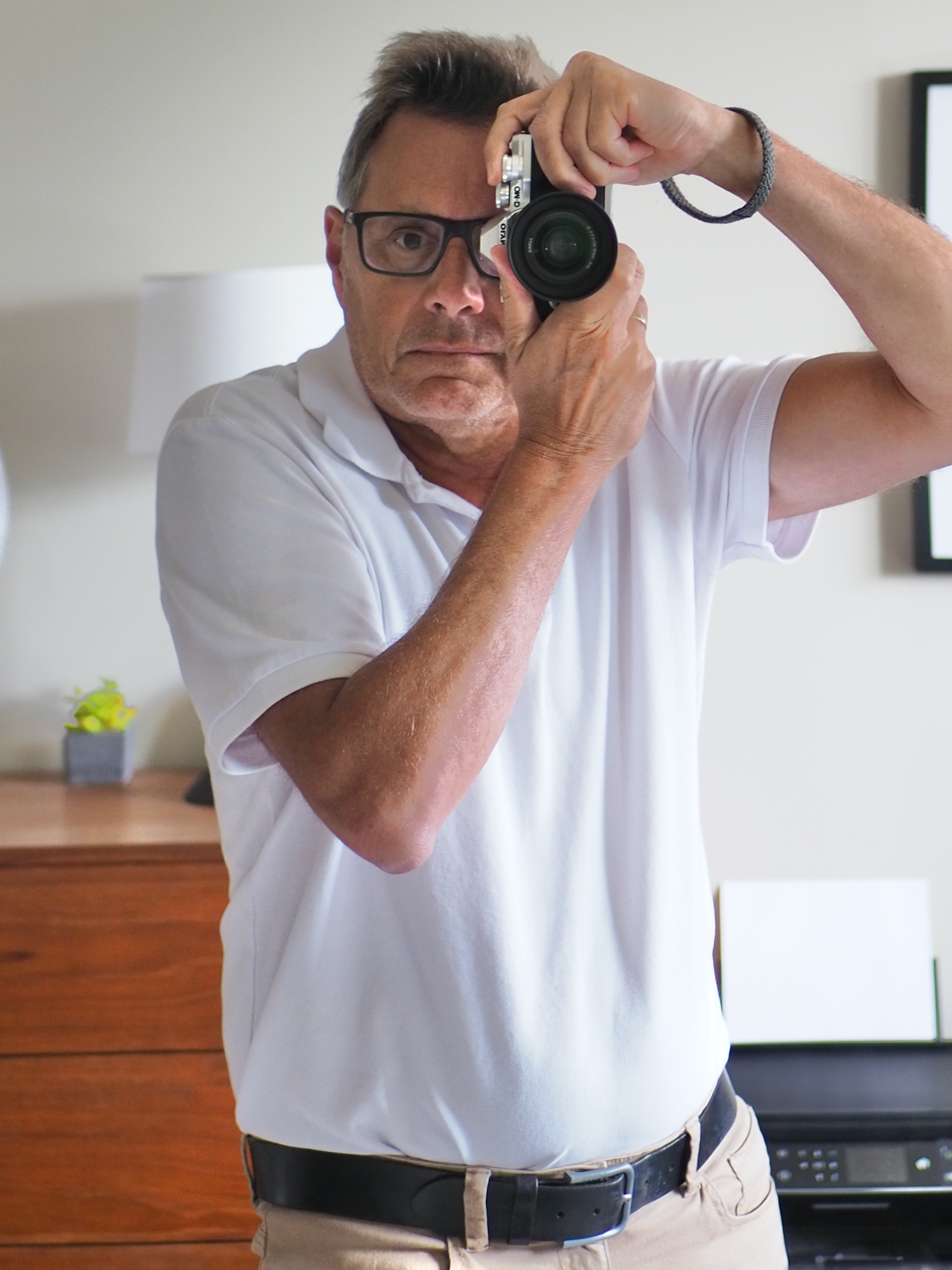
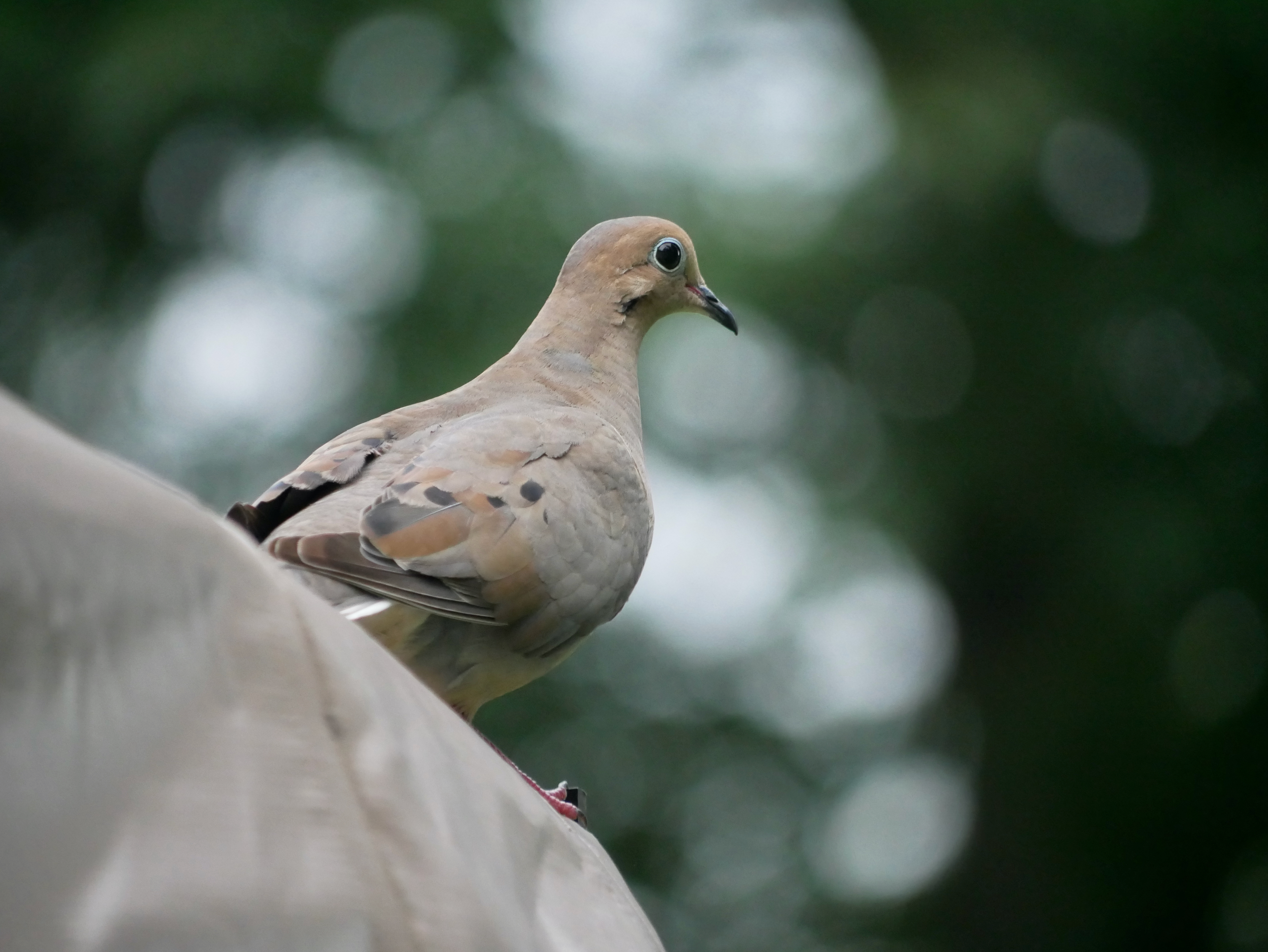
18 novembre 2023

Moment fugitif / Lost in the picture!

Il y a ce moment magique qui nous intrigue et qu’on veut bien préserver et partager entre nous.

Il y a aussi ce devoir de témoigner qu’on se doit de transmettre à une certaine postérité.

Il y a également ce souvenir dont la nostalgie nous commande de le momifier dans le temps.

Il y a surtout tous ces furtifs sursauts de vie qui s’enfouissent dans l’indifférence de l’oubli.

Photo Daniel M

17 novembre 2023

Le superlatif Leica DG Vario-Elmar 100-400 mm F4-6.3 ASPH Power OIS


Note de l'auteur: Oui, les produits Leica m'ont toujours attiré, tant comme admirateur qu' utilisateur (des Leica M4P et M6 et des objectifs Summicron M 35F2, 50F2 et Elmarit M 90F2.8 entre autres) et parce que je suis un amateur de produits de conception allemande ou d'inspiration allemande. J'ai donc profité de l'occasion pour essayer ce téléobjectif particulier tant par sa nature que son prix exorbitant , à savoir le Leica DG Vario-Elmar 100-400 mm F4-6.3 ASPH Power OIS conçu pour les adeptes du format de capteurs numériques Micro Four Third (MFT).


C'est d'abord et avant tout une optique de grandes dimensions (surtout à son réglage 400 mm) et assez lourde, on ne peut le nier. Elle est de belle facture même si elle provient de Chine (c'est sûr qu'on lui préférerait une origine totalement germanique). Malgré cela sa qualité de la construction ainsi que celle des matériaux utilisés pour ce faire semblaient être d'un très haut niveau. Sa finition noire satinée est irréprochable dans son exécution et sa présentation. Et pour un objectif zoom de sa catégorie, le Leica DG Vario-Elmar 100-400 mm ASPH est relativement compact si l'on compare des objectifs au grossissement similaire conçu pour des capteurs de format plus grand..

Tourner la bague-zoom du téléobjectif demandera un peu d'effort supplémentaire par rapport aux autres zooms de la série Leica DG tels que le Leica DG Vario-Elmarit 12-60mm F2.8-4 ASPH par exemple. Assurez-vous simplement que le mécanisme de verrouillage du zoom est complètement désengagé avant de tourner la bague. Cette option de verrouillage est pratique pour empêcher les changements indésirables de réglage du zoom, pour déplacer le pare-soleil intégré en position ou le rétracter, et pour empêcher le changement involontaire de longueur focale pendant le transport de l'objectif.

La bague de mise au point, elle, est facile à tourner et sa réactivité est bonne, ni trop rapide, ni trop lente. Bien sûr, si vous passez d'une distance très courte à une distance beaucoup plus éloignée, il vous faudra effectuer une rotation plus importante mais pour de courtes corrections de mise au point, la bague de mise au point fera l'affaire.Les trois interrupteurs situés sur le côté du zoom sont bien implantés même s'il faudra mémoriser leur position respective notamment lors de situations plus stressantes et faire attention à ne pas changer leur configuration par inadvertance. Le commutateur autofocus/mise au point manuelle (AF/MF) a ma préférence mais le limiteur de plage de mise au point et l'activateur de stabilisation sont également très pratiques.


Le support de trépied intégré et orientable (pour des compositions horizontales ou verticales) du Leica DG Vario-Elmar 100-400 mm ASPH est l'un des meilleurs que j'ai expérimenté. Non intrusif et robuste à la fois, il permet une bonne prise en main sécurisée du zoom téléobjectif. Oui, il peut être surdimensionnée  par l'ajout d'un pied fourni par le fabricant. Pour ma part j'ai trouvé l'expérience bien meilleure en l'utilisant avec un mono pied sans cet accessoire optionnel (rallonge de montage sur trépied).

Le grossissement du sujet requis par les photographes peut varier considérablement en fonction de leur type d'image souhaité. Par exemple, certains demanderont pour la photographie d'oiseaux un grossissement d'au moins dix fois (comparé à l'objectif "normal" ou standard) pour obtenir un résultat intéressant, même si ce n'est pas tout à fait vrai puisque certains photographes d'oiseaux opèreront à une distance plus courte de leurs sujets et cela cela dépend également de la taille de l'oiseau. Il n’y a donc pas de règles définitives à appliquer en la matière. Autant dire que la large plage focale du Leica DG Vario-Elmar 100-400mm ASPH est sûrement une meilleure garantie pour être prêt à faire face à diverses circonstances et éviter un changement rapide d'optique.


En photographie d'action comme pendant des événements sportifs, le Leica DG Vario-Elmar 100-400mm F4-6.3 ASPH Power OIS a une bonne polyvalence mais sa modeste ouverture maximale (F4-6.3) compliquera votre tâche avec des vitesse d'obturation moins élevées (qui doit être compensée par une sensibilité ISO plus élevée) et moins de discrimination du sujet par rapport au premier plan et à l'arrière-plan. Cela est particulièrement vrai si votre sujet se trouve à des distances plus longues. Vous devrez peut-être recadrer considérablement votre photo par la suite pour éviter trop de confusion dans l'image. 

La réactivité de la mise au point est bonne, surtout lorsque l'optique est couplée à un modèle d'appareil photo haut de gamme comme le Panasonic Lumix G9. À la fin, votre taux de réussite dépendra de votre maîtrise de ses caractéristiques inhérentes et de votre capacité à anticiper votre sujet et son contexte. Si vous êtes vraiment dédié à la photographie sportive, il pourrait être plus sage d'utiliser des objectifs comme le Leica DG Vario-Elmarit 50-200 mm F2.8-4 Power OIS ou le DG Elmarit 200 mm F2.8 Power OIS. Une dernière recommandation lors de l'utilisation du Leica DG Vario-Elmar 100-400 mm F4-6.3 ASPH Power OIS pourrait être de profiter de son support de trépied rotatif pour le monter sur un bon monopied facile à emporter avec vous.

Les zooms téléobjectifs sont souvent spectaculaires mais dans de nombreux cas sont également plus difficiles à appréhender. Ils sont aussi techniquement plus exigeants. Oui, nous sommes loin des anciens jours de la photographie argentique et des débuts fastidieux de la mise au point automatique (presque inutile à l'époque pour les sujets en mouvement), mais encore aujourd'hui, en fonction de la taille de votre sujet, de ses caractéristiques de mouvement et du contexte lumineux global, les défis techniques restent présents et doivent être tenus en compte si vous voulez obtenir des résultats d'image satisfaisants.

***

En guise de conclusion, le Leica DG Vario-Elmar 100-400 mm ASPH demeure un bon choix de zoom téléobjectif pour un usage extérieur en lumière du jour, bien conçu, robuste et réalisant une belle qualité d'image à condition que vous preniez soin de bien maitriser vos paramètres de prise de vue. Son prix de vente reste élevé et il serait avisé de faire une séance d'essai avant son achat définitif. En dehors de ces précautions préliminaires, une fois acquis, le Leica DG Vario-Elmar 100-400mm F4-6.3 ASPH Power OIS vous servira certainement fidèlement pendant de nombreuses années.

Photos Daniel M : Panasonic Lumix G9 / Leica DG Vario-Elmar 100-400mm F4-6.3 ASPH Power OIS

15 novembre 2023

L'importance du grain (en photographie)


 Dans le passé, le grain était l'élément essentiel de toute photographie argentique
. Il lui conférait sa texture et sa définition. Sa dimension intrinsèque entrainait sa précision ou, à l'inverse, sa perte de finesse. Le grain photographique était également une forme de signature selon le type de pellicule, i.e. de film, utilisé pour l'enregistrement de l'image. Pour toutes ses raisons et d'autres assurément, le grain avait un impact important sur tout le processus créatif de la photographie analogique et donc argentique.


On a dit souvent que le point numérique appelé aussi pixel, a remplacé le grain traditionnel de l'argentique. Si l'idée technique à la base semble quasi identique, le fait est que le grain analogique obtenu par une combinaison de l'effet physique révélé par une réaction chimique postérieure à l'exposition de la pellicule photographique diffère substantiellement par ses propriétés du rendu numérique des capteurs actuels des appareils photos d'aujourd'hui.

De nos jours nous pouvons recréer en partie cet effet de "grain" en optant pour un de ces modes "créatif" offerts par différents modèles d'appareils photo numériques. Bien sûr, cette simulation qui s'apparente beaucoup aux trames utilisées en photographie argentique par superposition de négatifs ("sandwichage") ne peut se substituer entièrement au rendu argentique mais elle a le mérite de réintroduire le grain comme élément légitime et artistique en photographie. 

Enfin pour ceux et celles que l'aventure intéresse et dont l'investissement en effort humain et monétaire ne fait pas peur, il est encore possible d'expérimenter le format argentique en ce 21ième siècle même si cela apparait de plus en plus difficile d'accès et que son impact environnemental est de moins en moins tolérable. 

Le grain fut longtemps l'essence même de la photographique et sa disparition inexorable semble coïncider avec celle des répertoires, des encadrements, des albums et de l'archivage photographique. Serait-ce un signe des temps? Nul ne peut vraiment l'affirmer ou l'infirmer en ces périodes troubles de notre évolution. 

Photos Daniel M: Panasonic Lumix G95D / G Vario 100-300mm II Power OIS; Lumix G9 / Leica DG 12-60mm ASPH Power OIS

14 novembre 2023

Considérations angulaires


 En photographie le champs visuel de l'image est concrètement défini à la fois par l'angle de vue proposé par l'objectif et la cadrage induit par les dimensions de la surface du capteur numérique (ou de la pellicule en argentique) de l'appareil utilisé. Cependant pour le photographe, l'angle de visée est essentiellement associé à la longueur focale de l'objectif sélectionné en conjonction du format d'enregistrement de l'image. Il existe également un rapport de reproduction de l'image par rapport au champs visuel de notre oeil nu, rapport qui définit les proportions des sujets photographiés.

Dans le jargon des photographes, on mentionne souvent les termes comme objectif standard (ou normal), téléobjectif ou encore grand angulaire et on les associe de même à des usages plus spécifiques au traitement des sujets abordés comme le paysage, le portrait, la photo d'action, etc. Bien que cela reste un peu réducteur du potentiel complet des toutes ces optiques qui peuvent traiter avec originalité de toutes ces catégories de sujets, cette classification simple reste pratique sur le terrain et constitue une sorte de norme implicite proposé par plusieurs érudits de la photo.

Certaines particularités propres aux différentes optiques photographiques méritent tout de même d'être considérées ne fut-ce que pour mieux les exploiter. Nous en aborderons quelques exemples ici sans pour autant oublier qu'il en existe d'autres qui peuvent être toutes aussi déterminantes.


Le grand angulaire est peut-être l'optique le plus propice pour établir l'aspect contextuel d'une photographie. Son angle de champs plus large permet d'englober une grande étendue de l'environnement entourant le sujet abordé. Dans la composition d'une image prise au grand angulaire, la position et l'importance qu'occupent les différents plans de celle-ci comme l'avant-plan, l'arrière-plan et tous ceux de transition sont capitales dans la lecture de l'image et de trajet que l'oeil observateur du spectateur parcoure.


Les téléobjectifs sont assurément les optiques les plus discriminantes (avec les objectifs spécialisés en macrophotographie quand ces derniers sont utilisés à des distances très rapprochées du sujet). Ils ont donc un effet limitatif qui accentue l'impact visuel du sujet principal mais limite aussi son temps de lecture. L'impression que laisse l'image s'inscrit dans la pensée abstraite qu'elle déclenche. Le sujet est ainsi mémorisé plus efficacement et son effet peut perdurer plus longtemps. Cela explique entres autres leur usage privilégié pour le portrait humain ou animalier ou encore pour la photo d'action. 


L'objectif normal appelé aussi standard est celui qui se rapproche le plus de notre vision des sujets en terme de proportions et de perspectives même si son angle de champs reste réduit par rapport à notre vue. Ainsi le photographe est plus en mesure d'utiliser son aspect prédictif pour rendre justice tant au contexte qu'au sujet principal de l'image et ce malgré un champs visuel plus étroit qu'une optique grand-angulaire et une moins grande capacité de discrimination qu'un téléobjectif. Sa maitrise tient également pour beaucoup à la mobilité de son utilisateur avant tout et à sa faculté d'analyser le sujet, parfaire sa composition et choisir sa perspective de vue. Son sobriquet d'objectif-école explique bien que l'optique standard ou normal participe à un sérieux apprentissage du médium photographique.

***

Ces trois exemples de catégorie d'objectifs montrent bien l'importance pour le photographe de mieux comprendre certaines caractéristiques fondamentales qui les qualifient. Leur expérimentation et leur choix créatif participe de plein pied à la signature de l'artiste-photographe qu'il soit amateur passionné ou professionnel. 

Photos-illustrations Daniel M

17 octobre 2023

The tactile photography versus the virtual imaging: more a cultural concern than a simply technical one.


 What is the modern characterization of digital photography
is more its inherent virtual status if we compare it to the past physical analog-film-print era because in that past period doing photography was an act of tangible material transformation involving physical proprieties that were used to get a chemical reaction on film and paper. Today we are looking at picture through a virtual support that will not retain aftermath any image details of the subject. Yes, there a form of electronic memory involved in this process but even that is not directly observable by the observer.

Many of us may ask if digital photography has not in fact kill the basic idea of photography in its essence, i.e. not only selecting a momentary picture of a specific subject but recording it (and processit) on a material universal support like a film or a printing paper. But it is true that the modern technology can produce such a final result. The point is not really there because although print are still feasible, people today are simply not looking at them or even save them for future references. The demand for such artefacts doesn’t exist anymore for most of us and that can be very preoccupaying especially for preserving testitomnies of our human path and history.


This dramatic technological and cultural turnover is reflected by our instant past-present-future perception that is simply erasing most of the lessons of the past that we can consult, analyze and project on our present and future. We cannot oppose to the technical advancements that have been introduced in digital photography and to the more « democratic » approach of its use. But you can ask yourself if its cheap price to do picture is not false facade from its very ephemere final issue. For example since the last two decades, all my personal photographic production will be certainly be lost and will certainly disappear after my passing (even if it has been temporary preserved through my several hard disks or partly into the few blogs I have maintained). In my sense it is a modern tragedy (not necessarily the lost of my own pictures ;-)) that will have a profound impact in our cultural heritage.

There is no immediate solution to this dilemma except to be concerned about it. how can we create space and resources to preserve and to encourage the photographic testimonies of our generation for the following ones? That is may be the biggest challenge we are facing as a progressive society and civilization.

Photos Daniel M

13 octobre 2023

Fragments-Fractures fratricides


 Vivons-nous l’ère des oppositions qui nous entraine dans la confrontation perpétuelle? Après l’espoir de la grande reconciliation fraternelle de l’humanité, sommes-nous au bord du précipice du chaos et de l’anéantissement? Qu’en restera-t-il sinon les fragments d’un rêve, la fracture de nos ideaux ou encore le vide d’une lutte fratricide vide de sens.

Cette confusion auto destructive saura-t-elle se dissiper pour laisser place à une certaine sérénités de l’être et de son âme perdue à jamais. Et cet avenir intangible, ce futur éphémère, le connaîtrons-nous enfin ou je me désespère d’autrui et de moi-même. Ah! Que j’aimerais revivre ma matrice maternelle pour renaître dans un monde d’ouverture, de curiosité, de diversité constructive plutôt que ce cauchemar actuel. 

Oh Dieu qui n’existe point que dans la tête corrompue des hommes de cette terre troublée, ne pourrais-tu pas lui inculquer un peu de sagesse réparatrice. C’est une prière athée que je nous souhaite tous… 

Photo Daniel M: Olympus Pen-F / M.Zuiko 17mm F1.8

09 octobre 2023

Retro Cameras are ... retro cameras or not?


 There is always a fascination about retro cameras and it isn't a "new" thing. For example the folding camera models (analog photography) have been for a time the "taste of the day" for photo gear collectors, and, overtime other different design categories have been praised by many enthusiasms. What's interesting now in this digital photography times, is that manufacturers are proposing their newer photographic technologies into an old fashion envelop mimicking what ancient photo device looks during the 35mm film-analog golden era. And it seems obvious that a certain market segment is positively responding to these special retro offers.

But as usual there is a trick here or if you prefer a compromise in getting these retro camera models. Although all these new models have beautiful aesthetics for some 35 mm film nostalgic users, some aspects of them are less interesting.

One obvious example is the less interesting handling of these retro camera models. Most of them have a far less secure grip which can became annoying especially for the active photographer. Camera hand prehension have evolute a lot since the last century and, in doing so, have procured a greater confort for the more enthusiasm and professional ones which are by definition heavier users of the photo devices. Some may argue that the compactness factor has been neglected for those ergonomic designs but you must admit that these camera models are really fitted for the "on hand" photographers.


Now there's the "interface" question meaning by that, the direct (and by dials) access to the traditional basic photographic parameters like the sensitivity (ISO), the shutter speed and the lens aperture. Although almost all really oriented digital photography camera models have in fact dials or push buttons to get access to these parameters (and much more!), still some will ask for engraved stepped pre-adjusted and rotating ones in the name of better creative control of the camera. The truth in that debate is that modern sophisticated digital camera models give you an outstanding extensive creative control if you ask for it such as the color reddition, the contrast, a highlight and shadow curve bias, the stacked focus, a pre burst mode and many many more, just name it! Modern interfaces are using not only limited control dials (because they aren't as precise compare to step-less adjustments), but pushbuttons, joysticks and touch-screens, the choice is yours.

Modern digital cameras have to be highly versatile and this is why even the so-called retro camera models are also integrating a lot of automated functionalities. The manufacturers don't want to loose their beloved customers if they suddenly want to get the advantages of the latest technologies available. And this is the real secret about this retro trick, yes for the traditional camera body presentation but no for the limitation of the internal technical camera capacity. At the end, retro camera models are essentially a fashion trend as for many similar consumer products but this is true that they are beautiful to look at!


Photos-illustrations Daniel M 

06 octobre 2023

Any camera can do!


To get a beautiful picture, any camera can do,
if there is a creative photographer behind it,
if there is a sensitive one,
if there is an attentive one,
and if there is an imaginative one,
with a persistent motivation to do it!


Photo Daniel M: Panasonic Lumix G9 / Leica DG Vario-Elmar 100-400mm F4-6.3 ASPH OIS

16 septembre 2023

Deviner / To Guess


Ce qu’on devine est souvent plus important que ce que l’on voit effectivement. 

La photographie est souvent perçu comme l’expression de l’explicite peut-être par la précision et le réalisme de son propos qui a priori l’a distingué des autres formes d’art visuel comme la peinture ou la sculpture. Bien sur, cet aspect reconnaissable de la photographie n’est pas négligeable mais il omet tout de même que l’image photographe reste une représentation partielle de la réalité qui prête aux interprétations tant de leurs auteurs que de leur public. 

Une histoire démarre  fréquemment à  partir de fragments qui deviennent des pièces d’un puzzle à assembler dans notre conscient et notre subconscient. La photographie comme tout autre représentation iconographique peut entraîner le même processus déductif dont l’effet final variera d’un observateur à l’autre. Ainsi se crée une diversité de l’interprétation à la fois individuelle, sociale et, à la fin, puissamment culturelle.

Deviner devient donc l’extension de la créativité initiale de l’auteur.

(google english translation)

 What we guess is often more important than what we actually see.

Photography is often perceived as the expression of the explicit, perhaps through the precision and realism of its proposal which a priori has distinguished it from other forms of visual art such as painting or sculpture. Of course, this recognizable aspect of photography is not negligible but it still forgets that the photographer's image remains a partial representation of reality which lends itself to interpretations both by their authors and their audience.

A story often starts from fragments that become pieces of a puzzle to be assembled in our consciousness and our subconscious. Photography, like any other iconographic representation, can lead to the same deductive process, the final effect of which varies from one observer to another. This creates a diversity of interpretation that is at once individual, social and, in the end, powerfully cultural.

Guessing therefore becomes the extension of the author's initial creativity.

Photos Daniel M: Panasonic Lumix G9 / Leica DG Vario-Elmar 100-400mm F4-6.3 ASPH OIS


10 août 2023

Novelty and creativity: are they beyond the Artificial Intelligence capability?


 Can we be against progress? And what we are meaning by progress? Are our human goal of better life is synonymous of progress? Is materialism and technical evolution the only progress we are renowning as legitimate? 


There is so many questioning involving the very nature of what we call “progress” and its intended goal into our human universe that it is almost impossible to get a straight answer that will satisfy even our lowest expectation. Yes, we have evolute since the fragile dawn of the humanity from a very frail and dispersed animal specie up to its outstanding materialist achievement but its philosophical meaning of life has still to be explore for most of us. Even our religious convictions have not prepared us to these technical revolutions. Competitions between us and wars of any kinds are still fondamental issues to be addressed for our survival.

And now there is this question about the so-call Artificial Intelligence (AI) which is simply in a way the technical extension of our own intellectual evolution. And this very extension of our intelligence might surely survive to our biological envelopes and assume ultimately our part of eternity (or at least for a longer period of time). And, let's face it, this very progress wont be stopped whatsoever we will try to do against it.

In photography, these advancements are not new in any ways. For example, the automatic exposure metering systems have simplified the photographer interpretation of light intensity for a specific scene in its translation on the photographic recording material. Nobody surely wants to go back into a painful learning curve to be able to get reliable picture rendering. Automated systems have become more and more sophisticated in their ability to select a subject category and apply the good parametric formula.
________


Subjects interpretations. What is more recent in automated photometric interpretation is subject reconnaissance. It means that the photographer can simply choose or pick the subject, follow it and the camera will select the best configuration that will suit it. To do this with reliably, the internal camera processing computer have at its disposal thousands of comparative algorithms based on past memorized pictures taken by photographers. The more these memorized data are accurate, the more the automation will set efficiently the photographic device. At that point the human intervention is limited to the subject selection, its composition and the moment of taking the picture although it could be also retro sequential to better select afterword the final decisive moment we want to privilege.

Special & Art Effects. Special effects in photography may be compared to painters techniques in a more sophisticated and automated way. Mastering special effects is now far more easier because the electronic viewfinders (EVF) and the live view monitors can illustrate them right before and during the picture taking moment. That way it facilites the photographer task to get a better composition and to choose the "decisive" moment to record it. Some art effects are more pronounced, others are less intrusive. It is up the photographer to experiment them and fine tune their picture interpretation degree level. You cannot disregard the pertinence of using special effects in photography. We have to judge the pictures that are integrating them the same way as more traditional ones for impact and creativity.


(Post)Editing & Enhancement. This is another difficult debate among photographers and critics of their works. Computer image editing can be compared to the past photo lab finishing and printing with or without retouching. Nobody during the long analog-film era have contested the veracity or the authentic of a fine prints done by the renown photographer Ansel Adams because it reflects the interpretation of the master, just to mention this example from others. Creativity is often the way that the author have chosen to represent his/her subject. At this point of the endless debate about straight photography versus its manipulated representation, we must admit that both positions can be argued, never to be reunited but always be part of our iconographic universe.

The human interventions.When we speak about the Artificial Intelligence as a replacement or substitute of its biological counterpart, we often omit that AI is also the extension of the human mind because of its obvious technical origin and all the basic algorithm that compose it. Yes, AI is a learning electronic device that deduce and create practical solutions that can be or not proposed and applied mechanically. It is our modern electronic Frankenstein which is still very difficult to precisely define for its future potential and impact into our human life. Trying to stop or ignore this particular evolution won't work because of the human competitive nature. Adaptation is may be the key word when we are facing this kind of mutation.
_________

Now if we accept that artificial intelligence (AI) can generate a legitimate visual representation, we may ask ourselves if these pictures are an expression of iconic creativity of their own without any biological human intervention. Is it technically possible? Is it ethically acceptable? At the first question, we can answer that surely it will be possible in a near future. At the second question, have we any other choice to totally integrated AI photography as a cultural phenomena of our society. In one word it is better to face it then ignore it and be gradually marginalized from a world of progress and advancements. The challenge is already there! 

Photos-illustrations Daniel M

07 août 2023

Handhold Bird Photography with the Panasonic Lumix G Vario 45-200mm F4-5.6 II Power OIS


 Note: I am not a birder photographer in any ways but just a photo taker who loves to pick some interesting pictures of the birds occasionally. 

The "made in Japan" Panasonic Lumix G Vario 45-200mm F4-5.6 II Power OIS is not a "powerful" zoom lens designed to do bird photography. It is rather an all-around telephoto zoom optic to carry with you everywhere that can manage many different subjects that need to be discriminate from their surrounding and contextes. It isn't also a very expensive lens to own and its construction quality although fairly decent cannot be compare to more pro oriented product. Moreover its maximum variable aperture is definitively on the modest side (F4-4.6). But the Lumix G Vario 45-200mm II Power OIS has two interesting qualities with its internal optical stabilization system and its weather resistant envelope.

So, to do bird pictures with the Lumix G Vario 45-200mm II Power OIS, you need to be enough near of your subject to prevent too much editing cropping. The photographic technique selected can be different from a photographer to another. Some will work at fixed location and wait for birds. Others will trek around themselves to visit different promising spots that they know to be productive. And some will visit specialized zoo places to get pictures of more exotic species. Each of these can produce excellent results of their own. Observation, patience, good technical parametric adjustments and ... a lot of "try and error" pictures and finally be sometimes rewarded with fine iconic results.

Another good thing to experiment in doing bird photography is listing the different species and their particular habits by illustrating them. You can even participate to birder clubs or blogs and share your discoveries.

Here are some examples of handhold bird pictures taken by the Panasonic Lumix G Vario 45-200mm F4-5.6 II Power OIS.


Photos Daniel M: Panasonic Lumix G85 / G Vario 45-200mm F4-5.6 II Power OIS