Aucun message portant le libellé Architectural. Afficher tous les messages

15 février 2022

Our Arkitektural Frontiers.


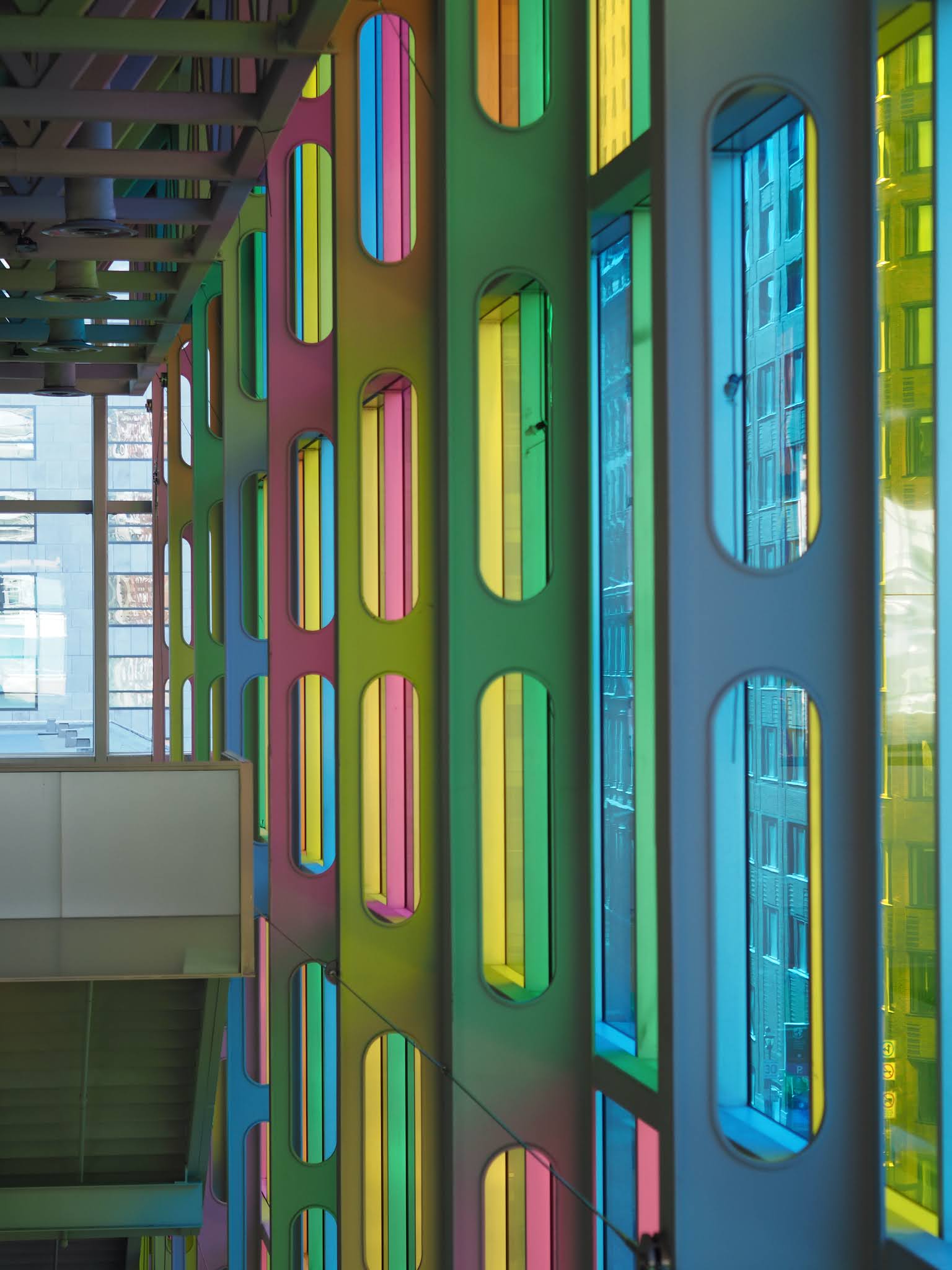
 Design is not a new thing in human history. Because we are essentially big constructer remodelers that distinguishes us from other animal species, we have created a very graphic approach how to rearrange our surrounding world. Straight line, curves lines, parallel ones, perpendicular others, triangles, circles, pentagonal, octagonal, and other representations, etc. are part our search and experimentation to draw a world at our minded image. It could be seen as artificial construction opposed to the "natural" state of the untouched things and it is an evident human civilization signature.

Over the past, we have largely documented the incessant human effort to reconfigure its own eco-system on a macro or micro point of view and architectural photography has been a vast field of recorded observations. We have even imposed some rules to do those pictures although they apply more for scientific or factual comparison purposes over times and locations, and we won't argue of their intrinsic pertinences.


But there is another part of it that is more esthetic and that require a far more artistic approach in visual arts such as drawing, painting, or photographing. And that part is the one that involve a fresh creative view where impact and emotions take the first motivation for their authors. Moreover, a world of rapid changes, substitutions and finally... material obliterations, there is a necessity to document and to interpret all these ephemeral human construction manifestations as a time and culture testimony. Today most of this past presence is vanishing in profit of a kind of standardization of our living space where economics has become the primordial factor.


Every human material organization can be appreciated by its "architectural" approach even if it seems sometime odd, unreasonable or futile. Recording these elements as a whole or in details can be a real photographic challenge not only in regard of the technical aspect to produce a picture but also and more important in considering the artistic point of view of the subject. Contextual examples of architectural photography can be seen into these previous posts. This visual experience is starting right into our own familiar surrounding at home and to our regular daily activities. Observing, noticing, taking pictures on a regular base and in different hours and sharing the results are a very rewarding way to experiment architectural photography.

No limit should be imposed to practice architectural photography and every interpretation can add to the cultural knowledge about the human habitat. It is a very inspiring visual subject to explore with interest and enthusiasm.

© Photos Daniel M: Lumix GX7 / G 20mm F1.7; Lumix GM5 / G Vario 12-32mm OIS

15 décembre 2018

The Olympus OM-D E-M1 Mark II: The "more compact" pro camera from Olympus!


Suppose you love compactness and portability but you want a pro level camera model that can withstand an intensive use even under adverse conditions, what would be the more sensitive choice today? The answer is simple: the Olympus OM-D E-M1 Mark II. This model is part of an entire eco-system of different optics and accessories that will fulfill almost every specific photo tasks that any photographers "on the run" will ask for.

The Olympus pro range of products is now including two current version of the E-M1 which are the E-M1 Mark II and the E-M1X. The last one and newest model is integrating permanently the vertical power grip compare to the optionality of the one offered for the Mark II previous model. But the two cameras share the same MFT 20MP sensor and most of the function abilities although the E-M1X take advantage of some latest technical novelties or upgrades.


In 2017 the Olympus OM-D E-M1 Mark II was introduced as an significative improvement of the original E-M1 by replacing the 16MP MFT sensor with the newest 20MP one. The autofocus functionality has been also upgraded. The video capability of the model has been enhanced. The LCD has been transformed to the tilted variation to a fully articulated screen.

At the time of the outcome of the Olympus OM-D E-M1 Mark II, some reviewers have questioned its large size and its higher price tag. But as time past this perception is changing at a fast rate and more and more the size dimension of the Mark II appears now more as an average pro camera model.


The late Nikon F4S: A modern "Pro" 
design back in 1988 of the film era.
Over time professional photographers have always appreciated a camera design that will fall literally in their hand and have equally appreciated a more simple rounded ergonomic device that feels secure, confortable and robust on a long intensive use.  At the time of its introduction the newest autofocus Nikon F4S was representing a similar evolution in term of ergonomics compare the previous F, F2 and F3 series. The modular aspect of the model as for the Olympus OM-D E-M1 Mark II was cleverly designed for a complete integration of the each additional modules.

The Olympus OM-D E-M1 Mark II is the second interpretation issued from the manufacturer of an especially constructed professionally oriented digital ILC (Interchangeable Lens Camera) for the M4/3 format sensor. It incorporate the newest 20MP image captor (sensor) for a finer definition and  higher overall performances. I have never really try to evaluate a camera model on specific statistical characteristics. In place I better prefer to regard it as an whole package. As a photographic tool you need something that will be coherent and flexible for your everyday use.

The Olympus OM-D E-M1 Mark II is not a pocket camera. It can be seen as the antithesis of the Olympus Pen series. It is a more pro oriented compact option and system (coupled with the intended lenses and accessories). It remains a camera made to be hold in your hand on a full time base. In that sense it stays a unique product from the entire M4/3 ILC Olympus line-up. A bit like a beefier Olympus OM-D E-M5 Mark II with a permanent hand grip.

The simplicity of design of the OM-D E-M1 Mark II is considerably emphases by the integrated hand grip that prevent the doublement of controls required with an add-on optional hand grip such as the combo seen on the OM-D E-M5 Mark II. After a general setting of the camera many function buttons can be ignored to facilite the picture shooting. At that point complexity doesn't mean necessarily complication. And this can be said also for the menu versus the direct access to the principal parameters option on the LCD screen. The Olympus OM-D E-M1 Mark II is a very configurable camera but you dont need to apprenhed every single option offered by the manufacturer.

You can add the optional (vertical) power holder grip HLD-9 that will double the power autonomy of the OM-D E-M1 Mark II and give you a better vertical prehension of the camera for portrait framing type shooting. The Olympus HLD-9  keeps you access to all the essential control dials and functions of the camera. With larger and bigger lenses it can help you to get a better balance and a more secure way of handling the combo. Lastly the Olympus HLD-9 let you manage a three battery pack rotation (one into the camera, one into the grip and one spear) that extend your power autonomy during longer assignment.

The OM-D E-M1 Mark II is a very sturdy model and very well protected against adverse contextual conditions such as rain, snow, freeze. It give a good sense of confidence to use the camera without the normal restrictions and open access to more delicate photo situations. The viewfinder and the LCD black screen are first class devices and even for people wearing glasses, the EVF is fully usable for seing the whole picture and technical information attached. Control buttons and dials are well manner and dont require too much contorsion and can be assimilated intuitively especially for previous Olympus users. The same can be said for the optional grip.

If you  like to adjust your focus point manually, the OM-D E-M1 Mark II electronic viewfinder (EVF) will help you in that task beautifully with its clarity and its definition finesse. Couple with one of the Olympus Pro series lenses and their Clutch Manual Focus mechanism, the combination is a winner. "Defocus" creative experiments are a delight to do with this model.

The left thumb cavity (located on the bottom right side of it) to facilitate the opening of the reverse LCD screen is a real special ergonomic touch. I discovered it simply by touch intuition but it became an instant reflex if I want review a picture without reversing permanently the LCD screen (Open out then folding it!). By the way the massive right thumb grip rest (on the upper right edge of the back of the canera body) is simply very practical and secure. In all the body molding configuration of the Olympus OM-D E-M1 Mark II reflect that a deep care has been done for a design and its manufacturing that cover the ergonomic needs of a (pro) photographer.

Getting the OM-D E-M1 Mark II alive (On) is fast and accurate. You can stay pro-active and produce spontaneous imagery at will without bothering long delay of awakening from the camera. The EVF eye detection is efficient even if you are wearing glasses. You will have a good sense of your picture exposure and be able to apply exposure correction factor on the spot be roughly evaluate its effect through the EVF.

The shutter release button is very smooth and the OM-D E-M1 Mark II is a very discrete camera considering the sound level of it. It is perfectly suitable for shooting situations that require almost silence presence from the photographer. You can also operate the camera with the touch screen functionalities which can be practical for more static subjects (reproduction, macro. portraits, etc). The exposure and focus settings can be memorized by pressing with your thumb the appropriate push buttons rightly located on the upper right side of the back of the camera body. The same easiness of use can be said about most of the control dials and push buttons of the OM-D E-M1 Mark II although you have to get use of the Olympus way of actuating the camera (the famous classical On/Off lever).

You wont be deceived by the overwhelming availability to customize the Olympus OM-D E-M1 Mark II to all your specific photographic needs. Many of us will simply scratch a fraction of its whole potential as it is the case for several digital camera today models.

Because the OM-D E-M1 Mark II is a bigger camera than the OM-D E-M5 Mark II for example you will feel more secure when who are manipulating it and particularly when you are holding it with one hand. In that sense Olympus has designed this model for a professional intensive level of use in mind.  And that explain also the "superior" level of selling price of the camera the will be amortized by its everyday tasks performed.

And what about the famous Olympus interface? As usual the menu contain is very rich of different possibilities and will ask to invest a good amount of time on the side of the learning curve especially if you want to configure the camera outside the manufacturer default settings.

For still photography the autofocus system is fast and reliable. Follow-up action photography with greater subjects can be done in confidence for the focus tracking. As I have said in previous posts to properly photograph"on-pick" moving subjects may ask you a certain amount of preparation on your part. Exposure and focus preset are still a good way for doing this kind of task.

Flash system
For flash aid, the Olympus OM-D E-M1 Mark II rely on external unit either on-camera mount or completely none-solidaire devices(a small emergency flash unit FL-LM3 is furnished with the camera model). Connectivity can be done through infrared or radio communication or even by using a traditional but obsolete PC cord.  TTL flash option has been part of the Olympus system since the introduction of the analog OM-2 series and so the expertise and reliability are firmly established. Some Olympus flash units (FL-900R, FL-700R WR) are protected from adverse weather conditions and can be used under usually impractical flash photo contexts.

The picture output of the Olympus OM-D E-M1 Mark II is absolutely impressive. Both colours and Black & White images can be produced flawlessly without compromise. The JPEG rendering is fully usable. The finesse of the details obtained by the combine in-board sensor and immediately post-treatment engine is remarquable if you respect the basic photo techniques required to get first class results. The camera is giving its best when fixed focal lenses and "pro" zooms are coupled with it.

Black and White Photography
The love to produce black and white pictures has been partly revived with the introduction of the electronic viewfinders that are allowing us to appreciate on place (and also with the LCD viewing screen) the B&W picture results. No exception for the OM-D E-M1 Mark II that is offering you the Monochrome option with some more grainy variations (Art filters). In all the quality of the B&W image outputs is a strong asset of the Mark II.


Art Filters are creative!

This is one of the most intriguing feature included into the Olympus OM-D E-M1 Mark II capabilities (as for other Olympus models). There are a great number of these image art bias with variations depending which you are selecting. I gradually discovered some of them (Key Line, Partial Color, Soft Focus, Dramatic Tone, Sepia, etc) and began to use them occasionally with success. Each of these filters is proposing a different palette of colors or tonal effects alongside with specific alterations of the picture rendering. After the initial experimentation, you became able to predict their different bias in different photographic taking situations.

We have to remember that over the history of photography, past and present picture taking and registering techniques had and still have particular bias that are interpreting the subject. You can compare the Art filters option as a modern digital way to do the same today but with a far more versatility and easiest to produce it.

Keystone compensation
The Keystone compensation functionality is another fine in-camera image post-process that allow vertical and horizontal line corrections as we do optically with specialized tilt-and shift lenses. This application can generate pictures for architectural and still-life purposes that withstand the exigences of humain interpretation of the subject (subjective linear mind auto-corrections). The effect of the Keystone compensation can be controlled directly on the camera LCD screen or into the electronic viewfinder (EVF). On an average image magnification scale (X5-X7) its output quality impact seems to be very minimalist.

The more you will play with the Olympus OM-D E-M1 Mark II, the more you will discover its flexibility to withstand many different shooting situations. Many interesting techniques and in-board functionalities will expand your creativity and offer you better opportunities to try something different.

Final thoughts
On a personal note, I love to work with the Olympus OM-D E-M1 Mark II because it is a pro "compact" camera that you can rely on in (almost) every circonstances. If you couple it with an Olympus M.Zuiko Pro lens, you will obtain a perfect combination of quality of construction and image output. As an independent (freelance) or a self-entrepreneur photographer, the Olympus system can be a winning solution. What is the decisive factor for choosing the Olympus OM-D E-M1Mark II as a professional camera model? In many ways it can be resume to its compact portability (enhanced by by the superb Olympus pro lens series). The complete Olympus pro eco-system is perfectly suiting that particular task to be light, versatile, creative and highly competent in photography.

Some additional notes about the MFT system
Choosing the Olympus OM-D E-M1X make no sense in my book except if you intend to use it with larger or longer lenses, and be able to use some kind of handling assistance like a tripod or a monopod for example. So as a sport or nature camera, yes, the OM-D E-M1X can fit the bill but for a mobile photographer it can be also a big weighty burden... 


(First Published in April 2017, Revised in May 2019)


18 février 2017

Black'nd Mine: An Adventure in Gray Tone.

Tone my expression in a gray world and I will be in the black of mine. Storyboard of my life is the témoignage of the despair of emotion. Click the instant desire of eternity and the full inspiration of the romantic soul.

Where are you my love, my muse, my perfect picture of the physical human art. Light is triking the edge of my insanity. And I hope some understand my deviance. That's only photoetry.

You must say something, you must show something so we want to see.


28 décembre 2016

Montréal Like It Like It Not: A Black & White Desire


Montréal is my born city even if I became a suburb boomer like many of us. Montreal is the essence of our cultural french identity the other places are simply anecdotical for us. When I walk in the streets of Montreal I am always strike by infinite nature of changes over the places, the people and the time. Montreal is a survivor in this very competitive world of North America.


You can see the buildings, the beautiful girls and boys as the ancients, the surroundings, the noise and  the music, it is the the dis-harmony of life. It is Montréal!


Are you with me ?


06 novembre 2016

The Superior Lens: The Olympus M.Zuiko ED 75mm F/1.8 Premium

It sometime arrive that a new product is becoming a fetish item right from the start and it was effectively the case for the beloved Olympus M.Zuiko ED 75mm F1.8 Premium, the "made in Japan" state of art optic for M4/3 format cameras.
It is a purely indecent and expensive piece of glass that everybody want to touch, try and ... adopt if they can afford to pay for this majestic device.
Carefully crafted the Olympus 75mm is also a beautiful collector jewel especially in its silver version. The short and fat design of the lens can be still assimilated as a compact design considering the fact it is a real telephoto with a fairly large maximum aperture. The focus is sumptuous and using it in conjunction of the Auto-focus/Manual option of the camera is a charm. When you turn manually the focus ring you will easily feel and ear the by-wire mecanisism of the lens coupled with a lighter turning resistance compare to some prime lens models. For my personal point of view I have seen it more as an avantage than an inconvenient.

Plumage (OM-D E-M5 II / M.Zuiko 75mm f1.8)
A short word about the lens hood
The dedicated and factory lens hood of the Olympus ED 75mm F1.8 Premium is not part of the included accessories that come with the lens. In fact the Olympus policy regarding lens hood availability is not really clear. It seems that most of the "polymer-made" hood are included with the lens and the "metal-made" ones are optional accessories. For the Olympus 75mm lens, the gigantic metal lens hood (and expensive) has to be bought separately. Considering the hood large dimension it is really an occasional  add-on accessory that will bother more than be practical. It's up to you to "invest" or not.

With 16 degrees of (narrow!) angle of view the Olympus ED 75mm F1.8 is the first real telephoto that will give you an equivalent three time magnification compare to your normal eye sight. Combined with its maximum aperture of F1.8 it can be a very discriminating lens considering its reduced deep of field.
Because of its great selectivity the Olympus 75mm F1.8 is more an off-contextual lens than the others lenses doted with a wider angle of view. Perfect in doing portrait or such related subjects this small and fast telephoto can be also used in cultural (such in theatre or musical scene) and sport events.
You may consider the Olympus ED 75mm F1.8 as a true "project" lens that will ask a greater sense of study of your subject. In fact working with the optic will allow you to really discover different aspects of your subject.


What to add more about that optical marvel from the Olympus M4/3 line-up except its outstanding performance. Yes this a superior optic even if it is a specialize piece of glass. But using the Olympus 75mm may transform you in an addict of this focal length with a narrow angle of view.

Urbascape with the Olympus M.Zuiko ED75mm F1.8 Premium

10 juillet 2016

The Panasonic Lumix GX85/GX80 (Japan GX7 Mark II): TheTraveller Successor


The Panasonic Lumix GX85/GX80 or GX7 Mark II (Japan):
A very classical rangefinder style digital modern camera
My first introduction to M4/3 image captor format was with the Olympus Pen EP-3, The camera and lenses dimensions were just perfect in my sense for an everyday compact camera. The only irritating omission was the absence of a traditional viewfinder and using the add-on EVF accessory simply destroy the homogeneity of the basic idea. Later the coming days of the OM-D series solved partly the problem by integrating a workable EVF and by offering in-body stabilization.

Panasonic have developped over the years a complete series of rangefinder style cameras such as more recently the GX7, GM5 and GX8 models all cameras doted with a good EVF and in-body stabilization. It reunited other successful features such as standard 16MP image sensor or the moe recent 20MP sensor for the GX8, touchscreen and tilt-able or fully orientable (GX8) LCD screen. The GX7 was a near perfect size model and the GM5 was a real traveler camera.
Many still photographers prefer the tilt-able screen
option over the fully orientable side-screen alternative
designed more for videographers
.

Now Panasonic have decided to refresh the GX7 by presenting the new GX7 Mark II (in Japan market) relabelled GX85 or GX80 into the other world markets. The "Mark II" designation clearly indicate the filiation with the previous and original GX7 version.

Many factors are differenciating the original GX7 from its successor, the Lumix GX85 / GX80 / GX7 Mark II. I will review some of them that I have found more determinant.

Less grip compared to the original
GX7 but more than the GM5
The Grip Factor
The Panasonic Lumix GX85 / GX80 have not the same grip volume as the original GX7. It results in a smaller prehension confort. Since the camera is more on the moderate heavy side for its overall dimensions it will ask you a more careful attention in bringing, holding and manipulating the model.  But compare to the previous and diminutive Lumix GM5,  the Lumix GX85 / GX 80 offer a more secure way to work with its body. It  is always possible that in the near future an add-on accessory grip will be proposed for some of of us  who are asking for a better grip.

The Switch Factor
The On/Off switch is is located on the upper right side of the body of the camera but reaching it with your thumb may ask you a strong contorsion exercice. All the other operating dials and fonction buttons are classically presented. No more direct dial for the the automatic and manual focusing setting is present on the Lumix GX85 / GX80 model. That absence can be compensated by using the autofocus with manuel correction option.

Reactivity and Focus Factors
In general the Panasonic Lumix GX85 / GX80 is a very reactive camera fast enough to capture spontaneous pictures of acting subjects. If you have chosen to work with larger aperture prime lenses such as F1.7 or more the auto focus adjustment seems to be faster and on target most of the time. Screen touch focus selector can be another option easy to reach when you are more selective with less usual subject target (that option can be also desactivated on demand).

The Monochrome Factor
Some of my previous viewers know already my love affair with black and white photography and the Panasonic GX85 / GX80 will perfectly respond to that task by offering two monochrome photography options: MONO and MONO L. Ether versions give you a tonal palette from black to gray to white which is rich and detailed. Black and white photography rendering with digital still camera is now a mature feature. Professional results are obtained right from the start preventing that way more destructive post-treatment manipulations.

The Sensor Factor (16MP vs GX8's 20MP)
Panasonic have chosen to maintain the commun standard 16MP sensor for the GX7 Mark II. Quality  output of the picture using this sensor has been already demonstrated several times over the past. A marginal improvement can be observed by the fact of the absence of an anti-aliasing filter initially used to prevent  the moiré effect. These changes may offer you better image cropping factor ability without noticeable quality decrease.

Severe cropping is possible without altering the overall quality of the picture.
None retouched original picture


The Viewfinder Factor (Tilt GX-7 EVF vs Fixed GX85/GX80 EVF)
The Panasonic Lumix GX85/GX80 s doted with an in-board EVF without the previous option of upper tit-ability present in the original GX7. That option has been offered with the newest rangefinder style Panasonic flagship model the GX8 which is in fact a larger camera with all-weather sealing and maybe more capability to resist from intense using. Apart from the tilt-able option, the previous (GX7) and the newest (GX85/GX80) EVFs are behaving in the same matter giving a good but more contrasty representation of the actual image. The big advantage of using EVF is its direct relation with the final result registered by the image captor. It is an almost perfect tool to preview black & white results. Moreover the EVF allow you to do instant review of your last picture taken without losing contact with your subject.

The Design Factor (Angular vs rounded GX7)
The Panasonic Lumix GX85/GX80 is marginaly a more boxy camera compare to the first version of the GX7. It represent a certain drawback in term of ergonomic design of the model. Body style is more classical which is a popular present trend among many camera manufacturers. On a daily using basic sharp angular design camera are less confortable to work with to say the least but it is partially compensated by the more discrete presence of the device in face of the subject.

The Stabilization Factor (GX85/GX80 more in-board Axis)
Modern cameras need to be stabilized for many reasons. They are smaller and lighter packages and we are facing most of the time faster subjects or contexts that need to be adequately  stopped or freezes. The Panasonic Lumix GX85/GX80 offers the two stabilization options with in-board stabilization sensor and the possibility to combine lens stabilization (if offered by the lens model used) and sensor stab. Most of the time the stabilization factor will increase the definition of your picture output in a decisive way. Dont prevent yourself to use it extendely.

The Lens Factor (Panasonic G lens system + Zuiko M. options)
One of the decisive factor of selecting to work with M4/3 ILC format cameras resid in the the very interesting choice of lenses available on the market. These lenses can be versatile, fast or specialized and their overall dimension stay compact and lightweight. For sure my preference goes for the prime (focal fixed) lenses with moderate larger aperture such as the Panasonic Lumix G 20 F1.7 or G 42.5mm F1.7 OIS models. There are perfect matches to bring you good to outstanding results from the camera. For a one-lens traveler combination  you can consider the Lumix G Vario 12-32mm F3.5-5.6 OIS that is offered at a ridiculous selling price when you decide to buy the GX85/12-32mm package. There are many others lenses that can fit your specific need and the Olympus Zuiko M lenses can be also another option.

Other factors
The in-board flash of the Lumix GX85/GX80 can be a good help for using the fill-in flash technique and you have the possibility to put an external unit if you are a heavy flash user.

As usual for ILC mirrorless cameras an extra battery is clearly a must recommendation. For charging them an external charger seems to me a very practical add-on. I hope in some way that an add-on grip will be in someway available in the near future.


In short the Panasonic Lumix GX85/GX80 (GX7 Mark II) represents a very interesting successor of the previous GX7 and GM5 models.