Aucun message portant le libellé Panasonic Lumix G95. Afficher tous les messages

21 janvier 2025

Resetting a Design (Panasonic Lumix G95 vs G85)


 Being a big fan of the Panasonic Lumix G85 camera model since its introduction in 2016 (during the last true Photokina event in Cologne 😢), I was wondering what can be really improved with its replacement version Lumix G95 (or G97)* except for sure the image sensor definition that have been enhanced from 16MP to 20MP. Even though considering this added image definition, the Pana Lumix G95 (or G97) may not represent a strong departure from its ever popular G85 predecessor. 

What was a first turn-off in favor of the beloved Lumix G85 was the bulkier camera body of the Lumix G95 (or G97) not by a lot I agree, but sufficiently to bother you. Secondly the dial controls texture and presentation do have a different feel for the user although the push buttons of the G95 have a more positive clicking feeling and are better positioned. The top of flash pseudo-pentaprism of the Lumix G95 is triangular opposed the flat one of the Lumix G85 that give to the new model a less simpler design. 


If you looking on every angles the two camera models, it is clear that the newest Lumix G95 is bigger in dimensions compare to the previous Lumix G85. But the two models are using the same accessories including the battery pack, the electronic flash models and the battery grip. So, why the latest G95(or G97) is been the biggest? May be because it is a mystery of the electronic embarked into these model replacements. With a new 20MP image sensor, the Lumix G95 may ask for an additional space to accommodate it. 

Another explanation could be that the Lumix G95 (or G97) are manufactured with a totally different camera body. Many differences are noticeable like the larger camera grip or the re-localisation of several push buttons. As for the additionnel headphone port added to the Lumix G95 (or G97). There is no doubt that both Lumix G85 and G95( or G97) are sharing a lot of technical elements outside or inside but their configuration seems to be slightly different. Moreover the general feeling for some Lumix G85 regular users is that the Lumix G95(or G97) don't carry the same construction quality level and the same fineness of design. 

In terms of performance the Lumix G95 offers some avancements like a more definite image sensor or like some extended functionalities no present on the previous Lumix G85 (Live Composite Mode, BlueTooth, Headphone Port, etc). But except for the sensor, you can expect the same behavior from the two models, same performance for auto-focusing, for exposure metering, for reactivity in  general, for video capacity and many other similar characteristics. All these camera models (G85, G95, G97) are weather resistant which is excellent for outdoor assignations. The Lumix G85 is less energy-consuming than the G95(or G97) and have also a power indicator green light.

***

All in all, I have a net preference for the original Lumix G85** over the G95(or G97) because the latter reflect a non-desirable tendency in the photo industry to offer new versions of camera that are bigger in dimensions which is the last thing many photographers are looking for. For them, compact cameras are still a better choice to use everyday. 

___

*All these Panasonic Lumix G camera models have different nominations depending in which country they are offered. G85 can be G80 or G81; G95 can be G90 or G91; G97 seems to be universal. A new version of the G95 named G95D is using an improved rear screen.

**The Panasonic Lumix G85 may have the best optional vertical power grip (DMW-BGG1) that I ever experimented in term of ergonomic and functionalities. Its balance is remarquable especially when used with a physically longer lens or zoom optic. This combination has been slightly altered with the succeeded G95 (or G97) model.   

Illustrations: © 2020 camera decision.com

16 avril 2024

Retour à la m(r)aison: le Panasonic Lumix G95(D)


 Le Panasonic Lumix G95(D) a déjà fait l’objet d'un certain nombre d’articles dans ce blog et plus encore si vous y ajoutez ceux traitant de son prédécesseur, le populaire Lumix G85. Le modèle est en soi un achat très sensé tant pour ses performances, sa durabilité, son format plutôt compact et son tarif d’acquisition modéré neuf ou usagé. Il est souvent offert en combinaison de l’objectif Lumix G Vario 12-60mm F3.5-5.6 Power OIS qu’on peut considérer comme une optique compétente, polyvalente et résistante aux intempéries au même titre que le G95(D) d’ailleurs. Bref un ensemble très équilibré. 

Perso, j’ai toujours eu un petit faible pour l’ergonomie, le design et l’interface des produits Lumix de Panasonic dont une lointaine parité germanique semble à mes yeux évidente. De plus, cette série informelle du G85, G95 et G95D à la fois au design "Bauhaus" et toujours abordable est certainement une des meilleures illustrations que chez les plus modestes se retrouvent parfois des petits bijoux d'ingéniosité. De retour de mes séjours annuels en Guadeloupe, j’ai bien réalisé que parmi les trois fabricants d'appareils à avoir été expérimentés là-bas, soi Fujifilm, Olympus et Panasonic, la gamme Lumix représente toujours mon véritable coup de coeur pour la sobriété et la pertinence tout-terrain de leurs produits.*


Jouons cartes sur table à ce stade de la discussion car il est certain que d'autres modèles à vocation plus professionnelle sont déjà disponibles chez ces trois manufacturiers (Fujifilm, Olympus et Panasonic) et possèdent des caractéristiques supérieures au Lumix G95(D). Il va de soi que leurs dimensions et leurs poids relatifs sont souvent accrues de même que leur tarif d'acquisition respectif. À contrario cependant, le facteur de compacité demeure essentiel pour un usager comme moi qui déteste maintenant se lester d'un équipement photo encombrant et lourd qui génère parfois plus de fatigue que de créativité au final. Bref c'est comme une espèce de quadrature du cercle que je n'ai jamais résolu pendant toutes ces années de pèlerinage en équipement photo.

Quand Panasonic a introduit le Lumix G85 en 2016, plusieurs ont considéré ce modèle comme le summum de l'appareil hybride à objectifs interchangeables (photo-vidéo). Si ce n'était de son ancien capteur de 16 Mégapixels, le G85 demeure toujours aussi pertinent aujourd'hui, en faisant abstraction de certaines petites mises à jour en terme de connectivité qui seraient appréciées. Le Lumix G95(D) jouit quant à lui de ces mises à niveau avec un capteur d'images numériques de 20MP et un boitier au dessin légèrement retouché. La préhension de ce dernier est rehaussé par l'utilisation d'un revêtement à l'adhérence plus prononcé. Pour le reste, le Lumix G95(D) s'harmonise des mêmes accessoires optionnels tels la poignée d'alimentation ou la gamme des flashes externes que son prédécesseur le G85.


 En performances iconiques pures, le Lumix G95(D) est très prévisible et sa palette de couleurs, rendu JPEG, reste neutre. Par contre ses interprétations monochromes sont tout simplement exceptionnelles et diversifiées. Si la photographie en noir et blanc vous est prioritaire, ce G95(D) saura certainement vous plaire et stimuler votre créativité à cet égard. Ce trait de caractère se retrouve bien entendu dans toute la gamme des autres appareils numériques Lumix. 


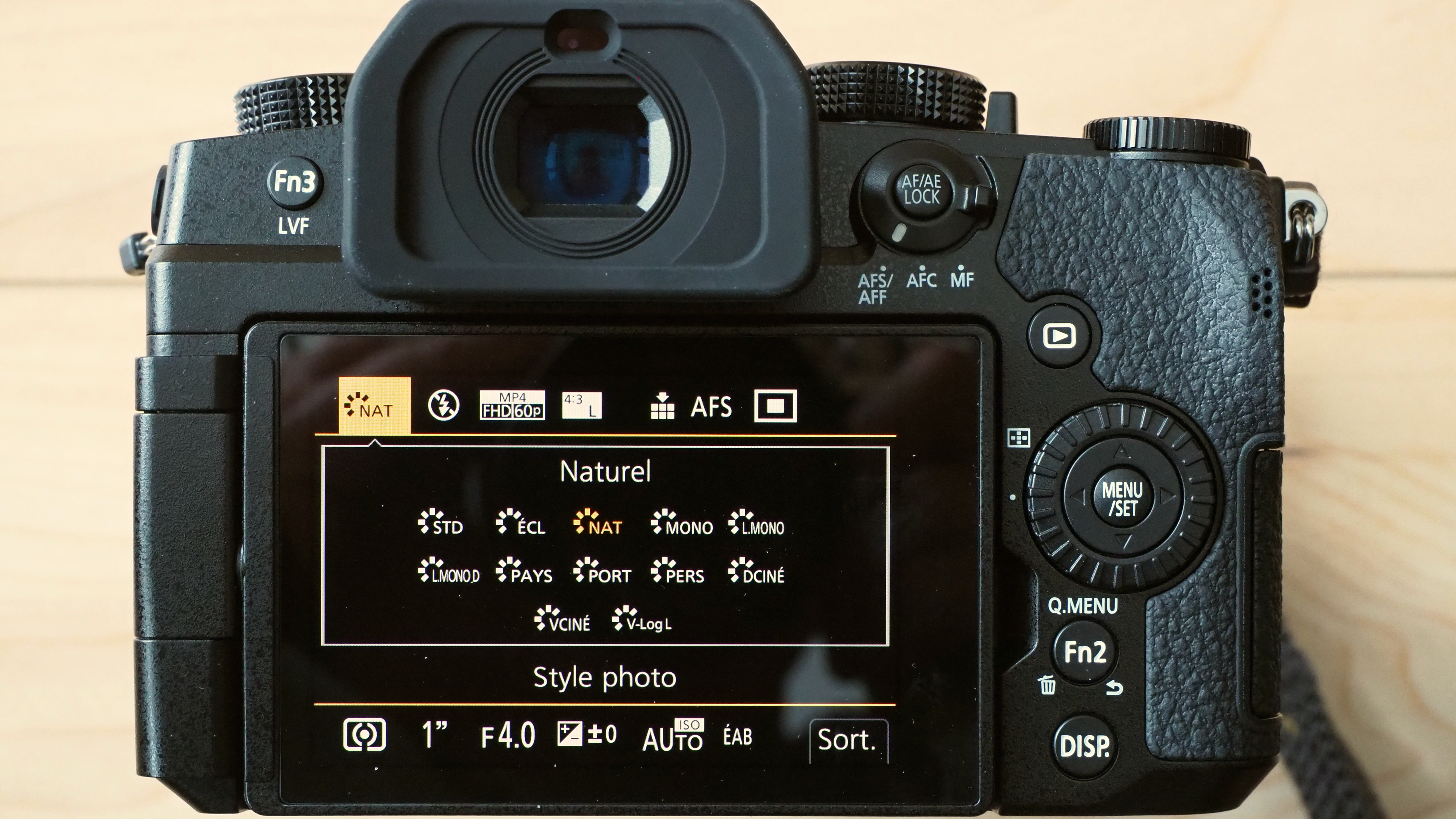
En terme d'interface, le Lumix G95(D) propose l'architecture maintenant traditionnelle introduite par les SLR est D-SLR des dernières décennies avec une sélection des modes d'exposition de type P-A-S-M bonifiée des modes iA, Style, Scène, Custom (X2) et, bien entendu, Vidéo. Trois contrôles rotatifs multi-fonctionnels sont présents tout comme des boutons-poussoirs à accès direct pouvant être reconfigurés. De même l'écran arrière orientable est entièrement tactile et le menu est facile d'accès et surtout compréhensible. Le type de mise au point peut être directement sélectionné à l'arrière du boitier. Bref, cet interface d'utilisation est un modèle du genre même si on note l'absence d'une manette multi-fonctionnelle (Joystick) cependant bien remplacé par une rondelle de contrôle arrière très versatile. La définition du viseur électronique est suffisante pour réaliser une mise au point manuelle et les informations affichées sont nombreuses et correctement positionnées. La réactivité du Lumix G95(D) est surprenante et sa discrétion au déclenchement est également exemplaire. Toutefois son autonomie (alimentation) est juste et l'achat d'une pile-accu supplémentaire est recommandable tout comme l'ajout éventuel de la poignée d'alimentation optionnelle (DMW-BGG1). À noter que le G95(D) peut aussi être alimenté par un bloc accu externe via sa connection USB. Le G95(D) n'utilise qu'une carte mémoire de format SD.

À l'usage, la vocation "tout-terrain" du Lumix G95(D) demeure un élément-clé de son succès. Certes ce n'est pas le modèle en format de capteur numérique MFT le plus compact et le moins lourd mais sa préhension exceptionnelle hiver comme été (avec ou sans gants) compense largement ce constat. Cependant la dimension plus petite de son capteur commande au photographe d'apporter un soin plus particulier dans la composition finale de son sujet pour éviter les retouches plus prononcées de cadrage en post-traitement de l'image. La présence du système interne de stabilisation d'image est aussi un facteur important pour le choix du G95(D). Dans la mesure du possible il faut privilégier la sélection d'une sensibilité moins élevée, de 200 à 800 ISO par exemple, pour optimiser les performances du capteur numérique. 

Le Lumix G95(D) est aussi un appareil photo compact très modulable avec les ajouts optionnels d'un poignée d'alimentation interactive (contrôles et déclenchement), d'un flash électronique externe avec alimentation (AA) indépendante et éclairage de soutien, des prises de connexion microphone, écouteurs, télécommande, port USB et HDMI, bref plusieurs possibilités de rehaussement technique. Si on le compare avec la gamme OM-System / Olympus, le G95(D) se situe entre leurs modèles OM-1 (OM-D E-M1 II & III) et OM-5 (OM-D E-M5 III), i.e. pas tout à fait un véritable appareil photo de niveau professionnel mais certainement de calibre pour amateur avancé et enthousiasme (ou pour un ancien professionnel à la retraite!).

*****

Que conclure de ce retour à la maison et au format de capteur d'images MFT en disant simplement que le Panasonic Lumix G95(D) facilite bien les choses. 😉

_______________________

* En toute honnêteté, les images obtenues cette année en Guadeloupe avec le Fujifilm X-T30 II étaient excellentes et ce dernier s'est avéré un outil photographique très compétent. Cependant son ergonomie et son interface moins accessible ainsi que l'absence de la caractéristique de résistance aux intempéries ont constitué des irritants déterminants pour le remplacement du X-T30 II au profit du Lumix G95(D). De plus, les optiques trans-standard compactes du système Micro Four Third offrent également une meilleure sélection d'objectifs particulièrement pour le photographe voyageur qui recherche discretion et versatilité.

Photos Daniel M: Panasonic Lumix G95(D) / Lumix G Vario 12-60mm F3.5-5.6 Power OIS / Leica DG Vario-Elmarit 12-60mm F2.8-4 ASPH Power OIS 

30 janvier 2023

The Panasonic Lumix G95(in)D(eed): additional notes


 With the "new" D version of the Panasonic Lumix G95, it appears interesting to revisit this Micro Four Third (MFT) camera model as Panasonic have decided to maintain its offer into their current line-up (as for its predecessor the Lumix G85). The "original" G95 and its "upgraded" version are in fact almost identical except for the LCD rear screen that has been substitute in reason of, we can suppose, of its specific manufacturing part availability. So, there is nothing to add from our initial review of that model in regard of its basic characteristics. To know more about these similarities and sparse differences, you can consult this Panasonic Web page.

Is the Pana Lumix G95D a perfect camera? Of course not, but for those who are more familiar with the manufacturer digital offer and in particular in the video field, they have been appreciated for years even considering certain limitations like for their (infamous) autofocus system. Over the past decade, I have the chance to work with several of them (GM 5, GX7, GX8, GX85, GX9, G85, G95) and I was really impressed not only by their interesting ergonomics and interfaces but also by their picture performances. In one word, they are better devices that many may first thing.


The Panasonic Lumix is made in China and so what? Are you seriously thinking that because it is labelled from an otherwise manufactured country, it will be a real different camera? The answer is obvious especially for those if not all who are buying computer, tablet and smartphone products. Let's forget that "Ken Rockwell" emotional like factor to move on about the design of the Lumix G95D. The ergonomic is good to very good. It would exceptional if the covering of the hand grip was not so much "grippy" (like it use to be on the previous G85). No joystick to rely but the rear D-Pad is versatile enough to compensate this absence. We must mention the excellent focus switch located at the back which is far more convenient compare to the front ones from other camera models. The menu and the interfaces of the Lumix G95D are comprehensive and are an exemplary simplicity while being very extendable if necessary. In brief, the Lumix G95D is highly configurable and customizable.

On the other hand, many aspects of the Panasonic Lumix G95D are less glamour such as its Micro Four Third (MFT) 20MP image sensor, its limited 2.39MP electronic viewfinder (EVF) from in other age it seems, the already mentioned absence of joystick, its only one memory card slot, its older generation USB port, etc. If you are easier influenced by the the last novelty siren, the Lumix G95D will not certainly appeal to your search of the latest of the latest.


The electronic viewfinder (EVF) thing.

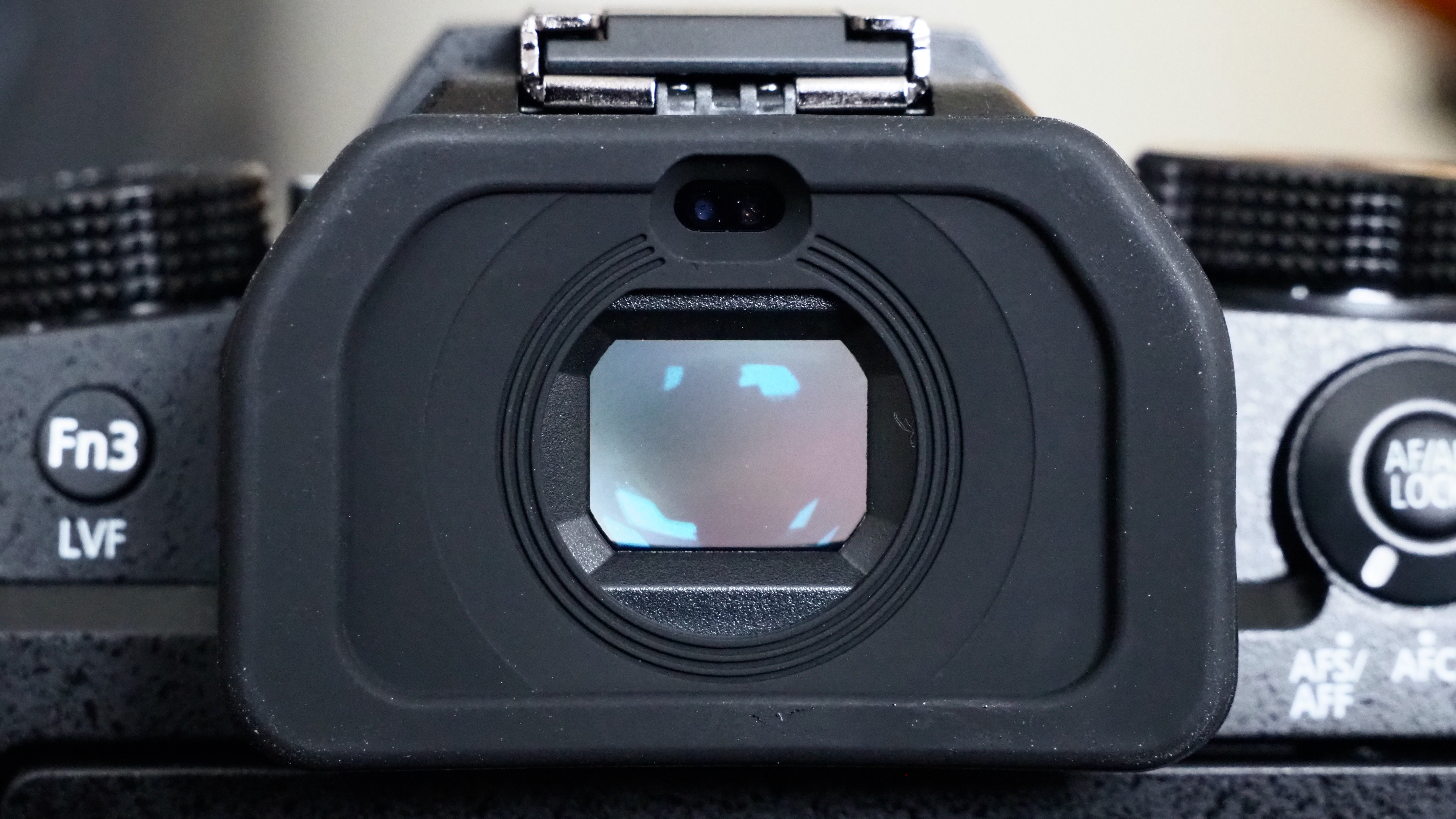
Sure we love to have on hand a very detailed electronic viewfinder (EVF) with a fast refreshing image rate and a high magnification not forgetting a long viewing eye point. You wont find these latest technical developments when you are considering the Lumix G95D. But what you will see instead is a proved competent and clean EVF sufficient to help you in manual focusing, an accurate color reproduction with no rainbow effect in the low light areas when looking at a high contrast backlight scene which phenomena you can adversely observe with some notorious "pro" models. True to say also that the Lumix G95D can generate a grainy (noisy) picture in very low light situations but even though it is manageable for the photographer (at least you see something...).


The (rear) live monitor (LVF) thing.

Unlike the original Lumix G95 (without "D") the TFT rear screen has been replaced by an OLED one which got a bit less resolution (1040 dots/G95D versus 1240 dots/G95) but have a better side view rendering. Honestly the difference should not be so noticeable in real life photography since if you need to have a better focusing view for specific works (tabletop, reproduction) you can rely on the optional image part magnification functionality. The Lumix G95D back screen is fully orientable and can be totally protected by turning it face on the camera body.


Hocus Focus?

Nobody is perfect and the Panasonic autofocus saga is raging since already a time ago in this digital world. Is it so bad as you may ask? Under specific situations with moving subjects, it is simply and entirely true. Moreover the viewfinder rendering cannot confirm or not if the focus is obtained which can be really annoying. The problem seems to be finally addressed with the introduction of the newest model (Lumix S5 II) that combine contrast and phase detection. But for the Lumix G95D contrast detection stay alone to perform the autofocus of the camera. Using the single autofocus setting (AFS) should be the best focusing option to select with the Lumix G95D although if you can cope with the limitation of the continuous autofocus setting (AFC), it can be manageable to a certain extend.


High battery consumption.

Battery consumption when you are using any mobile electronic devices has been always a strong discussion debate. The Lumix G95D battery consumption is highly demanding for the rather small Panasonic BLC-12 power pack. The solution is to have on hand sufficient replacements for the entire outing duration. Moreover you can add the optional Panasonic BGG-1 vertical power grip that will double your camera autonomy and will give you a better handling comfort when using bigger lenses or doing portrait (vertical) orientation pictures. However finding the original Panasonic manufactured BGG-1 can now be difficult and rather expensive.


Weather Resistance (WR) feature rules the game.

It is a common fact that electronic don't cope with adverse conditions such high humidity and furthermore with direct contact with water (especially with the salty ones). They need a more advanced protection that seal them from the outside elements. The Lumix G95D is qualified s dust and splash resistant (but cannot go underwater obviously) and can operate in humidity ranging from 10% to 80% as for temperature from 0 to 40 degrees Celsius (No, you cannot boil the camera!). Knowing that, the Lumix G95D should be a competent outgoing companion in most circumstances.


Versatility is on your own.

You can do a lot of things with the Panasonic Lumix G95D. It will be almost impossible to experiment truly all the possibilities of the camera configuration. In fact many of them may rest unused for the lifetime of the Lumix G95D. But the important thing here is that the Lumix G95D offers you many specialized photo taking opportunities as long you are ready to learn how to program them. So the potential is there for almost everybody. No, it is not a "pro" camera (the Lumix G9 is the one that Panasonic have designed for this intensive use) although it can easily do (within its limits) that king of work if necessary.


The quiet introduction of the new Panasonic Lumix G95D version have permitted us to revisit a versatile and competent camera model that is following a tradition inaugurated by the Lumix G series. Even its actual selling price is a strong temptation to adopt this digital camera model. Don't prevent you to try it and you may be surprised of its conviviality and performance.

© Photo-illustrations Daniel M

08 février 2022

The Panasonic Lumix G95 / G90: Back to basics!


Many of us have a special affection for the Panasonic Lumix MFT products. Their functional esthetic reminds me all these German designs of the begin of the 20th century with simplicity, durability, and efficiency as essential characteristics of their products. Nothing flashy except maybe for the connoisseurs. But I must add that the different Panasonic Lumix models have never disappointed me over time starting with my tiny Lumix LX5 in 2011.


 The Panasonic Lumix G95 (G90) is incorporating the common 20MP image sensor following the actual standard used into almost every high and mid-range Micro Four Third image sensor format (MFT) camera models. The previous Lumix G85 (G80) has been such a successful camera model (both for users and critics) that Panasonic seems to have mostly replicated the basic design of it to its newest Lumix G95 (G90) which is in a sense a indirect homage of the pertinence of the ideas implemented onto the original G85 (G80). We must underline that the Lumix G95 (G90) doesn't use the exact same camera shell compared to the previous one (G85) therefore being a little bit larger and a little bit heavier. The camera model might appear more robust although there is no way to prove this assert. 

The Lumix G95 (G90) is a weather resistant camera which is qualifying it as a real all-around photographic tool even in more adverse contextual conditions. Of course, the camera body must be couple with a lens which is accordingly weather resistant (WR) to be able to get a total profit of this feature. Panasonic is offering already in many worlds marketplaces the Lumix G95 (G90) with the Lumix G Vario 12-60mm Power OIS zoom kit (WR) lens. So, you just must be aware to select an additional optic that is WR.


The ergonomic of the Lumix G 95 (G90) might be conquer you when you will handhold the Lumix G95 (G90) for the first time. The G95 sense of proportion seems to be ideal (at least, for some of us!). The front and back control dials and the different function push- buttons are well positioned. The back thumb rest give a good prehension that complete the one (prominent) of the front face. The On- Off switch isn't perfectly located but, at least, it is positioned on the Lumix G95 (G90) right side. No joystick is available, but the touch screen optionality may be considered as a useful substitute.

The shutter release button has a two-stage (focus lock/shutter release) feather touch, and its action sound is discrete, a good characteristic for photographer who must operate in quiet surrounding. The two major control dials are rightly located in the right upper front and back of the G95.


The electronic viewfinder (EVF) eyepiece is noticeably recessed from the camera body living a breathing space for your eye and ... for your nose! The EVF image is clear and sufficiently detailed to be able to focus manually with accuracy. The Live Viewfinder (LVF) panel is fully articulated and can be appreciated by both photographer and videographer. All information data can be reviewed on the EVF or the LVF although they don't rotate to accommodate a vertical (portrait) composition.

Except for the lens release button, the Lumix G95 (G90) body front is exempt of any others function lever or button. The camera body top deck remains a model of simplicity. The ISO, the White Balance (WB) and the exposure correction bias have a direct access through dedicated push buttons. The exposure mode dial (P/A/S/M) is complete with two custom modes (C1, C2), creative and scene modes and a fully automatic mode (iA) is available on the spot if necessary. The B setting is available through the manual mode (M). On left side, the shutter mode dial give access to single and continuous shooting sequences, 4K and back focus modes, and finally interval and self-timer modes. Each camera body sides have specific accesses for the memory card and for the wired different connectivity options. The in-board tiny flash is practical for emergency short distance flash fill-in and is rightly positioned into the false pentaprism.


Other functionalities are positioned on the back side of the Lumix G95 (G90) and can be also reconfigured at will for some of them. Therefore, at some point, it can be difficult to remember all the functionalities selected for the multiple functions press buttons or for D-pad. It is up to you to stay familiarized with the G95 by reviewing the functionalities regularly.

The Panasonic Lumix G95 (G90) despite its basic presentation give you access to a very large spectrum of different ways of experimenting your creativity. You can set the camera the way you want, and it will behave to your own satisfactory. The menu is extended but comprehensible. Wireless connectivity is practical with both Bluetooth and Wi-Fi availabilities. The Lumix G95 (G90) is a very easy-going camera to work with since its interface is vastly intuitive. Playing with its different functionalities (even using the menu guide) will allow you to better understand and set the Lumix G95 (G90) your personal way.

The camera is quick to wake up and to be available to photograph. Therefore, the battery consumption is high compared to others competitor products. It is prudent to have on hand an additional battery pack and the use of the optional DMW-BGG1 power (vertical) grip can give you an extended power autonomy, but it stays an expensive accessory although it offers an excellent vertical grip for portrait or action shooting.** 


The autofocus system is efficient for still photography although the tracking option doesn't have the accuracy and reactivity compared to more recent competitor models that have both contrast and phase detection focus operation abilities. The continuous follow focus is manageable with a good success picture taking rate as long the subject movement is not too much erratic. Manual focus can be done through the EVF that have good definition to do so.

The Lumix G95 (G90) stabilization system is a big part of its successful photographic ability. It prevents efficiently to blur generated by the operator unintended movement especially in handheld picture taking situations. It is almost inconceivable today that the modern digital camera models didn't have that specific functionality. Moreover, Panasonic is offering a selection of different optics that carry their own optical stabilisation system (OIS) that can be rightly paired (Dual IS) with the sensor stabilization of the Lumix G95 (G90). It is a win-win situation when you are coupling the camera with a telephoto lens.

The picture review button is located just beside your right thumb and looking to your last recorded image is fast and logically easy compared to some other manufacturer camera models.


The image output.

When it comes to appreciate the Panasonic Lumix imagery output, my first very favorable impression (if not my everlasting) is about their black and white (B&W) special rendering. Coming for that (dark!) age of B&W analog-film, you cannot avoid the pleasure to set the Panasonic Lumix G95 (G90) at its monochrome mode (there are three actually) and enjoy it extendedly. I must add that the color rendering is good equally. The pictures are nice and well detailed especially into the lower ISO sensitivity scale but even in the higher setting (more than ISO 1000), the results are noticeably pleasing.

The creative filters are useful. I love creative filters because they often open our mind to other pictures interpretation bias. Some of them are more anecdotic but some are clearly less intrusive to the picture rendering and can be assimilated as a basic image canvas to explore and exploit. And many of these creative filters (as for the monochrome modes) have a nice setting range in regard of their final effect. 


The future of Micro Four Third image sensor format.
 

Again, we must answer this inevitable questioning about the MFT long term perspective as a system. First, we may notice that the MFT system is already a very mature one in terms of offer and variety of products such as camera models, lenses, accessories. Second to consider, compare to the larger sensor size format other systems, MFT is still more compact and will stay considering its smaller sensor advantage. Third, although the dead of MFT has been anticipated several times, the two major manufacturers, Panasonic, and OM System, are maintaining the availability of the complete line of products. Nobody can clearly predict what will happen in the next 3 or 5 years because it is the way things are working now but don't prevent you to adopt and stay faithful to MFT even if some reviewers or other format fanatics were implying that you must do.

In Brief.
The Panasonic Lumix G95 (G95) is a good camera model that reunite all the characteristics of a competent, durable, and enjoying photo device. For a photo enthusiasm like me, the G95 (G90) answers my search for a compact camera (and lenses) that replicate many "pro" advantages without breaking my small budget. The G95 (G90) can be conveniently coupled with the BGG1 power (Vertical) grip for more battery autonomy, with an external electronic flash for more additional light output and with other specific accessories that are meeting your own choices and needs. The G95 (G90) ergonomic is excellent and its interface complete and easy to interact with. Finally, its image output is very satisfying even for the more asking ones if you stay out of the eternal image sensor format web war. Yes, the Panasonic Lumix G95 (G90) is a fine evolute successor of its beloved predecessor, the G85 (G80).


** If you can afford the purchase of the additional BGG1 power (vertical) grip and the size increase of the camera body, it could be an excellent recommendation for getting a noticeable better handholding of the Lumix G95 (G90). In some country markets, the BGG1 comes already with an additional BLC-12PP battery pack to be use with this accessory.

© Photos Daniel M: Lumix GX8 / G Vario 12-60mm Power OIS; Lumix G95 / G Vario 12-60mm Power OIS / G Vario 45-200mm Power OIS; G Vario 100-300mm Power OIS

21 novembre 2019

The Panasonic Lumix G Vario 100-300mm F4-5.6 II Power OIS: the affordable bird-watcher super zoom lens!

Is the Panasonic Lumix G Vario 100-300mm F4-5.6 II Power OIS zoom lens the ultimate super telephoto for less than $900CAN? A look into the latest Panasonic MFT lens line-up seems to confirm this assertion. But what about the qualities of this specialized telephoto zoom lens? Its very modest aperture (considering the MFT format), the absence of any tripod lens collar mount accessory, its lightweight construction are all parts of the criticisms that can be addressed for its design and its manufacturing. But despite those objections, the Panasonic Lumix G Vario 100-300mm F4-5.6 II Power OIS should be seen as an accessible opportunity to reach these higher magnifications.

Because the Lumix G Vario 100-300mm F4-5.6 II Power OIS zoom lens will give strong magnifications (4 to 12X compare to your own vision), we can really classify it as a true long-range telephoto. But you may ask you if the image quality results will be or not sustain these big numbers. That is the essential question.

Ergonomics
At my first encounter with the Lumix G Vario 100-300mm F4-5.6 II, I was surprised by its compact size considering its long telephoto focal length range. Combined with a mid-sized MFT ILC camera body such as the G9 or G95, the zoom lens is perfectly handholding usable. Adding the furnished bayonet-mount dedicated lens hood will increase the total lens physical length and when selecting its longest focal setting (300mm), the lens will extend almost twice its original physical length. The two focus and zoom rings are smooth to operate and are easy to identify. The Stabilizer On/Off switch is clearly located on the left side. The 67mm accessory filter ring diameter is a bit large but it reflects the focal length magnitude of the zoom lens. No provision has been designed for an additional tripod ring collar which it can be annoying for long use at the same position during picture taking like for animal or action photography***.

By no means the Lumix G Vario 100-300mm F4-5.6 II Power OIS zoom lens can be qualified as a close focusing optic. The minimum focusing distance is limited to 1,5 meters so, you certainly won’t disturb your subject by your own proximity! On the sunny side the high magnification of the zoom lens will allow you to isolate the subject in a very effective way. Speaking of those magnifications, the necessity of the internal optical stabilization functionality became obvious for the photographer as for selecting a higher shutter speed if the light level allows it. The apparent lack of definition from pictures taken by many long telephotos is often the result of a blurry effect induced by the photographer movement (shake). Special care should be taken in consideration by the photographer all the times when handling lens model that more than 2X magnification

Picture quality output
That is the second pleasant surprise that I have encounter in using the Lumix G Vario 100-300mm F4-5.6 II Power OIS zoom lens. The image result output was clearly comparable with its sibling trans-standard zoom partner (Lumix G Vario 12-60mm F3.5-5.6 Power OIS) perhaps with a bit of being more contrast but it offers the same consistency along its different focal lengths. The color and monochrome renditions were similar too. I was a little concern about that since the Lumix G Vario 100-300mm F4-5.6 II Power OIS zoom lens is manufactured at a different place (in fact "Made in Japan»!) but the manufacturer lens standards seem to have been respected.

Big telephoto (zoom) lenses imply narrowed deep of field, a phenomenon that many photographers are please to profit. But because the Lumix 100-300mm maximum aperture is quite small (F4-5.6), that characteristic is less present for the farthest distance subjects. The Lumix G Vario 100-300mm F4-5.6 II Power OIS zoom lens is not really a "portrait" optic but it can be used that way providing that your main subject will not be located too close to you.

Some reviewers will limit the good use of the Lumix G Vario 100-300mm F4-5.6 II Power OIS zoom lens to specific and sunny light conditions because of their higher requirements for the shutter speed and a low ISO and I won’t dispute the necessity of applying these criteria to many various situations. But it can be counteracted by using other picture taking techniques such as pan-follow-up your subject in action situations. It appears today that some photographers have forgotten to adapt themselves to more critical light conditions and were asking for a photo equipment that is answering theirs needs in a static point of view. That is generating more "standardized" results with less creativity (that is often incidental of a specific situation).


Is the Lumix G Vario 100-300mm F4-5.6 II Power OIS zoom lens the ultimate bird (on-hand) optic? If not, it is may be not far from it considering its relatively low buying price. Right from the start I have pleasure to use it on the spot and the first result were very encouraging. For action applications, its smaller maximum aperture can be in fact an advantage by getting a little more critical deep-of-field. Setting your camera different parameters like shutter speed and ISO sensibility should be paramount to get a certain picture result consistency (yes, that could be applied to many other photographic subjects 😉).

*** If you intend to use extendedly a long telephoto (zoom) lens with a tripod or a monopod, it may be better to get an optic that have already a tripod lens collar optionality that will allow you a better weight distribution (without stressing the camera lens mount), and will give you a more usable panning pivot and an easy switching between the horizontal view (panoramic) to the vertical one (portrait).