Aucun message portant le libellé Cuba. Afficher tous les messages

21 décembre 2023

À l’ouest de Cuba, rien de nouveau! (Cayo Largo 2023)


 Évoquer Cuba, c’est relater une lutte historique et contemporaine pour sa survie et son indépendance. Car Cuba est une île et un continent selon votre point de vue, qui a fait face à l’envahisseur tout au long de son évolution tumultueuse. Aujourd’hui plus que jamais le défi pour sa persistance et son éventuel progrès se pose alors que son riche pays voisin au nord n’en finit plus de vouloir se venger d’un regime qui a terminé sa domination économique au vingtième siècle. 

Chaque année une partie de la population cubaine fuit les conduites indigentes de sa patrie natale qui peine à se relancer et à moderniser sa gouvernance. L’industrie touristique naguère assez florissante est devenue un autre exemple de la déconfiture graduelle de cette économie aux abois. Après plus de trente ans de multiples séjours dans ce paradis du touriste moins fortuné et canadien de surcroît, plusieurs d'entre-nous peuvent témoigner que les beaux jours de l'insouciance sont bel et bien terminés.

Bien sûr, il faut souligner la résilience des cubains toujours résidents alors d'autres abandonnent le navire vacillant pour la recherche d'un eldorado économique et social et ceux-là ne reviendront pas sur ce divorce national devenant parfois des apatrides aigris par le mal du pays sans doute.  Mais pour celles et ceux qui restent, l'avenir est parsemé d'incertitudes et seule leur foi profonde en leur patrie cubaine et sa culture originale semble les soutenir momentanément.


Cuba est en crise mais n'est-ce pas aussi le cas pour une grande partie de l'Amérique centrale et du Sud et des Antilles avec une multitude migratoire vers un Nord qui se referme et s'emmure dans son individualisme strictement matériel. Car Cuba nous interpelle aussi comme citoyens du monde qui se refuse à toute responsabilité collective. Pour beaucoup de touristes venant à Cuba, la réalité de ce petit et grand pays combatif se voit à travers une vitrine rassurante et hermétique avec ça et là de petits gestes de "charity" dont on peut parfois déceler le mépris inconscient des nantis.


Je m'en voudrais de ne pas conclure ce court témoignage sur mes amis cubains sans une note d'espoir, de joie, de plaisir et de fête qui nous habite tout de même et qui ensoleille nos coeurs et ceux de nos lointains cousins latins qui continuent d'apprécier la visite de leurs clients-touristes canadiens années après années,  tempêtes de toutes sortes après tempêtes, pour leur plaisir de prendre des nouvelles de ces voyageurs du nord si déconcertants.

Merci à vous amis cubains de nous accueillir fidèlement depuis si longtemps.

Photos Daniel M

31 mars 2019

Cubanitas with the Fujifilm X-T20


The Cayo Largo Island has been (and still is) a frequent destination for recharging your frozen batteries affected by our long Canadian winter season.

Located south of the main island of Cuba into the Gulf of Mexico, this idealistic place is share by people in search of calm, of nice long white sandy beaches and of friendly Cuban people.

Although many hotels installations are now more on the rustic side because the buildings are suffering a lot into the southern weather since the island seems not to have a lot of material resources to refresh them properly, vacationers from Canada and other countries are coming back year after year and some are paying visits for even a more frequent pace over the year!

We know now that there is very few probabilities that the island of Cayo Largo will be ever "americanized" in any ways in the near future. The Italian travel agencies seem to be the only ones really interested to invest on the island and have created a group of specific resorts strictly controlled and only available for their clientele.

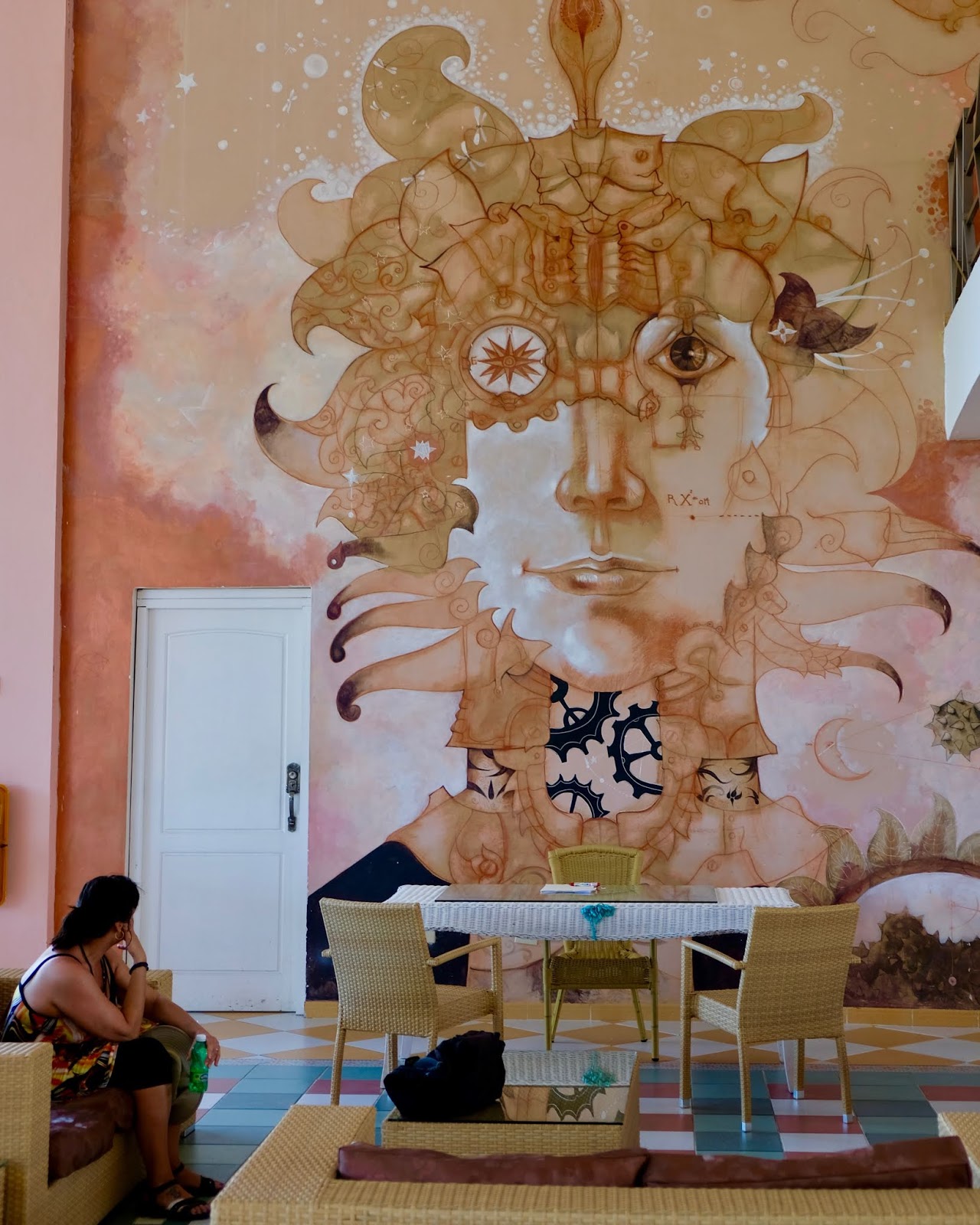
I am particularly fascinated by the architectural point of view of many earlier buildings since they represent a kind of merging of the hispanic heritage blended into the Cuban modern way of building back in the 1980s and 1990s. And because it has not been reproduced in the last twenty years, it may be important to preserve some image temoignages of what may disappear in mid-term.

All the pictures of this article have been taken with the Fujifilm X-T20 camera and the Fujinon XF 18-55mm F2.8-4 R LM OIS lens.


14 septembre 2013

The perfect wide angle of view: Olympus M.Zuiko ED 12mm F2 & ED 12-50mm F3.5-6.3 lenses

We ca argue again and again on what is the perfect "wide" angle of view but many of us will agree that 12mm (24mm equivalent in 35mm film format) is one of the most appealing focal length to work with.

Olympus M.Zuiko ED 12mm F2.0
Olympus M.Zuiko ED 12-50mm F3.5-6.3


These two fine Olympus Zuiko Lenses are very good choice to start experimenting the 12mm focal length .


The12mm is certainly an true urban lens that allows photograph to be close from his subject. It is also a real contextual lens in term of the extra angle of view available. It may be the widest lens that you can easily apprehend the final result without doing testing during your photo shot.


With such a wide angle we are able to control the impact of your foreground and background subjects by creating a more dynamic composition. The notion of space arrangement is giving a true 3D perspective to the observer.


Because wide angle lenses are "decompressing" the final image using them is demanding a more careful attention to its composition. It also add some kind of disproportion of near subject opposed to far context. That could be use as a creative tool.


Wide angle lens are by essence very close action lenses compared to their telephoto brothers. But it doesn't prevent to do action imagery if you are able to position yourself to do so.

Although many people are recommending wide  angle lenses for architectural work the use of the M.12mm may be tricky considering the fact that this model of lens doesn't have any provision for tilt and shift correction. Yes it can be use successfully to exaggerate perspective for instance but it cannot pretend to present objectively to work of the designer.


Playing (i.e. working) with the M.12mm is very interesting because it will ask the photograph to learn to anticipate a different perspective and the results will represent a different view of our surrounding world.


16 février 2013

Olympus OM-D EM5 personal experimentation 1

Since last December 2012, I have the chance to bought a new Olympus OM-D E-M5 along with some interesting lenses such as the Oly 75mmF1.8. I have already experimented the Olympus system with the Pen model EP-3 and beautiful optics like the 12F2.0 and 45F1.8 that are still part of my camera case. Many friends who know me for several years are aware of my love for beautiful 35mm film cameras which I have worked personally and professionally many years ago just to mention some like Nikon F, F2, F3Hp, F4 series and Leica M4P/6 and R4.

Photo industry have taken a different direction privileging post-creativitiy through graphic hardware and software equipment instead of the reality interpretation approach of the last century. You can call it a kind of photo painting expressionist with its own esthetic rules.

But as a more classical photo enthusiasm I am not really found of this figurative trend. I think photographs in a large view have a duty of reporting direct reality even considering that it always represent in fact our own aspect of it.

But enough philosophy for today and let speaking "camera" (and lenses) as beautiful artistic tool. What really hook me with the Olympus M4/3 system are their selection of prime lenses which are in essence the eyes of the photograph. Even some of their zoom lenses are interesting.

The Olympus 45mm F1.8 is the first prime lens that have caught my attention because of the combination of the maximum aperture and the very small size and... selling price. Picture like this one taken with the Pen EP-3convince me to invest more in the M4/3 system. 
The Olympus color rendering was another strong factor to invest more in the system. This "River Scape" was capture with the Olympus 14-150mm zoom lens at 14mm.

At first I was really seduced by the charm of the Olympus Pen series and I have selected their EP-3 model with the EVF 2. I do like working with the camera but the external viewfinder (technically excellent) was too much protuberant from the camera itself.

Eventually the Pen option was not the final answer and with the coming of the new OM-D E-M5 my though have taken a new direction. 

What I am really appreciate regarding the E-M5 is the size of the camera by itself which remind me the original 35mm OM series. And also the fact that it is a real system camera with a lot of funny combination as for example with the grip. As a direct consequence, the camera can follow me everyday, everywhere for every purpose. I can use it (as intended) or... forget it if I am not in a photographic mood. It does not  bother me to bring the little package.

During my last Cuban trip I have appreciated to bring the kit combination E-M5 / 12-50mm without asking myself if the camera/lens will sustain the possible adverse condition (water, sand, etc) and picture results for a zoom lens were up to the level.

Modern Cuban architecture (around 1980) with the M.12-50mm lens.

Cuban Interior Court, Cayo Largo Pelicano

Casual Abstraction. E-M5 / 12-50mm at 50mm

Winter rainy day at the bus window. E-M5 / 12-50mm

Ice over the river. E-M5 / Zuiko OM 200mm F4 MC