Aucun message portant le libellé Fujifilm X-E3. Afficher tous les messages

30 mars 2020

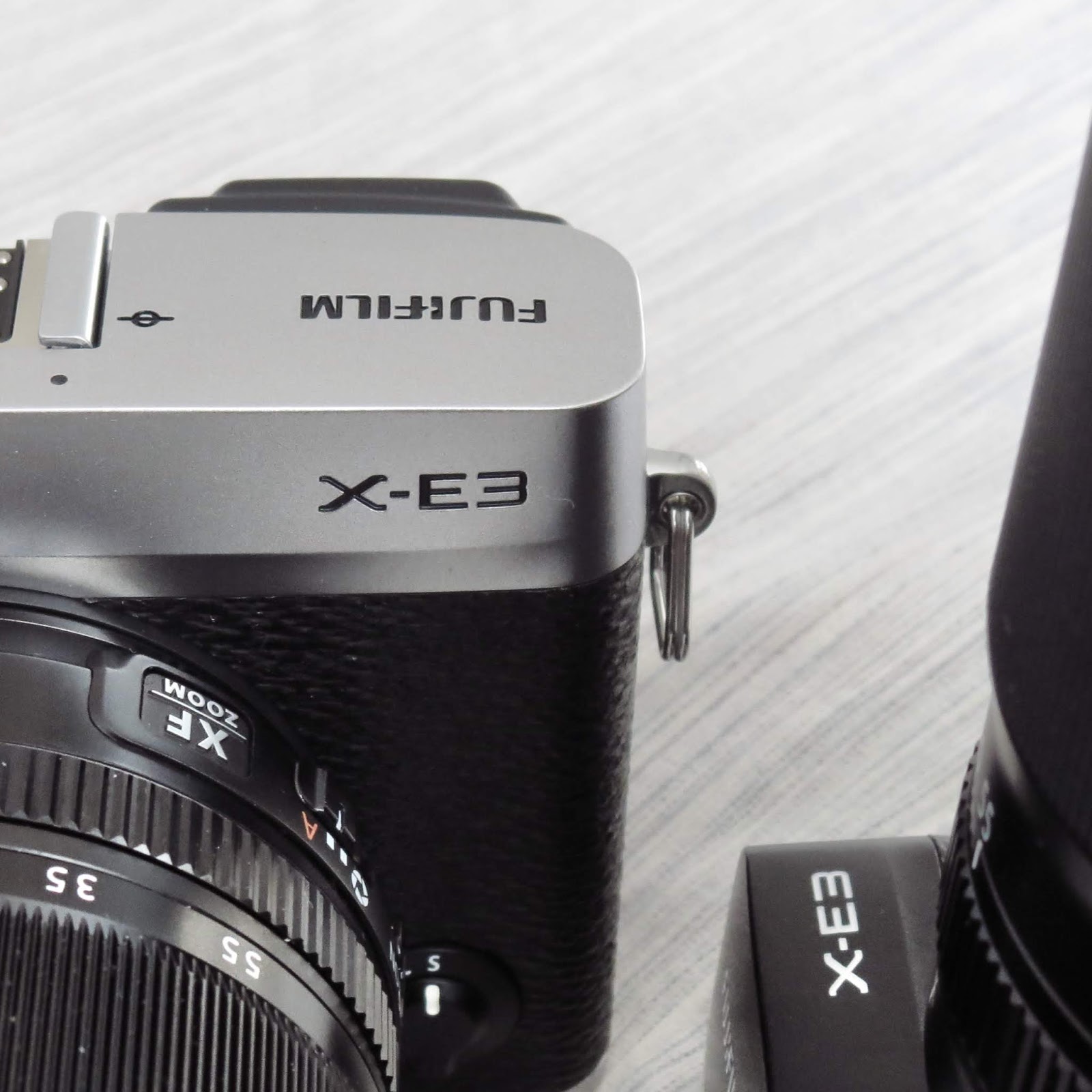
The Fujifilm X-E3: The last (and beloved) compact photographic Swiss knife of the Fuji X-E family !

Not long time ago, Fujifilm have seemed to confirm the cessation of the X-E series (X-E1; X-E2; X-E2S and X-E3 models) and many X-E photographers were very disappointed by this decision. The Fujifilm X-E series, although that some reviewers were never able to appreciate it, was a kind of cult among its faithful users over the years. With the latest X-E3 model, the series has reached a certain maturity mainly because it reunites the compactness exigence with the technical performance requirements.

For sure, the X-Pro series has been and still is the pro reference for the rangefinder style digital camera models from Fujifilm, but the X-E ones were and still are appreciated for their lighter camera body and their more discrete presence. If you are a travel, street or casual photographer, you can attest of their versatility and their very capable functionalities.


This is the second X-mount model series that Fujifilm will phase down, this first one has been the X-M one. The SLR fashion camera models like X-T3digits and X-T2digits series have now take the lead for the compact Fujifilm representation alongside with the sans-viewfinder X-A models.

Only future will tell us if it was a wise (commercial) decision from them or, more optimistically, if Fujifilm will change its mind and will resurrect the X-E series. Let's hope for some light in that direction!

20 février 2020

Why life must be complicated? My love affair with the Fujifilm X-E3 facing the numerous recent novelties.

We love to do photography and we love to do it with beautiful cameras that we cherish but like many lovers, we are not always fully loyal, and we often look on the other side of the fence for a new loving novelty. That's human and ... that is also logical to improve our material situation. After all, why not be more efficient, more comfortable and get a jazzier product. It is not a real syndrome; it is simply the way human behave for millenniums.

True that I have been excited for all the Fujifilm cameras that I have the chance to own and to work with. The X-E2, X-E2S, X-T10, X-T20, X-T30 and X-H1 were wonderful products and each generation have solved many newborn flaws seen in the mirrorless planet. At this moment of time, two Fujifilm X-E3 cameras (silver, black, so no discussion here!) are following me into the different photo projects that I am intended to do. Yes, I love the Fujifilm X-E3 with his off-center viewfinder that replicate the old rangefinder camera way of working. The X-E3 are simple cameras with less optionality (such as a moving rear LCD screen or multiple dials and function pushbuttons). You can set the very basic technical data such as ISO, aperture, shutter speed and concentrate yourself about your picture composition and the critical picture taking moment. You can also configure the camera regarding some more specialized photographic aspect of your own.

The Fujifilm can be a fantastic "monochrome" camera without fussing about its total versatility to also do color pictures. Black and white photography represent at least half of my total but modest production. It is a format (B&W) that I am highly comfortable to anticipate and to select. The X-E3 electronic viewfinder (although it seems small in comparison of its other X-T series cousins) will give you an accurate preview of your final picture like for the very precise rear back viewing screen. My film simulation preference in monochrome goes, not surprised, to the Acros version implanted into the X-E3. The possibility to simulate B&W color filters is another fine option.

As many have already concluded, I am not very fond to add and use accessories on any camera. With the Fujifilm X-E3, you need to fit the optional and small Fujifilm EF-X8 flash unit (furnished with the camera) and set it at its upper position (which is an advantage to prevent the lens proximity). This light helper can be good as an emergency or a tiny fill-in flash. Be sure you have an extra battery pack to sustain its extensive use. The optional grip from Fujifilm (or from a third-party) is interesting not only for the additional one-hand prehension capacity but to serve as a more secure (Arca-Swiss type) tripod mount base. It is easier to center the lens with the tripod head when the optional grip is attached to the X-E3.

I am not a videographer but I can understand that the Fujifilm X-E3 is not really a photographic product meanly designed for animated picture project although it can be use that way providing certain adaptations such as may be the use of the control remote optionality operated from a phone or a tablet.

Now we can start the always present debate concerning the urgency to "upgrade" yourself with the newest camera models which is meaning the X-T200, the X-Pro3 or the X-T4 (if not the X-T3 or X-T30) that are using the latest technical advancement such as, for some of these already mentioned, a new image sensor, a faster and more accurate autofocus system, new film simulations, etc. Is the Fujifilm X-E3 becoming a complete outdated camera by today's standards? The same question has been asked in the past for the previous Fujifilm X-E1, X-E2 and X-E2S models. The answer is never a universally accepted one. But all these X-E series different versions are still producing fine and, time to time, outstanding results simply because of the involvement of the photographers that are using them.

What to conclude of all these so profound "photographix" reflections? For one, there is always place for further technical development and we are encouraging them by buying new photo equipment at our own desire and our budget availability. For two, we have a renowned tendency to fall in love with our camera choices and this why we defend them so fiercely. For three, all digital camera models (in particular the interchangeable lens cameras - ILC) can perform decently and produce interesting photographs. At the end, there is no bad or improper photo equipment choices as long you intend to use them!

09 février 2020

Fujifilm X-E3 + Fujinon XF 55-200mm F3.5-4,8 R LM OIS: An improbable pair!

It is a strange phenomenon that I have experimented right from the beginning of my ownership of the Fujifilm X-E3 model. For an unknown (odd) reason, I love to work with the improbable body/lens combination of the Fujifilm X-E3 camera model and the Fujinon XF 55-200mm F3.5-4.8 R LM OIS zoom lens. And the major think about it is the (surprise!) good handling of the kit.

No doubt that the Fujifilm X-E3 can give equally good picture results as equal as the ones from the X-T2, X-T20, X-Pro 2 or the X-H1 models that, in fact, are using the same image sensor. Even considering the autofocus performance disappearances between all these models, I didn't find significative differences in my everyday photography, except maybe for bird picturing (rate of success is significant lower even if the X-E3 is set the same way as the X-T20 for example). With the newest X-T30 model (that have replaced the previous X-T20), the story is also a bit different (marginally) because of the evolution of the autofocus system implanted by Fujifilm.

I always regarded the Fujinon XF 55-200mm zoom lens as a very creative optic, more than a "sporty" lens type. Examples around the world have proven this assertion in many ways for landscape, portrait, architectural, close, graphic, etc. And if you aren't mounting the intimidating lens hood the Fujinon XF 55-200mm can be more discrete than we may first think of. Pair with the Fujifilm X-E3, the Fujinon XF 55-200mm F3.5-4.8 R LM OIS is really a "reach" zoom lens that can discriminate an annoying surrounding from your main subject. It can be done by reframing or by selecting a shallower deep of field (larger aperture setting).

Using the "off-center" electronic viewfinder (EVF) of the Fujifilm X-E3 is a real pleasure that allow you to keep most of your face free of the camera body. Your left hand will naturally serve as a support for the zoom lens helping that way to get a better stabilization of your picture taking combination device. The optical image stabilization (OIS) of the zoom lens is another very practical tool to prevent blurry effect induced by the photographer shakes.

If you are already using the Fujifilm X-E3/XF 18-55mm F2.8-4 R LM OIS combination, it will be natural to extend your photo kit by adding the Fujinon XF 55-200mm F3.5-4.8 R LM OIS zoom lens. Controls are similar and adaptation will be fast and efficient. But yes, it will add weight (+ 270g) and the overall combo will be sensibly bulkier (+ 20mm of length in comparison when both lenses are retracted).

The Fujifilm X-E3 is a very nice, practical and efficient interchangeable lens camera (ILC) and by adding the Fujinon XF 55-200mm F3.5-4.8 R LM OIS zoom lens, you simply take advantage of its full potential of versatility and creativity, but, yes I admit, this is not in anyways, a "pancake" lens!

18 janvier 2020

The Fujifilm X-E3: the "off-center" mind

I've got a long love affair with the original rangefinder cameras (Leica M4-P & M6) and the now digital rangefinder style cameras (Fujifilm X-E2, X-E2S & X-E3). I don't know if it is due to the fact that their viewfinder is located off center (meaning not in the same optical axe of the picture taking lens) but that peculiar camera body design seems to stimulate my creativity and my motivation to brought the camera in places and at moments that I will have a tendency to ignore.

The Fujifilm X-E3 is the fourth version of a popular model design (X-E1, X-E2, X-E2S, X-E3) that many photographers like to bring with them as their main camera or at least as their back up camera body that often happens to become eventually their most used. The same 24MP image sensor of the X-T2 and the X-T20 previous models is incorporated to the Fuji X-E3 and the picture quality is at par of the two first mentioned cameras. Some people may call the Fujifilm X-E3 as a compact version of the Fujifilm X-Pro 2 although there are many differences between these two models especially in regard to the viewfinder system which has been simplified to its only electronic option with the X-E3. Moreover the X-Pro 2 is a more rugged camera with a proclaimed weather resistant status.

One of the thing which most interesting when you are using a rangefinder style digital camera is the fact that they are less noticeable, less protuberant, less intrusive in front of the subject. This characteristic to be more discrete is always appreciated by the spontaneous photographer on the street, during a travel and even when you taking a candid portrait of a person (The camera seems to be less "serious").

Many people were tempted to make the comparaison with the Fujifilm X100F which is a compact APS-C digital camera doted with a focal fixed lens of 23mm. If you combine the XF23mm F2.0 lens with the Fujifilm X-E3, the two camera-lens combinations will give you the same angle of view but the Fujifilm X100F is more a kind of a (large) pocket camera while the Fujifilm X-E3 is an interchangeable lens camera (ILC) that have a more standard dimension (with the XF23mm F2 lens).

Fujifilm X-E3 w/ Fujinon XF55-200mm F3.5-4.8 R LM OIS


Reviewers will talk in length about the good or the bad regarding the handling of a camera model. It is always a very personal and intuitive impression at the end. Ergonomics are designed by technicians that are biased by their own physical and cultural differences. All this has been said, one thing that I have experimented with the Fujifilm X-E3 is its fine ergonomic in terms of the camera body and lens combination and I am surprise how good and easy it is still true even when you are using a larger zoom lens such as the Fujinon XF55-200 F3.5-4.8 R LM OIS. As a travel or street photographer I fully appreciate this ability. If you combine with the Fujifilm X-E3 a "pancake" style lens such as the Fujinon XF 27mm F2.8, you will find that it is resulting in a very small photo devise package.

About the tiny Fujifilm EF-X8 electronic flash which is included with the furnished camera accessories, I was at first skeptical of its practical use but I have found later that it very easy to bring with me and to position it on the X-E3 (You can leave the unit at rest on the Fujifilm X-E3 camera at its down off-position). Dont forget that the EF-X8 is using the battery pack power of your camera. As a fill-flash and as an emergency flash unit are, may be, the two best tasks for this EF-X8 unit. For a more extended use of an electronic flash, it would be better to select an external flash unit doted of its own power management.


Window back lightning interior ambiant light exposed


Using a fill-in flash can be one of the most rewarding thing to do with interior photography with subject that are backlighted during the daylight period. The color temperature is similar between the ambiant natural light and the electronic flash output and the only big task is to choose an interesting exposure balance between the two in preserving or not the shadows or even simply voluntarily underexposure the ambiant (effect often use in fashion photography).
Using the Fujifilm F-X8 as a fill-in flash

Small in-board camera flashes are a very handy solution but they are located usually too near the taking lens  and they  are often interfering with the lens hood (you have to remove it to prevent incomplete flash bottom coverage). The Fujifilm EF-X8 give a more elevated flash reflector position. You just have to push it in its down position if you want to power it off.


Officially the Fujifilm X-E3 is a less "sporty" camera model than, let's say, the X-T series models such as the X-T20, X-T30 or the X-T2, X-T3, X-T4 or even the X-H1. The off-center viewfinder may create a small different perspective between you naked eye and the image recorded by the taking lens but if your concentrate your attention at your viewfinder, it wont be noticeable. So spontaneous photography stay a strong opportunity.

As for most of the Fujifilm X-series camera models, the controls of the photo basic parameters are designed in a similar fashion way that it is used to be for the traditional analog (film) cameras. Shutter speed, lens aperture, exposure correction and focusing options including manual adjustment can be selected with direct dials or control rings. The others parameters have to be adjusted through push buttons, touch screen options or using the versatile joystick located beside the rear screen. All these functionality controls need to be learn before really be able to master them without hesitation.

Using the Quick menu (Q) and reprogramming certains function controls can facilitate the handling of the Fujifilm X-E3. Most of the menu option presentations are easy to understand and interact but some functionalities may need more time and essaies to get the habit. There is a lot of autofocusing modes at your disposal that can tailored your shooting workflow. The all-"AUTO" option (lever next to the shutter speed dial) is a good idea for emergency snapshots without disturbing your already programmed setting.

The electronic viewfinder (EVF) is fine and detailed with all the (configurable) information you may need and got an auto-rotation presentation very useful for vertical framing. In some specific situations, the image on the EVF will be more contrasting making more difficult to evaluate the lowlights and the highlights. For people who are wearing glasses like me, the eye relief is more limit and will ask you to pay more attention to the corner of your framing composition of the subject. The back and none-orientable live screen (LVF) give you a better reviewing reddition of your picture facilitating a deeper image analysis.

The side location of the Fujifilm X-E3 electronic viewfinder may give you a better viewing confort compare to the centered viewfinders of the X-T series models. The  instant picture review is easier and the reviewing (Play) push button is  located on the bottom right side of the LVF.

In all, the Fujifilm X-E3 is a very convenient camera model, a compact size device but without sacrificing too much good handling compare to the "center viewfinder" model type.

If you are already an owner of other Fujifilm X-series models, you will fully enjoy that the X-E3 is using the same battery packs (X-T4 except) and the same external electronic flash units and is part of the same optical lens X-mount system.


The Fujifilm X-E3 doesn't have an in-(camera)body-image-stabilization system (IBIS) and will rely on your ability to set and handle the camera in effort to avoid generating blurry from the photographer's movement. Of course you can couple a lens with an optical image stabilization (OIS) that will help you to prevent that phenomena and further permit you to select lower shutter speed in low light situations or simply to get a smaller lens aperture (for increasing the deep of field). As a loosely rule of thumb, no stabilization is available with focal fix lenses (except for the new XF80mm F2.8 OIS Macro and the XF200mm F2 OIS) and it is the contrary with zoom lenses (with some noticeable exceptions such as the XF16-55mm F2.8 Pro). At this day the Fujifilm X-H1 and X-T4 are the only X-Series models equipped with an IBIS.

What I am appreciated the most of the Fujifilm X-E3 is its compactness and its very discrete status in regard of other people ressent when they are facing the camera. It is what we can call not only a user-friendly camera but also a subject-friendly photo device. Combined with a short fixe focal or short zoom lens, the X-E3 appears to be part of the family. It is not perceive as an agressive intruder of our life compare to the look with the older DSLRs. So the interaction between the photographer and the subject is very different and much more positive.

If you like black & white photography, you will adore to work with the Fujifilm X-E3. This lovely camera model offers you a choice of two monochrome reddition, standard Monochrome and Acros, with 3 different filtering variations, Yellow, Red or Green. So you can literally transform the X-E3 as a Monochrome camera without further expensive investment. (This remark is also good for the other Fujifilm X-series models).

Is it sufficient to simply have a good camera device that can deliver not only nice, well exposed and focused pictures but which is also a creative tool fun to use and to bring with you? Sure, there will always be more performing camera models now and in the future and that is inevitable in this race for better human crafting but, in the mean time, we have not to forget that the most interesting and rewarding think is to do photography.

In a sense, the Fujifilm X-E3 fulfill nicely the task of proximity photography essential in close urban situations or in interior contexts. The Fujifilm X-E3 is a compact photo companion that is not only a competent tool but is also an inspired creative photo taking device.

(First published in February 2019, revised in January 2020 and May 2020)

Another post about the Fujifilm X-E3!


12 septembre 2019

Straight Photography versus patchwork numérique?


C'est bien là un éternel débat entre les tenants du réalisme inaltéré (pure photographie ou straight photography) et les partisans de l'infinie virtualité créative. Car la photographie a cette particularité depuis son avénement d'être associée sentencieusement comme le témoignage en prise directe d'une objective réalité, ce qu'elle n'est pas puisqu'elle demeure réductrice de l'interprétation qu'elle en fait.

Aujourd'hui la manipulation numérique de l'image est cependant tellement sophistiquée qu'elle devient même pour le regard le plus critique de plus en plus difficile à déceler au point qu'il faut en confier l'analyse de pseudo véracité à des outils informatiques très avancés et dont le résultat reste toujours contestable puisque pas totalement infaillible.


Bien sûr comme adepte de la straight photography, je suis légitimement frustré par l'ampleur et la popularité de l'imagerie "transformée" au détriment de la recherche de l'authenticité, du moins de celle que je prétend être... Car la straight photography comporte aussi sa grande part de surréalisme mais si elle est en prise directe dans l'usage du médium. C'est cependant son regard immédiat en prise de vue que je choisis au delà du réarrangement pictographique ultérieur du résultat.


Car la straight photography est jusqu'à un certain point le garant de sa "vérité" iconographique. Elle renvoie à la fenêtre non-altérée de l'observateur. Bien sûr les choix de la fenêtre et de son moment d'observation restent personnels et subjectifs mais si vous endossez les même choix de l'auteur, votre regard se portera sur ce même sujet tout en vous laissant la possibilité d'une interprétation différente.


La manipulation numérique importante de l'image fait souvent basculer profondément le contexte initial de et des image(s). Elle crée un environnement autre qui la dissocie la plupart du temps de la réalité initiale du sujet photographié. Elle est l'expression d'une vision tout à fait onirique de son auteur sans égard ou peu de cette réalité initiale.

Alors straight photography ou patchwork numérique? Les deux modes d'expression artistique continueront de coexister et de se confronter encore longtemps au gré des débats de tous et chacun. Ni voyons ici que l'importance du respect de chacune de ces démarches tout en les reconnaissant comme tel.

(Toutes les photos présentées dans cet article ont été prises à Lisbonne en septembre 2019 avec les appareils photo Fujifilm X-T20 et X-E3)