Aucun message portant le libellé Fujinon XF18-55mm F2.8-4R LM OIS. Afficher tous les messages

15 mars 2024

Photographier la réalité de chacun…


 Difficile de croire aujourd’hui comment le simple acte de photographer soit devenu un sujet de controverse si prononcé. Ou n’est-ce pas plutôt la confirmation historique que la photographie soit un moyen et un art d’expression beaucoup plus complexe que le cliché de l’instantané qu’on lui prête depuis son apparition il y a maintenant deux siècles. 

Car la possibilitée d’enregistrer une image se base d’abord avant tout par l’interpretation technique de celle ou de celui qui la produit en premier lieu. Il y a donc des à-priori essentiels dans l’acte de photographier qu’on ne saurait ignorer que ce soit hier, aujourd’hui ou demain. La photographie est un témoignage culturel au même titre que d’autres formes d’expressions comme l’écriture, la peinture, le chant, etc. 


En reconnaissant le caractère créatif et délibéré de la photographie autant pour les bonnes que les moins bonnes intentions de leurs auteurs, on reconnaît implicitement sa place en tant qu’art d’expression originale et se faisant on met fin à ce vieux débat stérile subsistant depuis sa naissance qui réduisait celle-ci comme un art visuel mineur. 

Comment adresser la question de la véracité ou de l’authenticité de la photographie? A quelle réalité correspond le message contenu dans l’expression visuelle photographique sinon à celui de son auteur en premier lieu, puis ensuite à celui présumé par ceux et celles qui la consultent. Car à la fin de ce processus de creation, de transmission et d’échange, chacun d’entre nous se bâtira sa propre vraisemblance et l’adaptera à son propre contexte existenciel. 

Oui il s’agit bien de photographier sa réalité toute personnelle et de la partager avec ses forces, ses faiblesses, ses détails et ses omissions.

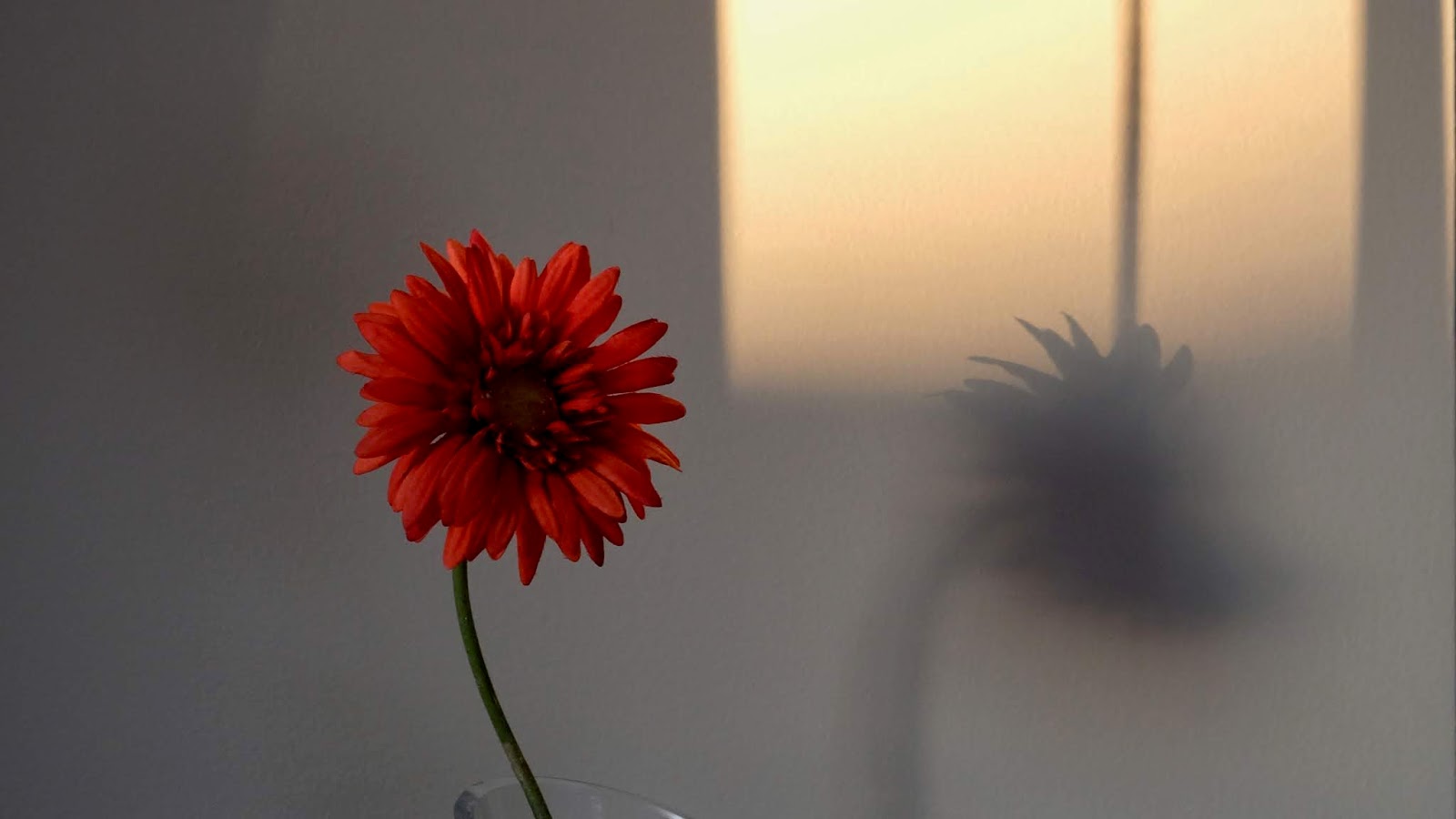
Photo Daniel M: Fujifilm X-T30 II / Fujinon XF18-55mm F2.8-4R LM OIS 

11 mars 2024

Guadeloupe, fille maritime des Antilles


 Le maritime est l’un des aspects les plus présents de la vie en Guadeloupe. Bien sûr, il y a beaucoup à dire aussi des riches territoires intérieurs de cette dernière mais l’effervescence de ses rives côtières nous rappelle souvent qu’il s’agit avant tout de plusieurs îles des Antilles.


Photos Daniel M: Fujifilm X-T30 II / Fujinon XF18-55mm F2.8-4R LM OIS / XF55-200 F3.5-4.8R LM OIS


10 août 2021

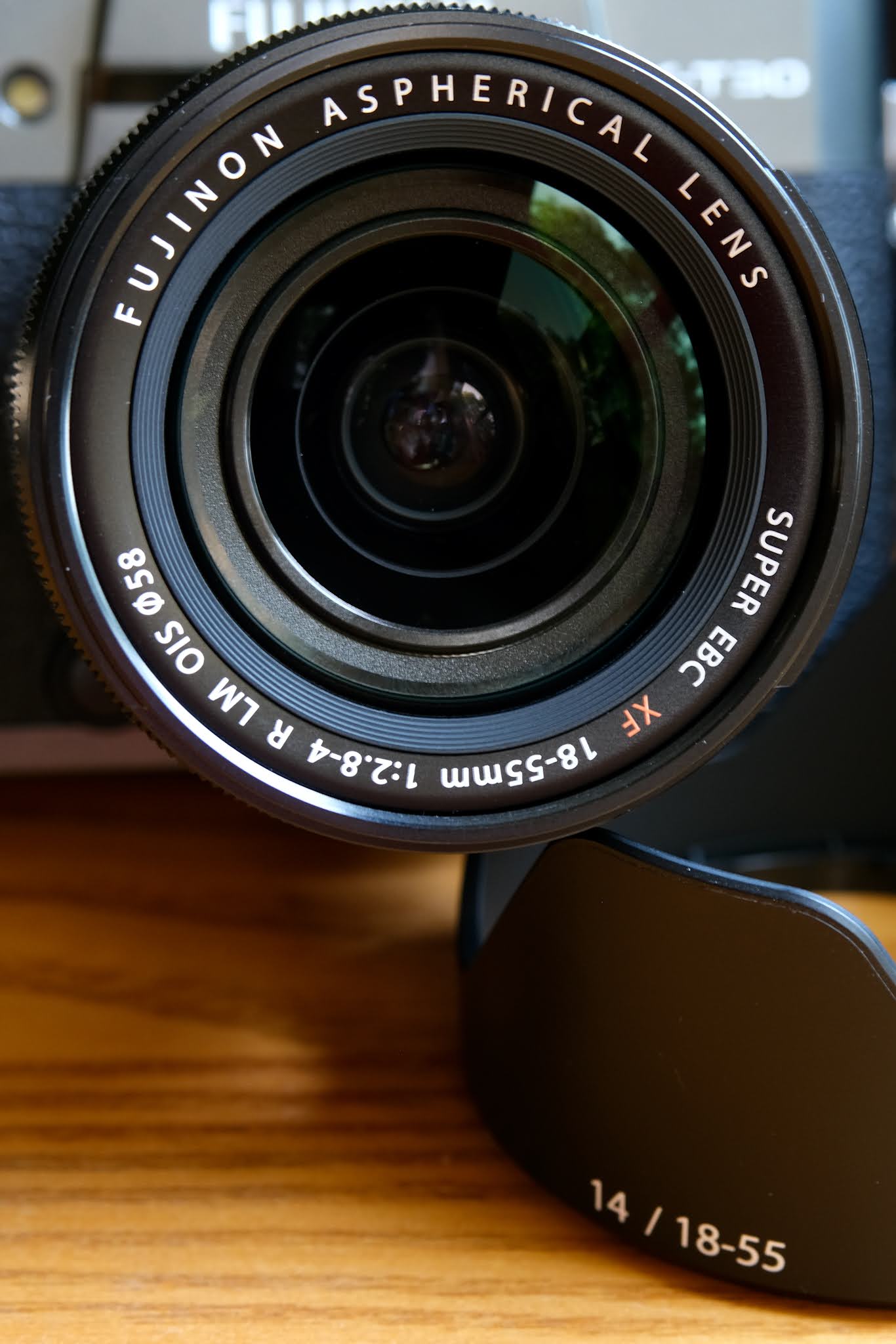
Why challenging an all-times winner? The Fujinon XF18-55mm F2.8-4 R LM OIS


The Fujifilm Fujinon XF18-55mm F2.8-4 R LM OIS* zoom lens has been part of the Fuji X-mount line-up for so long time, in digital terms (!), that many of us tend to disregard it despite its excellent abilities. It has been almost ten years since its introduction in early 2012 and many users are still hoping that Fujifilm will maintain its availability at least for the near future (as for the Fujinon XF55-200mm F3.8-5 R LM OIS, its perfect telephoto zoom lens companion) but more recent Fuji X-mount zoom lens introductions may soon signal a definitive retirement for this beautiful trans-standard zoom optic.

There is so much to said about the Fujinon XF18-55mm OIS that it may appear outrageous for many enthusiasms of the other Fuji X-mount lens models to promote and cherish it even after all these years. First it is a true compact zoom lens weighing 310g only with a lens filter accessory ring of 58mm of diameter. It has three control rings easily recognizable for focusing, zooming, and setting the aperture manually. it has also two switches to activate or not the optical image stabilization (OIS) system and the aperture ring. A dedicated reversible bayonet mounted petal lens hood is furnished with the zoom lens. In brief it is a complete package optic right from the start.


You can select a range of angles of view stating at 76,5 degrees wide up to the narrowed 29 degrees that is giving to the Fujinon XF18-55mm OIS a very good picturing and framing versatility even though some others Fuji X-mount lenses will offer a larger focal range **. The variable maximum aperture starts at F2.8 (18mm) and finish at F4 (55mm) which is moderate compared to the "pro" zoom lenses but much better that the usual "kit» lenses. Combined with the optical image stabilization (OIS) system, the Fujinon XF18-55mm OIS is clearly manageable in many low light situations.


In terms of optical performances and color (and black and white) rendition, the Fujinon XF18-55mm OIS is able to deliver high quality result even up to pro picture standards, and with the most recent camera models or the newest Fujifilm APS-C sensors. In that perspective, it is interesting to note how many Fujifilm X-photographers are still using the Fujinon XF 18-55mm OIS despite its longevity. Part of this long-time success seems o be attributed to its compactness, versatility, and performance.

Even though the Fujinon XF18-55mm OIS is not proclaimed weather-resistant (WR), many photographers will adopt it as a good travel and urban zoom lens. Discrete, focally flexible, and small, the Fujinon XF18-55mm OIS is an easy-going choice

Over the years, I had experimented different body-lens combinations with the Fujinon XF 18-55mm F2.8-4 R LM OIS zoom lens and many different Fuji X-mount camera models such as the Fujifilm X-E2, X-E2S, X-E3, X-T20, X-T30 and X-S10 and it had performed flawlessly through many various photographic situations. All these mentioned Fujifilm cameras are compact models that will harmonize perfectly in terms of size and weigh with this trans-standard zoom optic.


In January 2019, I have published
this post that contain a deeper "user" analyst of the Fujinon XF18-55mm F2.8-4 R LM OIS. Since that time, my opinion had never change and as for other lovers of this trans-standard zoom lens I am hoping that Fujifilm will keep this zoom lens available for X-mount photographers and be part of their regular and current line of optics.
______________________________

* The Fujifilm Fujinon XF18-55mm F2.8-4 R LM OIS was the first zoom lens offered into the new Fuji X-mount optic series.

** With the expense of a bigger and heavier optic to use and carry.

11 décembre 2020

Travel-Scape: Palacio Nationale da Pena, Sintra, Portugal


It is difficult to remember today how it was so simple
, so available and so easy to travel before the sanitary Covid-19 crisis. Last year (September 2019), we had the chance to visit Lisbon in Portugal and although the historic city was fascinating by itself and deserve to be explore for days and weeks, we decided to take a break excursion to the Palacio Nationale da Pena at Sintra located not far north from the capital. The place and surrounding were gorgeous to photograph (and the weather was accordingly splendid). Looking back to these pictures as a gift to close this tumultuous 2020 year.


11 avril 2019

The Fujinon "reframing" zoom lenses.


There is always be that dilemma of selecting between a classical fix focus lens and a more flexible vario-focal length zoom one. That debate will never end but you can simply look at the optic kit used by everyday photographers (amateurs, enthusiasms or pros) and chances are great that they are using the two categories of lenses. So it is not really a contest, it is simply a matter of convenience for each different use.


Many have described zoom lenses as the best replacement for, let say, two or three different fix focal lenses ranging from wide-angle to small telephoto or from small to longer telephoto or even the summation of all these angles of view. For each of those complex optics their designers have calculated the best technical combination available in term of size, price point, maximum aperture, minimum focusing distance, etc. But something you do more with a zoom lens compare to a fix focal one is implicating some obvious compromises.

And many zoom lenses are chosen first for their extreme focal length setting ... and often use exclusively that way! The manufacturers are aware of that way of using their vario focal length models and pay a more careful attention to the optical quality output observed at the very start and the final focal range of them.

But there is also an whole array of focal length choices between the two extremums of a zoom lens. We could call them the "lens-framers" of the photographer. There are very thoughtful optic tools that allows us to refine our picture composition on place with less quality loss compare to the post-processing reframing. Zoom lenses can be very proactive in a way that they are asking to the photographer to be more cautious about the selection, the position and the context of your subject.

Like we have said earlier the zoom lenses do compromise on others characteristics such as their maximum aperture, their weight and size, their minimum focusing distance, etc.. With a smaller maximum aperture your deep of field control will be diminished that can be partly compensated by selecting a longer focal length if possible. The zoom lenses size will result in a less discrete optic that can be more intimidating for your subject. A more distant minimum focusing distance can prevent you to be able to do easily close subjects.

Short and medium zoom lenses as for the extreme "traveler" zoom lenes are the most versatile in term of angle of view. Many photographers will adopt them as their "stay-on" everyday zoom lens for most of time. Casual, urban, close, travel photography are rightly served by these lenses. The better image output quality will be obtained by selecting the mid-range priced ones to the most expensive ones.

The long telephoto zoom lenses are more specialized optics. Portrait, wildlife, sports and action photography are their main domain. They are bigger optical devices that can ask you to pay more attention to their stability in order to counteract the photographer "blurry" effect by using a more sophisticated stabilisation arrangement from the camera (internal and/or optical stabilisation options, higher shutter speeds and/or ISO setting, tripod/monopod). Again their maximum aperture is smaller but usually at those focal lengths the deep of field is already shallowed.

Over the years I have worked with different combinations of zoom lenses and I am always appreciating them as a very valuable option not only for spontaneous photography but also for more composed subject. For general photography I have really enjoyed the flexibility and the compactness of the Fujinon XF18-55 F2.8-4 R and the respectable magnification factor and the optical quality of the Fujinon XF55-200 F3.5-4.8 both OIS (which is a nice feature considering that some of my camera models doesn't have an internal sensor stabilisation functionality). Many examples of my recent work are illustrating these abilities.


For travel and urban photography, the Fujinon XF18-55mm F2.8-4 R OIS is sufficiently versatile for many usual photographic needs and moreover is enough discrete to be a full time lens. To know more about this trans-standard zoom lens model you can refer to this recent article of mine.


The Fujinon XF55-200mm F3.5-4.8 R OIS as for every other long telephoto zoom lenses is a different kind of beast. I call it a "bazooka" lens (especially with the lens hood mounted!). So it is not by far a discrete optic and you will surely impress your surrounding and probably intimidate some folks with it. The most intended purpose of these long telephoto zoom lenses is to isolate your main subject from its surrounding and compress its context. Careful off-center composition may be a challenge since we have a natural tendency to center a magnified subject.

There are several others options available from the Fujinon line of zoom lenses. The Fujinon XF10-24mm F4 R OIS and the XF100-400 F4.5-5.6 R OIS are very interesting options at each end of the optical spectrum. The same can be said about the "Pro F2.8" line of lenses (XF 8-16mm, 16-55mm & 40-150mm). For entry-level Fujifilm models, the Fujinon XC series is giving you more affordable optic options. Fujifilm offer also their own version of an all-around zoom lens with the XF18-135mm F3.5-5.6 R OIS which is in fact a larger optical package that may be more appreciated by nature travelers particular. Lastly we have learn that Fujifilm will launch in mid-2019 a new Fujinon XF 16-80mm F4 R OIS WR zoom lens which can be a very attractive travel-urban all-around optic.

Speaking of the versatility of the zoom lenses is not in any way unevaluating the virtues of the fix focal length optics that are smaller (discrete), have a larger maximum aperture and will give you very high quality image output and these advantages remain today.

A perfect fix focal lens or zoom lens that will fit for every photographic purposes is purely an utopian concept. So even with the add-on versatility of different focal length present of a zoom lens, it cannot respond for every specific need in imagery. But zoom lens do offer a very easy way of re-framing your subject on the spot and without asking you a greater mobility from your original picture taking position. In my sense this is one of the biggest advantage of all those vario-focal length lenses.

All pictures were taken with the Fujifilm X-T20 & X-E3 cameras and Fujinon XF18-55mm F2.8-4 R LM OIS, XF55-200mm F3.5-4.8 R LM OIS & XF50mm F2 R WR lenses.

31 mars 2019

Cubanitas with the Fujifilm X-T20


The Cayo Largo Island has been (and still is) a frequent destination for recharging your frozen batteries affected by our long Canadian winter season.

Located south of the main island of Cuba into the Gulf of Mexico, this idealistic place is share by people in search of calm, of nice long white sandy beaches and of friendly Cuban people.

Although many hotels installations are now more on the rustic side because the buildings are suffering a lot into the southern weather since the island seems not to have a lot of material resources to refresh them properly, vacationers from Canada and other countries are coming back year after year and some are paying visits for even a more frequent pace over the year!

We know now that there is very few probabilities that the island of Cayo Largo will be ever "americanized" in any ways in the near future. The Italian travel agencies seem to be the only ones really interested to invest on the island and have created a group of specific resorts strictly controlled and only available for their clientele.

I am particularly fascinated by the architectural point of view of many earlier buildings since they represent a kind of merging of the hispanic heritage blended into the Cuban modern way of building back in the 1980s and 1990s. And because it has not been reproduced in the last twenty years, it may be important to preserve some image temoignages of what may disappear in mid-term.

All the pictures of this article have been taken with the Fujifilm X-T20 camera and the Fujinon XF 18-55mm F2.8-4 R LM OIS lens.


08 janvier 2019

The Fujinon XF 18-55mm F2.8-4 R LM OIS: (I'm) Not a kit lens!

How to compare the Fujinon XF 18-55mm F2.8-4 R LM OIS zoom lens from Fujifilm? I will be a bit controversial saying that this little first class optic can be put at the same level as the Leica MFT 12-60mm F2.8-4. I know that the Fuji XF 18-55mm R has obviously a less wider angle of view at its short end and is natively less powerful on its longest end. That stands for the focal length statistic comparaison between these two fine products but for the quality of their respective construction, their optic glasses, their control rings and their manual abilities, there are in the same league.

And there is something else very important. The maximum aperture of the Fujinon XF 18-55mm at F2.8-4.0 is an exception compare to what we see useably in the compact standard zoom lenses market. And that simple point make a big different especially for the lenses designated for their on smaller sensor format like the APS-C and the MFT. In that field the Fujinon beats the Leica although it seems they share the same maximum aperture because the effect is different between those two smaller format sensor zooms.

The Fujinon XF 18-55mm R LM OIS is remarquable because it has that maximum  aperture of F2.8-4 and the internal optical stabilization, but also because it is still a compact lens in regard of all these factors. It breaks the actual tendency for the lens manufacturers to design and produce more and more inflated (i.e. big) lenses with larger maximum aperture or with a wider range of focal variations.

When you will be introduced for the first time to the Fujinon XF 18-55mm F2.8-4 R LM OIS you may notice that it is an optic more oriented on the traditional design way. This is not a featherweight optic device and the zoom and focus control rings are more stiffer than many others zoom lenses. Direct access of an aperture control ring is another advantage of the Fujinon (as for all XF Fujinon lenses). Every bits of the XF 18-55mm R LM OIS is telling us about the quality of this zoom lens.

We can considerer it as the introducing zoom lens of the Fujifilm NMARX X-series lens models (None-Marked-Aperture-Ring-X-Series-lens i.e. NMARX) (the other ones are the Fujinon XF 10-24mm F4R, the XF 18-135mm F3.5-5.6R and the XF 55-200mm F3.5-4.8R all OIS).

There is a lot to say regarding the obvious optical quality results obtained by the XF 18-55mm F2.8-4 R. Many tests done over the Web by specialized photo test sites will tell you about its optimal definition compare to other products. I leave to them to give you a complete technical information.

A full exposure stop gain at 55mm focal length is one the most appreciated strength that I have experimented with the XF 18-55mm lens. It qualifies the zoom lens to an upper class compare to all others products that give you a max. aperture of F5.6 or more at their longest end. I wont pretend it can replace a "pro" zoom lens (with a constant max. aperture of F2.8) but it certainly is certainly far more compact optic.

On the purely none-objective side, we can already appreciate the image output of the XF 18-55mm F2.8-4 R LM OIS both in JPEG and RAW files issued from a Fujifilm X-camera.

With an angle of view of 79 degrees at its widest focal length, the XF 18-55mm R LM OIS is doing just a little bit better than an usual 28mm equivalent to 24X36mm format (FF). So contextual photography into cramped areas can be a real challenge especially in interior photography. But that angle should be manageable if you take time to carefully select your angle of view and the distance from your subject. The Fujinon XF 18-55mm F2.8-4 R LM OIS is an enjoyable urban lens with a lot of flexibility. If you can afford to not use its dedicated lens hood, the lens become very discrete and non-intrusive

At 55mm you have just sufficient magnification to partly isolate medium range subject with success. This is not a true face portrait lens  but the Fujinon XF 18-55mm can produce good full-body (or partial) portrait.

For sure we have access to any intermediate focal lengths available on the Fujinon XF 18-55mm f2.8-4 R LM OIS. Popular focal setting include 23mm and 35mm that replicate their fixed focal length counterparts. Close focusing is on the average and this Fujinon is not a genuine macro optic but it can perform with subjects like flowers or mid-sized objects (or parts of) with competence. The XF 18-55mm F2.8-4 R OIS lens doesn't have a special close focusing setting to activate to get its nearest focusing distance, an advantage for detail photography on the spot.

I am not really found on the special function switches way and I prefer the solution used by Fujifilm on most of the others XF lenses with an "A" position on the aperture ring (this way you can preset your aperture value without looking at the viewfinder/screen like with the shutter control dial). If you are a frequent user of the Fujinon XF 18-55mm F2.8-4 R LM OIS (maybe as your first lens) you will probably assimilate the reflex to activate/deactivate that switch...

Optical Image Stabilization (OIS) is in fact a commun "must be" with standard zoom lenses. Its advantage is obvious in particular when using slow shutter speed for less lit subject. Switching from a non-OIS lens, the Fujinon 18-55mm F2.8-4 R LM OIS will guaranty you a better rate of success by preventing micro blurs on the contours of your in-focus subject(s). The presence of OIS must not prevent you to still apply the best support you can give to your camera-lens. The OIS functionality can be shutdown for video or macro or tripod photographic situations.

A last a word regarding the dedicated lens hood that came with the lens (a nice though from Fujifilm). Using it will prevent flare no question about it as the lens hood offer an additional protection for the front of the lens. Without it as already mentioned the Fujinon lens is becoming more discrete, less protuberant for your subject. So the choice is yours. It can be inverted for transport but the inverted accessory is covering the vital focusing and aperture control rings.

Filter accessory size is 58mm a commun one available for a lot of filter combinations. It is up to you to use or not a protective filter. I do but the filter should be made with high optical quality glass that wont introduce more glare or  glass distortion in my picture. Many people don't bother anymore about that and I respect their choice. Being a retired professional that have encounter many adverse conditions I have always preferred to change a filter than a complete lens...


What to say more about the Fujinon only to qualify it as an "all-going" standard zoom lens of an higher level optically and with a more than average quality of construction. Fujifilm produces lenses in the upper standard that perform well over the years and offers products that in my sens surpass many big competitor counterparts. So try it and eventually own it with confidence. Since I am not in any ways paid or attached to them my only raeson is to encourage manufacturers that still have respect for photographers...