29 août 2022

Why coming back to bigger cameras? (because, for many, it seems to be the Graal..)


 Are you a "real" photographer if you are persisting to use small compact (digital) cameras? (As I was asking to myself and my conscientious reasoning mind). The bigger things and the larger ones tend to impress people and in doing so they put pressure on us to follow that inflated trend which seems to never be finished. In photographic gear, we have seen the recent introduction of "pro" (ballooned?) models by several manufacturers (you know already their names!). Let say it right now: I am not impressed and for many obvious reasons. On one side, we cherish the small and readiness of the smartphone, on the other, we are pushing on a pedestal camera models that could be assimilated to the biggest dinosaur ancestors. So, what is the problem here if not one of simply human perceptions and cultural behavior. 

For many users, holding or more precisely, showing a camera appears to be an affirmation gesture and posture rather than an act of photographic creativity. The proclaimed artistic tool can be more assimilated as an expensive and large jewel to show its material health and pretended cleverness. See, "I am a "pro" photographer (in my head more than for my empty pocket that never been filled by earning true photo revenue) and ... to finally stating that there is nothing interesting to photograph here or, on the contrary, I will press the shutter to take thousands of similar pictures (good or not) that nobody will never see or care to see anyway.

On the other hand, there are these dedicated "amateur" photographers (I'm there!) that like to "do pictures and share them" (how silly you are since everything has been already done in photography!). Even for myself that love to try different camera and lens models, my principal interest is in discovering how when I can do interesting pictures from them using their hardware and interface particular interpretation versions. And strangely most people are not fooled by the pretentious self-proclaimed "pro" photographers and are far more concerned by the ones who really take pictures even with very small cameras.

So, what is the argue here in this post, you may ask yourself very legitimately. And you are right because there is not at all! Everybody is allowed to spend their money, their interest, and their effort the personal way they intend to do so, and it is just a personal grumble morning from my not completely awaked mind!

Photo Daniel M: Canon ELPH 330

22 août 2022

Forever Young! (the nostalgic era)

Despite its obvious retro apparence, the Olympus Pen-F is an highly sophisticated digital camera
  that mimic the mechanical photo gear era.

 It is a FB contributor (See the World) Leigh that inspire me to choose that subject about our search for eternal youngness. I must add that Leigh have associated the musical therapy to stay young than ever in our mind and that inspire me that song from Alphaville. With the aging of the occidental population, the nostalgic trend is taking more and more a major part of our mediatic life. All historic eras are intertwined into a past-present-future way of life where history had no really important role to play, we must add. Yes, we celebrate remembering things and people but only to refuge ourselves in our own fixed time capsule-cocoon.

No place for nostalgia when we are looking for new urban spaces to develop!


What can be illustrate this nostalgic trend is certainly all these pictures that are venerating every artifact of the past available. Old houses, old garments, old cars, old cameras, let's name it ad nauseam... But the funny thing about this pseudo-interest, is that on a parallel course, we are destroying about anything including our own planet in the name of consumerism. An odd contradiction but a very human one by nature! Individualism seems to have conduct us to a dead-end issue. Flower power have been replaced by the hatred (and gun) power well illustrated into our libertine "showcase" and our social media fevers.

Forever young is also a dream by itself. The dream that we can stop the effect of time if not reverse it at least in appearance. Sure, every clever person will understand the fallacy of this dream becoming a reality. But again, cleverness is not a very popular quality at this precise moment of humanity. Even many entertaining’s has been confined to auto-repeated stereotypes that are reassuring for the spectators.

There are only the young people that are really young but for these ones, we don't care to listen them and give them a legitimate place for their aspirations and their experimentations. Yes, we, the older ones, are very far from the 1969 Woodstock folly or, are we still there? That is the question, my friends!

Photos Daniel M : Olympus OM-D E-M5 II / M.Zuiko ED 12-40mm F2.8 Pro; Fujifilm X-S10 / Fujinon XF55-200mm R LM OIS

15 août 2022

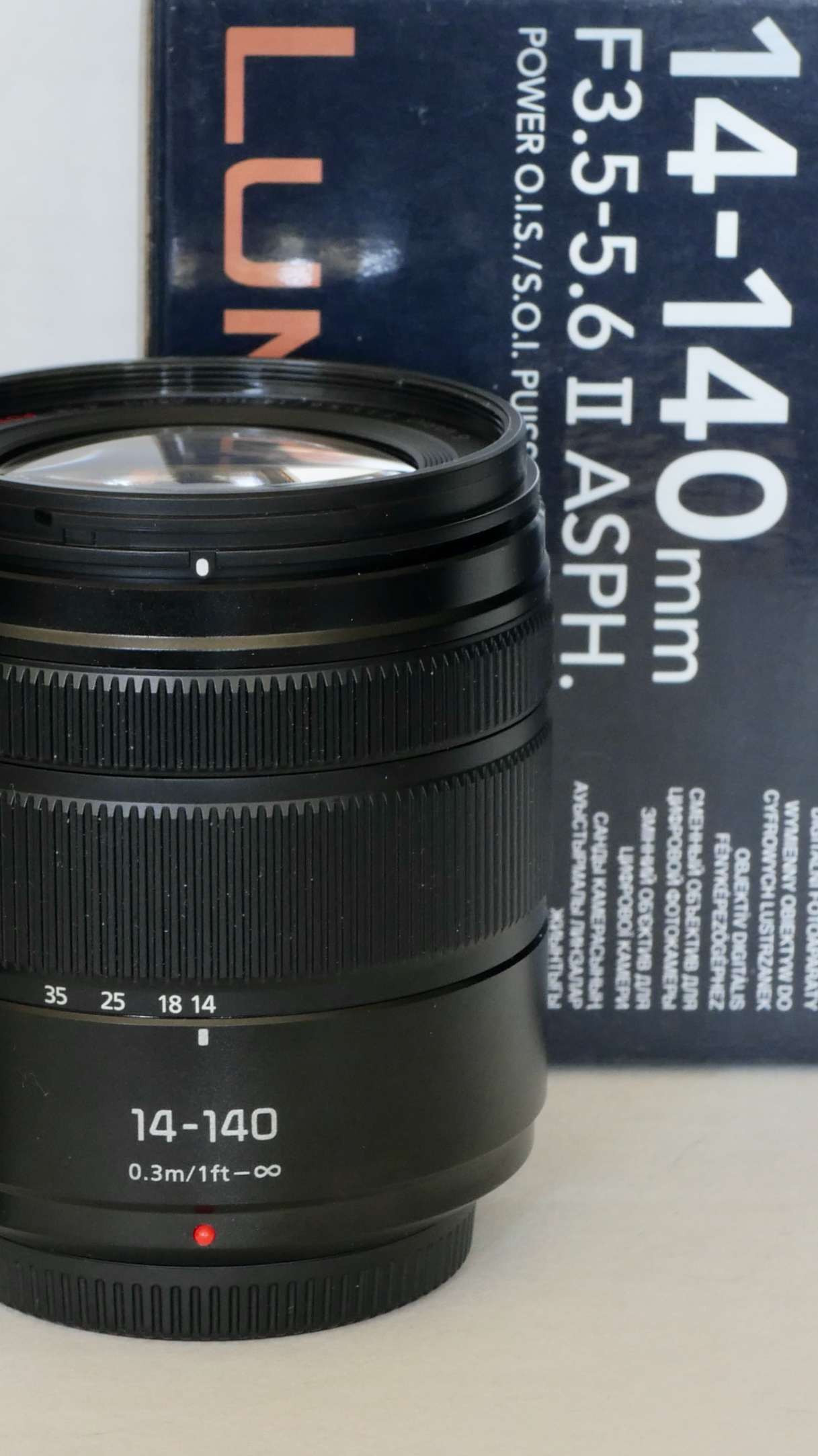
The Panasonic Lumix G Vario 14-140mm F4-5.6 II: The easy MFT out-going optic.


 It was an extended review
of the Lumix G95/90 published by the nomad and Belgium blogger Cynthia Bil that give me the hint to try the versatile “one-in-all” trans-standard Panasonic Lumix G Vario 14-140mm F4-5.6 II (Power OIS). It was clear that Cynthia was relying a lot on the latter to produce her magnificent pictures (see here). For my use and tastes, those long trans-standards optics are almost the perfect camera match although their very modest maximum aperture may ask you to bring with an extra-large aperture small prime lens for specific low light situations or if you are looking for a narrower deep of field effect.

The Lumix G Vario 14-140mm II is a good all-around zoom lens for serious photographers that don’t want to carry a lot of photo equipment and decide which to use and don't want to lose too many opportunities in the process. The key word here is versatility that define the strongest aspect to own an optic of this specific type. In a context of one camera-one lens combination, it may be a winner for many photo enthusiasms. The lens is relatively, small, light, and well-constructed. Two good sized control rings allow the zoom (focal length) and the manual focus (if asked) selections and there is a switch selector to enable or not the lens optical stabilization system (OIS). Filter accessory diameter of 58mm is also very reasonable.

With an optic like the Lumix G Vario 14-140mm II zoom lens, the choice of perspective is yours from a contextual view (wide angle) to a more intimate one (telephoto). You can switch from one angle of view to the other but often you will have already decided which specific (or around) focal length setting you may work in priority. This Lumix optic is not an extreme one for super wide-angle shots or for very long telephoto subjects (which are more specialized subjects to cope with) but it allows much creative picture possibilities in a small and handy package.


According to already mentioned nomad photographer Cynthia Bil, the Lumix G Vario 14-140mm II may be "the" traveler zoom type of lens of preference on the market. These optics are mainly designed for daylight use although it is still possible to get picture from them into more dim light situations using a careful approach of the subject especially in regard of the slower shutter speed or the higher ISO setting you will be asked to select.


The Lumix G Vario 14-140mm II is splash-proof according to Panasonic specifications which is always a nice reassuring feature. It won't prevent you to take precautions when use it in very adverse conditions. The trans-standard zoom lens is easy to manipulate for zooming and focusing purposes. It is a well balance optic that will couple harmoniously with the camera body of your choice even the smaller rangefinder style models such as the Lumix GX series or the Olympus Pen-F or EP ones. The optical stabilization system is also a welcome feature and can be switch off from the lens itself.


Close focusing capacities

The Lumix G Vario 14-140mm II is not and by far a specialized macro lens but it can perform very decently for near subject photography. Its minimum focusing distance varies from 30 cm (wide angle) to 50 cm (telephoto) which is practical for smaller objects as long you are not trying to do try subjects alongside with high reproduction ratio like 1:1 or 2:1.

Picture rendering

The Lumix G Vario 14-140mm II is in a good performer in terms of image definition, contrast, or color rendering although I never do scientific analysis about the optics I use. With large zoom range like this, it is always a greater optical compromise that designers are facing. So, some limitations are inevitable such as a bit of pincushion (narrow silhouette effect) at its telephoto setting and, may be, a glimpse of barrel distortion at the extreme wide-angle position although, frankly, I didn't observe it myself. It is true there are still some rare bad lenses on the market (and not necessarily the cheapest ones!) but this model is certainly not part of that avoidable category.


In brief

In North America, Panasonic doesn't offer the Lumix G Vario 14-140mm F4-5.6 II Power OIS as a kit lens optionality like in Europe for example and frankly, it is a pity. It should be the case as it is already for the excellent Lumix G Vario 12-60mm F3.5-5.6 Power OIS because it responds to a different type of users that privilege the capacity to better isolate their main subjects and are less incline to work with more contextual photographic projects and the Panasonic Lumix G Vario 14-140mm F4-5.6 II Power OIS should be a real handy and competent photographer companion on the run.

Photos Daniel M: Lumix GX9 / G Vario 14-140mm II

11 août 2022

(Color) Violet Times


 The color violet has always inspired us ambiguous feelings. For one it is a very pleasing and appeasing color but at the same time, it is often associated with less desirable human soul states like nostalgia, aging and sometime death and the end of our short or long period of life.

In nature, the color violet is also very rare to observe as for the flower that have given its name to identify it. Because of its obvious rarity, the color violet symbolizes a kind of mystic bridge between life and death, between day and night, between good and bad, etc. It is recent in human history that violet now represent more positive trends in our society, the color of women political emancipation, one of the colors that is part of the gay rainbow symbol, or its more extended use into the fashion industry.

For the photographer, the color violet can be an eye catching one that we tend to isolate from others creating an exquisite and exclusive effect of its own. May be violet is a charming color that is trying to ensorcelled us...

Photo Daniel M: Lumix G95 / G Vario 14-140mm II

13 juillet 2022

Summer audimat temporary drop or the inevitable fall of the blog audience?


 Seeing the last numbers concerning this blog audience (especially since two years), I was wandering if it is an important indicator that the popularity of photo oriented Web blogs is now dropping into a lot more confidential follower cohort. Many have already told to the Web planet that the blog format is dead replaced by the vlog one, but I suspect that even the latter is now also in jeopardy. It may feel strange in regard of our era of never fulfilled communication appetite but it can be a strong alarm signal that people are less interested about anything that is excessing their close-range universe.


So, the question is there: do we simply ignore the recent tendency and continue to publish new posts in our normal rate, thing I have done in the last two years, or take this summer time to reflect what can be a productive Web implication for all the photo enthusiasms. Are we still interested to learn, to discuss and to share different thoughts about our surrounding world? A negative answer can be frightening. On the other side, I don't feel comfortable to speak of something that reflect in part my own interest as a blogger for almost ten years (December 2012) but as I am consulting others blogs over the years, we cannot disregard that declining trend all over the Web.

Blogs were a beautiful Web sharing formula that have offered nice opportunities for many good and highly interesting people to transmit their love of the photographic medium and have inspired many others to not only appreciated beautiful imagery but also to create their own. Now many have been substituted by fierce debates about the photo gear virtues in total disregard of the picture production itself. Just that is profoundly depressive and totally demotivating.

There is a lot of human issues that merit to be acknowledged and discussed more than photography in this world, but the problem exceeds largely this subject. It englobes about every interest you may want to share with other fellows and is questioning the endemic hate is populating the Web and the social media all over the planet. Is it an afterthought about our today state of humanity, we cannot be sure, but it is at least very concerning...

Photos Daniel M: Lumix G95 / G Vario 12-60mm & G Vario 100-300mm II

27 juin 2022

Why absolutely spectacular?


 Each time we saw photo contest results, most of the awards are given to spectacular picture entries. It is a kind of cultural disease where impact is paramount of success in photography instead of a profound story inspired by looking at the picture presented. On the other hand, the "spectacular" is often fast forget with no real lasting impression.

For sure (and to be certain that many who read this modest post won't call off already!), initial impact is a good quality to consider in doing or selecting any photograph. But impact has also to be work in a way that is giving some deep reflexion, another certain picture prime quality, as for technical mastering in the image making, as for creative composition of the subject.

Is it because there are too many pictures published in detriment to be more selective, another disease encounter into the Photo planet? Is it how many pictures you will publish that will be counted at the end? Or the only ones (or one) that people will consciously or not will retained.

Impact is a strange thing and in our highly marketing and material world, there is a constant search to get one, but we have a strong tendency to waste impact, a brief and ephemeral moment without be concerned about some kind of cultural preservation of the subject and its context.

Why absolutely spectacular? Oh well if it is absolutely what's who wants...


Photos Daniel M: Panasonic Lumix G95 / G 25mm F1.7; Fujifilm X-H1 / XC50-230mm II OIS

21 juin 2022

The start of a (photo-grafik) conversation ... between us!


 Let's say it: graphic views or perspectives are against nature or is it the contrary? Because anything may be graphic if you analyze it differently. How they say in English: don't put too much "graphic" contain! (Meaning too much explicit as I understand the expression). Graphic is also highly materialistic, but it can be virtual at the same time on a sheet of paper, on a canvas or on a screen for example.

So, graphic is in fact a universal subject and, by extension, a universal language even better than mathematic. Graphic is geometric, eccentric, eclectic and so on. There is emotion in graphic or is it a mind play that is associating feeling when you observe graphic? The outlaw graphics are graffities which are the free expression of visual graphic without following the usual rules imposed by the society.

In one word, graphic is finally and simply graphical!


Photos Daniel M: Lumix G95 / G Vario 12-60mm F3.5-5.6 P.OIS


17 juin 2022

RED-FLAG!


Can we stop the race of ... colors?!!! Red is a stopping matter for the eye (among the other color competitors 😉). There is something very ironic that the red color can be at the same the official color of the republicans in U.S.A. and the communists in China (or it is more significant than we think first!). Red is also the color of almost all Fire Departments around the world. It used to be the same for the ambulances before they adopt the yellow. The Red Cross organization is also renowned for its distinctive color. Red is often the color of opposition.

Not everybody will wear the red color on a complete garment except, may be, for a minor accessory (with a major effect 😄). For many, red will hurt the eyes and will be interpreted as a violent color, the one of our blood. We see a lot of red color in sports and many teams have adopted it on their uniform.

Variations of the red color are also highly surprising. Take the rose for example or the orange to understand that the significant of color can be drastically different with another tonal combination. In nature, the red color is not by far a dominant one even if its presence can be spectacular to say the least.

At the end, nobody underestimates the importance of the red color, love it or not!


Photo Daniel M: Lumix G95 / G Vario 100-300mm F4.5-5.6 II

15 juin 2022

The good “kompromises” or how to be clever not follower!


 I have often the impression that people are now buying (digital) photographic gear not for themselves but for others even if that phenomenon is not new since many wants to impress or get the approbation of those who are thinking that they are detaining the “holy” knowledge. It is sad, it is highly counterproductive, and it is a waste of energy, of money and, at the end, of motivation to do what we really should devote ourselves to, i.e., do photography at the first place.

What you want to photograph? What will you do with your picture (image post-processing)? Where and how you will present your picture? What is your real expectation in terms of picture quality? All those questions should be considered as for the search for a comfortable camera to work with, and a camera that the design and the interface attract us and inspire us to bring with us.


In fact, there are no real compromises if you choose a photographic tool that fit your need and pleasure to use it. For example, having a “pro” labelled camera model without the very need to own one, it can be simply a big turpitude and a great annoyance over the simple joy to do photography. Believe me, I have discovered and rediscovered this verity many times in the past. And you don’t need to spend a lot of money to get a reliable camera model that can be also interesting in its ergonomic, interface and body design.

If you are a curious photographer that is traveling all over the planet or all over your country or all over your neighborhoods or all over your apartment, it is always interesting to get a handy camera coupled with a versatile optic (prime or zoom lens) and be able to take pictures to document, create or experiment in photography. After all, this is why we love photo. Small (compact) camera models are numerous to satisfy all sort of their future owner tastes and they shouldn't cost you a whole monthly rent to get them.


Such compact affordable cameras are still existing. Sure, Olympus (OM-D E-M10 Mark III), Panasonic (GX85 officially discontinue but still available), even Canon and Nikon offer some valid options. Fujifilm use to do so (X-T200, X-M and X-A series) but seems to phase down these opportunities. In doing a short search on Web, you will be able to locate good deals around.

Between us only, many so-called "independent» photo gear reviewers can be now more define as nonofficial photo manufacturer marketers that love very high-end equipment. It's becoming a pity when you remember that a few years ago their good advice were interesting and self-uninterested. The other fact is that over the latest years, there has been a significant price increase for the newest camera introductions from manufacturers. Simply put producing an expensive and sophisticated product is easy if money is no object but creating an affordable, reliable. competent one is much more intelligent and cleverer ***. There is no reason to penalize the photo enthusiasms for satisfying the “pro” reviewers of the Web planet, don’t you agree?

Good shopping!

*** This is why I have always hated big cars; big trucks and I don’t understand the need to produce electric cars that have so much luxury “electrical” accessories at the first place!

Photos Daniel M: Lumix GX85 / G Vario 35-100mm F4-5.6; Lumix G85 / G Vario 12-60mm F3.5-5.6; Olympus OM-D E-M10 Mark II / M.Zuiko 40-150mm F4-5.6 R 

04 juin 2022

Release the pressure!


 Pressing the shutter release button in photography can be a frenetic final action but, why not stay a bit longer with your subject, a lesson that have learned from my analog-film age (Oh boy! It was yesterday in my blown mind). Because when you give the order to your finger to press it there is a small delay even after the moment "you think" the picture has been taken. Therefore "anticipation" has become a key success word for many renowned photographers and for the none-renowned ones 😉. 

Be ready is a thing but staying calm and concentered is important too. We live in a constant moving world which we are learning that everything are not really staying still in place because there is always some kind of on-going replacement, or a growing (or its invert) or a changing in aspect, etc. So, taking a picture is not really finished the moment you have decided to press the shutter release button.


There is a technical prolongation to that initial shutter release action, and we must respect and cope with that fact. If you start exiting your attention of the subject just after you have pressed the button, you may provoke a blur or simply miss the peak moment of your subject.

Old cameras use to have a noticeable "shutter release delay" for mechanical reasons and the manufacturers have reduce it substantially over the years. Today and especially with electronic shutter release that delay is almost forgotten but still, there is also what we may call the "mind decision delay" between your anticipation and the very moment the picture is taking. We used to say: if you can see it with your eye, it is already too late to be register in the camera, and it is true. To counteract this phenomenon, some cameras have the option to record continuously pictures before you trigger it (In fact, the moment you half press the shutter, you activate a kind of prior picture buffer). That's a cute trick but it won't prevent that your subject peak action will happen between two pictures! (OK you can take 50 pictures/sec to prevent that and fill up your memory card or, at this point, why not doing cinematography instead?).

At the end, what we are trying to underline here is this: instead of hammering your camera shutter release button, rather do introduce more fluidity in the way you are interacting with it. Hold your lens with the palm of your left hand and liberate the pressure of your right hand. In doing so you will feel more comfortable and confident to get good, steady, and interesting moments to photograph. Photography may be relaxing too!

Photos Daniel M: Fujifilm X-H1 /XF18-135mm R LM OIS WR

01 juin 2022

My best journalistic picture may be my first one!


Life is full of surprises and inconstancies and can be fulfilled with upside down funny stories. Because we think that life is a linear one direction progression, it is difficult to us to recognize when it happens that we are already at the pinnacle of a situation or a context and then, thereafter, we can only contemplate the apex of the past. Yes, we invest all we can to improve ourselves and our material condition, but the photographic right moment won’t necessarily repeat itself forever and it may never repeat, period!

In fact, you need more than learning, experiences, creativity, audace, photographic gear, special access credentials, to be able to registrar the magic moments of life, you need to be lucky. I know that some people don’t like to admit they have been lucky but the whole life is an unpredictable thing, and you need to be lucky that all every element of success will reunite for a specific fugitive instant.

This short episode of the 1974 World Cycling Championships in Montreal may have defined a good part of my upcoming living road at this very point of time. In September 1974, waiting the beginning of my first college year and following a good earning for my work summer, I finally bought my first single lens reflex camera (SLR), an Argus Covina STL 1000 combined with a Cosinon 50mm F1.7 standard lens and few accessories (lens hood, filter, shutter release cable, table tripod) not forgetting some 35mm black and white films (Ilford HP 4 - 400ASA). In brief, I was finally introduced to the “major league” of photographers (at least, it was my thinking of the moment).


A friend of mine had a sister that was living in an apartment in front of the start-finish line of the road competition of the World Cycling’s Championship in Montreal and it provided us a direct access to the entire site of competition without credentials (This was a time where security concerns were lower). So, all day of this final day of racing, we were running around the urban temporary circuit trying to illustrate the mood and the crowd excitement of the competition. Frankly, it was simply magic, and I hope that the few pictures that have survived the passage of time can still give you a glimpse of these moments.


Near the end of the race, I foolishly thought that it may be a good idea to get the picture of the winner crossing the finish line (good journalistic reflex, Daniel) and to position myself among the “pro” by earning my small place with some elbow fighting. After that, I pre-focused my 50mm Cosinon lens, set my shutter speed to 1/1000 sec, checked my exposure metering accordingly, and anticipated without really seeing Eddie Merckx coming into his final sprint and shuttered blindly my Argus/Cosina. Listening to the sound of the crowd gradually elevating may have been the key to this successful picture. It was electric like the moment we finally have processed the film and the negative, the contact sheet and the first 8 X 10 inches enlargement.


What I never suspected is that picture may be the zenith of my sporting event photo-reporter career without having really starting it ten years after. Life is something strange. It is impossible to predict what will happen to us and to the universe surrounding us. The fact that picture survived after more than 47 years is also a mystery considering that I have almost lost all my analog-film archives years ago. It may be an eye wink saying to me to relax and enjoy the rest of my photographic life, who knows!


 © Photos Daniel M: Argus/Cosina STL 1000 / Cosinon 50mm F1.7