21 janvier 2025

Resetting a Design (Panasonic Lumix G95 vs G85)


 Being a big fan of the Panasonic Lumix G85 camera model since its introduction in 2016 (during the last true Photokina event in Cologne 😢), I was wondering what can be really improved with its replacement version Lumix G95 (or G97)* except for sure the image sensor definition that have been enhanced from 16MP to 20MP. Even though considering this added image definition, the Pana Lumix G95 (or G97) may not represent a strong departure from its ever popular G85 predecessor. 

What was a first turn-off in favor of the beloved Lumix G85 was the bulkier camera body of the Lumix G95 (or G97) not by a lot I agree, but sufficiently to bother you. Secondly the dial controls texture and presentation do have a different feel for the user although the push buttons of the G95 have a more positive clicking feeling and are better positioned. The top of flash pseudo-pentaprism of the Lumix G95 is triangular opposed the flat one of the Lumix G85 that give to the new model a less simpler design. 


If you looking on every angles the two camera models, it is clear that the newest Lumix G95 is bigger in dimensions compare to the previous Lumix G85. But the two models are using the same accessories including the battery pack, the electronic flash models and the battery grip. So, why the latest G95(or G97) is been the biggest? May be because it is a mystery of the electronic embarked into these model replacements. With a new 20MP image sensor, the Lumix G95 may ask for an additional space to accommodate it. 

Another explanation could be that the Lumix G95 (or G97) are manufactured with a totally different camera body. Many differences are noticeable like the larger camera grip or the re-localisation of several push buttons. As for the additionnel headphone port added to the Lumix G95 (or G97). There is no doubt that both Lumix G85 and G95( or G97) are sharing a lot of technical elements outside or inside but their configuration seems to be slightly different. Moreover the general feeling for some Lumix G85 regular users is that the Lumix G95(or G97) don't carry the same construction quality level and the same fineness of design. 

In terms of performance the Lumix G95 offers some avancements like a more definite image sensor or like some extended functionalities no present on the previous Lumix G85 (Live Composite Mode, BlueTooth, Headphone Port, etc). But except for the sensor, you can expect the same behavior from the two models, same performance for auto-focusing, for exposure metering, for reactivity in  general, for video capacity and many other similar characteristics. All these camera models (G85, G95, G97) are weather resistant which is excellent for outdoor assignations. The Lumix G85 is less energy-consuming than the G95(or G97) and have also a power indicator green light.

***

All in all, I have a net preference for the original Lumix G85** over the G95(or G97) because the latter reflect a non-desirable tendency in the photo industry to offer new versions of camera that are bigger in dimensions which is the last thing many photographers are looking for. For them, compact cameras are still a better choice to use everyday. 

___

*All these Panasonic Lumix G camera models have different nominations depending in which country they are offered. G85 can be G80 or G81; G95 can be G90 or G91; G97 seems to be universal. A new version of the G95 named G95D is using an improved rear screen.

**The Panasonic Lumix G85 may have the best optional vertical power grip (DMW-BGG1) that I ever experimented in term of ergonomic and functionalities. Its balance is remarquable especially when used with a physically longer lens or zoom optic. This combination has been slightly altered with the succeeded G95 (or G97) model.   

Illustrations: © 2020 camera decision.com

11 janvier 2025

Two Styles *, One User.


 * ... of viewfinder configuration

More than only the electronic viewfinder (EVF) definition, it might be the configuration of them that will definite the style of photographic approach the user will adopt in front of his/her main subject. Most of today's EVFs are good enough to get a good evaluation of the picture focusing clarity as for the exposure accuracy. But the EVF position on the camera body can be also determinant of how you will behave yourself as a photographer. 

Since the two inventions of the rangefinder camera and  of the pentaprism reflex models, the never finished debate rages over the photo planet: What is the best system of viewfinder? No final answer has been ever found but many have concluded that each of these different optical viewfinder configurations have their own advantages and ... flaws*! With electronic viewfinders, there is no more mechanical constraint for configuring its physical position on the camera body and what you see will be what you get. So, what is the point from now?

To be more specific today, the EVF configuration can be designed according the manufacturer inspiration of the moment. It simply replicate what we use to say during the analog-film era. Some technical astuces have been proposed over time like the presence of an in-board electronic flash over the EVF or the mobile off-center EVF that is tilt-able like a waist level finder. Beside those ones, the EVF performances will stay about the same. Some of them will get a better definition, a faster reactivity or/and a longer eye point. 


The "Rangefinder Planet" (off lens centered viewfinder) very popular at the introduction of the digital photography era are phasing down a lot for the profit of the centered EVFs (like the old pentaprism reflex viewfinder). You can still have access to some models like the Sony's or Fujifilm's ones in the APS-C or Full sensor image format. In the M4/3 image sensor format category, no actual new models are available if you except some ancient stock still found through  photo dealers here and there. It is a pity considering that "rangefinder style" (or off lens centered viewfinder) cameras are preferred by many street or travel photographers for their small size body dimensions and their notorious discretion in face of the main subject. Many are hoping that OM System and Panasonic will issued new versions of their Pen-F or GX series. 

The "Reflex" category refers to the lens centered viewfinders which are perfect for action photography and are easier to apprehend in terms of final perspective and subject physical position from the context without continually consulting the EVF. Sports, nature, macro photographic assignations are often better served by this type of viewfinder. Presence of an electronic flash that pop-up a little higher is also an interesting advantage if the option is available. However these camera models are usually bigger and heavier that the "rangefinder style" counterpart but hand prehension. larger functional push buttons and dials and fully articulated rear viewing screen are undeniable advantages proper to the neo-reflex EVFs. It is also notorious perception that a lens centered viewfinder seems better suited for tripod/monopod working set-up.

*** 

In regards of these two EVF styles, I have never be able to make a definite conclusion in favor of one from the other. It may be a question of what creative mood the photographer is trying to experiment. Let's hope that these two EVF configuration options will be maintained and expanded in the future for the benefit for all the enthusiasm photographers.

_____

* Optical viewfinder flaws and advantages: For the rangefinder, it was the parallax phenomena that present a different framing than the actual taken picture especially for short distance subjects but the rangefinder cameras have a reputation to be "silent" cameras because of the absence of the return mirror mecalnisism present into the reflex models and moreover the focusing by superposed images is often see as faster and more efficient. For the pentaprism reflex finder, it was the brief moment of blackness during the very exact picture taking moment but the precision of final picture framing and the accuracy of the final subject perspective were their big advantages over the rangefinder viewfinders. 

Photos Daniel M

05 janvier 2025

Fix on Prime!


 Zoom lenses have obviously dominated the traditional photographic gear market for several years if not now decades but with the smartphone overwhelming popularity, the prime optics are coming back in an interesting fashion way. It has been transposed with some new iconic camera models such as the Fujifilm X100 or the Leica Q series (and many other offers). 


 The benefices of selecting a prime
(fix focal length) lens are multiple. More compact package, less weight, larger maximum aperture for better discriminate the main subject from the foreground/background (bokeh), easier way to focus with the simpler lens construction are amount the most renowned advantages compare to the bulkier zoom optics. They are also much more discrete to operate in context and are less intimidated in front of your subject. And the prime lens can be versatile as long you agree to move yourself (physically) to get different points of views.

Prime lens have also limitations as they offer a fixed perspective that depend on their own fix focal length. It has the basic consequence to be obligated on specific contexts and diverse needs to change with other more appropriated lenses like the wide-angle or the telephoto ones. That is strongly illustrated by the use of different lenses on the more sophisticated smartphone models of today. With traditional cameras it induce the necessity of interchange different prime lenses or to simple use more than only one camera body as it was the rule during the analog-film photographic era.

Many good photographers of yesterday as today will kept their photo gear to a minimum of one lens/one camera only combination. It is inherent to their own signature technique and their iconic results simply reflect their master of the medium. And keep in mind that even one camera with one lens can be a very expensive outfit. For them it is not a real compromise as they are able to get an optimum in terms of creativity and output quality with these diminutive photo equipment.

With the compact image sensor formats such as APS-C and Micro Four Third (M4/3), the selection of products is very diversified and the manufacturers like Fujifilm, Olympus/OM System and Panasonic have been very prolific over times without speaking of some more exotic third-party ones. 

A "standard" lens for a "normal" photographer. Is it possible to be so definitive in regard what would be a basic optic for everyone? No, for sure, and mainly because we don't cherish necessarily the same visual approach for our surrounding universe. And because photography is, like other media or arts, a very subjective manner that can sustain a lot of different interpretations from the technique used to the final composition of the image we want to expose and to share. The choice of a particular lens plays a major role in this individual quest. 

We can categorize the prime lenses into some "elastic" segments like wide angle, normal or standard and telephoto ones. We can add specialized optics for macro, astronomical, medical, etc. The list is long and imperfect in view of the continual introductions of new optics over time.


 A Normal View.
Many lenses has been designed to replicate the perspective and the proportion similar to what we usually see with our own naked eyes. Some models of those optics have a wider angle of view nor others have a more cropped composition. To take the example of the M4/3 image sensor format, focal lengths like the 15, 17, 20, 25, 30, 42.5 and 45mm could easily fall in that category. These lenses are easy to pre-visualize and to apprehend for the final recorded picture. They are physically compact and they have a good maximum aperture except may be for the very tiny ones (pancake type). They are also the cheapest available except for the F1.2 to F1.4 models. You can get from them a better deep of field control that help to discriminate the main subject from its contextual surrounding. Many classic photographers use to work with them most of time and get outstanding pictures. For others, these "normal" lenses have been a good starting point to emulate to a different category of optics.

 Reach your subject.
Cropping and compression are ones of the most interesting features of the (long) telephoto lenses. Longer focal lengths of 60, 75, 90mm and more (m4/3 format examples here) are part of this category of optics. They are larger and longer in size by definition and often have a smaller maximum aperture except for the most expensive ones. They discriminate further the main subject from its context. Portrait, sport, animal, architectural details even macro photo among many others are examples of the type of photo assignments given to the telephotos. And they are not discrete and accordingly a lot more intimidating. Using the very long telephoto will ask special care from the photographer especially for its handling (stabilization) and exposure (shutter/speed selections) techniques. Focusing can be critical since the deep of field of telephoto appears to be narrowed (in fact it is the image compression that produce this effect). For all these reasons telephoto lenses are more difficult to master that it seems at first. 

 Entering the context.
With wide angle (of view) optics the photographer will be incited to physically be nearer from its subject and its context. These lenses ( 12mm or smaller focal lengths in M4/3 format) are mean to be used in close range photographic situations as for panoramic purposes (that include astronomical tasks). They are not as popular as their telephoto counterparts partly because they are more difficult to master and to apprehend (visualize). Their big advantage on assignation is their smaller size and their better maximum aperture (F2.8 or larger). The wide angle optics are often associated with an apparent strong deep of field, a direct consequence of the decompression effect of these lenses. Because of that, hyperfocal setting will help the photograph to maintain a larger focusing margin that is appreciated in spontaneous photography like in travel or urban situations. You have also to consider that wide angle are subject to linear convergences if the lens is tilted from its ideal horizontal position. This effect can be as creative like as distractive. Street photographers often fully appreciate the complete potential of the wide angle optics. 

 Small is better.
Macro photography is oriented to the discoverer a small universe that is rich in details and interpretations.  Macro lenses are specialized in part because only few of them are selling compare the other categories such as telephotos or wide angles. The macro optics use the be called "flat field" lenses oppose to the "curvy field" of all the others. We don't know for sure if the todays macro are still characterized by this specific factor but most of them have at least an higher definition with often a more precise color reddition. Focusing is very critical in close range of your subject and deep of field is strictly limited (almost not). Because of these constraints, the macro lenses are typically slower to operate and don't have a very large maximum aperture (F2.8-3.5). The focal length of these specialized lenses are ranging from 30mm, 45mm, 60mm to 90mm ( M4/3 format). The macro lenses with longer focal length (45, 60, 90mm)  will leave a little more space between the optic and the subject preventing that way less light interference. The shorters one can be used as "normal" lenses and the the longer ones as "portrait" optics.

 Oddy ones. That is leaving with the very specialized lenses such as fisheyes, medical purpose optics like the dental ones, super long telephotos, etc. All these represent some sort of niche photography and their functionality is reflecting their special use. Communally they are not very versatile photographic tools. A preliminary rental for a first try on may a more reasonable way to start your experiment of them. 

***

Using a prime lens will ask you a different commitment physically, technically and creatively on your part. In other words, they are fine photographic tools with further exigences but the final results may often plus value the additional effort.  Among their avantages, they simplify certains choices, facilitate your approach (no more zooming), give you better exposure and focusing latitude and they less intrusive. On the back side they limit your focal length versatility and oblige you to be more pro-active. It is up to you to become or not of their adepts. 

____

(First illustration) The Superlative Olympus M.Zuiko ED 75mm F1.8, the first real pro optic from Olympus before the official introduction of their designated Pro line of lenses.

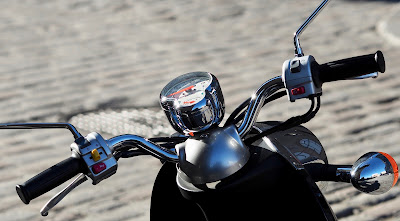
(Second illustration) A classic Olympus OM-D E-M5 II / M.Zuiko 45mm F1.8 camera body/lens combination picture example.

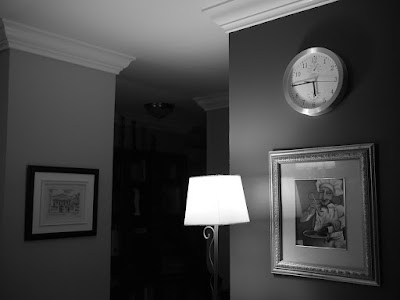
(Third illustration) Micro Four Third format at its best with a light body/lens package, a fast optic and an outstanding output image definition (Panasonic Lumix GX85/G 42.5mm F1.7 Power OIS).

(Fourth illustration) The "cannot resist" Olympus M.Zuiko ED 75mm F1.8

(Fifth illustration) A "in between wide-normal" lens like the Lumix G 20mm F1.7 II give you both a contextual and a detailed picture.

(Sixth illustration) A piece of Macro with the Olympus M.Zuiko ED 60mm F2.8

Photos Daniel M: Olympus OM-D E-M1 II / M.Zuiko ED 12-40mm F2.8; Olympus OM-D E-M5 II/ M.Zuiko 45mm F1.8; Panasonic Lumix G85 / G Vario 12-60mm F3.5-5.6 Power OIS; Olympus OM-D E-M5 II / M.Zuiko ED 75mm F1.8; Panasonic Lumix GX7 / G 20mm F1,7 II; Olympus OM-D E-M5 II / M.Zuiko ED 60mm F2.8 Macro

01 janvier 2025

Travel light


  If you are the kind of person who wants to deplace yourself with a minimum of objects you are not obviously alone in your search to get less stuff to bring and transport with you. That said you can consider that a iPhone or smartphone is the ultimate device for communication, documentation or photographic purposes. However most of these mobile phones have functionalities that are facing certain limitations even though their different manufacturers are racing to produce new generation of products that are better performing than the preceding.

If you are more a photo traditionalist, you prefer to use a device that reflect its specialized purpose especially if you are looking for characteristics like a real viewfinder or for lens interchangeability. These technical considerations still prevent the photographer to adopt the "mobile" way of doing pictures.

Another aspect to consider is the basic discretion now asked in this controversial world. The candid era of photography is long time gone because people are more and more defiant of what photographers are intended to do with their pictures especially if you are perceive as a professional one with a big camera you enter easily in that category. Small cameras are seen far less serious (dixit "amateur") and can be operate more liberately around you in different contexts. This is not really new but the tendency have been accentuated over the years and the decades.

For all these reasons and for sure others non-mentioned here, small size camera gear appears to be the right choice for many photographers who travel or are simply documenting their immediate surrounding. With my modest experience over the years, I have learned to privilege two type of camera-lens combinations. The "street one" like the Panasonic Lumix GX85 w/G Vario 12-32mm or the Olympus Pen-F w/M.Zuiko 17mm, or the "sport/nature alternative" like the Panasonic Lumix G85 w/G Vario 12-60mm or the Olympus OM-D E-M5 III w/M.Zuiko 14-150mm II (Similar examples can be found for Fujifilm APS-C products). All these examples are using a Micro Four Third (M4/3) image sensor. In any case those camera models are smaller in body/lens dimensions than their big brothers equipped with a larger image sensor format.


On the other hand the "one camera/ one (zoom) lens" combination is not a new concept by far. It facilitates the general approach to do photography. It is better for anticipation, for handling, for operation, etc. It prevents cumbersome gear manipulations that are slowing the photographer reactivity. For the subject it is less intimidating and simplify the interaction with the photographer. Some are avoiding part of this by using two cameras already coupled with a different optic (which was very popular with focal fix lenses) but again it represent more gear to bring with you and manage on place. As same having your camera already on hand without its front lens cap make a lot of sense.*

And how about to select a good compact camera model with a fixed optic (no interchangeable lens). That may be an excellent tool for the traveller despite some technical limitations that usually are the lens factor (too slow or not enough focal length versatility) and the viewfinder system (if there is one!). But the idea of a perfect compact companion like some Fujifilm (X100 Series) or from Sony to name just a few is excellent and could be very productive from a creative photographic point of view. With these camera models, you will free to take pictures at will and without constraints. And these compacts w/fix lens will give you a lot better definition on your pictures files to play with when you choose to edit them compare with the ones taken by a mobile phone.

*** 

Travel light is a good step forward to enhance your photographic experience and to ease effectively your journey. All gear combinations can be considered as long they suit you. At the end it simply prolongs the joy to do photography.

______________________

* Using a protecting neutral filter may be the best solution to that.

Photos Daniel M: Olympus OM-D E-M5 III / M.Zuiko ED 14-150mm II ; Panasonic Lumix GX85 / G Vario 12-32mm F3.5-5.6 Mega OIS

27 décembre 2024

Hey Now! *


 Hey Now! What I can do to do better! My picture is everywhere and I am young but old in my thoughts! I am not a genius but a kamikasi in a false society of individual materialist interests. Is it really that did that disturbance, that fatal shock for people that I ever know and will ever know. Did I am a confuse Oswaldof these days in this new century.

My confusion mind is the confusion of this society that is no more a real community but instead a melting pot of individual interest with no goal in their heart. I don't know if love is still a part of ou spectrum of life. Yes I am disoriented with a disturbed spirit that cannot an issue in what I think of my wasted life. For a moment she provoked a smile of my own but I decide to keep my resolution of sacrefice both the life of another one as my mine.

You may have recognize me at a metro station, at a youngster refuge or even at a Mc Donald restaurant but you don't need to bother about me and just leave me loose my own. I am sure you recognize me for sure because I am part of everybody life one way or another. *

* This reflexion is dedicated to all desespate young and beautiful people that need help from us before they do the irreparable.

* London Grammar

Photo Daniel M

18 décembre 2024

A Place to Compact (Cameras)


 Traditional photography has been estrangler between the large and big dimensions cameras and the very smaller devices. It was a battle of different technology approaches that may be ignited in the 1930 with the introduction of the Leica 35mm cameras created by Oscar Barnack. At this point there was also the old debate about the relation between film-negative size and the quality of the final (print) picture. Suffice to say that the same clash is still vibrating concerning the modern size of the todays digital image captor and its relation with the final image output definition.

At first with the digital revolution many of us were thinking heavenly about the coming of a true “compact age” but after more than three decades the return of big and heavy camera models have now invested the market place entirely with only very few exceptions (thanks for the Fujifilm effort in that sense). The more appropriate image sensor format for designing compact cameras was the Micro Four Third but since at least five years or more no new real compact model have emerged from the two major players in that field.

Speaking of ILC (Interchangeable Lens Camera) and how it is difficult today (January 2025) to find new compact camera models is obvious and frustrating.OM System * and Panasonic are no more supporting the idea of a compact and versatile camera and only Fujifilm seems to stay solid in its offer of this type of photo devices as already mentioned. So, what can we reasonably anticipate for the immediate future of the compact camera category? I am afraid less than nothing since no strong pressure from the market can push the various camera manufacturers to invest in it. Many camera new developments have been more at first in act of faith then the result of a specific marketing plan (Thanks Oscar ;-)). Can we count on that again in this more then ever calculated world? It has to be proven.

At the end my love for compact cameras is at the stake to find new "old" models that are still of some interest in photography today. Recently I have bought a brand new Panasonic Lumix GX85 that may have been forgotten on a camera store shelf (as for a Domke gadget bag!). Manipulating the GX85 and moreover use it as an everyday handy and small camera has been revelating of the joy of doing photography with a small, competent and discrete photo device. I hope that heritage will be preserved and may be flourished again in the future. 

_____________________________

* In the case of the OM System, the Olympus OM-D E-M10 Mark IV remains (temporary?) the only last very compact ILC  (but for all long) although the OM-5 is also a smaller size camera of its own.

Photo Daniel M 

06 décembre 2024

A Mix-Up Mind


 This is the a story of a mix-up mind of myself in a mix-up society stranded in its mix-up evolution in a mix-up universe. 

This is the story of a mix-up thinking about a mix-up of subjects in a mix-up contexts  in its mix-up continuity.

This the story of a mix-up cry confused in its mix-up energy into a mix-up of opportunity ever mix-up with incernities.

This is the story of a mix-up life plagued by a mix-up of sensations that mix-up with no understanding that mix-up reality and fantasy.


This is a story of an eternal mix-up that will mix-up with its finality…


Photo Daniel M

23 novembre 2024

Notes about a Gadget Bag...


Curiosity is a good human habit (but sometimes bad for few others). If you are reading about photographic gear and their use, there is always this question in our mind concerning which specific gear the author is really using. And it is a tricky one especially if you changing it at a fast rate (as myself) or you don't want to influence people with photo equipment that don't suit their needs and their preferences.

So, before going in some depth about my own and modest photographic bag of the moment, please consider those before hand precautions. I love photo, I love photo gear but I love also to bring the less equipment that I can afford and to be honest I love the one camera/one lens only combination especially when I am on the go. So, the level of compactness can be the strongest determinant point of choosing a specific gear from another.

When the compact factor is on the discussion table, it englobe not only the camera body but also all the lenses and the auxiliary accessories. That leaves us in practical with two major types of camera image sensor format systems, APS-C and Micro Four Third (M4/3). The M4/3 offers an assortment of downscaled optics especially if you are looking for the biggest maximum apertures, or for the larger zoom focal ranges. Using bigger sensor formats such as the so-call Full Format (which is the equivalent of the old 35mm film format) or for larger ones, will induce inevitably photo gear with larger physical dimensions and more weight to hold and bring with you.

If you are looking for a specific camera system, Fujifilm, OM System (former Olympus) and Panasonic Lumix are each equally interesting and competent and can offer good quality products. Using any of theirs models will give excellent image output as long you respect their fondamental limitations which is the case of any photographic gear. I have used them extendedly with pleasure and satisfaction although I have understand that nothing can be the best choice for all of us. But for the compact factor, the M4/3 system seems to be the best for their choice of camera bodies and lenses (even thought they have abandoned their respective "rangefinder" style models such as Olympus Pens or Panasonic Lumix GM and GX series).


As an ex-pro photographer (meanly during the analog-film era), my preferences will go for the camera models that seem sturdy and durable and weather resistant. Presently I am using an Olympus OM-D E-M1 (first generation) that the external body dimensions and weight is not far from the ones seen on the Olympus OM-D E-M5s (original and Mark II) models that I have appreciated in the past for their performances and their easy-going virtues. Yes, this original E-M1 has been surpassed by the Mark II and III versions and by the actual introductions of the first OM System OM-1 and its Mark II version but I have chosen to stay on a realistic budget level and try to find the smartest deal over the Web for a used photo equipment.


Find good optics is another challenge for all photographers of this planet. Even today selecting a lens model that will answer all your needs is almost impossible depending the kind of your subject diversity. The Olympus M.Zuiko ED 12-40mm F2.8 Pro stays certainly my first choice. This lens is a gem, built like a rock and offers you an outstanding image definition. Its zoom focal range starting at 12mm (wide angle) and going up to a small telephoto setting of 40mm is versatile and its constant maximum aperture of F2.8 is also a strong virtue. The focusing clutch system is very handy although it get a propension to be activated too easily for my taste.


A second optic companion like the Olympus/OM System M.Zuiko ED 75-300mm F4.8-6.7 II is fulfilling my specific needs for part-time snap-shot birding and for the telephoto extreme compositions. It is an extended zoom lens model that is obviously slow to use in low light conditions but its physical dimensions and its weight fit well into my narrow photo bag limits (an antique Lowepro Passport Sling first version!). Price point speaking, the M.Zuiko ED 75-300mm II is difficult to beat for preserving a minimum of image quality level and get a large zoom range (but I reckon that the best deal in that sense is still the M.Zuiko ED 40-150mm F4-5.6 R).

If you are in adept of vertical compositions, an optional power grip (with replicated control dials/buttons and shutter release buttons) can be appreciated in term of handling and long session use. The Olympus HLD-7 has been rightly designed for this task and is giving you an additional autonomy with its own battery embarked that double the potential number of pictures/time available. With longer lenses such as the M.Zuiko 75-300mm II you will felt more secure with a more balance combo. Giving the supplementary of weight it involves, it creates a more stabilized plate-forme to rely on.

Doing interior photography is another challenge in particular when you are facing dim and/or unequal light distribution. This is why I am still using occasionally an electronic flash with an orientable head (for bouncing). With the Olympus FL600R you have sufficient output for medium distance subjects and moderate space contextes. The flash works with its own four size AA batteries preserving that way the camera (inside) one. Surprisingly I did a good amount of pictures with this flash (in booth Olympus and Panasonic versions) with a good rate of successes.

Tripod and monopod cannot be totally ignored even today. I still have a venerable Manfrotto 190B tripod with a Sinnofoto Q-08 ball head as an occasional sturdy plate-forme. A very old and small Cullmann 741 monopod (with some alterations) is completing the camera standing department.

To conclude with accessories suffice to say that all my lenses are protected with a good (high quality) neutral color filter that avoid me to carry front lens cap and prevent me to clean the lens front first glass. Replacing a scratched filter is cheaper than a lens repair or replacement. Spare batteries and additional memory cards are also a must in my bag. USB cables, charger, portable power bank, cleaning kit, etc cannot be forgotten.

Gadget bag. Alongside the Lowepro Passport Sling already mentioned, a Vanguard Up-Rise 38 is my companion at the airport for its stocking ability for a computer and other accessories even a few clothing items. A Kanken Photo Insert (small) bag offers a safe long term space for non-used equipment. Regarding strap I try to avoid the shoulder ones but I keep a Tamrac model for the exceptional occasions. My repeated choices for years are the Jobe wrist strap, a simple non-intrusive concept that appears to be sadly no more available from the manufacturer.

At the end, be simple and lightweight with photo gear has been my moto for several years and help me a lot to concentrate on the most important parts of photography which is observing and taking pictures. In brief save your back and wallet, clean your mind and stay ready are may be a good way of enjoying more this beautiful activity.


Photos Daniel M

20 novembre 2024

Don't dream it's over *

*  Crowded House


 How things will take to be forgotten for ever? Think about all our dreamed paradises since our veering infancy beginning. We are always full of hopes that have fuel our life motivation to pursuit this very path to a better future, an exhilarating one with brightness of enthusiasm and joy. 


Nothing is really over because time will continue to follow its eternal road to infinity destiny. It is the profound dreamscape for what we are looking for voluntarily or not. It's a frenetic sequence of pictures that are blasting our narrow mind road. No it is not over and we cannot dream that is over it!

Photo Daniel M

18 novembre 2024

I am a man , a simple man, a man of colours... *


* Man Of Colours - Icehouse

A simple man, that what's many of us are dreaming to be "simple" in this complex world, in this complex mind of each of us, in this complex way of life, a simple man should I say a simple human being as to be more inclusive...

To be alive is a so overwhelming experience, an experience of sensations, an experience of colors, an experience of differences that were shaping each of us in our diverse individualities.

Are we alone in this vastly universe as it seems to submerge our spirit into imaginative religious or philosophical thoughts that are trying to justify the meaning of your long and small life and to reassure us from the anticipated emptiness that appears ahead of our inevitable death. 

Man of Colours or Colors of Life, the choice is yours!

Photo Daniel M

12 novembre 2024

Careless Whisper *

 * Inspired by the one and only George Michael


Should I take that picture with my camera or …

Should I leave it to my own mind, for my own pleasure or …

Should I share it to the ones I know, I appreciate, I love or …

Should I publish it to the Web planet hoping it will pleased some or …

Should I simply forget it into the universal indifference of our fatal blindness …

Like a careless whisper.


Photo Daniel M 

09 novembre 2024

Speaking about photography in english…


 A year ago I have started a french only year partly to challenge myself to do so, partly because many surrounding us in Quebec, Canada were reproaching guys like me who were abandonating their native language in an attempt to reach a more international audience. The result of this twelve months hiatus was everything but mainly inconclusive at the end. And I not sure my very small contribution into the french cultural scene had really any kind of impact. What can I say more about that seemly foolish attempt to reverse an universal trend to communicate in english and get more retroaction from those courageous who are following this blog (and others obviously!).

At the end I think it is simply a question of communicating with those who are sharing this commun passion for photography that reunite us all around the world. And beside I am not really sure that my english knowledge have been ever sufficient to master the language but I felt oddly more confortable to communicate to you that way. Sure it is a pity for the french diaspora of this planet that most of us (particularly in North America) have to switch in english but we have to convainc ourselves that we are at least bringing a french touch, a french zest to the english world current tendency.

So as you may already guessed and starting now (end of November 2024) I will return in english speaking version for all the future posts of this beloved blog of mine. As I used to said some 12 years ago, « Back and Front the (compact) camera with Daniel M» ... again!

Photo Manon P 

31 octobre 2024

Un OM-5 numérique par OM System


 Il n'y a jamais eu de modèle "OM-5" argentique conçu et manufacturé par l'ancienne division photographique de la compagnie Olympus. Ce "nouveau" OM-5 représente en soi une vraie première pour cette dénomination OM emblématique*. Mais depuis cette période faste de la photo argentique des années 1970-1990 bien des choses ont changé à commencer par cette nouvelle ère des capteurs d'images numériques. De plus l'avancement technologique dans le design et le fonctionnement des appareils photos a été pour le moins fulgurant. Enfin il faut aussi mentionner le tumulte propre aux changements qui a entrainé de profonds re-positionnements chez les manufacturiers d'équipement photographique.


Au moment où la compagnie Olympus a finalement lancé la serviette en cédant sa division de fabrication d'équipement photographique, plusieurs ont anticipé la disparition rapide de cette gamme historique de produits à l'image de ce qui avait déjà été observé chez d'autres anciens manufacturiers. Mais la reprise des actifs (surtout vietnamiens) d'Olympus par OM Digital Solutions s'est avéré réelle bien qu'on comprend aujourd'hui que ce nouveau joueur n'a certainement pas des capacités de design et de production comparables à l'ancien groupe Olympus. Tout de même, petit à petit, les produits de la gamme OM System maintiennent leur présence sur un marché devenu pour le moins chaotique en ces temps plus troublés de notre civilisation de consommation.

Le modèle OM-5 d'OM System reprend pour l'essentiel les grandes et petites caractéristiques vues sur le défunt Olympus OM-D E-M5 Mark III. Ce n'est guère surprenant compte tenu que la version III du Olympus OM-D E-M5 offrait un raffinement technologique très suffisant pour plusieurs photographes investis dans le système des capteurs numériques de format Micro Four Third (M4/3). En gros la formulation de l'appareil reste la même. Depuis l’apparition du modèle original d’Olympus, i.e. le OM-D- E-M5, la perception initiale du format M4/3 a fortement évolué passant de modèles de petites dimensions donc très compacts pouvant recevoir des objectifs interchangeables de type « Pancake » pour évoluer vers des appareils pleinement modulables à vocation quasi-professionnelle sinon complètement pour certains photographes vraiment dédiés au format M4/3.


D’un point de vu strictement personnel les Olympus OM-D EM-5 de première et de deuxième générations évoquent d’excellents souvenirs et se sont avéré d’excellentes caméras photos ayant une approche très motivante pour la prise de vues.  La dernière version OM-D E-M5 Mark III fut tout aussi compétente que les antérieures mais malheureusement, elle a été sous-évaluée par les nombreuses critiques médiatisées dans la communauté Web d’alors à la recherche perpétuelle d'innovations techniques percutantes. Il est vrai aussi qu’Olympus a produit des appareils photo argentiques et numériques très inspirants depuis plusieurs générations et la demande actuelle pour des progrès de plus en plus pointus a probablement dépassé les ressources plus limitées d’Olympus. Le choix logique d’un OM-5 va donc au-delà de la simple analyse économique et technique du modèle versus la compétition et c’est peut-être devenu aujourd’hui un choix personnel basé sur le signature ergonomique et iconographique d’un outil photographique compétent certes mais aussi motivant et significatif.

L’OM-5 est un appareil photo compact dans sa véritable définition du terme. Il s’harmonise très bien avec des optiques de faibles dimensions et d’un poids plume. Bien sûr, son ergonomie ne permet pas une préhension optimale de la main droite surtout si vous couplez l’OM-5 avec un objectif plus encombrant et plus lourd bien qu'une poignée accessoire optionnelle (ECG-5) demeure disponible pour améliorer ce point. L'architecture de son interface des commandes reste dans la tradition des autres modèles d'OM System et des anciens Olympus OM-D avec, entre autres, ce levier-interrupteur de fonctionnement (ON-OFF) situé à gauche du dessus du boitier, un clin d'oeil bien connu qui exige l'usage des deux mains pour démarrer l'appareil. Les boutons-poussoirs et rondelles d'ajustement du OM-5 sont logiquement positionnés et demandent un peu de mémorisation particulièrement pour les touches-poussoirs de la "pétale" arrière (D-Pad) de l'appareil s'ils ont été configurés différemment de leur usage originel. 


OM System assure que l'étanchéité de son OM-5 est améliorée par rapport à l'ancien OM-D E-M5 Mark III et peut faire face à des conditions climatiques adverses modérées. Cette caractéristique assure une tranquillité d'au photographe dans la mesure où on combine l'OM-5 avec des optiques qui ont la même résistance aux intempéries. 

L'interface du OM-5 est relativement aisé à maitriser pour peu qu'on consacre un certain temps pour l'apprentissage des fonctions de l'appareil. Les différents modèles d'Olympus et maintenant d'OM System ont une personnalité qui leur est propre et souvent assez éloigné de ce qui s'observe chez les autres manufacturiers. Certains éléments sont très novateurs et intéressants d'utilisation comme la correction des lignes parallèles (Compensation trapézoïde) ou encore la correction de la courbe d'exposition des hautes et basses luminosités, cependant leur accès direct ou indirect peut parfois être assez fastidieux. Certaines touches-poussoirs peuvent être configurés différemment ce qui est bien mais le choix du menu reste restreint et évite des options pourtant évidentes comme les simulations de film. 


Le viseur électronique OLED (EVF) du OM-5 offre une définition correcte de 2.36KP, une espèce de standard économique pour cette catégorie d'appareils numériques à objectifs interchangeables (ILC). L'information technique de prise de vues y est complète et bien illustrée dans le viseur EVF mais ne bénéficie pas de l'auto-rotation en cadrage vertical (portrait). Le relief oculaire (distance entre l'oeil de photographe et le viseur) est de 27mm ce qui est tout de même plus élevé que plusieurs autres modèles similaires et permet une plus grande facilité de cadrage critique par le photographe. L'écran arrière de 3 pouces du OM-5 avec une définition de plus de 1KP est complètement articulé et peut être caché à volonté pour sa protection accrue. Là encore l'information de prise de vue et de révision des images enregistrées est très complète et l'écran permet une bonne appréciation de l'image.

Une mise au point automatique avec une bonne réactivité et une bonne précision caractérise l'OM-5 bien que le suivi du sujet en continu (AF-C tracking) n'est pas son point fort comme beaucoup d'autres appareils dont l'algorithme d'ajustement peine à prévoir les mouvements plus erratiques du sujet. Sur ce dernier point, l'OM-5 est plus avantagé quand on le couple avec une optique plus lumineuse et qu'on fait face à un sujet plus contrasté et bien éclairé. De plus l'appareil permet aussi la mise au point manuelle avec une option loupe pour plus de précision. 


Une mesure d'exposition précise et modulable par modes de lecture et par coefficient de correction était un élément caractéristique des produits d'Olympus et l'OM-5 d'OM System l'a bien intégré. La zone de la lecture de l'exposition peut être délimité suivant trois variantes (Matricielle, Moyenne et Spot) et cette lecture peut aussi être mémorisée. En utilisant les coefficients de correction d'exposition, on peut introduire un biais systématique à cette lecture. Enfin il est possible d'influer sur la courbe d'exposition de la cartographie des hautes et des basses lumières. 

Des modes d'opérations à la carte. On retrouve tous les modes d'opérations maintenant traditionnels chez les appareils photos modernes, soit les modes Program (P pour entièrement automatisé au niveau des paramètres de l'exposition), Priorités Aperture (A) et Shutter (S) pour la sélection de l'un de ces paramètres, Manuel (M) pour l'ajustement simultané des ces deux paramètres. Un mode entièrement programmé intelligent (AUTO) est aussi offert. Les modes Scene (SCN) et Art (ART) sont des modes d'ajustement dédiés à certains types de prise de vues et tiennent compte de critères particuliers d'exposition et de colorimétrie. Enfin un mode Custom (C) pouvant être decline en quatre variations (C-1-2-3-4) permet au photographe de configurer ses préférences et de les préserver pour un usage privilégié.


La stabilisation exemplaire du capteur d'images numériques n'est pas nouvelle et poursuit le développement exceptionnel introduit de plusieurs années par Olympus. Cette option non-négligeable a le grand avantage de s'appliquer peu importe l'optique choisi en combinaison du OM-5. Son efficacité légendaire est bien adaptée à l'usage des objectifs grand-angulaires et normaux ainsi  qu'aux petits et moyens téléobjectifs. 

Navigation logicielle (Menu). Naviguer dans le menu d’un modèle Olympus n’a jamais été une experience tres exaltante compte tenu de son approche austere et peu familière pour le profane. L’OM-5 reprend précisément cet abord plutôt rebutant pour le non-initié de ce menu plutôt académique, i.e. exigeant un apprentisage certain. Il faut oublier le cote intuitif si invitant de plusieurs interfaces numériques d’aujourd’hui pour se consacrer à l’étude de l’arborescence du OM System à la sauce ex-olympusienne. Nonobstant ce qui est mentionné précédemment, le menu du OM-5 reste tres exhaustif et permet plusieurs alternatives de configuration de l’appareil et cela sans restrictions importantes. 

L'autonomie du OM-5 est entièrement tributaire de son seul accu-pile dédié soit la BLS-50 qui lui confère une performance moyenne de 250 à 300 prises de vues. Il est donc largement recommandable de se procurer des BLS-50 additionnelles pour se garantir une certaine longévité d'emploi du OM-5 surtout si vous êtes éloigné de votre port d'attache. À noter qu'il est possible d'alimenter l'OM-5 via un bloc d'alimentation externe relié au port USB de l'appareil. Ce dernier requiert également l'usage d'une carte mémoire de format Secure Digital (SD) qui est facilement disponible un peu partout sur cette planète et avec différents niveaux de capacité-mémoire. 


À l'ère des changements climatiques et des perturbations plus intenses qu'ils engendrent, la question de la pertinence de posséder un appareil photo et son objectif ayant des caractéristiques avérées de résistante aux conditions adverses environnementales se pose de plus en plus bien que plusieurs nouvelles introductions de modèles semblent abandonner cette caractéristique devenue si populaire il y a à peine une dizaine d'année. Par chance l'OM-5 d'OM System est demeuré fidèle à ce précepte en le poussant à un niveau supérieur comparativement aux modèles antérieurs de la série Olympus OM-D E-M5. Se qualifiant aisément d'outil tout-terrain en toutes circonstances ou presque ***, l'OM-5 avec sa norme IPX 53 rassure son utilisateur de tous les jours tant à l'extérieur qu'à l'intérieur.

Un déclenchement doux et discret de l’obturateur caractérisé l’OM-5. En l’absence du claquement si frequent chez d’autres modèles d’appareils photo numériques de meme catégorie, l’OM-5 se distingue par sa capacité de se fondre tant dans la jungle naturelle et urbaine. De meme l’efficacité de son système de stabilisation interne du capteur d’ïmages permet une utisation du OM-5 dans des situations d’éclairage plus critiques ou encore de le coupler avec des objectifs ayant une  ouverture maximale plus modeste. 


La signature visuelle d'Olympus s'est transmise dans les appareils d'OM System ce qui confirme la très plausible collaboration des designers de l'ancienne série. Avec un tel ADN, les habitués de la défunte marque seront rassurés de cette continuité iconique. Cette similitude s'applique également dans leurs palettes de simulation colorimétrique et dans leur gamme d'effets spéciaux confirmant ainsi que la transmission de l'héritage d'Olympus fut entière. De plus certaines applications comme la correction des lignes parallèles pour un ont également été préservés avec justesse. On peut même avancer que la recherche et le développement de l'hardware et de software d'Olympus font maintenant partis de l’ADN du OM System. 

Avec l’option HDR (pour High Dynamic Range), l’OM-5 permet de résoudre plusieurs problématiques d’exposition du capteur d’images face à des situations de grands écarts de luminosité (haute et basse lumière). Il faut souligner que cette option devrait être sélectionnée pour une prise de vue en conjonction d’un support fixe pour l’appareil, trépied ou autre.

Le rendu monochrome du OM-5 est l’égal de celui déjà constaté chez les anciens modèles de la série OM-D E-M5 d’Olympus, i.e. performant et prévisible. L’importance de ce rendu se réplique dans les options de filtres spéciaux (Sépia, Ton dramatique II, Film Grain Noir et Blanc II et II). Les modes Scène (SCN) et ART sont très étoffés et comportent des belles trouvailles qu’il convient de découvrir et d’expérimenter sans restriction. Le mode Auto est en fait le mode d’exposition intelligent de l’OM-5 qui peut dépanner le/la photographe dans une situation spontanée et inattendue de prise de vue. 

On dit parfois qu'il n'y a pas de grandes ou des petites économies mais parfois cela peut devenir irritant surtout quand il s'agit tout de même d'accessoires très pratiques comme l’ancien flash d'appoint FM-LM3 ou le chargeur BSC-5 qui étaient inclus avec l'achat du défunt Olympus OM-D E-M5 Mark III. Dans un cas comme dans l'autre, leur absence signifie maintenant des dépenses additionnelles si vous souhaitez vous les procurer. 

*****

La pertinence de choisir un OM-5 peut se poser aujourd’hui en 2024-2025 dans une comparaison plus générale de l’offre des autres modèles d’appareils issue des autres manufacturiers d’équipement photographique. Mais si vous vous en tenez aux avantages inhérents de compaticité propre au système Micro Four Third (M4/3), l’OM-5 de OM System correspond précisément à ces critiques de valeurs et de performance recherchés. Tant pour le photographe baladeur que pour le créatif à la recherche d’expérimentation inspirante, l’OM-5 possède l’ergonomie et le savoir-faire répondant parfaitement à ces exigences particulières. 


Notes:

* Les modèles argentiques Olympus OM-3 et OM-4 ont été introduits en 1983 et sont demeurés au catalogue jusqu'en 2002 en version titane (TI).

** Un mode dédié à la vidéographie est aussi accessible bien qu'il ne fasse pas l'objet de ce compte rendu.

*** Pour autant que vous combinez l'OM-5 avec une optique qui est aussi résistante aux intempéries.


Illustration initiale (recadrée): OM System

Photos Daniel M: OM System OM-5 / M.Zuiko ED 14-150mm F4-5.6 II

24 octobre 2024

Le Nord et le Sud


 Pour beaucoup de Nord-Américains, il y a toujours eu cette distinction entre le Nord et le Sud, le Sud étant bien entendu cette région géographique située en "bas" de l'espace nordique du continent, entendre par là vers le Mexique, l'Amérique centrale, les Caraïbes et parfois l'Amérique du Sud. Cette distinction arbitraire entre les régions nord, central et sud des Amériques revêt aussi un coté moins glorieux car elle caractérise assez bien les inégalités de richesse matérielle entre les populations visées. Le Nord pour les populations du Sud nettement défavorisées représente un accès privilégié vers un avenir plus prometteur et plus sécuritaire.

Dans mes pérégrinations depuis mon enfance de Canadien du Nord, le Sud symbolique de contrées chaudes à la végétation luxuriante a maintes fois contredit cette généralisation réductrice en montrant des visages parfois très à l'opposée en dévoilant par exemple des terres arides au climat sec. Le Sud m'a aussi conscientisé aux importants écarts de richesse et d'opportunités vécus par les habitants du Sud ainsi  qu’une propension évidente à la ségrégation des individus et des communautés économiques et culturelles. et, bien malheureusement, les exemples ne manquant pas à cet effet.

Bien sûr le Sud est aussi synonyme de farniente, de chaleur et de douceurs de vivre. Pourtant cette fantaisie résiste mal aux réalités vécues par ces populations aux prises souvent à une pauvreté endémique souvent accentuée par leur passé colonialiste. Ces chaînes de la subsistance ne sont pas récentes et ne s’effacent pas facilement si toutefois cela s’avérait vraiment possible même aujourd’hui où les bouleversements climatiques risquent bien de les submerger dans l'indifference du Nord.

Les barricades du Nord lui permettront-elles d’ignorer ses responsabilités planétaires devant la détresse du Sud ou tout simplement un fort vent d’Orient balayera tant le Nord et le Sud des Amériques de la surface de cette planète pour lui-même s’exterminer dans sa poussée démographique destructive, seul l’Univers pourra en témoigner. Entre-temps peu importe son azimut, l’humanité devra tot ou tard s’interroger sur sa propre pertinence d’exister.

Photo Daniel M