03 mars 2022

Details...

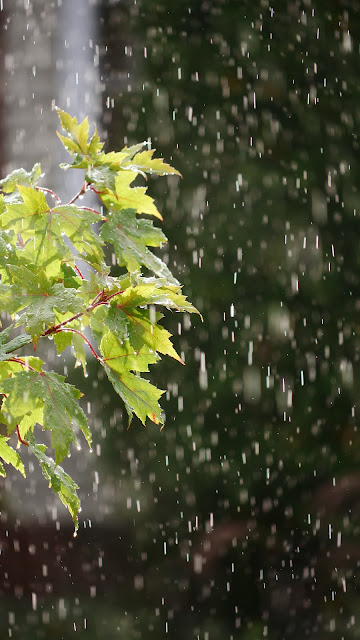
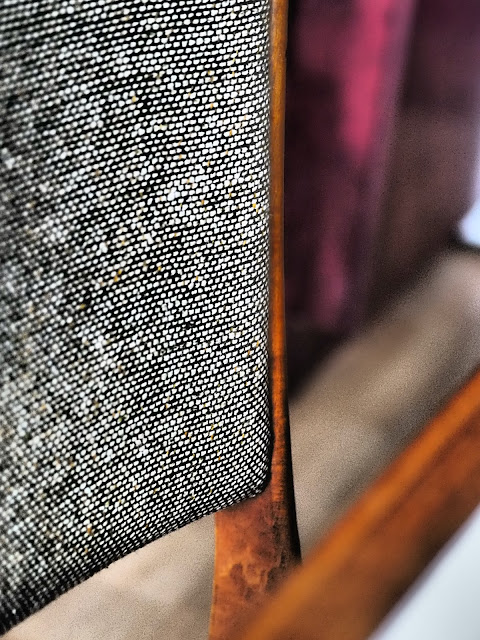
 In photography, the devil is in the details. Sure, the entire context of a picture can be paramount for a better understanding of the story behind, but details are always captivating the lookers and are pushing their reflection about the subject. More than that, the detail can be the only picture object subject. They are becoming an extraction of the total reality of the complete situation. And details have a soul of their own. Don't minimize details and maximize their impact instead.

© Photo Daniel M: OM-D E-M1 III / 12-40F2.8 Pro


01 mars 2022

Micro Four Third??? Yes Sir!


"The reports of my death have been greatly exaggerated." - Mark Twain... and MFT!

We will reverse the problem for one time: Why all those so-call "full-frame" aficionados want that the Micro Four Third sensor format is a dead end into the photographic and videographer gear world of today? It seems a kind of incessant frustration in regard of a certain ascertainment in regard of the difficulty to be a compact and affordable sensor format system when we speak of the digital 35mm incarnation (24 X 36mm mini film format).


But enough controversies to simply celebrate the new gear introductions by OM System (Olympus OM-1) and Panasonic (Lumix GH6) proving that there is still a "market" for good ideas and ... for the good taste! These two new camera models personify the two major MFT trends as photographer and videographer devices. They are professional (or financially comfortable enthusiasms!) intended products, but we understand the marketing goal intention from the two manufacturers to establish a renew credibility. On the side, OM System have proposed new lenses that are a kind of bridges between their most expansive "Pro" optics and their "Premium" amateur ones.

With the Asian market pressure, it is conceivable in a near future that more MFT amateur products will be introduced equally but keeping in mind that the middle range offer will certainly decrease accordingly. So, save your money if you are looking for a more sophisticated camera model with more manual configurations available. The same may apply for the optic offer composition.

Cameras are devices primarily designed for photographic and videographic purposes which is not the case for smartphones or tablets. The last are evidently difficult to handle properly and don't have the same use flexibility. For people who like to do and create imagery with a high-quality level in more extreme subjects or contexts, "real" cameras are still the first choice to make in terms of gear and use. But there is always this historical search for more compact and less intrusive photo (and video) devices, and therefore the MFT sensor format can be a beautiful, complete and reliable answer to that demand.

So, what will be the (far) future of MFT sensor format as for traditional photography as for any visual art techniques? We cannot say it in this great adventure of human expression but that have never prevented us to have the pleasure to do and share photographs between us.

© Photos Daniel M: G95 / G 25mm F1.7; G Vario 12-60mm F3.5-5.6 

21 février 2022

Something has to be different!


 Replication is not a new thing in photography as for variations over a basic theme but, at least, variations are a different exploration of the main subject opposed to simply an endless reproduction of the same formula. In many ways we are asking for stereotypes because we want to be reassured and comforted in our vision of this world and reassurance seems to be a (surviving) key word in this moving surrounding.

Differences are fundamentally provoking facts because they are questioning the establish order of our interpretation of this world. In photography and especially in the recent digital decades, we have definite a kind of esthetic algorithm that reproduce the ways on how we want to perceive our recorded imagery. But it is not about to be simply critical technically or not about the picture, it is about acceptation of its inner value in term of visual original expression. In one word, we don't accept any more differences even if we proclaim the opposite!


Without strong feelings and deep emotions, the art of photography is going nowhere except for its tapestry purpose which we can observe truly over the Web and the (social) media of these generations of (fanatic) adepts. Broking their rules and you are simply excluded or marginalized of this visual planet. Their way of thinking contradicts their artistic pretentiousness because they cannot accept to be generous outside their personal goals.

Accepting differences is not easy for many of us. It can be in highly insecure state of mind. If you intend to experiment something new, there is some chance that you won't be satisfied with the first results you will obtain. But that is leading you to try again and expand your exploration desire. That will push you to question your artistic and technical skills and go further and, at the end, will bring you to an higher level of emulation. Observing (and photographically recording) the world around us is opening our mind to different interpretations of this universe. It is a (very) complex environment which we can subtract elements or parts of it to better understand its nature. As they say, there is no real objectivity in our human curiosity but there is certainly a lot of differences that we have to respect!

© Photos Daniel M: Lumix G95 / G 25mm F1.7 / G Vario 12-60mm F3.5-5.6 Power OIS

15 février 2022

Our Arkitektural Frontiers.


 Design is not a new thing in human history. Because we are essentially big constructer remodelers that distinguishes us from other animal species, we have created a very graphic approach how to rearrange our surrounding world. Straight line, curves lines, parallel ones, perpendicular others, triangles, circles, pentagonal, octagonal, and other representations, etc. are part our search and experimentation to draw a world at our minded image. It could be seen as artificial construction opposed to the "natural" state of the untouched things and it is an evident human civilization signature.

Over the past, we have largely documented the incessant human effort to reconfigure its own eco-system on a macro or micro point of view and architectural photography has been a vast field of recorded observations. We have even imposed some rules to do those pictures although they apply more for scientific or factual comparison purposes over times and locations, and we won't argue of their intrinsic pertinences.


But there is another part of it that is more esthetic and that require a far more artistic approach in visual arts such as drawing, painting, or photographing. And that part is the one that involve a fresh creative view where impact and emotions take the first motivation for their authors. Moreover, a world of rapid changes, substitutions and finally... material obliterations, there is a necessity to document and to interpret all these ephemeral human construction manifestations as a time and culture testimony. Today most of this past presence is vanishing in profit of a kind of standardization of our living space where economics has become the primordial factor.


Every human material organization can be appreciated by its "architectural" approach even if it seems sometime odd, unreasonable or futile. Recording these elements as a whole or in details can be a real photographic challenge not only in regard of the technical aspect to produce a picture but also and more important in considering the artistic point of view of the subject. Contextual examples of architectural photography can be seen into these previous posts. This visual experience is starting right into our own familiar surrounding at home and to our regular daily activities. Observing, noticing, taking pictures on a regular base and in different hours and sharing the results are a very rewarding way to experiment architectural photography.

No limit should be imposed to practice architectural photography and every interpretation can add to the cultural knowledge about the human habitat. It is a very inspiring visual subject to explore with interest and enthusiasm.

© Photos Daniel M: Lumix GX7 / G 20mm F1.7; Lumix GM5 / G Vario 12-32mm OIS

08 février 2022

The Panasonic Lumix G95 / G90: Back to basics!


Many of us have a special affection for the Panasonic Lumix MFT products. Their functional esthetic reminds me all these German designs of the begin of the 20th century with simplicity, durability, and efficiency as essential characteristics of their products. Nothing flashy except maybe for the connoisseurs. But I must add that the different Panasonic Lumix models have never disappointed me over time starting with my tiny Lumix LX5 in 2011.


 The Panasonic Lumix G95 (G90) is incorporating the common 20MP image sensor following the actual standard used into almost every high and mid-range Micro Four Third image sensor format (MFT) camera models. The previous Lumix G85 (G80) has been such a successful camera model (both for users and critics) that Panasonic seems to have mostly replicated the basic design of it to its newest Lumix G95 (G90) which is in a sense a indirect homage of the pertinence of the ideas implemented onto the original G85 (G80). We must underline that the Lumix G95 (G90) doesn't use the exact same camera shell compared to the previous one (G85) therefore being a little bit larger and a little bit heavier. The camera model might appear more robust although there is no way to prove this assert. 

The Lumix G95 (G90) is a weather resistant camera which is qualifying it as a real all-around photographic tool even in more adverse contextual conditions. Of course, the camera body must be couple with a lens which is accordingly weather resistant (WR) to be able to get a total profit of this feature. Panasonic is offering already in many worlds marketplaces the Lumix G95 (G90) with the Lumix G Vario 12-60mm Power OIS zoom kit (WR) lens. So, you just must be aware to select an additional optic that is WR.


The ergonomic of the Lumix G 95 (G90) might be conquer you when you will handhold the Lumix G95 (G90) for the first time. The G95 sense of proportion seems to be ideal (at least, for some of us!). The front and back control dials and the different function push- buttons are well positioned. The back thumb rest give a good prehension that complete the one (prominent) of the front face. The On- Off switch isn't perfectly located but, at least, it is positioned on the Lumix G95 (G90) right side. No joystick is available, but the touch screen optionality may be considered as a useful substitute.

The shutter release button has a two-stage (focus lock/shutter release) feather touch, and its action sound is discrete, a good characteristic for photographer who must operate in quiet surrounding. The two major control dials are rightly located in the right upper front and back of the G95.


The electronic viewfinder (EVF) eyepiece is noticeably recessed from the camera body living a breathing space for your eye and ... for your nose! The EVF image is clear and sufficiently detailed to be able to focus manually with accuracy. The Live Viewfinder (LVF) panel is fully articulated and can be appreciated by both photographer and videographer. All information data can be reviewed on the EVF or the LVF although they don't rotate to accommodate a vertical (portrait) composition.

Except for the lens release button, the Lumix G95 (G90) body front is exempt of any others function lever or button. The camera body top deck remains a model of simplicity. The ISO, the White Balance (WB) and the exposure correction bias have a direct access through dedicated push buttons. The exposure mode dial (P/A/S/M) is complete with two custom modes (C1, C2), creative and scene modes and a fully automatic mode (iA) is available on the spot if necessary. The B setting is available through the manual mode (M). On left side, the shutter mode dial give access to single and continuous shooting sequences, 4K and back focus modes, and finally interval and self-timer modes. Each camera body sides have specific accesses for the memory card and for the wired different connectivity options. The in-board tiny flash is practical for emergency short distance flash fill-in and is rightly positioned into the false pentaprism.


Other functionalities are positioned on the back side of the Lumix G95 (G90) and can be also reconfigured at will for some of them. Therefore, at some point, it can be difficult to remember all the functionalities selected for the multiple functions press buttons or for D-pad. It is up to you to stay familiarized with the G95 by reviewing the functionalities regularly.

The Panasonic Lumix G95 (G90) despite its basic presentation give you access to a very large spectrum of different ways of experimenting your creativity. You can set the camera the way you want, and it will behave to your own satisfactory. The menu is extended but comprehensible. Wireless connectivity is practical with both Bluetooth and Wi-Fi availabilities. The Lumix G95 (G90) is a very easy-going camera to work with since its interface is vastly intuitive. Playing with its different functionalities (even using the menu guide) will allow you to better understand and set the Lumix G95 (G90) your personal way.

The camera is quick to wake up and to be available to photograph. Therefore, the battery consumption is high compared to others competitor products. It is prudent to have on hand an additional battery pack and the use of the optional DMW-BGG1 power (vertical) grip can give you an extended power autonomy, but it stays an expensive accessory although it offers an excellent vertical grip for portrait or action shooting.** 


The autofocus system is efficient for still photography although the tracking option doesn't have the accuracy and reactivity compared to more recent competitor models that have both contrast and phase detection focus operation abilities. The continuous follow focus is manageable with a good success picture taking rate as long the subject movement is not too much erratic. Manual focus can be done through the EVF that have good definition to do so.

The Lumix G95 (G90) stabilization system is a big part of its successful photographic ability. It prevents efficiently to blur generated by the operator unintended movement especially in handheld picture taking situations. It is almost inconceivable today that the modern digital camera models didn't have that specific functionality. Moreover, Panasonic is offering a selection of different optics that carry their own optical stabilisation system (OIS) that can be rightly paired (Dual IS) with the sensor stabilization of the Lumix G95 (G90). It is a win-win situation when you are coupling the camera with a telephoto lens.

The picture review button is located just beside your right thumb and looking to your last recorded image is fast and logically easy compared to some other manufacturer camera models.


The image output.

When it comes to appreciate the Panasonic Lumix imagery output, my first very favorable impression (if not my everlasting) is about their black and white (B&W) special rendering. Coming for that (dark!) age of B&W analog-film, you cannot avoid the pleasure to set the Panasonic Lumix G95 (G90) at its monochrome mode (there are three actually) and enjoy it extendedly. I must add that the color rendering is good equally. The pictures are nice and well detailed especially into the lower ISO sensitivity scale but even in the higher setting (more than ISO 1000), the results are noticeably pleasing.

The creative filters are useful. I love creative filters because they often open our mind to other pictures interpretation bias. Some of them are more anecdotic but some are clearly less intrusive to the picture rendering and can be assimilated as a basic image canvas to explore and exploit. And many of these creative filters (as for the monochrome modes) have a nice setting range in regard of their final effect. 


The future of Micro Four Third image sensor format.
 

Again, we must answer this inevitable questioning about the MFT long term perspective as a system. First, we may notice that the MFT system is already a very mature one in terms of offer and variety of products such as camera models, lenses, accessories. Second to consider, compare to the larger sensor size format other systems, MFT is still more compact and will stay considering its smaller sensor advantage. Third, although the dead of MFT has been anticipated several times, the two major manufacturers, Panasonic, and OM System, are maintaining the availability of the complete line of products. Nobody can clearly predict what will happen in the next 3 or 5 years because it is the way things are working now but don't prevent you to adopt and stay faithful to MFT even if some reviewers or other format fanatics were implying that you must do.

In Brief.
The Panasonic Lumix G95 (G95) is a good camera model that reunite all the characteristics of a competent, durable, and enjoying photo device. For a photo enthusiasm like me, the G95 (G90) answers my search for a compact camera (and lenses) that replicate many "pro" advantages without breaking my small budget. The G95 (G90) can be conveniently coupled with the BGG1 power (Vertical) grip for more battery autonomy, with an external electronic flash for more additional light output and with other specific accessories that are meeting your own choices and needs. The G95 (G90) ergonomic is excellent and its interface complete and easy to interact with. Finally, its image output is very satisfying even for the more asking ones if you stay out of the eternal image sensor format web war. Yes, the Panasonic Lumix G95 (G90) is a fine evolute successor of its beloved predecessor, the G85 (G80).


** If you can afford the purchase of the additional BGG1 power (vertical) grip and the size increase of the camera body, it could be an excellent recommendation for getting a noticeable better handholding of the Lumix G95 (G90). In some country markets, the BGG1 comes already with an additional BLC-12PP battery pack to be use with this accessory.

© Photos Daniel M: Lumix GX8 / G Vario 12-60mm Power OIS; Lumix G95 / G Vario 12-60mm Power OIS / G Vario 45-200mm Power OIS; G Vario 100-300mm Power OIS

01 février 2022

The few (pictures) that really count!


 While scanning through the Flickr Photo public bank, a sudden reflexion strikes me about the futility of presenting a massive number of pictures compare to be more selective and choosing the few ones that can generate more impact, questioning and inspiration. Because, in fact, you don't have to prove yourself in front of others by overwhelm them with a large and motley photo album that will simply induce a fatigue effect from the observer.

Let's be clear. You want to gain the heart of all the people and especially the ones that are often negatively critical by habit, by malice, by insecurity of their own inaptitude to produce and share pictures. These false proclaimed amateur "art directors" cannot understand anything that won't fit their narrow-minded interpretation. They don't want to be surprised, chocked, and learn sometimes new or different. It is a lost cause for you and for them.


Some pictures will survive in your heart and more importantly, will survive from their first taking context which is meaning that the message they convoy is more universal, less limited. Other pictures are often the repetition of something already presented several times in a kind of "pastiche" of the theme they try to reproduce. By opposition, some pictures are another kind of(artistic) search variations that expand the interest of the subject. Finally, some others are more consumable fashionable image representation that may see for a time (if you are lucky) as long they survive to the taste of the day.

Exploring the different Flickr galleries is a good indicator of the kind of documentation work or artistic exploration propose by their respective authors. Although we never really sure about the profound intentions of them, we can, at least, get a certain idea of the impact of their imagery output. By picking a very few of them to be part of my small "favorite" gallery, I want to encourage new talents with a fresh view of our surrounding world. There are often not technically perfect, but they are authentic and inspiring, two qualities that I am looking for in every photograph. That gallery is not only an homage but also an encouragement to go further and to share among other photographers.

There is a misconception about specifically "news" photography and why they do such number of pictures in a short time. Many of these pictures are in fact regarded as safeguards of the moments of the event, the context, and the subject. News photographers already know that will be only an infinite fraction of these pictures that will be selected like 1 of 100, 1,000 or 10,000! And most of these pictures are repetitive with very small variations. At the end, you can summarize them into small subject packages in very few theme and subject developments.

Everyone that is a bit serious about photography like to share his/her pictures but often feel very insecure to do so. It is normal because, in a way, it is a very intimate act that represent you, and your believes, your intentions. But it is an error to submerge your audience with a lot of pictures that will confuse and tired them. We must be more confident and audacious in your attempt to strike people about our pictures. Less pictures but with far more impact!

© Photos Daniel M: OM-D E-M5 III/ED 14-150mm II; OM-D E-M1 II/ED 12-40mm Pro

24 janvier 2022

The Olympus M.Zuiko 17mm F1.8 Premium: the other normal lens


 Of course, everyone knows the usual consensus that defines the "normal" focal length of any picture format by its diagonal of its recording plane-surface. The best known can be referred in the old 35mm film format ( 24 X 36mm) as the 50mm lens although the result of the real calculation in this particular format should have been around a focal length of 43mm.

In fact, with a field angle of about 45 degrees or a little more, these so-call "normal" lenses are often perceived as a little too discriminating and this is why another category of lenses has been developed alongside, often qualified as semi-wide-angle, with a visual arc of +/- 65 degrees. Their effect of distancing subjects from our personal vision is not very pronounced and the general rule is that the distortion produced by their image compression remain modest if not imperceptible.


During the interesting history of modern photography, several authors, reporters, or travelers have favored this other normal focal length (35mm lenses in the 24 X 36mm format), sometimes even venturing with 40mm focal lengths lenses especially present in non-interchangeable single-lens compact cameras. More recently, many 35mm film enthusiasts will remember, among other optics, the Leica Summicron 35mm F2.0 or the Nikon Nikkor AI(S) 35mm F2.8 which were very versatile basic prime lenses.

Today with the pronounced and universal development of zoom lenses, single or fixed focal length lenses have taken a bit of shade, but since a decade or two, we have witnessed their coming back in force with photo gear manufacturers and more particularly with compact mirrorless camera systems. This is how at Olympus (Now OM System) in Micro Four Third (MFT) sensor format, they have developed a whole series of lenses called Premium or Pro series which correspond well to the focal lengths prized by lovers of fixed focal lengths. Among these, there is this Olympus M.Zuiko 17mm F1.8 now accompanied by its more recent big brother called the professional 17mm F1.2.


The Olympus M.Zuiko Premium 17mm F1.8 can be the ideal companion for a compact camera such as the OM-D E-M5, E-M10 or Pen-F models. Its visual field of 65 degrees corresponds to a visual rendering comparable to the area of ​​sharpness of the human eye (even if our total visual field is of course much larger). This 17mm F1.8 is compact and relatively light. It can be focused automatically by the camera or set manually on the fly since the focus ring has two convenient and directly accessible positions (clichy functionality). Its very metallic construction is serious but the lens is not officially qualified by the manufacturer as weatherproof.

The Olympus M.Zuiko 17mm F1.8 belongs to this category of lenses that I like to call contextual, i.e. direct proximity of the subject. We find in this family, other focal lengths such as 12mm, 15mm, 20mm, 25mm or even 42.5mm and 45mm, all adapted to the MFT format. But the 17mm has the added bonus of being a true "al purpose" lens that can pick up for many subjects spontaneously. And it's not an intimidating lens. Although it is seen primarily as a street or travel optic, it can be used as a documentary lens.


Because the Olympus M.Zuiko Premium 17mm F1.8 is not a zoom lens, it will require greater availability of movement from the choreographer-photographer-author in order to obtain the assurance of a framing or of an adequate composition and to optimize the quality of the anticipated result. Of course, this is the case with most fixed focal length lenses. However, these invariable focal length lenses are tools that provide superior image quality than zoom (vario-focal) optics as many photo gear reviewers proclaim and often demonstrate. They are less demanding (and more linear) for the corrective software embedded in current cameras. This smaller correction process induces a greater fineness of definition of the image and contributes to a much less destructive post-processing even in the situation of a pronounced reframing.


You may find that this Olympus M.Zuiko Premium 17mm F1.8 is the only lens you really need in most photographic tasks. In any case, this 17mm will be able to fulfill its mandate well and will become a much-appreciated companion, no doubt about it.

(French original version previously published in February 2018. The text has been enhanced for this more recent English version)

© Photos Daniel M: Pen-F/17F1.8; OM-D E-M5 II/17F1.8

15 janvier 2022

Klimatik Views: the future of planet Waste-Land


 Over the past few decades, the climatic debate around the world has been amplified year after year peaking just prior to the present sanitary crisis that is prolonging itself for more than two years now. Climatic changes are a fact almost universally accepted except for people or organizations that don't want to acknowledge its profound implications in socio-economic terms. Their biased or ignorant points of view will be fruitless in front of the inevitable perspectives, but they are buying time for their own interest.

As photographers, we can only record the obvious testimony of the environmental situation and its effects on our life and our planet. The human demography in constant growth have altered severely our landscape and way of life. Simply showing our pictures (and films) have alimented our conscientious ad sub-conscientious about the phenomena (climate changes) even if we are facing more at first, the disastrous aftermath effects in comparison of the possible alternatives. On that specific point of reforming us, the solutions can be either personal or collective.

Transiting from a consumer culture to a more ecologically respect attitude is not an easy task. For one, the photographers of this world are often frenetic consumers themselves and the photo gear manufacturers have become marketing master of that tendency based on their market survival in the classic definition of a producing economy. How many camera models, lenses and accessories associated to, are finishing their life span on tablets, closets, or simply waste dumps? This is an amazing warning about our anti-ecologic habits.


Climatic changes are rightly associated with human activities and especially the ones that are not particularly efficient by transforming basic resources into nonreusable residues. The planet Earth is in any ways a big waste park and a plastic dead ocean. It is correctly frightening if you are not an ignorant (the term ignorant is used here with kindness).

What has happened to the nature? Some may still have the illusion that we can "restore" the natural state of planet Earth as it was a few centuries ago but this is a big illusion like having personal garden for everyone in this humanity. It is radically impossible. Yes, we can create big or small zoologic zones in certain protected areas, but the interest stops there. Nature views as a free and infinite state of animals and things is a long gone past since the human exponential demographic growth that will conduct us a general planetary urbanization. Many vegetal and animal photographs are now taken in subtraction of their context and that may appear disturbing for the picture lookers who seems to have and maintain a preconceived view of what is the "real" habitat of them. In doing so, the culture of denying the obvious profound planet changes is "preserved" and is avoiding any observations, analysis, and debates regarding this question.


There is no "objective" way of observing, recording, and interpreting the world surrounding us. We don't want to emphasize the evidence of our general consumer destructive habits. For many, seeing this testimony of desolated and destructed areas is too much disturbing for their taste of beauty and harmony. The question is why it is so disturbing? May be because we are sharing a kind of responsibility regarding those images obvious testimonies.

It is hard to not do an instant judgment about reprehensible behavior without really knowing the contextual factors that have contributed to act "against nature". Wilderness for one has been looked as a granted gift in the past (even recent one) but it is now perceived as a lost cause for humanity. The climatic change warning is a beckon on what we must base the start of a more global discussion concerning our human future and heritage and photography might help to open our eyes and to document our search and our analysis of this changing situation state.

© Photos Daniel M: G85/45-200 OIS; Pen-F/45F1.8; Pen-F/14-42 II R

08 janvier 2022

Crispy Contrasts or how to catch the eye!


 I love contrasts! My camera too! And its autofocus system is crazy about contrast at a point that if there isn't any, it refuses to work properly! Contrasts are an important part of this life. Contrasts in lines, in colors and gray tones, in people and subjects, even in opinions... Contrasts are creating differentiation between things, surfaces, graphic forms, etc. Contrasts catch your attention and are pushing us to try to get more details which are part of the image definition. Yes, we love or hate, for some, contrasts but we are not indifferent to contrasts, even on a very philosophical point of view.


Getting the maximum contrast and preserving a maximum of details, that is the question! How can we do it without losing too much differentiation while maintaining the nuances. Not only that but we don't want to transform a photograph into a photo paint that will eliminate too much authenticity of the subject and its context. "Hard" black and white photographic representations (without medium gray tonal scale) use to have a certain popularity during the 1960's for example but now people are asking for more sophisticated pictures.

Color opposition is another kind of visual contrast.
Color contrast also called complementary colors is another way to create strong separation between surfaces or textures or volumes. In a way there are more spectacular in their effect although they may become more distracting of the main subject of the picture. Color patches are always attractive especially if you are creating a specific "mood" in your picture.

The better dynamic of digital photography.
One thing that the digital era has brought to photography is its fantastic ability to render details from the different and largely dispersed picture light zones. That detail capacity has opened a new world in permitting to record and to enhance the pictorial subject/context to a level never seen before and mostly without too much destructive post-photographic manipulations. All this have allowed the photographer to register contrasty pictures with more profound representation of their subject. " The devil is in the details!"


Contrast of subjects.
By opposing different types of subjects, we are creating a contrast of ideas, of contexts, of people that will increase the single impact of them individually speaking. that will add to the analysis of the picture observers. Yes, it is essentially a cultural point of view for most of us that is differing from the various human groups or cultures, but the basic interpretation of the picture author stays as a personal afterthought regarding his/her surrounding world.

A life of contrast is that make the living so interesting, so instructive, so challenging. Why stay drab when you can get higher in every sense of the word?

© Photos Daniel M

01 janvier 2022

Generosity (the only way for humanity to survive!)


 Generosity is not in any way a very popular word in our consumer society. It is not only a materialist unavoidable fact but also a counter-philosophical point of view that prevents any kind of appreciation and help for others even the closest ones. In these actual days, to give is becoming a personal loosing attitude.

We are at a point that there is no more desire to communicate, to inform, to enlighten others and the world surrounding us. Yes, we like to be confirmed in our tastes, choices or own actions or reactions, we like to be comforted when we need to get some sort of life motivation but in a sense, but there is nothing there that is supposing in any way that we are open to suggestions or new ideas and certainly not to any critical remark!

So, we are inventing humanity without humanity. We are all the greatest, all the finest, the most extraordinary person among the others. We are the star of our own planet if not the entire galaxy. And ... it is simply a pity for all of us because we may have already notice that we, humans, are only fragile, momentaneous fragments of dust in this universe. Some may reply to that the true is not the true, but they are contradicting themselves by pretending that they are telling the true!

And a human alone is a very lonely person, physically, mentally, irremediably. Our strength has been always the summation of a group of individuals rather than the work of a God, a prophet, or a dictator. Our intelligence is based on not only personal observation and analysis but in collecting critical information, points of view and discussions from other fellow humans. Singly, we are a dead end, collectively, there is no limit on what we can reach.

The theme of generosity as I state earlier is not a today popular one except if we understand how important an open social behavior can be our salvation and progress hopes for a better future, different, interesting, and exhilarating. Be generous in any way, that can be our best resolution for this new year!

© Photo Daniel M

21 décembre 2021

Are you a professional photographer? No, I’m simply a stupid tourist! Ah! OK then…


Beware: the front picture illustrating the article has been taken in September 2019 at Lisbon. Other times, other customs!
😉

There were more simple times when people had still a tendency to rely on your words (that was a long time ago, it seems!). The problem when you are doing photograph a bit more seriously (without taken yourself seriously) is that people have defiant reaction versus your suspicious photographic behaviour upon them. In fact, it is not a new thing even if you are looking further in the past. Photographers tend to be intimidating simply because they are staring at people and things a little much longer then usually.

But is there a more stupid photographer than a tourist one? I don’t know why but tourist are often exempt of malicious intentions since they understand nothing about the world surrounding them. And if they are staring at something, it is only because they don’t know what they are facing. And if you add a « stupid » smile on your face, it is only confirming your mindless innocence. And tourists have money (any pickpockets of this world know that), and so, they have beautiful, sophisticated cameras that they don't even understand the basic use. So, in brief, no danger there.


Don’t spread the word but you may already aware that I have been a professional photographer in my previous life, and I have learned to dance with the rhythm of many photographic situations. I don’t do so-called street photography but instead tourist tapestry and everybody is correctly reassured. And you know what, photo opportunities have been falling in front of my (tourist trap) camera without really searching them. Sure, there is a bit of anticipation and experience in that but, chut! don’t tell them. If you add that you are speaking a tourist language (French, English, Japanese, etc.), you have the perfect tourist camouflage.

And please avoid those serious « full-flesh » camera models (also called full-frame) that, when pointed to the autochthone people, will provoke adverse and suspicious reactions and can conduct you up to the police or military stations! Being a idiot amateur photographer is so more beautiful and securing for everybody.

No, I’m simply a stupid tourist (of this life)! Ah! OK then…

© Photos Daniel M

14 décembre 2021

About ( compact camera) preferences...


"The way it is ..."
Bruce Hornsby and the Range

We like to photograph, and we like the cameras. It's maybe obvious but, in fact, it isn't that simple because there are so many possibilities and choices in photographic equipment, that it is often overwhelming especially for the most passionate ones. Over the past several years, I had the opportunity to try, and to compare many camera (and lens) models. Digital cameras were a new field the manufacturers had to fulfill. So, it was fascinating, to say the least.

Novelties have been always attractive for many photographers that are always interested to try and improve the tools they are using. And the technical advancements in photography into the last decades were amazing in terms of easiest of doing pictures and having outstanding image results. In the still photography field, we were privileged to assist and to profit all those developments over the years. Today we may think that we have reached a certain plateau that allow us to reconsider at last to have photo equipment for a more lengthily period of ownership and ... use!

My current photo equipment
The love of (real!) compact cameras, for good imagery, for decent performance (exposure metering, autofocusing, reactivity, reliability, etc.), to have access to an extended line of lenses and for a competent stabilization system (in-body-image-stabilization-IBIS) have certainly oriented my currents choices. Ergonomic and style also, I must confess. For me, a good design must be esthetic and effective.


If I feel dedicated to do photography on a specific assignation or subject, my preferred choice of the day will be the former Olympus (now OM System) OM-D E-M5 Mark III coupled with the M.Zuiko ED 14-150mm F4-5.6 II which is not only a very versatile combination but also weatherproof. For more specific long-range subjects, the Olympus ED 75-300mm F4.8-6.7 II will be a good complement (although it is not weatherproof). The OM-D E-M5 III/ED 14-150mm II is excellent for travel and outdoor photography and it can be used for interior and lowlight situations, thanks to the IBIS of the camera*.

For a more casual and discrete companion, my Olympus Pen-F** is also excellent because of its non-intrusive presence which is good for urban subjects and interior picture catches. Coupled with a small lens such as the M.Zuiko 14-42mm F3.5-5.6 R II or the M.Zuiko ED 45mm F1.8 Premium (a personal favorite since my first Olympus EP-3 model), the Pen-F is an outstanding rangefinder style camera model. These two camera models (OM-D E-M5 III & Pen-F) are using the same 20MP image sensor and the same picture interface with the consequence that you can predict similar imagery from both the OM-D E-M5 III and the Pen-F.***


I haven't never been able to make a definite choice between rangefinder (off-lens-axis viewfinder) and SLR (on-lens-axis viewfinder) style cameras so, ownership of both the OM-D E-M5 III and the Pen-F has been imposed by itself. It gives me the opportunity at a relative low cost to cope with the two different photo gear style. You can get a similar approach toward other manufacturers like Panasonic or Fujifilm since they offer the same alternatives into their camera line.

The cameras that I love to use are the ones that inspired me to do photograph and extend my picture quest on various subjects. On a longer run, the compactness criteria have always been a basic issue and time tend to confirm that is useless to think differently. The Micro Four Third image sensor format correspond precisely to that photo equipment philosophy. Some may privilege a more cinematic approach and will choose to work with the Panasonic Lumix models which is a perfect match in that (video) case****, others like me are more traditionalists by doing mainly still photography and will rather like the OM system line of products (formerly Olympus). At the end it is up to you to considerer your own feelings about the tools you like to work with.
___________________________________________

* Internal camera sensor stabilization (IBIS) has become an essential feature for me partly because I like the optionality to use non-optical-stabilized lenses (OIS).
** If you can still find one, just buy it!
*** If you ask me what would be my professional choices (in consideration of the more intensive use of the camera/lens into more demanding contextual situations), I will surely opt for the OM-D E-M1 II or III plus the M.Zuiko Pro zoom lens duet, 12-40mm F2.8 and 40-150mm F2.8 (with one camera body for each lens). But those professional exigences are now a think of the past in regard of my day-to-day concern.
**** Although the Panasonic Lumix G9, G85/G80 and G95/G90 (all weather resistant) have also excellent ergonomic and performance  for still photography.

© Photos Daniel M: OM-D E-M5 II/ED 14-150mm II; Pen-F/45mm F1.8; OM-D E-M5 III/ED 14-150mm II

07 décembre 2021

Insouciant Memories!


 Life has been good for many of us including myself. When I look the backward for this time, I am always fascinated by the chance we have as a special generation to be witness of such rapid human evolution even though it was not always for the best of humanity and its planet habitat, vegetal and animal. We as a so-call civilizations are highly turbulent people that have an often-deranging behavior in regard of this great universe that we are only beginning to partly understand.

During that period of falsely certitudes that we have developed mainly because of a certain technical advancement (industrialization, scientific discoveries and new methodologies, computer technologies, instant telecommunication, etc.), humanity never has asked itself about his own limitations and about the ones that surrounding them. But now we are so numerous and that we are aware of it, this unconscious brave facade is beginning to collapse almost brick by brick, and moreover the new insecurity doesn't guaranty that reason will finally prevail on the contrary, it seems.


Photography is basically an imperfect regard of humanity even when there is no people presence as the subject of it. It is a cultural expression of the past, the farthest to the most instant one. A kind of visual testimony of the interest of their authors. Every photographic part can be archived, summarize, analyze, and transmitted for future generation of lookers. The very significant of the picture can vary entirely with time and different auditors.


Today we are preoccupied people (at least some of us!) and confused t the same at a point that humanism seems to be very low in the priority list of this society. It is disturbing to have seen the shift from a collective dream with no frontiers where nothing was impossible to a very dark and narrow perspective of survival. Even the act of communication that was the obvious intention of link and reconciliation between us, has become the instrument of division and controversy. The dark side of humanity has taken the lead, and many are look for an emperor instead of a participating republic. The (non?) evolution of the photographic Web sites often illustrate this chaotic change.

Make your point, at first, can be understandable but it must be done with an open mind to be able to reunite at this very point of view the assemblage of all the others especially when you cannot really ignore them in this crowded world.

Is the selfie photo planet already a think of the past? May be or maybe not. We were told that humans are social animals (by definition), but in a perceptive overpopulation situation, what can be expected from individual behavior? Photography is also a social act of visual expression but now does the people are still willing to be curious and agree to not only tolerate but also to try to understand the differences? And this is where my "insouciant" memories leave place to apprehended worries.

_______________________________________________________________________

© Photos Daniel M: OM-D E-M5/ED 12-50mm; GX85/12-32mm OIS; G95/100-300mm II

01 décembre 2021

Nostalgia is for good memories!


 We are used to ear that the past was better than the present time but in the far back of our mind, we know already that is most likely never the case, that today give you better chance to live in better conditions that will be difficult to simply ignore. Photographers experiment the same attitude toward the analog past era compared to the actual digital world. And most of them have a limited if not at all experiences from those analog times.

I was born into the analog era and have learned and worked to use those photo gear that everybody seems to cherish today as collectors and, sometimes, as users. And many of them rediscover the "magic" of the film-analog but as every magical field, there is a lot of secrets to be unfolded before getting the "picture" you are looking for. Because analog techniques are more demanding and obviously much limited at the same time. And they are not particularly forgiving.

I remember clearly the first time I have literally seen a picture apparition from the developing tray of my school photo laboratory. And yes again, it was so magic! At those times, we were accepting any picture as extraordinary even if they were (very) far from perfect. By today's standards we will never consider them as interesting or to be preserved. If you want to be convinced of the complexity to produce nice film analog pictures, I recommend to you the lecture of these three excellent books from the American master photographer Ansel Adams, The Camera, The Negative and The Print.

Acting as a photo reporter during several years, I can testify about the difficulties and the insecurity of doing analog photography. With time, I have experimented many frustrating situations in regard of the picture taking contexts, film and print failures and imperfect results. The event of the the digital photography was an outstanding liberation for many reasons not only technical but also practical (especially for documenting and sharing your pictures) and psychological in term of security (you see what you are taking).

It happens time to time that some personal souvenirs are popping in my mind recalling the good days of analog photography but then I pick up my digital camera just beside my keyboard and fairly appreciate its instant availability and reliability to do and create beautiful pictures that I can look and share easily. Yes, nostalgia is really for good memories!
_________________________________________

© Photo Daniel M: OM-D E-M1 II/ED 40-150mm Pro