Every time that we are facing to an inevitable transformation or we are on a verge of a more fundamental change, you can see all those sudden and popular trends proposing going back to the past. But it is profoundly human to be insecure about something we don’t really know how it will establish themselves in your day-today life.
The obvious example of that in the photographic field is the reemergence of the interest in film photography, a technique that have been substituted and surpassed by the digital technology. For sure the digital photography emergence doesn't prevent many people to persist in using the old film technique and its associated and still available products as long it will possible to do so. There will be surely some supplying and environmental issues regarding this resurgence, but we won’t elaborate about these issues.
Going back seems to be reassuring although we must add that for most of us, we have already understood the virtues of going ahead with the future of things. In fact, is it possible to going back by simply ignoring, boycotting and refusing the progress as a positive value of the evolution of humanity? And this is not the most intriguing about going back idea because for some of those who defend these trends, going back is a better solution than looking ahead. Like a kind of time-laps refuge that will defend ourselves again the uncertainty of the future.
There is not only one factor that is pushing the evolution of things. It is an array of decisive multi-reasons, multi-events and multi-influences (external) that is provoking the change. Digital photography is not only related to a specific technology of equipment, it is also the result of the global spreading of personal and commercial communication through Internet. If the camera makers have not followed this trend, they would have been simply eliminated from their market share and, in fact, some have already paid a higher price for having been to slow to do it.
Now we are entering into a new social physical distancing era for obvious reasons. And it will last for a longer period of time that we have first anticipated it and hoped that everything will back as it used to be in a very short time. That will be not the case and the Internet social channels are becoming more and more important and less recreational too. Photography will have to adapt itself to this intermediate reality, at least for a few years and, who knows, it can be a more permanent change in a long term.
I think you have past the photo equipment review blogs domination over the Web as many of them are not only redundant but also not so pertinent in a more mature market. We have to move ahead with the real purpose of doing photography which is sharing your personal visions of this world. Hardware or software subjects have to be rightly replaced by the true subjects of the pictures or photographs. And the discussion must evolve to the family of man (and woman) and his/her surrounding universe.
30 avril 2020
26 avril 2020
Autour de l'humain en photographie
Nous vivons tous à travers cette crise sanitaire et socio-économique un sentiment d'incertitude et de questionnement sur la pertinence de nos actions, de nos attentes et de l'empreinte que nous voulons laisser de notre passage dans cette vie. Mais fondamentalement, peu importe ce changement apparent de perspective, tous les grands thèmes qui animent notre humanité demeurent. Et ces thèmes sont souvent la base mutilatrice de l'expression photographique et de toutes autres formes d'expression humaine.
Le médium photo est connu, maintes fois expérimenté mais toujours renouvelé. Sa nature même a évolué et ces supports de représentation passant du verre, au papier jusqu'à la projection éphémère et virtuelle, ont continué leurs mutations incessantes. Son public d'abord très généraliste s'est transformé en des auditoires de plus en plus spécialisés sans oublier son côté individuel axé sur un visionnement très intimiste.
Le plus grand thème de la photographie reste l'humain que ce soit explicitement ou très implicitement car la photographie est surtout un fait culturel qui se définit et définit à travers ses auteurs. Il n'y a pas de photographie automatique, spontanée sans que ce soit au départ une intention (humaine) de se faire.
Donc l'humain domine la réflexion photographique. Bien sûr les variantes d'interprétation de ce thème fondamental sont presqu'infinies.
L'humain (sa nature)
Centré sur un soi-même corporel d'abord, les esquisses photographiques de l'humain peuvent passer du réalisme de représentation au surréalisme quasi-virtuel. C'est un portrait de l'âme, de l'émotion, de l'expression des attitudes, des gestes et, par extension, des intentions. Le visage de l'humain ne délimite pas qu’à sa partie faciale mais englobe toute sa représentation corporelle. C'est aussi un témoignage de la diversité raciale, culturelle, sociale et économique.
La créativité humaine (son édifice, ses activités)
L'humanité bâtit sa maison, son refuge, son domaine par souci de sécurité, de prospérité et de plaisir. Cet édifice jamais terminé se métamorphose au gré des années, de sa localisation, des saisons, des envies et de l'invention, du pouvoir de posséder et d'afficher, bref ses motivations sont multiples.
La présence humaine (son environnement)
C'est la conséquence du précédent (la créativité humaine) où l'environnement naturel et planétaire de l'homme doit subir toutes sortes de transformations et, souvent, faire l'objet de sa consommation définitive. Historiquement l'humain propose plus la dénaturation plutôt que la préservation de son environnement. Il considère la nature comme un réservoir de ressources à sa gratuite disposition et n'a souvent aucun véritable respect pour celle-ci, la bouleversant allègrement et sans retenue. La présence humaine, c'est avant tout la tragédie d'un état planétaire.
La trace humaine (sa pérennité éphémère)
Que restera-t-il de cette humanité après son déclin matériel universel inexorable et planétaire? À moins qu'il ne mute en pur esprit ce qui est peu probable devant sa spiritualité infantile, le leg de l'humain restera éphémère si ce n'est par les messages lancés par l'univers comme des bouées de sauvetage lancées sans grand espoir. Est-ce qu’il aura une post-humanité? Cela apparait presqu'impossible par sa nature foncièrement matérialiste. Avons-nous une parcelle d'éternité en nous ou plutôt une petite semence de pérennité à transmettre à l'univers? C'est encore à voir si cette trace saura perdurer momentanément.
La spiritualité humaine (sa raison d'être)
Alors se pose toujours ce pourquoi de l'humain. Une raison d'être qui pourrait la justifier dans ce grand ensemble qu'est l'univers. À ce propos nous n'avons pas toujours été modeste et aujourd'hui, nous tentons toujours de définir cet univers à partir de notre petitesse vaniteuse mais bien éphémère. Mais quand l'humain se met à réfléchir sur son modeste destin, il a souvent la sensation du vide spirituel auquel il s'est bien accommodé longtemps. Et cette spiritualité humaine s'est souvent exprimée dans l'exclusion plutôt que l'inclusion ce qui en résultait au final à un cul de sac, somme toute, prévisible. Serons-nous aller au-delà de notre petite humanité? C'est une question bien fondamentale.
09 avril 2020
Photography: this cycle is over!
This is an article theme that we are used to read since several decades. It has been evoked when the roll film has taken over the photographic plates. It happened again when compact 35mm film cameras have sweep the larger format ones. It happened again when electronic cameras push the mechanical ones to obsolescence. It happened another time with the apparition of the digital photography. And now we are speaking of the end of the D-SLR type domination in favor of the mirrorless camera’s devices.
But there is another phenomenon that is may be a far more preoccupation for all the supporters of the traditional photography. The lifetime of all the present photographs has been cut to almost nothing, from the documentary and archival purposes to the actual instant consumerism with no intend preservation. Images as a whole, have not been so present into your society but individual iconographic representation are vanishing almost as fast they will appear. Photography have loose one if not its most important task: preserving those precious moment as testimony of our human presence.
In search of a (durable) purpose
The history of traditional photography is a very fascinating one. Its peculiar story has demonstrated right from its start a huge popular interest for the new visual medium. Even with its very limited initial technology, photographers of all over the planet and any conditions have found different ways to express their art and to share theirs results. The pace of photography in our society has been frenetic right from its beginning. People were very aware about the real potential of photography and they manage to use it.
Almost all the greatest themes in photography have been exploited during its infancy. Travel, documentary, scientific, journalistic, fashion, portrait, family, abstract, nude, nature and many more have been the core pretexts to do pictures and printed them for prosperity. Because photography can be a precise and detailed medium, it offers a very rich testimony of the past and present that is describing more meticulously our surrounding and ourselves.
It is now more difficult to us to apprehend the major role that photography has stand for many decades to our recent civilization. Because the importance of history and its study has been depreciated in our present consumerist society, (authentic) photography tend to be less and less popular. Places or media channels to show and preserve it are disappearing at a fast pace. Many recent tentative have failed to reintroduce an appeal to enrich ourselves with pictures that are revealing all the aspects of this civilization without the pollution of marketing censorship.
In search of a public
Photography has been for almost two centuries one of the most favorite way of visual expression both artistically and for documentary private or public purposes. All kinds of public were demanding for pictures and we have seen a plethora of photographic different channels overtime that fulfill the everybody visual appetite. Today it would be inconceivable to live in a world without the iconographic contribution. And photography is still "the" universal language that most of us can refer without prevention or the need of special translation. For sure the problem of the different photographic interpretations for the same image is still a challenge for the various publics of this planet.
Although the demand seems to be ever growing, by a strange phenomenon, traditional photography had loose most of its presence and have been replaced by the "photo illustrations" who are creating totally controlled (often fake) visual universe to fulfill more often their promotional task into the commercial, social, economic and politic fields. As I have state elsewhere, authenticity has simply been put aside in favor of idealization of the iconic representation. People have chosen to be reassure in their vision of this world instead to stay inform and actively reactive. Photo stories based on reality without too much filtering have no longer general channels to get diffused.
Which is bringing us to the Internet alternative often seen wrongly as the life buoy of many traditional media channels. That initial perception of an open, free and universal way of popular communication have been changed for the todays highly commercialized Web tool that its sophistication has pushed aside the less fortunate communicators. Even the (private) social media channels have imposed specific user constraint that have mainly standardized their contents.
If I am very critical of today’s photographic diffusion channels, it is because it seems that the most interesting and provoking contents appears to be totally evacuated in profit of those never-ending standards edited (winning contest) pictures. We are the "Don't Rock the Boat" civilization preferring the comfort of a repeating pattern instead of the disturbance of the difference.
What's next?
Sure, we are moving ahead. Human stagnation never has been an enduring option for the future. We need to progress, to evolve and to elevate ourselves. And into the need to move ahead, there is a basic curiosity stimulus that give us a strong motive to try, to push, to jump on the other side. What is photography if not an act to project ourselves through a visual flash of reality that is recorded into a virtual support that we share with others.
Photograph is an act of self-expression which allow us to select a special moment of time, a special space and subject arrangement of a fading reality. But fundamental photography is not a pure invention issued from our imagination that is simply using light effect and an object or subject drawing to create a completely virtual universe. So, is there always a place for a more "realistic" photographic quest? Before saying yes for sure, we have to ask ourselves if we are still interesting about this world surrounding us or if we think that we are now enough self-sufficient in every way for evacuating any "outside" disturbances that are questioning our selfish behavior.
The recent world crisis has forced us to refugee ourselves in a very secure cocoon to simply survive further. What will happen next? Do we want to reopen humanity to its diversity and share its rich culture heritage? Can photography be able to participate to a new emancipation of the people on a universal level? For that, it has to be seen what our choice in this crossroad of the future will be.
But there is another phenomenon that is may be a far more preoccupation for all the supporters of the traditional photography. The lifetime of all the present photographs has been cut to almost nothing, from the documentary and archival purposes to the actual instant consumerism with no intend preservation. Images as a whole, have not been so present into your society but individual iconographic representation are vanishing almost as fast they will appear. Photography have loose one if not its most important task: preserving those precious moment as testimony of our human presence.
In search of a (durable) purpose
The history of traditional photography is a very fascinating one. Its peculiar story has demonstrated right from its start a huge popular interest for the new visual medium. Even with its very limited initial technology, photographers of all over the planet and any conditions have found different ways to express their art and to share theirs results. The pace of photography in our society has been frenetic right from its beginning. People were very aware about the real potential of photography and they manage to use it.
Almost all the greatest themes in photography have been exploited during its infancy. Travel, documentary, scientific, journalistic, fashion, portrait, family, abstract, nude, nature and many more have been the core pretexts to do pictures and printed them for prosperity. Because photography can be a precise and detailed medium, it offers a very rich testimony of the past and present that is describing more meticulously our surrounding and ourselves.
It is now more difficult to us to apprehend the major role that photography has stand for many decades to our recent civilization. Because the importance of history and its study has been depreciated in our present consumerist society, (authentic) photography tend to be less and less popular. Places or media channels to show and preserve it are disappearing at a fast pace. Many recent tentative have failed to reintroduce an appeal to enrich ourselves with pictures that are revealing all the aspects of this civilization without the pollution of marketing censorship.
In search of a public
Photography has been for almost two centuries one of the most favorite way of visual expression both artistically and for documentary private or public purposes. All kinds of public were demanding for pictures and we have seen a plethora of photographic different channels overtime that fulfill the everybody visual appetite. Today it would be inconceivable to live in a world without the iconographic contribution. And photography is still "the" universal language that most of us can refer without prevention or the need of special translation. For sure the problem of the different photographic interpretations for the same image is still a challenge for the various publics of this planet.
Although the demand seems to be ever growing, by a strange phenomenon, traditional photography had loose most of its presence and have been replaced by the "photo illustrations" who are creating totally controlled (often fake) visual universe to fulfill more often their promotional task into the commercial, social, economic and politic fields. As I have state elsewhere, authenticity has simply been put aside in favor of idealization of the iconic representation. People have chosen to be reassure in their vision of this world instead to stay inform and actively reactive. Photo stories based on reality without too much filtering have no longer general channels to get diffused.
Which is bringing us to the Internet alternative often seen wrongly as the life buoy of many traditional media channels. That initial perception of an open, free and universal way of popular communication have been changed for the todays highly commercialized Web tool that its sophistication has pushed aside the less fortunate communicators. Even the (private) social media channels have imposed specific user constraint that have mainly standardized their contents.
If I am very critical of today’s photographic diffusion channels, it is because it seems that the most interesting and provoking contents appears to be totally evacuated in profit of those never-ending standards edited (winning contest) pictures. We are the "Don't Rock the Boat" civilization preferring the comfort of a repeating pattern instead of the disturbance of the difference.
What's next?
Sure, we are moving ahead. Human stagnation never has been an enduring option for the future. We need to progress, to evolve and to elevate ourselves. And into the need to move ahead, there is a basic curiosity stimulus that give us a strong motive to try, to push, to jump on the other side. What is photography if not an act to project ourselves through a visual flash of reality that is recorded into a virtual support that we share with others.
Photograph is an act of self-expression which allow us to select a special moment of time, a special space and subject arrangement of a fading reality. But fundamental photography is not a pure invention issued from our imagination that is simply using light effect and an object or subject drawing to create a completely virtual universe. So, is there always a place for a more "realistic" photographic quest? Before saying yes for sure, we have to ask ourselves if we are still interesting about this world surrounding us or if we think that we are now enough self-sufficient in every way for evacuating any "outside" disturbances that are questioning our selfish behavior.
The recent world crisis has forced us to refugee ourselves in a very secure cocoon to simply survive further. What will happen next? Do we want to reopen humanity to its diversity and share its rich culture heritage? Can photography be able to participate to a new emancipation of the people on a universal level? For that, it has to be seen what our choice in this crossroad of the future will be.
07 avril 2020
Photographic Community Identities
There is no question about the existence of many photographic communities around the world. Their purposes are various and reflect the different interests that reunite people to photographic themes such as styles, schools, professions, genres, gear, etc. What the introduction of Internet had changed was the higher facility to reach and share these diversified groups of interest.
Socializing through digital virtual channels is not really a new thing since the Internet had been becoming for more than two decades the privileged communication structure of most modern communities. But in doing so the people relations are now proceed a to more on an international base with an obvious cultural blending. It has opened the exchanges at a more instructive and enriched cultural level.
With time many group plate-forms have specialized their subjects creating niche interests that eventually evacuated other subjects initially discussed. As a generalist myself, I have found more and more difficult to avoid all the associations with narrowed subjects that are now orienting many Web (or Blog) sites. An easy example can be observed into the numerous Web sites reviewing photographic gear. Many of these sites have been transformed to (political) commercial self-promoting groups that have loose almost any detachment regarding the various photo equipment products. There are even fierce wars between specific gear users divided by their manufacturer’s product choices.
So the identity debate is very actual. In a way nationalism had been substitute by commercialism. With the actual sanitary and economic crisis, it may be the time to realize how we have loosened touch with the essentials of Photography that is ... doing photography and share it! Everybody is talking about a "pause" imposed to your way of life dominated by consumerism. Is the way we want to ultimately transform, spend and dispose of your planet resources for short-term selfishness? Are we happier with that way of life that excludes more and more mind opening to someone or to something different that could push us to emulate and to progress?
As photograph, curiosity should be a strong stimulus to get original contents that will be interesting to share. Let's hope we won’t lose this photographic universal fundamental spirit.
Socializing through digital virtual channels is not really a new thing since the Internet had been becoming for more than two decades the privileged communication structure of most modern communities. But in doing so the people relations are now proceed a to more on an international base with an obvious cultural blending. It has opened the exchanges at a more instructive and enriched cultural level.
With time many group plate-forms have specialized their subjects creating niche interests that eventually evacuated other subjects initially discussed. As a generalist myself, I have found more and more difficult to avoid all the associations with narrowed subjects that are now orienting many Web (or Blog) sites. An easy example can be observed into the numerous Web sites reviewing photographic gear. Many of these sites have been transformed to (political) commercial self-promoting groups that have loose almost any detachment regarding the various photo equipment products. There are even fierce wars between specific gear users divided by their manufacturer’s product choices.
So the identity debate is very actual. In a way nationalism had been substitute by commercialism. With the actual sanitary and economic crisis, it may be the time to realize how we have loosened touch with the essentials of Photography that is ... doing photography and share it! Everybody is talking about a "pause" imposed to your way of life dominated by consumerism. Is the way we want to ultimately transform, spend and dispose of your planet resources for short-term selfishness? Are we happier with that way of life that excludes more and more mind opening to someone or to something different that could push us to emulate and to progress?
As photograph, curiosity should be a strong stimulus to get original contents that will be interesting to share. Let's hope we won’t lose this photographic universal fundamental spirit.
30 mars 2020
The Fujifilm X-E3: The last (and beloved) compact photographic Swiss knife of the Fuji X-E family !
Not long time ago, Fujifilm have seemed to confirm the cessation of the X-E series (X-E1; X-E2; X-E2S and X-E3 models) and many X-E photographers were very disappointed by this decision. The Fujifilm X-E series, although that some reviewers were never able to appreciate it, was a kind of cult among its faithful users over the years. With the latest X-E3 model, the series has reached a certain maturity mainly because it reunites the compactness exigence with the technical performance requirements.
For sure, the X-Pro series has been and still is the pro reference for the rangefinder style digital camera models from Fujifilm, but the X-E ones were and still are appreciated for their lighter camera body and their more discrete presence. If you are a travel, street or casual photographer, you can attest of their versatility and their very capable functionalities.
This is the second X-mount model series that Fujifilm will phase down, this first one has been the X-M one. The SLR fashion camera models like X-T3digits and X-T2digits series have now take the lead for the compact Fujifilm representation alongside with the sans-viewfinder X-A models.
Only future will tell us if it was a wise (commercial) decision from them or, more optimistically, if Fujifilm will change its mind and will resurrect the X-E series. Let's hope for some light in that direction!
For sure, the X-Pro series has been and still is the pro reference for the rangefinder style digital camera models from Fujifilm, but the X-E ones were and still are appreciated for their lighter camera body and their more discrete presence. If you are a travel, street or casual photographer, you can attest of their versatility and their very capable functionalities.
This is the second X-mount model series that Fujifilm will phase down, this first one has been the X-M one. The SLR fashion camera models like X-T3digits and X-T2digits series have now take the lead for the compact Fujifilm representation alongside with the sans-viewfinder X-A models.
Only future will tell us if it was a wise (commercial) decision from them or, more optimistically, if Fujifilm will change its mind and will resurrect the X-E series. Let's hope for some light in that direction!
28 mars 2020
Cayo Largo désertée (mars 2020)
L'année 2020 sera marquée d'une pierre noire pour l'ile de Cayo Largo, avec la fermeture momentanée de son aéroport en début d'année et finalement la désertion complète de l'ile en pleine haute saison touristique de mars 2020 par sa clientèle toujours fidèle mais vaincue par les évènements que l'on connait.
Nous avons fait partie des tous derniers contingents de visiteurs alors que d'ores et déjà la moitié des complexes hôteliers avaient mis fin à leurs opérations et que pour les autres, il ne reste qu'une poignée d'irréductibles.
Malgré toute cette désaffectation exceptionnelle, Cayo Largo a gardé son charme incomparable et sa douceur de vivre au son des vagues déferlantes sur ses plages blanches. Ce refuge parfois rustique demeurera toujours une destination pour celles et ceux qui veulent momentanément s'affranchir du rythme effréné et bruyant de notre société matérialiste.
27 mars 2020
Last plane for the travel photographers!
Is travel photography a now past occupation? At this hour and at this day (March 27, 2020) every country is quietly closing its frontiers to foreigners and even to its own people that have been too late to catch the last flight available. One week ago, I was part of the first groups of people to be repatriated with the new airplane in-board rules that have seemed to be surrealist on the moment. They are now a standard process in the very few incoming flights to come.
What will be the world in the coming months and years? Nobody really knows! For one, the innocence of past travelers who have candidly explored the planet is a thing of the ... past! Nobody will ever be felt that full confidence about its own security, at least for sanitary obvious reasons. But there is more than a simple touristic impact from the recent events. There is also a very local one. Suspicion is now part of us very near neighborhoods. So, it is not only travel photography that is in jeopardized but any out-going photography (street, casual, etc.).
If we understand the logics behind the confinement measures, we have not really apprehended how they can be fully articulated in our day-today life. Simple acts of our basic social behavior have been abolished without any kind of substitution effort. Suspicion have replaced curiosity and it will take time to get a more relax human approach to other even with the familiar ones. Can photographs be able to take the relay of your on-sight relations? May be or maybe not. We don’t know what the common sentiment regarding socializing versus individualism will be.
During the last moments of our night return flight, I was observing through my airplane window the aerial view of the Montreal city with its empty highway roads and knowing how the traveling activities of any kind will drastically decrease almost to an unbelievable stand still. You know intuitively that, at this precise moment of time, there will be a day before and a day after.
What will be the world in the coming months and years? Nobody really knows! For one, the innocence of past travelers who have candidly explored the planet is a thing of the ... past! Nobody will ever be felt that full confidence about its own security, at least for sanitary obvious reasons. But there is more than a simple touristic impact from the recent events. There is also a very local one. Suspicion is now part of us very near neighborhoods. So, it is not only travel photography that is in jeopardized but any out-going photography (street, casual, etc.).
If we understand the logics behind the confinement measures, we have not really apprehended how they can be fully articulated in our day-today life. Simple acts of our basic social behavior have been abolished without any kind of substitution effort. Suspicion have replaced curiosity and it will take time to get a more relax human approach to other even with the familiar ones. Can photographs be able to take the relay of your on-sight relations? May be or maybe not. We don’t know what the common sentiment regarding socializing versus individualism will be.
During the last moments of our night return flight, I was observing through my airplane window the aerial view of the Montreal city with its empty highway roads and knowing how the traveling activities of any kind will drastically decrease almost to an unbelievable stand still. You know intuitively that, at this precise moment of time, there will be a day before and a day after.
25 mars 2020
Simplicity can be digital!
![]() |
| Fujifilm X-H1 / XF 50mm f2 R WR |
* Thanks to the digital camera designs from Fujifilm that mimic the film (analog) ancestors.
Yes, that debate seems to rage over the web photo planet for years and since the digital cameras and their vast inherent electronic possibilities have substituted their film-analog counterparts. Not new but always so actual. In fact, all the basics in photography remain the same (although sometimes translated differently technically) but the digital access to more parameters like film simulations, color and exposure sciences that were almost impossible to think when we were using traditional films cameras, have completely changed the photographic landscape.
![]() |
| Fujifilm X-T20 / XF 55-200mm f3.5-4.8 R LM OIS |
Even if we appreciated the well technically mastered pictures of all kind, it stays that the choice of the subject, its composition and its picture taking moment are still the very fundamentals of success in photography. And imperfections could be in a way part of the originality of every photo interpretation. Personal sophistication is also a manner of our mind (previsualize) image selection.
You may want to better control some exposure parameters for specific photographic purposes. The most noticeable ones may be the shutter speed for freezing or not the subject movement(s), and the lens aperture, for reducing or increasing the deep of field (the subject in the clear focus distance range). Experimenting and studying the different results you will obtain can help you to further push your artistic creativity and by extension your own visual originality.
In some extend, as you get more familiar to play with these parameters, you will develop some photo setting reflexes that will increase your working efficiency and also allow you to get easier the picture results you are looking for. You may find that every single subject may ask you a different technical approach and it is up to you to create different setting formulas that will apply accordingly. For example, action subject in movement could ask you the use of an higher shutter speed to freeze them or, on the contrary, a slower one to reproduce the impression of this mobility or even a moderate shutter speed combine with a panning of the central subject to produce its blurred background. So, every personal requirement may ask a specific formula.
![]() |
| Fujifilm X-H1 / XF 55-200mm f3.5-4.8 R LM OIS |
The deep of field debate is another never ending discussion. On the opposite side of the usual argumentation, blurring a subject can also develop a specific interest of it. The travelling of the observer image eyesight can create a complex interest about a two-dimensional picture. Tack subject sharpness is not always the perfect solution for a subject or a scene. Impacts of second level or third level can enhance the total photo experience. Even with a modest maximum aperture lens, you can use the deep of field phenomena creatively especially for short distance subjects.
I cannot more emphasis how the choice and the interaction with your photographic subject is paramount into your visual artistic picture expression and also for the image composition and the picture taking moment you are privileging. Those important points can surpass the only technical requirements of many in doing a more interesting content. Yes, the digital photo cameras are wonderful tool, but we have to develop also our personal vision of this world that must be translated using these devices. Persistent et repetitive photo experiences are a good way to fulfill that always renewing task.
![]() |
| Fujifilm X-H1 / XF 55-200mm f3.5-4.8 R LM OIS |
22 mars 2020
Photographic (human) uncertainty
![]() |
| Wind-Blow-Over-The-World / Fujifilm X-Pro2 & XF23mmF2 WR |
Two weeks ago, I was preparing myself for a short two weeks pause into my favorite island of Cayo Largo in Cuba with no any real concern regarding the global Mondial situation. Yes, at that point of time (Beginning of March 2020), there is some concern about a pandemic evolution of the Covid-19 but still the scale of the global menace was not clear and most of us were acting as usual. In those two little weeks, blinded into my faraway place, everything has changed and generated an outstanding new situation in every way.
Uncertainty has replaced our unconcerned behavior. We are now astonished by the utmost frailness of our society, our entourage and our own life. In that context, is there a photographic (human) testimony that we can create and perpetuate to the ones who will follow us? Because at the end photography may survive us and document those others whom will take the relay of our social community.
Life is a strange thing. She can appear and disappear in a flash on time. Life can produce a moment of time that look eternal in photographic terms but will dematerialized in a very brief time. As a photographer we want to register at least a more durable trace of it. In our mind there are so many different images of past that we will love to preserve but we know already that all this will disappears as our time will be past. For us photography is may be the only escape from the emptiness of the remembering future.
Today I sincerely hope that the photographers of this world will understand the fragility of life and be concerned to preserve the most magic moments of it. That is may be the most daring task to do for us.
02 mars 2020
Photography over the Web: an absence of authenticity!
(Foreword) Authenticity can be expressed with emotion, sharing, and generosity but also be opposed to self profit, narcissism and egocentrism.
Back to the infancy of the (large) public Web introduction, it was common that its contain was impregned of naivety, frankness and openminded will to help and share common passions such as photography. The platforms were not really sophisticated but everybody was not caring at all. But those times had come to an end when more commercially oriented people began to take the lead and simply push the basic quality level of the presentation to, let’s say, a more professional one.
If you are involved into the different commercial markets, you know already that what is appearing is often very different from what it is in reality. So, from small pieces to small pieces, the presence of photography as an innocent passion of the art and the tool have changed to a deep promotional race for the manufacturers, the promoters and finally the users. That change can be easily retraced by observing the recent evolution of the "vlogger" phenomena. Even the more popular and basic ones don't try anymore to put totally improvised contains and now they will script, screenplay and strongly edit their video posts.
At the same time, the pictures presented over the Web are more and more post-edited often with important masking, intricated subject montages and profound color and texture transformations. What we are now looking at is more a photo painting interpretation than a picture testimony in direct relation of a chosen moment of reality. And it seems that the general people like better these consumerist products that are an evident cultural standardization of their virtual world.
Who can be respond of that inevitable tendency if not everybody who is demanding for a physical world of certainty, of security, of mutual likeness, etc.? We ask for it, the web creators just answer to it. And that tendency, excuse the expression, is getting viral day after day without any hope to downplay it anytime soon.
I will certainly not blame anybody to try to embellish his/her life. That's human and that's positive. But in doing that for everything, everywhere et at any moment is progressively creating some kind of frustration because there is no perfect model that already works flawlessly. Sure, we aspire to get there but there are so many other interactions, contexts and evolutions to cope with, that is impossible to prevent new situations and learning from them.
The second alarming Web tendency is the apparition of individual and institutional but sophisticated hatred behavior regarding not only political or cultural subjects but also for consuming products which is annoying by their violence carried over simply goods like camera models. If you don’t like, just don't click on! But it is not only that because, in fact, they want to "eliminate" it! They aren't looking for a respectful discussion, they want to destroy the competition. And I am finding this very disturbing because humanity evolution is based greatly on its social interaction not the reverse.
Authenticity and integrity for ourselves, respect and openness for our community and our society are values that need to be translated through all our communication channels and in particular over the Web which is now occupied so much of our daily attention. We have to elevate ourselves from that another infancy that is polluting the actual public relations and discoverer the beauty of differences among us.
Back to the infancy of the (large) public Web introduction, it was common that its contain was impregned of naivety, frankness and openminded will to help and share common passions such as photography. The platforms were not really sophisticated but everybody was not caring at all. But those times had come to an end when more commercially oriented people began to take the lead and simply push the basic quality level of the presentation to, let’s say, a more professional one.
If you are involved into the different commercial markets, you know already that what is appearing is often very different from what it is in reality. So, from small pieces to small pieces, the presence of photography as an innocent passion of the art and the tool have changed to a deep promotional race for the manufacturers, the promoters and finally the users. That change can be easily retraced by observing the recent evolution of the "vlogger" phenomena. Even the more popular and basic ones don't try anymore to put totally improvised contains and now they will script, screenplay and strongly edit their video posts.
At the same time, the pictures presented over the Web are more and more post-edited often with important masking, intricated subject montages and profound color and texture transformations. What we are now looking at is more a photo painting interpretation than a picture testimony in direct relation of a chosen moment of reality. And it seems that the general people like better these consumerist products that are an evident cultural standardization of their virtual world.
I will certainly not blame anybody to try to embellish his/her life. That's human and that's positive. But in doing that for everything, everywhere et at any moment is progressively creating some kind of frustration because there is no perfect model that already works flawlessly. Sure, we aspire to get there but there are so many other interactions, contexts and evolutions to cope with, that is impossible to prevent new situations and learning from them.
The second alarming Web tendency is the apparition of individual and institutional but sophisticated hatred behavior regarding not only political or cultural subjects but also for consuming products which is annoying by their violence carried over simply goods like camera models. If you don’t like, just don't click on! But it is not only that because, in fact, they want to "eliminate" it! They aren't looking for a respectful discussion, they want to destroy the competition. And I am finding this very disturbing because humanity evolution is based greatly on its social interaction not the reverse.
Authenticity and integrity for ourselves, respect and openness for our community and our society are values that need to be translated through all our communication channels and in particular over the Web which is now occupied so much of our daily attention. We have to elevate ourselves from that another infancy that is polluting the actual public relations and discoverer the beauty of differences among us.
28 février 2020
The graphite and spartan Fujifilm X-Pro2! Did we said traditional like boring or exciting?
![]() |
| Fujifilm X-Pro2 w/ XF 23mm F2 R WR (Graphite version) |
Some love to own devices that are fully stuffed with functionalities and the latest novelties available. We just have to look at the "phone" market to acknowledge that it is not really recent consumerist phenomena. The same thing happens for the photo equipment market which is a "niche" market partly habited by eternal debaters who are looking for the "best" camera.
So, it is more a discussion about numerous potentialities and less about the practical use of a camera model for most of the time. It is to forget that for many decades during the analog-film era, the camera designs and interfaces were, by far, perfectible and not always fully reliable but it didn't prevent the vast majority of the photographers of that time period to make outstanding pictures.
I was hoping with this long introduction to awake our good logical reflexes and put our photo materialist preoccupation to a higher level, but I have so often failed for my own that I have no lesson to give to anybody in the first place.
![]() |
| The love of dials (ISO, Shutter speed, Exposure correction) |
For those few who are following my blog over the years, you know already my always motto to want and buy a camera model of the just preceding generation at a discount selling price right at the moment of its replacement by a newest model. Because I have a tendency to prefer a more mature product that have benefited with all the latest firmware and have been more smoothly manufactured. For example, you can be very confident to use a Fujifilm X-H1 pro model considering its inherent qualities and the obvious fact that its last promotional selling price tag was simply a hell of opportunity.
But even with the introduction of the new X-Pro3, the price level of the previous X-Pro2 is still on the higher side for modest budget like mine. Luckily one of our best retailers in Montreal have made a special offer over the Fujifilm X-Pro2 Graphite kit (w/ XF23mm F2 R WR) that I cannot have ignore and here I am with one of the best (and at least affordable for a time!) "rangefinder style" digital camera on the market!
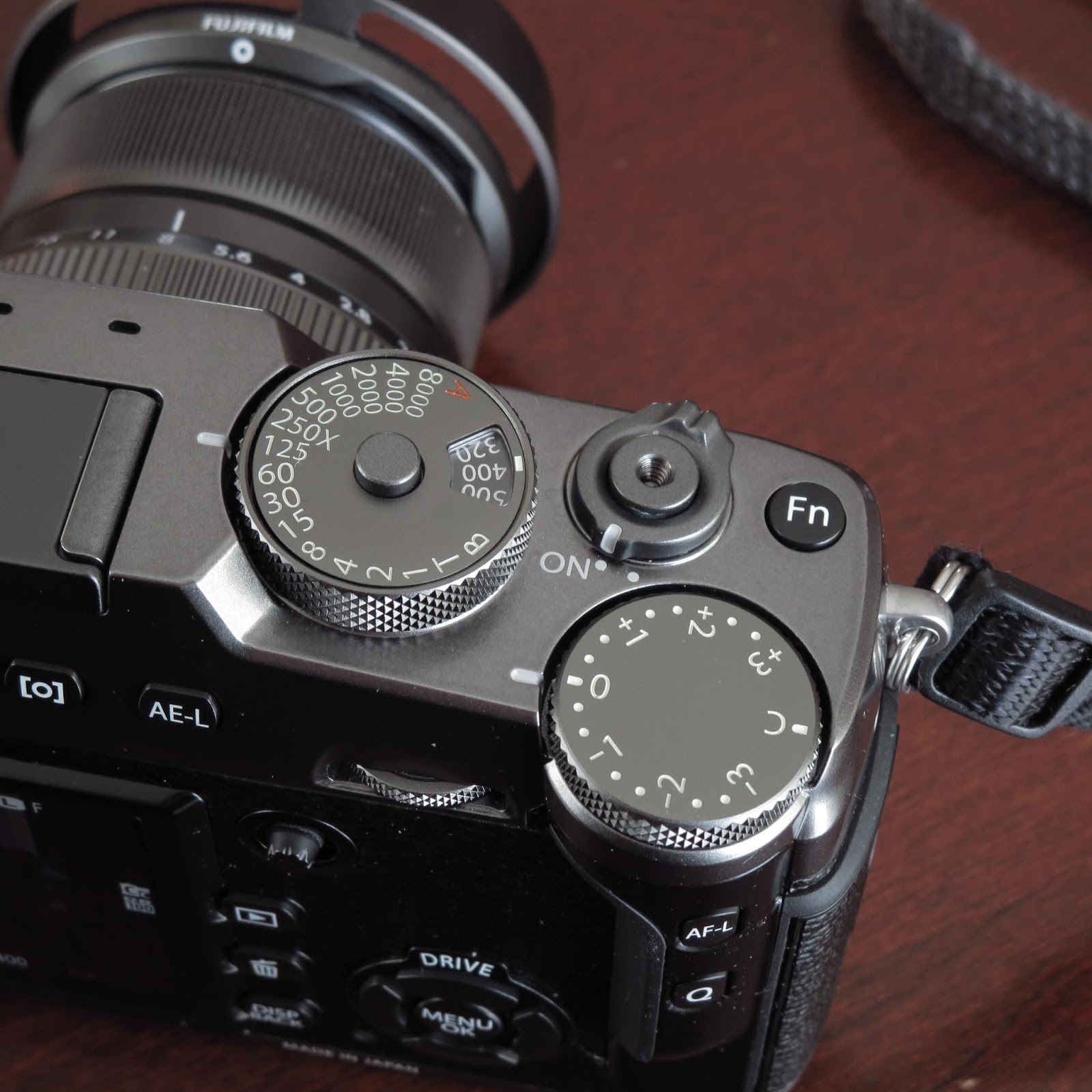
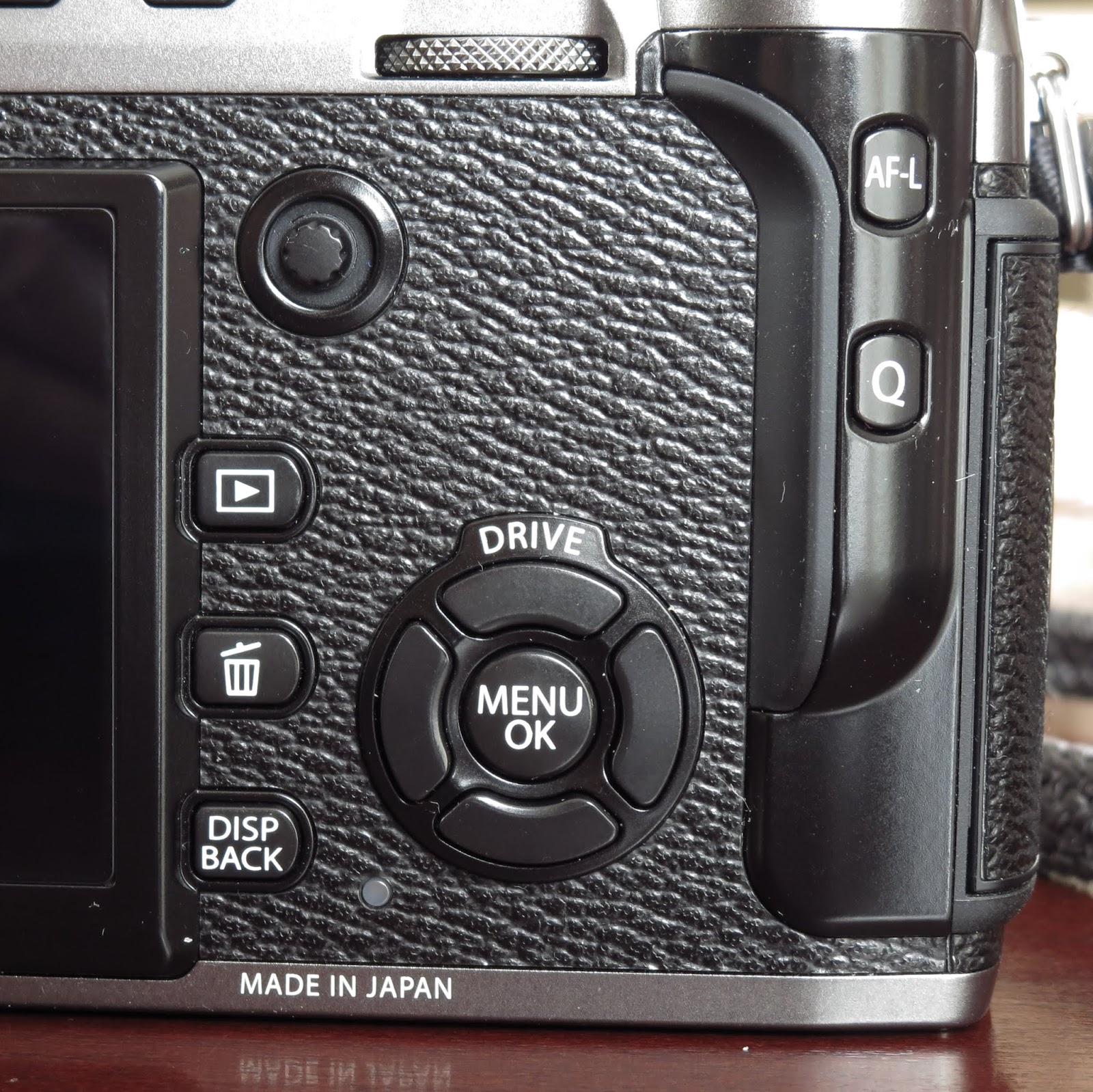
Compare to X-E series, the Fujifilm X-Pro2 is a bigger camera although its hand prehension may appear more secure depending your hand size. Many basic controls (dials and push buttons) are similar from what we can expect on a Fuji X-mount camera model. The combination of the "joystick" and the D-Pad command selector is welcome because it facilitates different direct configuration such as film simulations, white balance, focus areas and drive functionalities. Fine tuning of the shutter speed and expanding of the exposition correction factor can be performed through front and back commander dials. Auto-exposure and auto-focus lock are easy and well implanted. The Quick menu let go to the most used functionalities extracted from the complete menu. And there are other adjustments available from programmable function buttons.
But the Fujifilm X-Pro2 won't offer you all the usual requests that photo equipment web reviewers always ask for. No moving LCD back screen. no internal flash, a very limited video use and no provision for headphones, no optional vertical battery grip, etc. Sure, without the Leica label, you cannot avoid the critics about these choices of voluntary omission. No, the Fujifilm is not a do automatically everything camera for you and you will have to adapt yourself with imagination to cope with certain picture taking situations.
![]() |
| Front view of the optical viewfinder (OVF) |
The Fujifilm X-Pro2 is equipped with a dual-option viewfinder, a unique feature among the "rangefinder style" digital ILC (Interchangeable Lens Camera) camera models. In simple words, we can select between a truly optical viewfinder (OVF) with picture frame parallax adjustment and a now classic EVF (Electronic Viewfinder). At first, I was skeptical about the utility of the optic option but after a certain time, I have found it very comfortable considering that the EVF (although more precise and more practical to preview the final picture taken) seems to develop some eye fatigue during an extended photo session. I must add that the larger view version of the OVF is not really interesting for glasses wearer like me.
The EVF is considered as the primary viewfinder by many X-Pro photographers. Its ability to project a preview picture in all the image and exposure configurations we may choose to make it as a very efficient photographic tool. With the eyepiece that Fujifilm have implanted, the eye relief of the viewfinder is (for the glasses wearer) limit for evaluating the entire frame especially for the extreme corners. All the proper information is well presented (into OVF or EVF) and have the autorotation ability. Lastly, you may prefer to select a different brightness of the EVF through the menu manual setting (in my case, minus 1 has been selected).
The Fujifilm X-Pro2 rear viewing screen can be operated to get a good Live View of your picture or as a reviewing screen for all the pictures already taken. The image definition is excellent, its reactivity is fast, and you can rely on it for many various photo opportunities. As already mentioned, the screen is fixed on the camera and no other orientation is possible. That can be annoying for people that are accustomed with more "video" oriented devices, but less external mechanisms might mean better long-term reliability and less provision for accidental (and fatal) manipulations. You can shut down the rear back screen if you don’t intend to refer to it during the photo taking session with the exception of reviewing the already pictures taking which is a very nice feature (you don't need to reactivate the rear screen to do so).
![]() |
Contax G2 w/Planar 35mm F2 (35mm film ILC) Source: Wikipedia |
The Fujifilm X-pro2 is bearing resemblances with older rangefinder cameras of the film (analog) era such as the Contax G2 illustrated here. But to evoque such a comparison like that is sometimes misleading because of the strong differences in term of design and manufacturing between the two types of cameras (film (analog) versus digital). And performances associated with them were also very apart. Digital cameras of today have a much performant auto focus system and auto exposure calculator that are more versatile and more reliable than it was 25 years ago. Going back is more an esthetically nostalgia than anything else.
The Fujifilm X-Pro2, doted with a 24MP APS-C digital image sensor, can be a very simple camera model to operate. Its handling is facilitated by its more prominent size. The shutter sound is smooth and discrete. The X-Pro is reactive in auto-focus and for the auto exposure setting. It is easy to parameter the photo basic like the ISO, the shutter speed, the aperture and the exposure correction factor. You take the camera and with an eye glance, you are informed about all these data. The accuracy of the X-Pro2 metering system is reliable even in more critical situation but you can adjust the camera following your own bias.
![]() |
| The bottom of the Fujinon XF 23mm F2 R WR Graphite Made in Japan! (not Philippine) |
The Fujifilm X-Pro2 have provision to accommodate a pair of secure digital (SD) memory cards allowing its owner to duplicate pictures in RAW and JPEG or simply get a longer autonomy. Power consumption is supported by the regular NP-W126(S) battery pack seen on most others Fujifilm models (except for the newest X-T4). Keeping spare (and loaded!) battery packs is a good habit to have with electronic camera models.
![]() |
| The best of both worlds: Joystick + D-Pad controls |
As already mentioned, the dual presence of the D-Pad and the jock stick is given you a rapid access to many other functionalities. The "Fn" push button is programmed initially to start the video recording but it can be configured for more still photography utilities. I won’t bother you in listing all the possibilities that the X-Pro2 give us access through its quick (Q) and extended menus. I leave you that part to explore and to discoverer how the Fujifilm X-Pro2 is an outstanding camera model for a lot of different photo situation. And yes, a traditional flash PC plug is located on the (LCD) side of the X-Pro2 for those who have the nostalgia of the annoying old (and hazardous) PC cord.
The autofocus system of the Fujifilm X-Pro2 perform nicely even under low light conditions. For the still photographic purpose, the system can be adjusted following more specific needs. Normal action photography can be correctly served although erratic subject movements are always been a particular challenge for any autofocus system and depend essentially on standardized algorithms that have been programmed by the manufacturer. Even if the Fujifilm X-Pro is not a "track and field" labelled camera model, it can manage its way to that task as long its owner understands its limitation and work on a creative alternative like the subject panning technique, the pre-set focus, or the voluntary blur, etc.
![]() |
| A shutter release cable mounted on the Fujifilm X-Pro2 |
One of the major strengths of Fujifilm digital camera models is certainly its science of colors and black and white that the manufacturer has imported from its past and renown experience from the film (analog) era. All the Fujifilm film simulations are interesting to try because they can offer new picture interpretations you never think of. For sure, black and white (especially ACROS) simulations are very popular. If picture quality is your primary criteria for electing a camera model, you won’t be disappointed par Fujifilm and the X-Pro2.
Since the Fujifilm X-Pro2 is designed as a professional camera, its lifespan is proclaimed to withstand more than 150,000 shutter actuations, meaning 600 working days of 250 camera shutter releases per day. For the more moderate users, it represents years of continuous use. At this date (and before the release of the X-T4 model) only the Fujifilm X-H1 can surpass that mechanical longevity interns for the number of pictures produced. Saying that a camera model is a pro one doesn't necessarily induce that it is a fully loaded photo device with all the functionalities that you may think of. It simply implies that the X-Pro2 is primarily designed and manufactured for an intensive pace of utilization.
The Fujifilm X-Pro2 like its predecessor the X-Pro1 and its successor the X-Pro3 are all greater dimension camera models not really playing into the more compact field of the X-E series for example. That bigger size allows the manufacturer to combine effective an OVF and an EVF, a specific feature you cannot find to other competitor rangefinder style models. The durability of the X-Pro2 should classified as a working everywhere and under most adverse conditions camera model and that will withstand intense uses. But it can be also seen as a long-term camera device for someone who to spend more time, more destinations, more subjects to his/her photo projects. Are still some X-Pro2 available out there? For one, I was privilege to have found one of the last in Montreal!
All illustrations were realized by Daniel Marchand except for the one presenting the Contax G2.
25 février 2020
Photo-Graphic-Ti !
Graphic subjects have always a strong photographic challenge over the years, the decades and... the centuries!
It may be because, in part, photography has been done originally in black and white (before the color event) and the graphic representations were catchier in term of contrast and form than other subjects like humans, animals, etc.
It may be also because of the more segmented light distribution that was enhancing the impact of the taking picture.
It may be the "static" of the graphic subjects that make easer to produce these types of photographs.
All these reasons and surely others have contributed to the popularity of this specific subject and of the photography practice in general.
There are many ways to do graphic subjects depending what is your purpose you intend to do. For example, architectural photography is a difficult art to perform that involve a good study of the localization and the position of the subject and a good control of the light and a good respect for the proportions to render. So, graphic photography is not so simple that we may first think. And there is emotion involved too.
Graphic representations are also a cultural testimony over time of the communities and the civilizations. The more "primitive" ones are surely the ancient graffities printed or carved on rock walls or on wood pieces. Today’s we can find them everywhere around the planet and over the walls of our material civilization! A part of the graphic representation has a great iconic value with universal themes used for many applications even through our Internet communication.
Graphic are not only a linear testimony; it can be an assembly of different density masses that will compose the context of our picture. That remark can go also for the edge exactitude of the subject(s) involved in our image. In one word, graphic doesn't always mean precision, or fine edges or even the greatest resolution. It is also a matter of personal impression face to iconography representation. The significant of a picture find its way through our mind and our imagination.
Everybody got their individual interpretation of esthetic which differs greatly between us. So graphic can be provocative (get impact), can be highly destabilizing and can exceed our comfort zone. What is more boring than a perfect picture, an image made for existing and accepted standards but without provocative originality that push the limits.
So, what about the Photo-Graphic-Ti? Is it a line, is it a form, is it a texture, is it a color, is it a subject? It is up to you to tell me what it is!
S'abonner à :
Messages (Atom)