(Part of "the contemporary meaning of photography" series)
Finally Edwin Hebert Land the creator of the original Polaroid instant film process has won the war over Kodak. Its idea of instant photography succeeded with the combined introduction of the smartphone and the web facilities of our digital world. You can call it the digital Polaroid of our time. And nobody can contest that simple fact and even the idea of an instant print picture has been revived by nostalgics, by artists or by web fans and many commercial opportunities have been taken by small entrepreneurs like the Impossible group or by big industrial machine like Fujifilm.
So doing digital "Polaroid" was really the future of popular (instamatic or instant) photography. And it works at the gigantic scale in our modern demography. The tools are available, affordable and easy to operate with good picture results in standard situations. There will be no coming back to the despair of many traditional camera manufacturers.
Today instant photography is becoming an expression of ourself in the context of our life and surrounding. It interact with our close friends and relatives. It definite our style of living. It express our thinking, our reaction and our endorsement of the moment. It confirm our presence in space and events. It leave a fugace trace of ourself into our instant world, a trace that will be almost certainly obliterated the next moment. But this is part of our today world and the success of the medium. This world is about constant change more than evolution. It is like fashion and photography is fashion.
It isn't a question if instant photography is good or bad because it fulfil deeply a need of interpersonal communication in a society that have idealized individualism as a main way of life. Those who don't need it will simply ignore it as a way of expression because and it is still the beauty of it you can choose to participate or not to this instant world.
So what the most popular way of doing photography? You dont need help to find that answer! Just look simply into your pocket or your bag!
Next theme: Can I say (show) something? (The purpose of photography)
09 novembre 2017
05 novembre 2017
The contemporary meaning of photography: a story in color and in black and white
A short series of personal perceptions on photography
Foreword
Almost 200 years has passed since the bases of modern photography has been settled by directly or indirectly printing the right interpretation of our surrounding on the same manner as your eyesight. It was at the time a complete visual revolution that brings us with flashes of memory of our past time and many foreign spaces. It has shaped a new and extended vision of our world. It has fascinated large specialized or unaware different publics. Today photography even after 2 centuries remains a source of constant controversies on many of its diverse aspects or subjects. Some populations or cultures are still banning it on the base of its own subversive power.
At first photography was essentially a technical curiosity with strong limitations. It took several attempts and further technical development to reach a practical level of producing it. It was also a privilege medium of the few before industrial pioneers like George Eastman with its Kodak had popularized it. Today with the introduction of photography into the digital age with the web connected smartphones photography became an instant part of our every day life. But what is the contemporary meaning of today photography? Is it a simple communication tool of personal expression or a reliable memory instant statement of the time or a visual art expression of its own? Is it still valuable in our past-present-future way of living? Many questions had risen over the past three or four decades on the importance of the photography in our societies.
At least we have one answer about the need of photography in today world and it is paramount to try to evaluate its intense use in our way of communicating and living. Billions of pictures are presented on many different viewing supports everyday almost everywhere. So there is a strong demand to do and to consume photography and sorry…photography is not dead!
Almost 200 years has passed since the bases of modern photography has been settled by directly or indirectly printing the right interpretation of our surrounding on the same manner as your eyesight. It was at the time a complete visual revolution that brings us with flashes of memory of our past time and many foreign spaces. It has shaped a new and extended vision of our world. It has fascinated large specialized or unaware different publics. Today photography even after 2 centuries remains a source of constant controversies on many of its diverse aspects or subjects. Some populations or cultures are still banning it on the base of its own subversive power.
At first photography was essentially a technical curiosity with strong limitations. It took several attempts and further technical development to reach a practical level of producing it. It was also a privilege medium of the few before industrial pioneers like George Eastman with its Kodak had popularized it. Today with the introduction of photography into the digital age with the web connected smartphones photography became an instant part of our every day life. But what is the contemporary meaning of today photography? Is it a simple communication tool of personal expression or a reliable memory instant statement of the time or a visual art expression of its own? Is it still valuable in our past-present-future way of living? Many questions had risen over the past three or four decades on the importance of the photography in our societies.
At least we have one answer about the need of photography in today world and it is paramount to try to evaluate its intense use in our way of communicating and living. Billions of pictures are presented on many different viewing supports everyday almost everywhere. So there is a strong demand to do and to consume photography and sorry…photography is not dead!
Here are the themes that have been developed along this series:
Polaroid all over the "Phone" Planet and the "Web" World (as a trace of personal life involvement)
Can I say (show) something? (The purpose of photography)
Memory of the future: Paper, Disc, Cloud...Photography in search of a future! (The diary of our present conserved for the coming generation)
Photojournalism: where is my public?
The Art of frozen vision (Photography as a cultural expression)
Doing your classical homework? (Is there a future for the traditional way of photographing?) -
Your comments are always appreciated.
Daniel M
01 novembre 2017
The size (dimension) factor in modern compact digital camera
![]() |
| (Picture fromWeb source) |
In fact the size factor is not only an intemporel data regarding the design of cameras it is also a decisive one. Today we are facing the same dilemma for digital photographic tasked devices. What is the magic formula in terms of weight and dimensions? The answer is that there is no need to reinvent the calculations because that has been done several times already on several studies and the results are always approaching the same compact size package. A package that have been definite early by pioneers like Oskar Barnack with its Leica (although he was first using 35mm film but with a bit narrower negative frame format).
What we learn with experience is that the picture frame format is far less relevant to the photographic users than the size (and weight) of the camera. The models which are transgressing that moto will soon or later be put aside one way or another. It is a very unforgiving market law.
![]() |
| With the introduction of the OM-1 (M-1) in 1972 Olympus has redefined the Leica concept to 35mm (135) SLRs (Picture from Web source) |
Its about that time that the first attempts to substitute traditional 35mm SLRs by digital cameras appear. The new technology of digital image captor prevent the manufacturer to produce frame sensors of the 35mm size format equivalent. This is why they defend themselves by saying that DX (Nikon) or APS-C (Canon) were largely sufficient to do the job. And as a bonus the size of the cameras and lenses appear to be similar to the old film SLRs. Canon was the first to come back with a sensor size of approximately 24 X 36mm (comparable to the 135 film format). After a few years of denegations Nikon finally imitate Canon in that way. The big advantage for them was to be able to market again the old full line of lenses issued during the film era.
Today building a digital camera will face different new constraints. The image sensor and its processor will take the place of the old negative and its cartridge of the film era. You need to accommodate an LCD screen that can be act as a live viewfinder or a picture viewer for image review. automatic and regulator system are more sophisticated and rely on battery pack power. The heating issue mainly seen during video recording has to be addressed also. And not saying that you still have to design a camera that will withstand general and intensive uses in sometimes very adverse conditions. All those aspects have received special attentions from the manufacturer designed teams with success most of the time.
![]() |
| Today in 2017 the Olympus OM-D E-M5 Mark II is fully respecting the weight and the original dimensions of the 1972 OM-1. |
But at the end you will finish with the size factor. And more and more photographers are choosing the compactness of the mirrorless models precisely for that. The picture quality output of the modern mirrorless can easily withstand the usual requirement of the virtual or printed publication even better than the traditional film of the past.
Every technological step of evolution encounter stiff resistance at its first introduction. But solutions of the past have never been eternal answers to the problematic of the future.
26 octobre 2017
Short Splash Comment: Autonomy of (digital) cameras have never been so good!
![]() |
| No contest about memory cards that have already a fabulous picture (file) capacity compare to traditional films. |
Because autonomy in my book is referring to the ability of taking pictures on a continuous flux without any interruption (like a camera reset of any kind). In the case of the digital cameras this occurence will apply mainly when you are substitute an exhausted battery for a freshly charged new one. Rarely it apply in this modern age for a replacement of a fully loaded memory card by an empty one since their capacity have increased dramatically in the past decade.
![]() |
| Manufacturer proclaims more than 300 exposures with this unit but when adding the optional vertical power grip you will simply double that number... |
Loading a 135 film? Just follow these simple steps!
Just make sure the film tip is fully engage but not too much!
Wind the camera until Number 1 position...
![]() |
| (All pictures from Nikon FM Manual) |
And dont forget to ajust your ASA (ISO)!
![]() |
| Nikon F3 HP / MD4: A faithful combination of the golden era of the SLRs (Picture from web source) |
Now a last question for all the happy triggers of this world: What is the autonomy of a 36 exposures film in term of working time? Lets say you are using a Nikon F3 HP equipped with its MD4 motor drive (with the very useful electric rewing option) and your shooting rate is 5 frames per second. Your film cartridge will last around 7 seconds of recording time not much more. So very short burst are recommended if you dont want to change fil too often. And not instant review of your pictures is possible with film cameras. With a digital camera it will depend essentially of the memory card capacity or the camera memory buffer capacity or the battery autonomy. But you can be sure it will surpass largely the traditional film camera abilities.
In short digital cameras are better photographic devices with added autonomy and more accurate and oriented results. So next time take a little longer to apprehend and do your picture and ... bring an extra battery pack, That way you will face all the odds!
![]() |
| 1989: Nikon F3 HP good times with 36 exposures per film cartridge autonomy... Refill those pockets! |
![]() |
| 2017: Olympus OM-D E-M5 II with 600 exposures (accentuations) autonomy! Scotty, Beam me up! |
And as a bonus feature: How to load a film into the Nikon F3 HP (Extracted from Nikon F3 Manual). That was part of the entry exam to be qualified as a true photojournalist!
24 octobre 2017
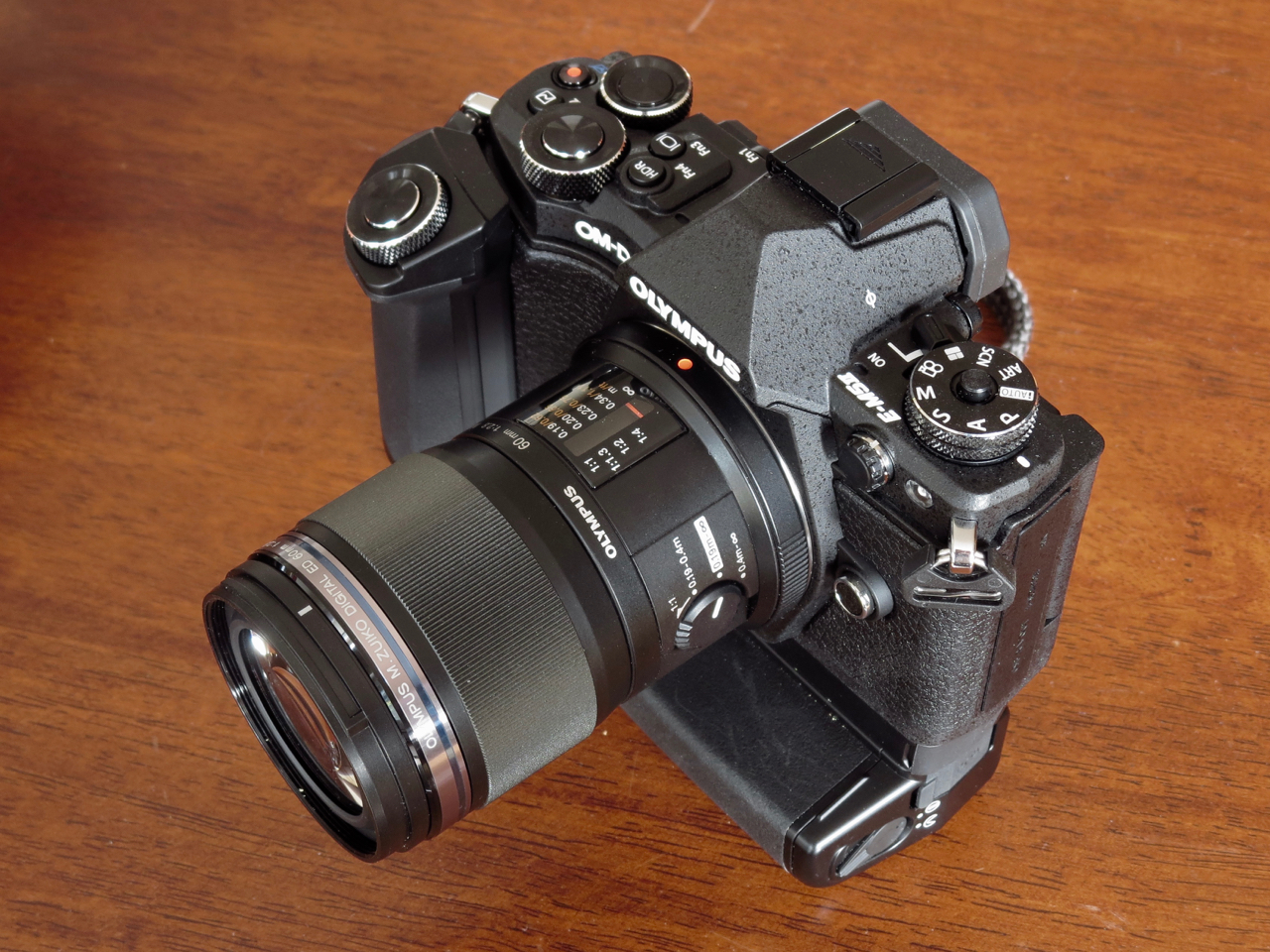
The Olympus M.Zuiko ED 60mm F2.8 Macro: Doing more than macro in M4/3 format.
Close focusing photography has been always of a great interest for me as for many of us. Subjects in that field are infinite with various points of view. On a purely documentary side doing macro photography was at first on the scientific priority but very early on following the first spreading of the new medium we have seen beautiful artistic black and white and later on colourful macrophotographic pictures. We may qualify them as the prelude of abstract photography.
Although many fine lenses designed for more general purpose can produce very fine close focusing pictures camera and lens manufacturers had soon beging to offer specific macro lenses calculated mostly to cope the flat field exigence of reproduction purpose. That trend has been observed throughout the technical evolution of the photographic equipment. Today macro lenses are current part of many photo arsenal of photographers around the world.
Into the M4/3 format lenses you can rely on different models part of the Olympus and Panasonic line-up. All of them are exceptional contenders of their own. Normal focal ones such as the 30mm length are more suited to be versatile as macro and everyday lenses. Long focal counterparts such as 45mm and 60mm may represent a more powerful alternative for doing very small and near object or better tool for studio and reproduction works.
The Olympus M.Zuiko ED 60mm F2.8 Macro represent a very interesting lens with close focusing ability at first and unprecedented characteristics such as its longer focal length and its all-weather construction. With an angle of view of 20 degrees it surpass many short telephoto for portrait work. Even with a maximum aperture of F2.8 it can be use for action photography in normal daylight condition. Of course close focusing can be its primary advantage combined by the fact that its longer focal length prevent most of its potential obstruction of light on the close subject.
Maybe the most spectacular part of the Olympus 60mm Macro is its oddly aspect if you compare it with others lens designs. But in the past many macro lenses had and still have that kind of visual aspect. I have to concede that it is not the most discrete optic I have ever used.
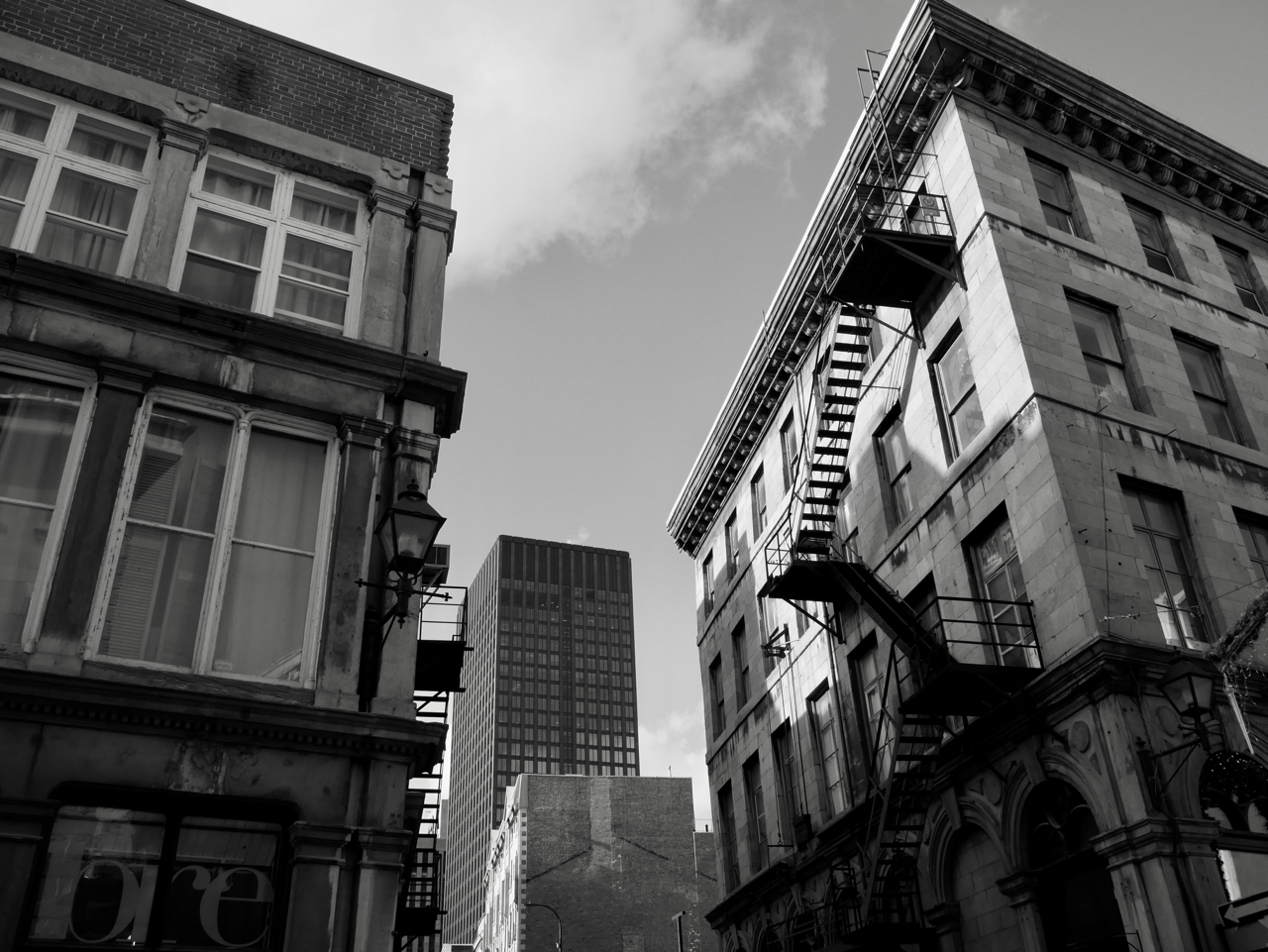
As for most telephoto macro lenses the Olympus M.Zuiko ED 60mm F2.8 Macro is a very creative tool and versatile because of its close focusing ability. If you accept the fix focal length factor you will find many ways to produce very original pictures that emphasize your main subject. As usual telephoto lenses can be also very competent for doing landscape or urbanscape photography with their dramatizing compression of many subjects in one frame.
The Olympus M.Zuiko ED 60mm F2.8 Macro lens is a small optic which is part a the traditional M4/3 format line of prime lenses. With a focal length of 60mm it is magnification factor of 2.4X compare to a standard lens (25mm) with an angle of view of 20 degrees which is qualified the optic for portrait or for small telephoto work. At 185g it is also a very light package easy to bring with you as an extra lens but you have to pay more attention to your stability in use since it is not possible to count on its own weight inertia (like bigger telephoto counterparts), In that case the camera stabilisation option is a welcome feature.
Manual focusing can be performed nicely through its large and very smooth focusing ring. Using the 60mm with the OM-D E-M5 II and its EVF (Electronic ViewFinder) is easy and the image is clear and accurate in most photographic situations. Focusing speed is surprisely responsive for this type of (macro) optic and it qualify the 60mm Macro lens for all other subjects associated with the use of a medium telephoto. And yes the use of the limiter dial can save you time (and picture opportunities!) if it is applied in the good working context. The reproduction ratio scale is an amusing gadget also.
![]() |
| Typical third-party screw-in (46mm) metal lens hood for telephoto. (Always check for trace of vignetting) |
The Olympus M.Zuiko ED 60mm F2.8 Macro is a very fine lens as it is intended to be. We are reaching pro level image results. Picture are crisp and rightly detailed. Colours are accurate and follow the Olympus expected bias without any adaptation compare to the other lenses of the Olympus line up. Out of focus areas are pleasant even considering the moderate maximum aperture of the lens.
The macro ability of this 60mm is flawless and enhanced by the longer focal length that reduce the risk of interfering with the subject light.
In bref it is fair to consider the Olympus M.Zuiko ED 60mm F2.8 Macro lens as an all-around medium telephoto optic with very handy macro possibilities but also nice other abilities such as for spontaneous photography, portrait or even action subject.
16 octobre 2017
Choose your lens first! ... then look for the camera body
The Lens Factor
For must of us it is a commun and general tendency to select first a camera model and then combine an optic to it. After all it is the camera body that will register your picture and no picture mean no photography! Let say that is a bit similar to human nature with no possible image memory without a brain to sustain it. But think about the essential role that have to play your eyes during that process. Without them no image at all (except your own virtual in mind imagery of course...)
So the lens role is equally important in photography. And often the most neglect one when a lot of people buy a new camera. Many camera manufacturers have comprehend the idea and usually propose a combo kit lens with good optical performances but cheap overall construction. It is also intended that the kit lens will be used more lightly than intensively and will be certainly replaced by one or another with a more quality optic if the photographer get more dedicated in his or her practice of the medium.
The different ILC camera systems will offer you a complete line-up of lenses. Some optics are more oriented to a general purpose use. Others are really specialized tools. The manufacturers will often produce a professional alternative of lenses that are designed for more intense use in adverse conditions. Moreover these "pro" optics are bigger units equipped with larger focusing and zooming rings, smoother mechanism, constant and larger maximum aperture for most of the models but these are also heavier devices to bring with you and operate.
Are you looking for focal fixed length or variable (zoom) ones? The price to pay for the zoom ones is usually a more modest maximum aperture and may be a variable one which can be annoying if you want to to keep constant your basic exposure parameters such as the shutter speed, the aperture or the ISO sensibility. The zoom (focal length) range is another factor to consider. All-in-one zoom models are addressing to photographs that like to work with a minimum photo equipment and a maximum of flexibility. The short zooms can be basic trans-standards optics or specialized ones like did trans-wide-angle or long telephoto models. The maximum optical quality will be obtained with the "pro" series and will be comparable to focal fixed (prime) lenses.
The focal fixed (prime) lenses are the most compact ones with larger maximum aperture compare to the zoom lenses. Because of their fixed angle of view they will ask from the user to be more available to mobility and anticipation of your subject. Many prime lenses will give you superior results and will force you to pay more attention to your picture composition. You have also a better control of your deep of field (DoF) that will help you to discriminate easier your foreground and background from the main subject. Furthermore some prime lenses are really specialized tool to produce macro photography or corrected linear architectural pictures from the ground level or giving you an hyper wide angle view (fisheye) for example. These complex lenses are really dedicated tools and offer far less flexibility than more "normal" counterparts. Lens manufacturers have started to add in their line up some focal fixed "pro" lenses with very exotic maximum aperture like F1.2 but those units are fairly expensive ones.
Give them a try!
So selecting a lens that will suit your need and taste can be a perilous exercice of pick so try and ... repeat again if necessary. The possibility to borrow them or to rent them or at least try them at the store or at manufacturer (store) clinics can help you. The other factor to consider is what will be the best camera combination to choose for the type of lens and the style of pictures you want to realize. Again trying the equipment will give an edge before buying the thing.
It is amazing to think that most of the personal involvement of people for the purchase of a photo device is directed to camera body specs and features in forgetting the crucial aspect of the optic in photography. Sometime it's better to use a lens that correspond to your vision and will suit your photographic needs instead of having the most powerful camera body.
P.s. Lens Factor
If you intend to equip yourself with 2-3 or more different lenses chance you may adopt a complete lens system. The good way of doing it is to stay with the same manufacturer and the same lens model series. In doing so you are assuring yourself to have a fully comparable design, construction, optical results and future compatibility with the camera upgrades.
For must of us it is a commun and general tendency to select first a camera model and then combine an optic to it. After all it is the camera body that will register your picture and no picture mean no photography! Let say that is a bit similar to human nature with no possible image memory without a brain to sustain it. But think about the essential role that have to play your eyes during that process. Without them no image at all (except your own virtual in mind imagery of course...)
The different ILC camera systems will offer you a complete line-up of lenses. Some optics are more oriented to a general purpose use. Others are really specialized tools. The manufacturers will often produce a professional alternative of lenses that are designed for more intense use in adverse conditions. Moreover these "pro" optics are bigger units equipped with larger focusing and zooming rings, smoother mechanism, constant and larger maximum aperture for most of the models but these are also heavier devices to bring with you and operate.
Are you looking for focal fixed length or variable (zoom) ones? The price to pay for the zoom ones is usually a more modest maximum aperture and may be a variable one which can be annoying if you want to to keep constant your basic exposure parameters such as the shutter speed, the aperture or the ISO sensibility. The zoom (focal length) range is another factor to consider. All-in-one zoom models are addressing to photographs that like to work with a minimum photo equipment and a maximum of flexibility. The short zooms can be basic trans-standards optics or specialized ones like did trans-wide-angle or long telephoto models. The maximum optical quality will be obtained with the "pro" series and will be comparable to focal fixed (prime) lenses.
The focal fixed (prime) lenses are the most compact ones with larger maximum aperture compare to the zoom lenses. Because of their fixed angle of view they will ask from the user to be more available to mobility and anticipation of your subject. Many prime lenses will give you superior results and will force you to pay more attention to your picture composition. You have also a better control of your deep of field (DoF) that will help you to discriminate easier your foreground and background from the main subject. Furthermore some prime lenses are really specialized tool to produce macro photography or corrected linear architectural pictures from the ground level or giving you an hyper wide angle view (fisheye) for example. These complex lenses are really dedicated tools and offer far less flexibility than more "normal" counterparts. Lens manufacturers have started to add in their line up some focal fixed "pro" lenses with very exotic maximum aperture like F1.2 but those units are fairly expensive ones.
Give them a try!
So selecting a lens that will suit your need and taste can be a perilous exercice of pick so try and ... repeat again if necessary. The possibility to borrow them or to rent them or at least try them at the store or at manufacturer (store) clinics can help you. The other factor to consider is what will be the best camera combination to choose for the type of lens and the style of pictures you want to realize. Again trying the equipment will give an edge before buying the thing.
It is amazing to think that most of the personal involvement of people for the purchase of a photo device is directed to camera body specs and features in forgetting the crucial aspect of the optic in photography. Sometime it's better to use a lens that correspond to your vision and will suit your photographic needs instead of having the most powerful camera body.
P.s. Lens Factor
If you intend to equip yourself with 2-3 or more different lenses chance you may adopt a complete lens system. The good way of doing it is to stay with the same manufacturer and the same lens model series. In doing so you are assuring yourself to have a fully comparable design, construction, optical results and future compatibility with the camera upgrades.
02 septembre 2017
Green light for the Panasonic Lumix G85 (G80)
![]() |
| The Panasonic Lumix G85: the genius with modesty! |
The Panasonic Lumix G85 is a D-SLR like mirrorless camera with practical virtues like a very secure handling (grip) along with control dials and fonction buttons that are easily reachable. Adding the optional power grip (DMW-BGG1) will simply give a longer battery life autonomy and a superior hand prehension when using larger lenses of external flashes.
Some aspects of the Lumix G85 have to be consider as inherent characteristics in parallel of the price point value of the model. The electronic viewfinder (EVF) for instance which very precise and handy for manual focusing is still more contrasty than the actual picture registered so appreciation can be falsely done. The LCD screen is a lot more accurate in that matter. The refresh rate frequency of the EVF is on average and seems to slow down a bit in low light condition.
The Lumix G85 interface is reasonnabely intuitive et front forward as for the Quick Menu option. Controls dials and buttons are well located meanly on the right side of the camera and are configurable. The side door memory card access is also a nice touch. The LCD touch screen facilite the access to interesting fonctionnalities. Pivoting LCD screen is another practical option for videographers, macro photographers and photographers who like to simply protect and shut down the screen. As usual the custom camera configuration (C1, C2) allow you to program complex combinations and keep it for future frequent uses. Wifi interactions are also present with the Lumix G85 when you are using the appropriate Panasonic application for mobiles and tablets.
Small but fully appreciated attentions from Panasonic and the Lumix G85 are certainly the side door access to the memory card and the extra battery pack furnished free of charge with the vertical grip BGG-1 as for the lens hood which is also part of the whole package.
In-board flash option is another advantage if you want an easy fill-in light directly available. The Lumix can also manage an external flash in order to get a more powerful and versatile unit.
About the kit lens (Lumix G Vario12-60mm F3.5-5.6 Power OIS)
And dont prevent yourself to choose the Panasonic Lumix G85 kit that include the Lumix G Vario 12-60mm lens Power O.I.S. For the difference of selling price it is a steal. Although the Lumix 12-60mm is not particularly a fast lens it is a very versatile optic to carry all around. Its focal length equivalence in 35mm film format is 24-120mm which represent a very handy choice of angles of view and the G Vario 12-60mm can easily replace at least 2 or 3 prime lenses such as the 12mm, 15mm, 20mm, 25mm and 42.5mm but we must add with the expense of a much smaller maximum aperture. The imagery results from the 12-60mm will surprise you considering the dollars you have spent to get it.
Premium picture output on the spot!
Yes I am particularly pleased by the standard output issued from the Panasonic Lumix G85 both in colour and Black & White. And I must admit that I use almost exclusively Jpeg files over the RAW entertained option. It is a matter of personal choice to get fast and exploitable results to edit and share.
Exposure metering by the Panasonic Lumix G85 will give you a clear picture rendering but as usual I prefer to underexpose as far as minus 1 EV to get more profound colours and better details into the highlight areas. In doing so especially with JPEG files you will get a more useful chance to correct your exposure when you are editing your pictures. It follows the old slide film rule of metering your highlight and then correct your lowlight areas.
After working with the new Olympus E-M1 II for a few weeks I did received my new Panasonic Lumix G85 and right from the start everything was falling in place. I can get pleasant and prévisibles colour rendering and most important B&W pictures were again very impressive and comparable to Fujifilm rendering which I consider as one of the highest level standard in mirrorless camera offer.
Furthermore the Panasonic Lumix G85 is a bit less heavier body and that factor adds a lot to its duration confort especially if you carry most of the time the camera with one hand (to be ready to photograph on the spot...)
Another secret is the better interaction of the automatic white balance option of the Lumix G85 especially with mixed sources of domestic interior lightning and in particular with the new LED. In those cases the Olympus E-M1 II was really struggling to get a natural and balanced result. Automatic exposure accuracy of the Lumix G85 is asking less use of the manual exposure correction dial maybe because of its more general metering pattern nature.
Automatic focusing of the Lumix G85 is snappy and repetitive. The only exception will occur when you are facing low contrast subject with low light condition and even under those circonstances the Lumix G85 manage to do its focus eventually most of time. The continuous autofocus option may also struggle when you have a subject that tend to produce space erratic movements and as a result the system may shift from a subject to another. (In my sense you cannot call this "hunting the subject") As usual manual pre-focusing techniques may a good alternative option for action photography.
A strong advantage of the Panasonic Lumix G85 is certainly its all-weather resistant construction that allows you to work in many adverse conditions without compromises and fear. It can sustain rain, freeze, snow but you have to remind you to combine its body with a lens that have the same ability like the Panasonic Lumix G Vario 12-60mm F3.5-5.6 OIS. Working with a AW camera such as the Lumix G85 is giving you the ability to bring the camera whatever is the environmental condition and in doing so it opens a lot a photographic possibilities neglected by others.
![]() |
| Green Light for the Panasonic Lumix G85 |
![]() |
| High ISO 3200 is very exploitable but you will loose some fine subject details... |
At the end the Panasonic Lumix G85 is by far a more paisible instrument for the casual and expert photographer. It is a simpler package that give you fast and pleasant output with less fussy reconfiguration of the medium. It encourage you to bring the camera and experiment on the field by taking pictures. Photography has to be fun and rewarding and the Lumix G15 is perfectly adapted for that task. Dont prevent yourself to enjoy it.![]() |
| Haro on the Panasonic Lumix G85 (G80) |
18 août 2017
The mid-range deep of field is on your side!
To Be or Not To Be (as for to have or not to have...)
![]() |
| Olympus M.Zuiko 14-42mm @ 42mm, 1/125sec F5.6 ISO200 Monochrome |
![]() |
| Panasonic Lumix G Vario 12-32mm @ 32mm, 1/125sec F5.6 ISO200 |
How can we definite mid-range deep-of-field (Mid-DOF)? Anything between two extreme: almost no deep-of-field or about infinite deep-of-field like in landscape photography. So Mid-DOF can be assimilated as an intermediate area between the closest and the longest(or infinite) distances. Most lenses for compact camera format (M4/3, APS-C and 24 X 36mm called wrongly "full-frame") if not all have the ability to do mid-range deep-of-field by using their smaller aperture settings such as F4.0, 5.6, 8,0 or 11.
![]() |
| Panasonic Lumix G Vario 35-100mm @ 100mm, 1/800sec F7.1 ISO 200 Monochrome |
If you are facing many various picture taking conditions it is good to rely on a certain deep-of-field margin. This "safety gap" ensure you that critical focusing is at least obtained for the principal subject especially considering its volume aspect for example on a face, on objects with incrustations, etc. Sometimes you won't be able or you will simply forget to double check the full clarity of your subject. This is why a mid-range deep-of-field will play as an insurance for your final image results.
Optical quality pick of the lens
Rarely you will get the optimum quality of your image by using the maximum aperture available on the lens. Furthermore we know already that the diffraction phenomena for an optics will appear by using its minimum aperture. So the best output will be registered in selecting the medium aperture such as F4.0, F5.6 or F8.0 on many lens model or even at F2.8 with lenses doted of a larger maximum aperture (F1.7, F1.8, F2.0).
Compactness
Lens models that are designed with a more moderate or modest maximum aperture are reckoned to be more compact and lighter package a big advantage if you have to carry them extendely. Their smaller size mean also more discretion or less intimidating aspect. All these consideration of better mobility and less carrying fatigue will be fully appreciated for your street or traveling photo projects or any other situation that required an additional effort from your part.
Good pricing on your part
Many moderate maximum aperture lens models are far less expensive compare to their "Pro" counterparts. Often they are available on special selling package with the camera at a ridiculous add-on price tag. I can recommend you without any doubts the Olympus M.Zuiko 14-42mm F3.5-5.6 II R & 12-50mm F3.5-6.3 EZ or the Panasonic Lumix G Vario 12-32mm & 12-60mm both F3.5-5.6 OIS or the Fujifilm Fujinon XF 16-50mm F3.5-5.6 & 18-55mm F2.8-4.0 both OIS which are all excellent optical tools.
![]() |
| Panasonic Lumix G Vario 12-32mm @ 32mm, 1/320sec F5.6 ISO200 |
A picture should tell a story and that story can be very limited when you are selecting a very narrow deep of field or on the contrary the story can be very long (translate boring) if you choose an infinite deep of field. Something in between could be the best thing to do... The choice is yours but a mid-range deep of field choice is certainly on your side. And the beauty of this is already available on the most affordable (kit) zoom lenses.
S'abonner à :
Messages (Atom)