26 février 2023

Gwadloup Carnets (Adventures from the "butterfly" archipelago): A touchdown!


 (Lucky Daniel M will spent the next month in Guadeloupe)

The charming “butterfly” archipelago of Guadeloupe is part of the French Antilles located into the Caribbean sea. Alongside with its richer sister island of Martinique, Guadeloupe is a refuge in many ways for its habitants human or not. Seen by many short or long-term visitors as a paradise, it is fair to say that Guadeloupe has also its own challenges with poverty and ecological issues and still depend on outsiders contributions.


During this monthly stay in Guadeloupe, I will challenge myself to document visually and to write short impressions about the islands and its society. Tourism have become an essential "industry" for many south destinations such as Gwadloup (native creole name). It transform the society that is facing basically two kinds of visitors: the short term one (as myself) and the long term one (mainly French people coming from, as they call, the metropole France). So even for the touristic activities and especially lodging and restauration, a large part of it is controlled by mostly French natives or mid-time habitants.

Two distinctives islands (or lands) are forming the Guadeloupe achipèl (archipelago in creole): Basse Terre and Grande Terre. They are geographically different and reunited by the Pointe-à-Pitre area which is not by the way the official Guadeloupe capital city (Basse-Terre).  The two islands have a very distinctive geography. Basse-Terre is a volcanic formation dominated by the Soufrière. The mountainous interior offer you spectacular sites such as the Carbet falls. many small and narrow beaches are secluded and naturally preserved. Grande Terre is a more flat land that has been mainly used in the past for the sugar plantation purposes have beaches that are larger with a lot of marine attracted activities like scuba diving, surfing, fishing..

Outside those two main islands, there are beautiful smaller islands (Desired,  Saint, etc) that are accessible via boat rides or even small charter planes. The entire Gwadloup archipelago may ask an extended stay (or multiples short ones) to properly embrace its diversity. 

Photos Daniel M: OM-D EM10 Mark III

17 février 2023

Graphitties


Photos Daniel M: Olympus OM-D E-M10 Mark III / M.Zuiko 14-42mm II R / ED 40-150mm R / Lumix G 25mm F1.7 ASPH

16 février 2023

04 février 2023

The pre-focus place into the autofocus era


 In still photography or simply in photography,
doing prefocus has been a technique that many of us have adopted to make sure that the subject or part of it that will be sharp and detailed. Even in action photography prefocus has been used to precisely select the position and the specific photographic moment. Today with the huge autofocus system advancement in term of predictability and reliability, only very few of us are still working that way for active subjects.

Prefocus is demanding a good among of anticipation and analyst to get good picture results and it is not surprising that the technique have lost so much ground in popularity because it isn't a spontaneous reactive behavior. It is part of a pre-visualization scheme that will dictate the composition and the photographic taking moment of the picture and the long-time value of the picture is often related to the time and the effort we have consecrated to produce it.


"Auto" Pre-Focus.

With the introduction of the actual and competent camera autofocus system, many if not most photographers are privileging that way to do focus on their subject. It can be done continuously (AF-C) or in a single or stop manner (AF-S). The latter is representing the electronic version of the traditional manually pre-focus method. Single or stop focusing imply that your subject will stay still in terms of position and distance from the photographer. If your main subject is not already in position, the pre-focusing has to be performed on a substitute subject that will be at the same place.

This is not different from the older way to do it manually except the fact of maintaining the shutter release button half-way to prevent the lost of your selected focusing point. To counter this obligation, you can use the memorizing autofocus functionality of the camera that is often coupled with the auto-exposure metering one (AEL/AFL). In that case, most camera model configuration systems allow you to program this function in alternance of focusing and metering or in combination of both. Many systems will ask you to press and maintain pressure this function button in order to keep the focusing point memory or more conveniently to press first to activate and press again to cancel it. Each system has to be learned and can be configured to fulfill your personal preference.


"Manual" Pre-Focus.

Manuel pre-focus and hyperfocal settings have been associated with the analog-film era for several decades of analog photography for doing action, travel, street, journalism, etc. In those times the cameras had to be set manually in regard of their camera shutter speed, their lens aperture and their lens focus point. The most convenient way (and fastest) was to "pre-set" your photo device as much it was possible and be ready to take the picture (although that you were not able in these days to see the picture end result before processing the film). Du of the lack of dynamic range of the analog-film, exposure metering was a tricky business with almost no latitude (less than one stop/EV in many cases). So anticipation was a popular way of doing for the photo takers of the time.


Today only few photographers will not rely on the camera automatic exposure metering system that has a lot of pre-recorded light situation algorithms to compare and analyse the subject and its particular context. Moreover light and color/tone appreciation can be altered automatically via film, filter, scene options already available into the camera ready to be selected by its user. The same apply for the auto-focus system although the camera interpretation of a main subject can differ from the one you decide to privilege. At this point, the photographer can simply override the camera automation and manually focus its lens. It can be done fully from the start or on a final fine tune intervention. Both method are good and accurate as long the user keep a good picture reference with its electronic viewfinder or its live viewing monitor.

Hyperfocal aperture setting is also possible through an appropriate and specific aperture selection but the big problem is that most modern electronic optics have lost their visual aperture reference scale that was showing the distance focusing range as it was engraved on older manual focusing lenses (except now for certain exotics optic providers). But you can still have a ruff appreciation of the deep-of-field by using the camera menu option or the function button designed for this but it can cumbersome to use with. Some lenses such as the wide-angle ones are more prompt to offer you a larger deep of field which is useful for the more contextual photographic subjects. 

__________________

The Pre-Focus place in modern digital photography is still important even considering the excellent automated performances of the actual digital cameras. And the todays photographers can be more than simple operator if they want to put their interpretation and their creativity underline and share an original visual experience to his/her other human fellows. It is up to us to put the extra but also valorizing effort and get a better self-appreciation of our work and our pictures.

© Photos Daniel M

30 janvier 2023

The Panasonic Lumix G95(in)D(eed): additional notes


 With the "new" D version of the Panasonic Lumix G95, it appears interesting to revisit this Micro Four Third (MFT) camera model as Panasonic have decided to maintain its offer into their current line-up (as for its predecessor the Lumix G85). The "original" G95 and its "upgraded" version are in fact almost identical except for the LCD rear screen that has been substitute in reason of, we can suppose, of its specific manufacturing part availability. So, there is nothing to add from our initial review of that model in regard of its basic characteristics. To know more about these similarities and sparse differences, you can consult this Panasonic Web page.

Is the Pana Lumix G95D a perfect camera? Of course not, but for those who are more familiar with the manufacturer digital offer and in particular in the video field, they have been appreciated for years even considering certain limitations like for their (infamous) autofocus system. Over the past decade, I have the chance to work with several of them (GM 5, GX7, GX8, GX85, GX9, G85, G95) and I was really impressed not only by their interesting ergonomics and interfaces but also by their picture performances. In one word, they are better devices that many may first thing.


The Panasonic Lumix is made in China and so what? Are you seriously thinking that because it is labelled from an otherwise manufactured country, it will be a real different camera? The answer is obvious especially for those if not all who are buying computer, tablet and smartphone products. Let's forget that "Ken Rockwell" emotional like factor to move on about the design of the Lumix G95D. The ergonomic is good to very good. It would exceptional if the covering of the hand grip was not so much "grippy" (like it use to be on the previous G85). No joystick to rely but the rear D-Pad is versatile enough to compensate this absence. We must mention the excellent focus switch located at the back which is far more convenient compare to the front ones from other camera models. The menu and the interfaces of the Lumix G95D are comprehensive and are an exemplary simplicity while being very extendable if necessary. In brief, the Lumix G95D is highly configurable and customizable.

On the other hand, many aspects of the Panasonic Lumix G95D are less glamour such as its Micro Four Third (MFT) 20MP image sensor, its limited 2.39MP electronic viewfinder (EVF) from in other age it seems, the already mentioned absence of joystick, its only one memory card slot, its older generation USB port, etc. If you are easier influenced by the the last novelty siren, the Lumix G95D will not certainly appeal to your search of the latest of the latest.


The electronic viewfinder (EVF) thing.

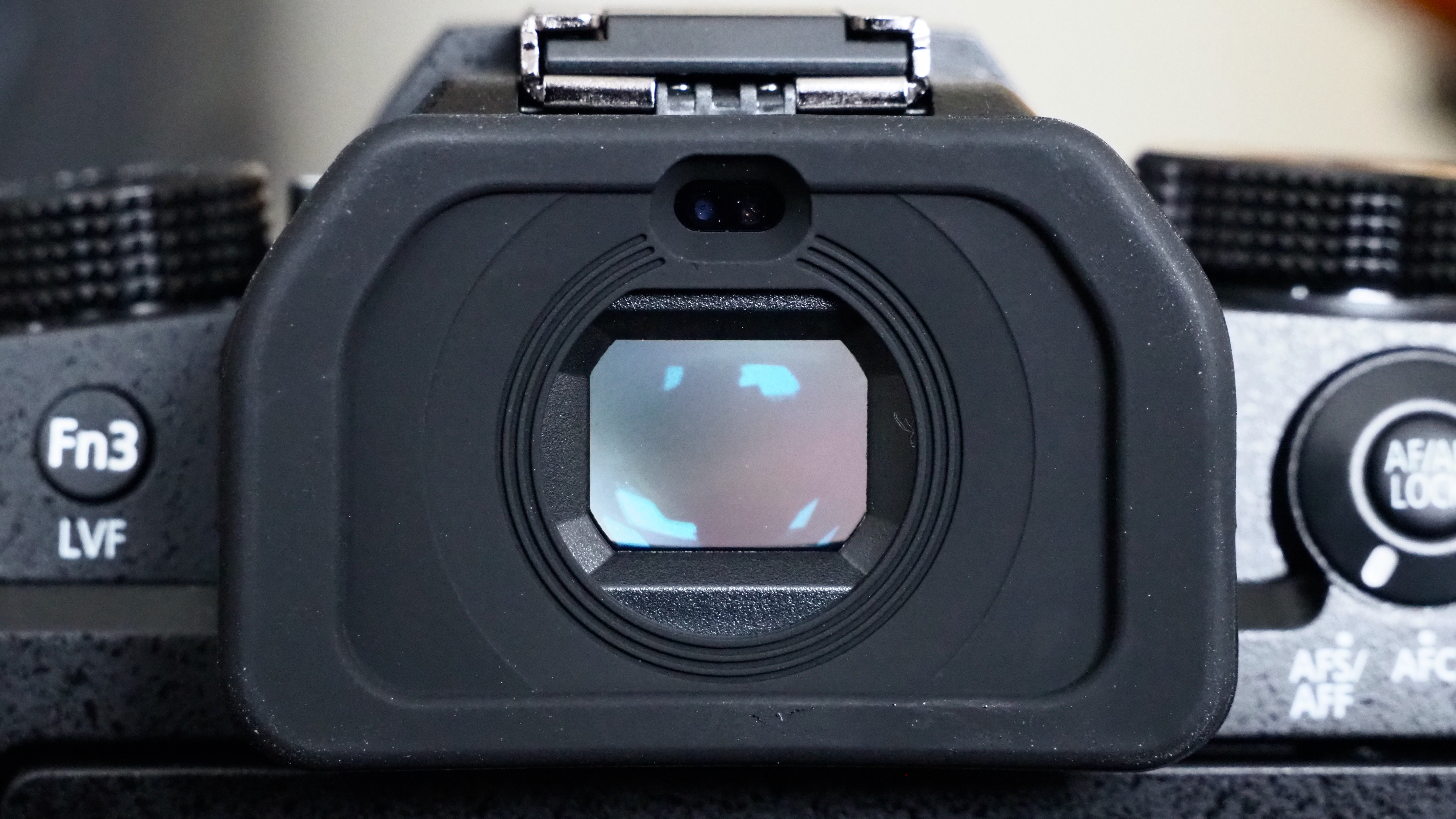
Sure we love to have on hand a very detailed electronic viewfinder (EVF) with a fast refreshing image rate and a high magnification not forgetting a long viewing eye point. You wont find these latest technical developments when you are considering the Lumix G95D. But what you will see instead is a proved competent and clean EVF sufficient to help you in manual focusing, an accurate color reproduction with no rainbow effect in the low light areas when looking at a high contrast backlight scene which phenomena you can adversely observe with some notorious "pro" models. True to say also that the Lumix G95D can generate a grainy (noisy) picture in very low light situations but even though it is manageable for the photographer (at least you see something...).


The (rear) live monitor (LVF) thing.

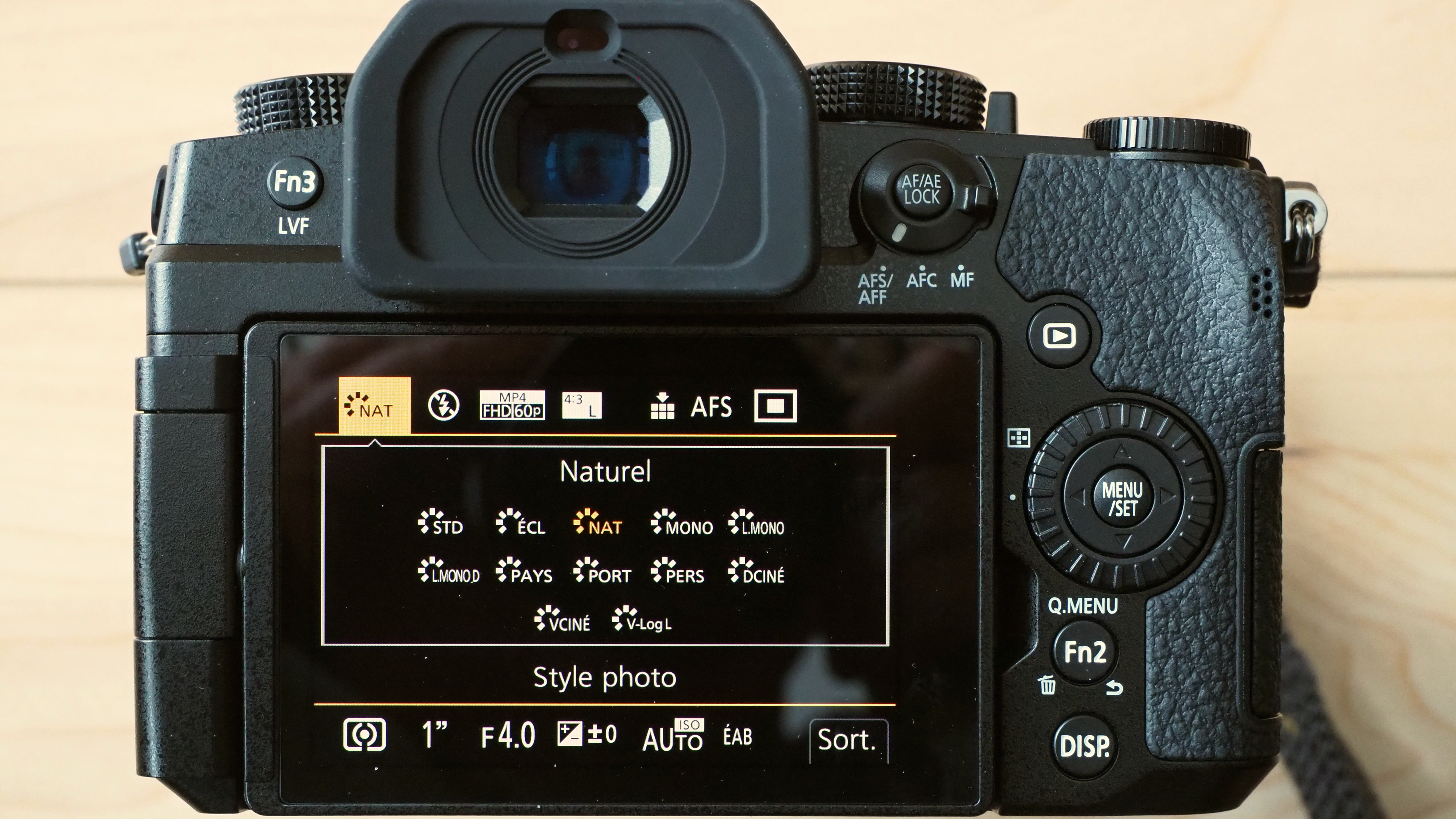
Unlike the original Lumix G95 (without "D") the TFT rear screen has been replaced by an OLED one which got a bit less resolution (1040 dots/G95D versus 1240 dots/G95) but have a better side view rendering. Honestly the difference should not be so noticeable in real life photography since if you need to have a better focusing view for specific works (tabletop, reproduction) you can rely on the optional image part magnification functionality. The Lumix G95D back screen is fully orientable and can be totally protected by turning it face on the camera body.


Hocus Focus?

Nobody is perfect and the Panasonic autofocus saga is raging since already a time ago in this digital world. Is it so bad as you may ask? Under specific situations with moving subjects, it is simply and entirely true. Moreover the viewfinder rendering cannot confirm or not if the focus is obtained which can be really annoying. The problem seems to be finally addressed with the introduction of the newest model (Lumix S5 II) that combine contrast and phase detection. But for the Lumix G95D contrast detection stay alone to perform the autofocus of the camera. Using the single autofocus setting (AFS) should be the best focusing option to select with the Lumix G95D although if you can cope with the limitation of the continuous autofocus setting (AFC), it can be manageable to a certain extend.


High battery consumption.

Battery consumption when you are using any mobile electronic devices has been always a strong discussion debate. The Lumix G95D battery consumption is highly demanding for the rather small Panasonic BLC-12 power pack. The solution is to have on hand sufficient replacements for the entire outing duration. Moreover you can add the optional Panasonic BGG-1 vertical power grip that will double your camera autonomy and will give you a better handling comfort when using bigger lenses or doing portrait (vertical) orientation pictures. However finding the original Panasonic manufactured BGG-1 can now be difficult and rather expensive.


Weather Resistance (WR) feature rules the game.

It is a common fact that electronic don't cope with adverse conditions such high humidity and furthermore with direct contact with water (especially with the salty ones). They need a more advanced protection that seal them from the outside elements. The Lumix G95D is qualified s dust and splash resistant (but cannot go underwater obviously) and can operate in humidity ranging from 10% to 80% as for temperature from 0 to 40 degrees Celsius (No, you cannot boil the camera!). Knowing that, the Lumix G95D should be a competent outgoing companion in most circumstances.


Versatility is on your own.

You can do a lot of things with the Panasonic Lumix G95D. It will be almost impossible to experiment truly all the possibilities of the camera configuration. In fact many of them may rest unused for the lifetime of the Lumix G95D. But the important thing here is that the Lumix G95D offers you many specialized photo taking opportunities as long you are ready to learn how to program them. So the potential is there for almost everybody. No, it is not a "pro" camera (the Lumix G9 is the one that Panasonic have designed for this intensive use) although it can easily do (within its limits) that king of work if necessary.


The quiet introduction of the new Panasonic Lumix G95D version have permitted us to revisit a versatile and competent camera model that is following a tradition inaugurated by the Lumix G series. Even its actual selling price is a strong temptation to adopt this digital camera model. Don't prevent you to try it and you may be surprised of its conviviality and performance.

© Photo-illustrations Daniel M
22 janvier 2023

One picture at the time!


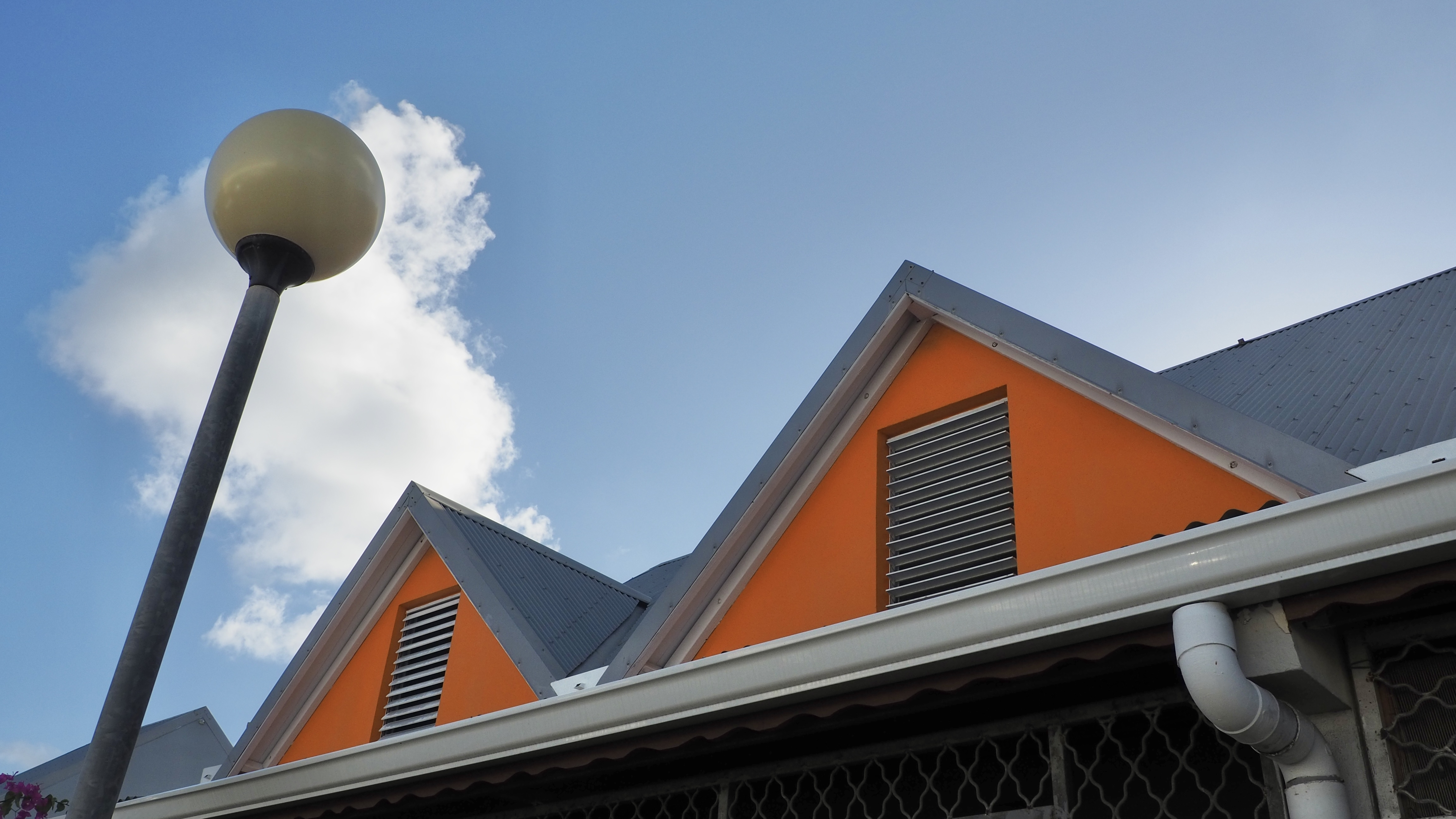
 A story, a subject, a picture at the time are maybe the very base of the event of photography two hundred years ago. In our actual "cinematic" view of present life, it may appear difficult to fully understand how the people then have a special approach for (still) photography. If every moments are precious, you have to pay attention to select the ones which you elect to preserve in particular for a future reference. The magic is that limitative way of choosing is also a visual testimony of a past moment that won't be back forever.

Digital photography with its easiest to perform and to share freely and at a very low expense, has downvalued the power of the picture itself by offering a way too much multiplicity of them. In the past, we have already experimented this acceleration of disposable imagery with the more available photographic (people) press expansion since at least 75 years ago. So, the photographic digital introduction is not the only factor of this "visual" depreciation. At large and cheap public communications like the Internet or the mobile revolution are contributing to this phenomena.

Can we go back to the bucolic (in our minds only) past and reinvent a future with less frenetic pace of life? No, and we already know this as a fact that evolution never turn back even if many insecure people would want to do it with despair. This wheel is turning forward only but can change course for many reasons or causes that are difficult to apprehend as the prediction games have learned to us.

What we can avoid today is may be the lazy replication of past photography in order to get a maximum positive appreciations (likes) from everybody. Photography should be provocative and instructive for those who are looking at. And originality must prevail over repetitive multiplicity.

Photo Daniel M: Panasonic Lumix G95 / Vario G 14-140mm F3.5-5.6 II Power OIS 

15 janvier 2023

Half of humanity is missing... (in marketing photographic gear)


 It is a question that I am asking myself since the beginning of my photographic interest: where is the feminine half part of humanity in your photographic universe? And may be the ones to blame first are the photo gear manufacturers that are strongly male centrist enterprises that have concentrate their marketing effort to a masculine customer declination for decades. That cannot be forget in any way especially knowing they maintain that behavior at this very moment in 2023! It is simply not acceptable.

Women have produced over the past two hundred years of photographic history, major creative artists, journalists and technicians, a fact that cannot be deny. And we, the males, beside them, have a duty to reintroduce the women contingency into a more inclusive photo planet. There will be no real equity as long women don't have the same access to industrial and marketing levers that are define our photographic gear world.

It must begin by the beginning with not only from these highly guilty photo gear manufacturers (Eh! Look to all those "Ambassadors" lineup almost exclusively male but with the noticeable exception of Panasonic Lumix, I must underline) and that obvious correction cannot rely only on the female group pressure, it must be a concerted effort. Today nobody really contest the female presence in specialized photographic fields such as in photojournalism, in studio work, in the fashion industry or in the commercial segments. Women are present everywhere but in view of many actual backward tendencies around the world in regard of woman rights, it is still a very deep preoccupation to still address.

Photo gear manufacturers are simply ignoring the female factor especially for the design, the fabrication and the marketing of their product but they have to amend themselves in all those perspectives. And, as male photographic enthusiasts, we have to encourage those ones who are fulfilling this task with sincerity and serenity. After all, together, ether females or males, we are the constructive parts of all humanity.

Photo Daniel M: Fujifilm X-S10 / Fujinon XC50-230mm F4.8-6.7mm II OIS

08 janvier 2023

Authenticity versus Creativity (in Photography) and the AI menace.


 Is it really a new debate?
Certainly not! Manipulation of photographic pictures have started at the very beginning of the medium. So, there is no reason to be so deeply shock to learn that a"false" or an " enhanced" or a "recreated" picture is part of our public or private visual space or screen. It can be glamour, amazing, disbelieved or simple bad tasted but there are a cultural expression that we cannot ignore.

Now there is also and always the same old justification to manipulation under the creative free expression. That can be understandable as long it will or it has never became a misleading attempt to abuse people and oriente them to adverse reactions that, on normal (and authentic) circonstances, will be highly condamnable. Sure some will say and pretend that in being critical will prevent the problem BUT being critical is not as easy as these "some" may think and in particular for these "some" that aren't many times in fact.

There is no limits to impose to creativity as for counter-creativity ("no pictures are good" or "everything have been done"). But authenticity depends greatly on personal and societal integrity, a human quality very rare to encounter these days considering the people individual agenda. Integrity is asking for open mind and a certain amount of intellectual generosity.

We have learned that artificial intelligence (i.e., none human) or AI may produce artificial pictures that cannot be distinguished from the reality. Although we may emphasize the technical performance, it seems that plausibility and counter-verification have to be applied in any case especially when these pictures seems in contradiction with our previous knowledge of the subject and its context. In one sentence, being critical is simply being lucid.

At the end, we cannot deny that creativity stays an important part of the photographic process. It is up to us to stay conscientious about the limits or the out-limits that this very imaging process represent in face of a "raw" reality of ours.

Photo Daniel M: Panasonic Lumix GM5 / G Vario 12-32mm F3.5-5.6 OIS

01 janvier 2023

2023: De profundis on Photography or the Modern Mind Segmentation (MMS)


 Surfing on the photographic enthusiasm web planet, you may encounter what it seems a growing trend of people for whom photography is facing a dead lock. For them photography as a documentary purpose or an educative or entertaining art expression doesn't interest us anymore. We have trans-passed the "Rubicon" where pictures are simply became an almost unnoticeable decorative tapestry with no real impact in our selfish life. We are facing a sentiment of vast useless identity. WHY DOING PHOTOGRAPHY TODAY? To whom it can still be addressed or who can be still interested to look at?

In becoming an hardware society in terms of technology applications (softwares are part of it), we gradually have evacuated the basic motivation of doing photography which is not only a communication channel but also the expression of our deep perception of the world. In one word the messenger has surpassed the message. The technique has completely overwhelmed the subject. And now after all those years and decades of stacking technical developments and configuring algorithms based on past doing, we are trialling about what can be done more to get original and provoking content.

Part of this no or less "interest" problem is us. Are we really interest about our surrounding universe or have we "retro-evolute" to our original foetal matrices? We know that the future will be challenging individually, socially and collectively but we simply refuse to face it. In place we try to delegate our duty to some others that are controlling more and more our society. And photography should testify of those changes but are we still opened to look at it? In fact reacting is not so easy to perform for anybody except may be for special extroverted persons but in face of these alarming people, we are highly suspicious or, worse, totally blind or indifferent.

The question may be to ask ourselves if photography as a visual expression is still as significant as it uses to be in the past? The answer might be found first in ourselves attitude toward our planet and people.

Photo Daniel M: Fujifilm X-E3 / Fujinon XF27mm F2.8

29 décembre 2022

2012-2022 Blog's Remains: Forgotten or anticipated changes!


 It is hard
to comprehend that this blog has started its itinerancy December 9, 2012. But it is easy to understand how we became different from the beginning of this decade of blogging. For sure I was new and naive (and late) into this blog train that has been already surpassed by the Vlog tsunami that followed in different channels like YouTube. Even the venerable DPReview Web site have had to reflect that change of guard into our Web-media universe.

Photography has been a passion since my childhood, thanks to the inevitable presence of the press writing media and the magazine golden era. At that time photography was still a documentary reference of the human activity around the planet instead of the actual mainly decorative role that it has inherited from the Web and mobile networking revolution. Unconsciously all this has been reflected by the title of the blog right from the start: Back and Front the (compact) camera with Daniel M.

Speaking of the hardware-software evolution of the photographic devices, it became also very clear that the value that people is giving to the photograph in general has drastically diminished at an alarming point. Let's face it, it is not the pictures by themselves that are simply ignored but more importantly it is their subjects for what people become indifferent or insensitive and this tragic attitude is may be the real drama of our selfish society.

On a lighter point of view, I have spent a lot of money in trying different camera and lens models from various manufacturers. Like the camera conspirator sings over the Vlog channel, there is definitively no perfect camera but there is a lot of amusing ones, at least during short essays. Now we have reached a plateau of basic evolution of digital photography gear and we can speak more about refinements compare to the past big evolution step-ups of the beginnings. A personal sense of repetition has emerged and the enthusiasm frenetic level of new acquisitions is now replaced by consolidation of what we already own.

There are two important things among others that digital photography have revolutionized. First, with its more democratic access in term of owning gear and of using it, and secondly, with its facility to share the picture results through very efficient diffusion channels. In consequent, the multiplicity of image resources have certainly contributed to its depreciation over time and to its repetition (standardization) instead of the search of its originality. At the end, the photographic impact aspect has been highly commercialized in profit of the media money makers.

After ten years, there are still an interest about photography but our planet is facing a lot of challenges that will transform our behavior in the next few decades. Can photography be an instrument that will reflect that evolution by documenting it or moreover participate to its awareness, it will have to be seen in the future. Until then, stay tune here or where else!

Photo Daniel M: Olympus OM-D E-M5 III / M.Zuiko ED 14-150mm F3.5-5.6 II

21 décembre 2022

2022: Photographic gear is still an active and rich market.


 Many have predicted the fall of the traditional photo equipment market often in profit of the multi-task mobile smartphone that have improved their photographic functionalities (but not obviously their ergonomics). In regard of what was happened in the year 2022, no such definitive decay has really been observed although there is a significative consolidation effort that has been done by the manufacturers. The latter trend is not a new one since we have seen such market tremors in the past for an industry (photo equipment) which is renowned for its perpetual technical evolution.

By definition, the photographic gear market is a niche one. For sure there is always over time a popular "instamatic" segment that is now fulfilled truly by the smartphone abilities and availabilities. For the specifically photo oriented devices, the offer follows a similar pattern as it has been the same since the event of the first Kodak introduced by Georges Eastman. Some (like smartphones) are intended for the mass market and the others for the specialized photo amateur and professional ones.

In 2022, there was an impressive arrival of new photo gear products. Technically most of them appear to be more upgraded camera and lens models than revolutionary ones perhaps with the few exceptions for the very higher and pricy examples. The camera manufacturers have also a better understanding of the market segmentations between populations, cultures and geographic repartitions. There is also a definitive trend to offer products that are ether video centric devices(vlogging oblige) or (still) photographic ones to accommodate these two user categories.


Among the other things we have observed this year is the apparent sensor format differentiation that has been maintained in terms of offer, between the Micro Four Third (MFT), APS-C and so-call Full Frame (ex 35mm-135-24X36mm). And about all manufacturers still introduced MFT and APS-C models which is a surprise considering the anticipated and proclaimed tendency to regroup all sensors into the 24X36mm format. It simply demonstrates that the compact design exigency cannot at this moment fully fulfilled by the so-call Full Frame technology (but it may happen in the near future with more nano technologies).

Today, buying a digital camera may appear expensive although, in comparative terms, it is in fact almost equal than fifty years ago if you base your calculation on how many working hours you have to cumulate to get it. What is changing is the obsolescence expected by the digital photo equipment compare to the past. It is due mainly to the actual tendency to clearly abandon (not maintaining) the hardware and the software involved into the camera and lens manufacturing. It is seen to be cheaper to simply replace instead of repairing which is certainly not ecological way of thinking and eventually not acceptable economically since the resources are limited on earth.

So, we can sleep well and be confident that the photographic gear market is not collapsing but still follows its own path of evolution for the years to come. We cannot predict an everlasting growing future for the photo equipment industry but for the next few years, there are a lot more important concerns we will have to address than this.

Happy 2023 New Year!

Photos Daniel M: #1: Montreal Stock Exchange Tower; #2 : Montreal's Convention Center / Olympus OM-D E-M5 II / ED 12-40mm F2.8 Pro

14 décembre 2022

Advices from the past for a better future (in photography)


Being fascinated by photography and its process has been always profoundly inlaid into my life since my youngest years. As an avid reader of all kind of literature, magazines and newspapers, I was looking for first hand experiences, ideas or advices from experimented photographers and masters to learn the medium. All these marvelous books extracted from my ex-collection that only some of my precious hand guides have finally survived of my wrecked basement. One of those few was that small photographic hand book issued in 1972 by the Time-Life Library of Photography, named in french Le Guide du Photographe that was in fact a bonus gift attached to the Library of Photography complete collection. This short notebook was an introduction on how to take and process films and print pictures from them.

It is normal to ask yourself if this long gone artifact, could be of some help today in our digital world. But when we take time to reread those ancient and venerable short texts, they appear to stay more actual and more pertinent than we may think first. Here are some extracts that have still their pertinence:


How to hold a camera
is a science that has been lost in the furious modern evolution of todays fashion (especially with the none ergonomically smartphones as photo devices). And with the event of all kind of electronic stabilization system (optical, sensor or digital ones), people have loose the necessity to correctly support a photo device but with a more secure support of the camera, you enhance your picture experience and you will pay a better attention to your composition and your subject position and its behaviour.


Choosing a particular lens focal length
can have a real impact how your subject and its context are related. And simply zooming in and out is not always the best approach to consider in doing your picture. Moving back or forward (from the subject) can transform your foreground and your background and imply a different visual signification. It is an exercise of relation between every details that will be selected in the final photo composition.


The deep of field secret
or how to discriminate or not the photographic subject in its space by deciding what will be privilege to be in sharp focus and what will be blurry (and how) into the final picture. In doing so, you are creating the points of interest that will be explored by the audience of your imagery. There is no definite rule as you may experiment the different lens aperture values that are associated to different deep of field specific ranges. Dont forget that the photographer distance from her/his subject can play also an important role here.


Selecting a film simulation
as for an ISO sensibility for your digital camera sensor is exactly doing the same think we use to do during the film analog era. The implication of those imagery sensor interpretations will dictate in great parts the atmosphere associated with the final picture. Moreover it can prevent too much post-editing of your picture afterward because too much of it may often imply a visible lost of the picture definition. Better doing the good thing first at the point of origin.


Using (digital) filters
will also alter your picture rendering right from the start and their dramatic effects can be observed before you actually are taking the picture. Monochrome filters will create contrast differentiations for the tonal distribution (in black and white, each tone is personified by a color). Art filters will completely change the value of the color’s palette, may modify the contrast scale, simulate optical effects, etc. The possibilities here are enormous.


A good exposure metering
is essential for many reasons such as for keeping a maximum of the subject details you want, and for deciding what general "image mood" you are expecting to offer to the people who will look at it. Although the dynamic of the modern digital image sensor are surpassing by far the one from the past analog film era, there's still some compromises to cope with. One easy example is that a certain image definition degradation can be observed into the less lit picture areas that often translate in (digital) noise or detail lost (partly because of the inboard camera image post-processor algorithms that will over-compensate the lack of visual information). Exposure metering is still an essential technical part to succeed in photography almost a science by itself because it force you to better analyze the light distribution on your subject and its surrounding and that basic is still existing today.


Questioning your composition
in relation with your subject and its context is again a photographic challenge that stay actual because it represent often the photographer intimate perception of it. Composition is also the finest expression of the visual emotion in regard of this subject. The dramatic is not only in regard of her/his facial expression but also in relation of its graphical position into the picture space. High, low, on-level angles of view, distance from, exposition metering, shutter speed, all those photographic elements can be decisive factors.


Understand photo editing
(post-processing) of your picture was the ultimate task of the photographer of the analog-film era. Many picture taking people were disregarding the darkroom processing work. In doing so they have missed to understand a lot of the fundamentals involving photography. Editing a picture is like to reverse the image taking process. That way we can often pinpoint problems that have not been correctly addressed during the photographic session. It also help to learn the technical limit of the hardware-software we are using. Yes, you can transform an image but is it the final picture you primarily looking for at the decisive moment you have taken it? Most photo editing will mimic the way we were dealing with the film-analog picture but the work can be done now in comfort in a safe context with ecological respect.


All these examples are only a small part of what we can learn from this Time-Life small but precious booklet (and from others of the same kind) to prove that many of the past photographic practices stay actual, digital world or not. As I use to say, I will really be outdated when I will stop learning (and in particular from the past).

_________________________________________________________

Photo Illustrations by Daniel M: Fujifilm X-E4 / XF27mm F2.8 R WR