16 janvier 2016

The Fujifilm X-T10: Are you serious?!!!


(This is the second version of a previous text that has been accidently delete to my great despair…)


The Fujifilm X-T10 is the diminutive and compact version of the Fuji X-series X-T1 camera that can be regarded as the flagship of this category. It represent a smaller, simpler, lighter package equipped with the same 16MP APS-C image captor of the other Fuji APS-C models with the exception of the newest Fujifilm X-Pro2.

The EVF  (Electronic ViewFinder) of the X-T10 is located on the axis of the taking lens like the bigger X-T1 compared to the off-axis viewfinder of the Fujifilm X-E1/2(S) or the X-Pro 1/2 that got also the OVF (Optical ViewFinder) option and  is assimilated as a hybrid camera. On-axis viewfinder has the advantage to give you a slightly more adequate position to anticipate your final taking angle of view in comparison with your own sight.  For their part the rangefinder style cameras tend to be more discreet devices in relation with their subject(s). I have worked over the years with success with ether on and off-axis type of viewfinder.

Today EVF viewfinder surpass OVF:
It may appear controversial but the point is that EVF viewfinder should be  today the first option of serious photographer. EVF allows us an instant view of the imagery result. It helps to do your composition, to fine tuning your focus, exposure or other special effect controls. It secures your results and increases a lot your efficiency. The days of film blind photography are gone and today new technology has liberated us in many ways of wrong guessing. As an ex-corporate and sport professional photographer I would have liked to work with digital cameras equipped with the most recent EVF.

Because it is a compact version the Fujifilm X-T10 is a narrower camera and like I use to comment for compact cameras it induce some sort of design compromise namely less space for the handling of the camera and for positioning the function command dials and buttons. To counteract that fact you can add an optional grip if this solution seem to improve your own handling of the camera.

A clean design that recall classic SLR film camera
Interesting points:
Speaking about the viewing option, working with the EVF give a nice representation of your final picture result even when you are wearing glasses like me. For myself I prefer to shut down the automatic brightness adjustment and manually set it. The automatic horizontal/vertical swift of the viewfinder indications is a nice touch too. The LCD back screen tilt able is also very handy to use as a waist level viewfinder or for tripod or tabletop work. Lastly on the EVF subject I must mention the very interest EVF switch-off option that will help to save your battery duration as for the nice automatic switch-on LCD screen option when you are reviewing your taken pictures (As I have firstly discover with the Fujifilm X-30 model).
The access to a distinctive shutter speed and exposure compensation dials are a very fine photographic features as for the aperture ring present on the XF version of the Fujinon line of lenses. Separate Automatic Exposure and Focusing Locking direct buttons are another fine touch for the user. The Quick menu is also a faster way to reach critical exposure adjustment without extendedly searching in the full menu.
Since the Fujifilm X-T10 is a simpler camera, it lacks some of the direct function buttons present with the others more advanced Fuji APS-C. This is partially compensated by clever use of the two front and rear command dials of the camera. I recommend you to consult a tutorial on how to handle the model such as the YouTube Fuji Guys.

To Be Improve Features:
There is no perfect camera in this world or should I say every model got its own personality. I definitively dislike the location of the Review and Trash buttons on the left side of the body. If you are a kind of one-right hand main user for holding and operating the camera, these particular buttons locations prove to be annoying and is asking you a less efficient procedure for reviewing your last results. The lack of signalisation for the functions buttons located around the Menu/OK button will also ask you to assimilate their respective value.

On-Board Flash.
The Fujifilm X-T10 is equipped with an in-board tiny flash that represent a nice fill-in flash option that can be used as an accent light. I must add that finding in the deepest of the menu the power flash output fine-tuning represent a challenge. Fuji designers have rightly maintain the flash hot shoe that allow us the addition of an external flash with more output, more flexibility and better height.

The Fujinon XC 16-50mm OIS II: a typical urban lens.
The Fujinon XC 16-50mm F3.5-5.6 OIS II Lens combine offer is a departure from the usual one of the XF 18-55mm lens with the other X-Series ILC cameras with viewfinder. The interest point of this XC 16-50 is mainly its 16mm focal length setting that gives a real wide angle of view compared with the 23mm, 27mm and 18-55mm lenses options. At 16mm the larger angle of view facilitate the creation of more contextual picture with close foreground subjects. For street photography this lens can be very creative. On the other end (50mm) of the XC zoom lens the telephoto option stay modest with a smaller maximum aperture  of F5.6 that prevent more shallow deep of field for portrait. In that case you may select one of the prime focal fix Fujifilm XF lenses with maximum aperture of F2.0 or F2.4 at least .

The Fujifilm Film Rendering Master Ability:
Every time I have returned using Fujifilm cameras after trying other maker models I always noticed how the Fujifilm image rendering is an always-pleasing experience. Because I am working mainly in JPEG format file I appreciate a camera maker that give us directly usable results at a professional level.
When I have started with digital camera I was amazed by the inability of many camera makers to produce repetitive image results. Posts processing of the time have been developed with a graphic technical bias that prevent photographer to correctly translate the traditional notions of imagery. Yes that language gap between photographers and software producers has been narrowed with time but more than that the camera makers like Fujifilm are now offering products adapted to photographs and with in-board post-processing very competent at the start.
There is something special with Fujifilm products because photographic technicians specialized in image rendering design them. And it shows I can testify. In fact Fujifilm is the digital successor of the Leica tradition of quality imagery.

Black and White is alive and well:
If you like B&W (Black and White) photography, you will be delighted with all the Fuji X-Series products. Their B&W rendering are simply rich and wonderful. If you process afterword your Fuji color picture in B&W you will get similar results without problems. But the ability to directly see your B&W rendering into your EVF/LCD screen is awesome. I think that products like Fujifilm X-series is recreating B&W popularity among photographs and the great public.
On the Fujifilm X-T10 you have the possibility to fine tune your B&W rendering by using the filter option that will increase contrast in discriminating certain colors/grey tones.


To conclude I would say that the Fujifilm X-T10 is the best entry option to the Fuji X-Series ILC camera without any image quality compromise.


Have you finish? Let’s take a nap!

18 décembre 2015

Photo Basic Instincts

What is the best camera for you? For sure the camera you bring with you and take pictures with it!

It may be common sense to bring a camera with you and to take pictures but it is not by far always true when you are observing all the so-called photographers. Many love to play and pretend to be great photo artist and like to flash with expensive pieces of equipment. That last two or three-decade tendency had flourished around the world at a point that real “day-to-day” photographers seems to be an animal in process of extinction with the exception multi-phone snap shooters mostly self shooters.
Urban Sky Scape

Cameras are nice media expression tools and as a tool intended to be used on the main purpose of taking pictures. And take pictures must have some kind of purpose by itself (to look at them, to show them, to share them, etc.) So it bring us back to a debate not on to select or use a camera but when you will use it except for showing to the other fellows (camera shops, clubs, schools are good for that!).

No technically perfect but perfect expression!
Good habits
Learning to interact with your camera will help you a lot to mastermind the medium and will become a second nature to do photography. Take time to play with your tool, to try the functionalities and to discover the full potential of it and there is a lot in it. Go see some “users” reviews that are presenting interesting results obtained during photo sessions. Keep your camera “on sigh” and it will be easy to fulfil most of your photo temptations. Take pictures of your surrounding to find angles, moments, compositions, or exposures that will reinvent the interpretation of your day-to-day world.

Digital is cheap
Yes digital photography is very cheap even if you want to get first class equipment. You just have to watch and wait for the best opportunities to buy products (see my other article about this: http://photodanielm.blogspot.ca/2015/11/over-paying-for-novelties-or-sub-paying.html )
You can take all the pictures you want and keep them first on your memory card. For editing your computer or tablet will work perfectly. On a regular base you can duplicate your photo files to an external hard disk for future references. But remember the real pictures that are lasting are the one that are still shared and all the others are past and forgotten memories.
Museum are very special space to experiment

Experiment yes but better Persist
You have to experiment to find your own way of photo expression. It is true at first but you must also persist in your search to explore and refine the interpretation of your subject. Get a fine shot at first glance is lucky but it is very difficult to repeat this everyday and everywhere. You must understand in your way how you can reproduce the process of doing the pictures that are pleasing to you and your public. So take pictures, take pictures and retake pictures, again and again.


Edit a presentation and share it
B&W add a lot by graphic expression
So you have a lot of provoking pictures. What is the next step? The next basic step is to encourage yourself to do more photography and as humans we need human reconnaissance. To get that the only way is to present and share your pictures with others. Put pictures on your walls, share over social media, open a Web account, create your own blog, and share your experiences with forum, other blogs and public photo files. Get reactions from others that will motivate you to follow your own path in accordance or not with the public eyes.
And don’t forget that you are a kind of unique person that cannot please to everybody.

Be ready, be interest and press the shutter!
Explore the medium, the subject, the mood
Photography is a medium among other forms of expression. The great artistic representations are the one that the subject transcends the medium. By seeing a picture you trigger a psychological process that will initiate a minded personal quest. So you have to consider things or subjects over the photograph by itself. It is asking a more fundamental task regarding the purpose of doing photography or other forms of expression.


find your own way, explore, repeat, share...
and more important have fun!

22 novembre 2015

Over paying for novelties or sub-paying for results


Mirrorless photo-video equipment can be a hard and tricky category of products to purchase. Compare to their D-SLR competition there are expensive, distinctive but not always intuitive to operate and their starting evolution was fast and decisive.

Overtime you can spend a lot of money for far less better results than we are thinking at first. That has happened to me during my first days as a new user of the M4/3 format and this can be applied equally with many of the other mirrorless categories.


Fujifilm X-E2 is a very attractive model that can be
 upgraded and perform almost as the newest  XT-1/10
Will I be better served to put big money on the latest novelties? We can answer easily by yes knowing the rapid evolution of the medium but is it worth to wait six months to one year to get the same technological advancement at a fraction of the initial introducing selling price.


Panasonic GX7 / 20mm F1.7 at $639US !

Working the last years of my modest photo production with Fujifilm, Olympus and Panasonic cameras and lenses I have developed a different approach in consuming equipment. I love to see the different manufacturers upgrading theirs products but I prefer to transfer the RD cost of those novelties to the aficionados of the newest models on the market.


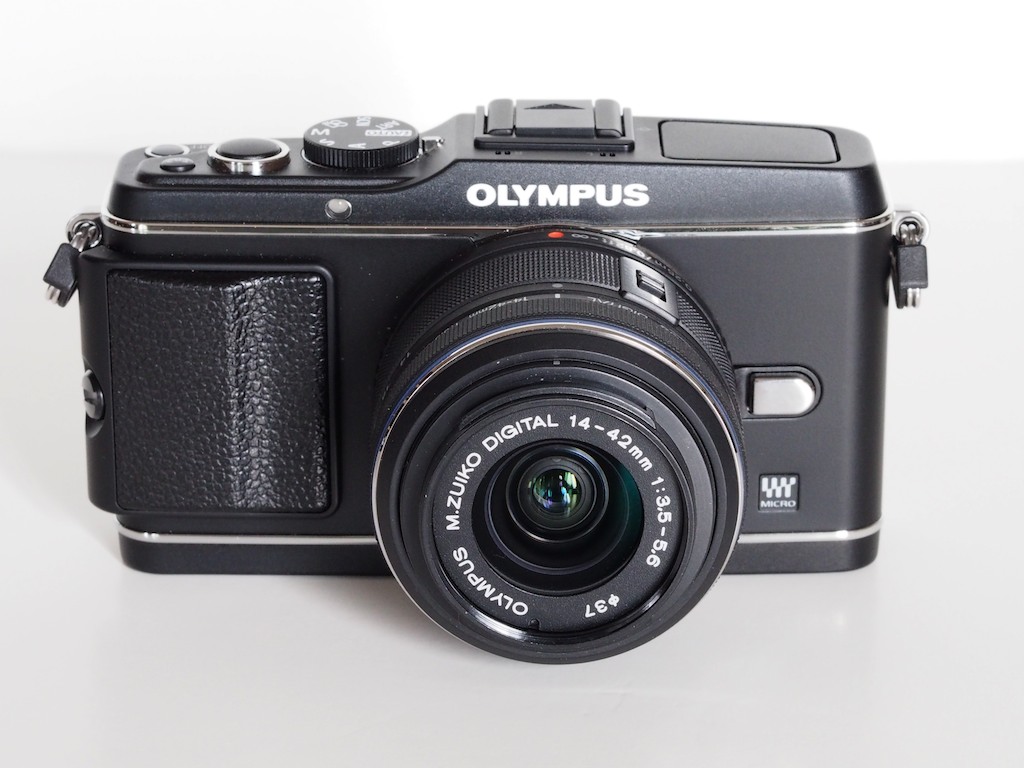
Olympus EP-3 / 14-42mm: A very fine deal at $399US two years ago!


Managing cost evolution.
These following simple examples has given me both saving and results at lower cost and a better assurance of reliability:
I have chosen to buy Olympus EP-3 and later on OM-D E-M5 at the end their selling cycle at half price of their initial tag. Those cameras give me a lot of pleasing results and I was able to resale them with a minimum money lost.
I did the same move in buying the Panasonic Lumix GX7 for less than half of the introducing selling price by using a combination of Manufacturer Instant Rebate and bulk packaging with the very good Lumix G 20mm F1.7 (II) lens. And the GX7 and the 20mm lens are delivering excellent results for my purpose. Fuji film X-E2 is another fine example of a top model that can sold for a very reasonable selling price and knowing that a lot of past Fujifilm models like the X-E2 have the possibility to be substantially upgraded had to the value of the camera.

For sure the Fujifilm X-Pro2 or X-E2S, the Olympus OM-D E-M5 II and the Panasonic GX8 are without question more up to date products with design and functionality advantages but I didn’t wanted to spend that level of money. At the end it depends on you if you want to get right now the newest offers. But with time the big forward technological advancements will be substituted by smaller refinements that will impact far less the final photographic image results.


Olympus OM-D E-M5/14-42mm at $499US !

And the less money putted on cameras can be converted to more interesting possibility of traveling, visiting or even buying other photo accessories if you please. After all it's your money...

15 novembre 2015

On the street with the Panasonic Lumix GX7


The Panasonic Lumix GX7 digital camera was marketed more than two years ago and has been already replaced by the newest model GX8. But the GX7 is still used by many photographers as an everyday camera. It is a very handy camera designed first for still photography despite its own video ability.

Table Top Wall Stripes
Digital compact camera offers handling advantages in term of small dimensions and low weight. But because of the multiple function buttons seen on many very diminutive models like the Lumix GM1 or GM5 we have reached a point that the compactness is inducing a lot of involuntary finger touch manipulations. The Panasonic Lumix GX7 can be classified as a mid-size compact camera with interchange lens option. It is not a subcompact (GM5 class) but combined with many Lumix G lenses it stays a small package.

With user experiences you can memorize most of the main function buttons and operating reels. As usual I have found there is too many options available to really mastermind their utility on picture taking situations with fast rate shooting. By keeping it simple you will better optimize your photographic results.


The display fonction button can be too easily involuntary activated and the rear adjusting dial edge is located too far to get a confortable reach from you thumb. Those two design flaws can be annoying in particular when you are using more manual setting.


The viewing system that offers a LCD screen and an electronic viewfinder (EVF) is very distinctive of camera design inspired by the ancient rangefinder cameras. It is a compact camera but not as a subcompact or a miniature like the Panasonic Lumix GM5. In that sense the handling of the GX7 is more secure partly because of the larger dimension of the body of the camera. Face strong front day lighting the EVF will generate a more contrast picture that doesn’t really help to evaluate the fine details of your composition. In those cases you have to guess first and check the result over the LCD screen.

Fifteen before six: Very good B&W gray tonal graduation even in using high ISO setting
The images preserved from the fine quality JPEG file option are generally very exploitable for web uses and mid-sized printout. As usual a basic RAW file will give the full opportunity to more deeply post-treat the taken image. The default contrast rendering is on the high side and you may have to use some of the softer rendering picture taking options to counteract this effect. The color rendering is mainly natural but artificial lightning can generate some misinterpretation of the white balance auto setting function.

Native JPEG Outdoor color rendering is very accurate

Onboard flash
To have an onboard flash option is liberation. The flash of the Lumix GX7 is easily reachable by a mechanical switch on the backside of the camera. As a fill flash it work very nicely but it can be advisable to power down a bit the flash output especially with nearby subjects. As a commander flash it is a perfect tool. And Panasonic designers preserve the possibility to add a more powerful unit via the hot shoe.


The EVF viewfinder as waist (sternum !) level finder
Many reviewers were sceptical about the use of the partly moveable viewfinder of the Panasonic Lumix GX7. Looking down to a camera viewfinder is not a real novelty. You can go back to the ancient twin lens reflex or to the very first reflex mirror cameras to find the same way of viewing your picture. A complete generation of amateur and professional photographs can easily remember the glorious days of the various Hasselblades and Rolleiflexes. The “waist level “ view option allows the photographer to better control the linear rendering of the lens by facilitating the positioning of the camera which respect parallel lines better than tilting up or down your point of view. It is remarkable that so many photo experts have missed that point.


Spontaneous close-up photography is easy by using larger aperture prime lenses such as the Panasonic Lumix G 20mm f1.7
As I have pointed out with many other camera models of the same features like EVF, it is very recommendable to bring extra batteries to prevent abrupt photo session finales.

Overall the Panasonic Lumix GX7 camera has been and still is a very competent picture-taking companion. It generate very interesting image results, the overall handling is on the good side, the Panasonic lens offering is correctly extended (and can be completed with the Olympus M4/3 counterpart lenses), the camera-lens combination is discrete, the operating system cost is reasonable and you can manage to overcome the few design flaws of the camera. 


BNC Tower over De la Commune, Old-Montreal