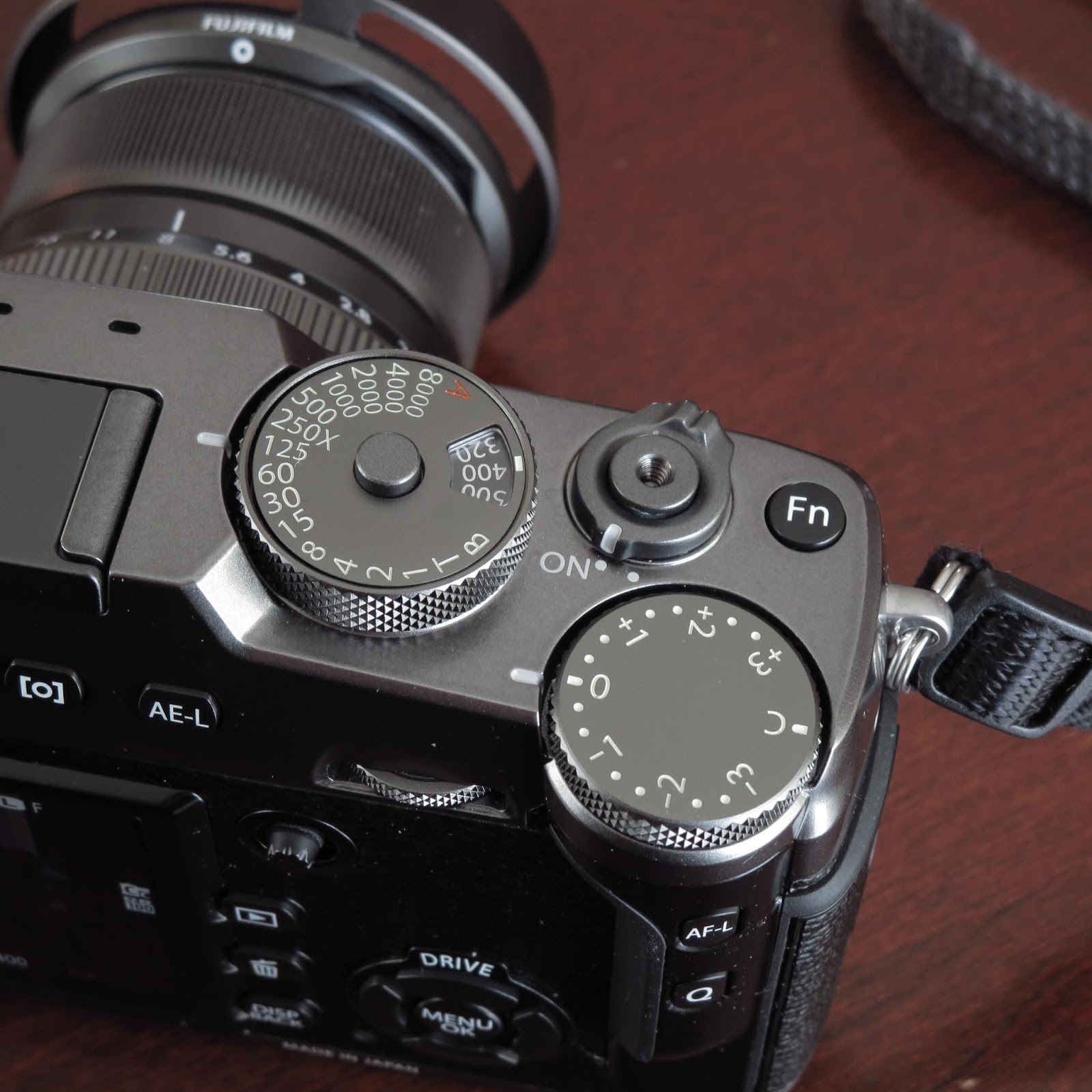
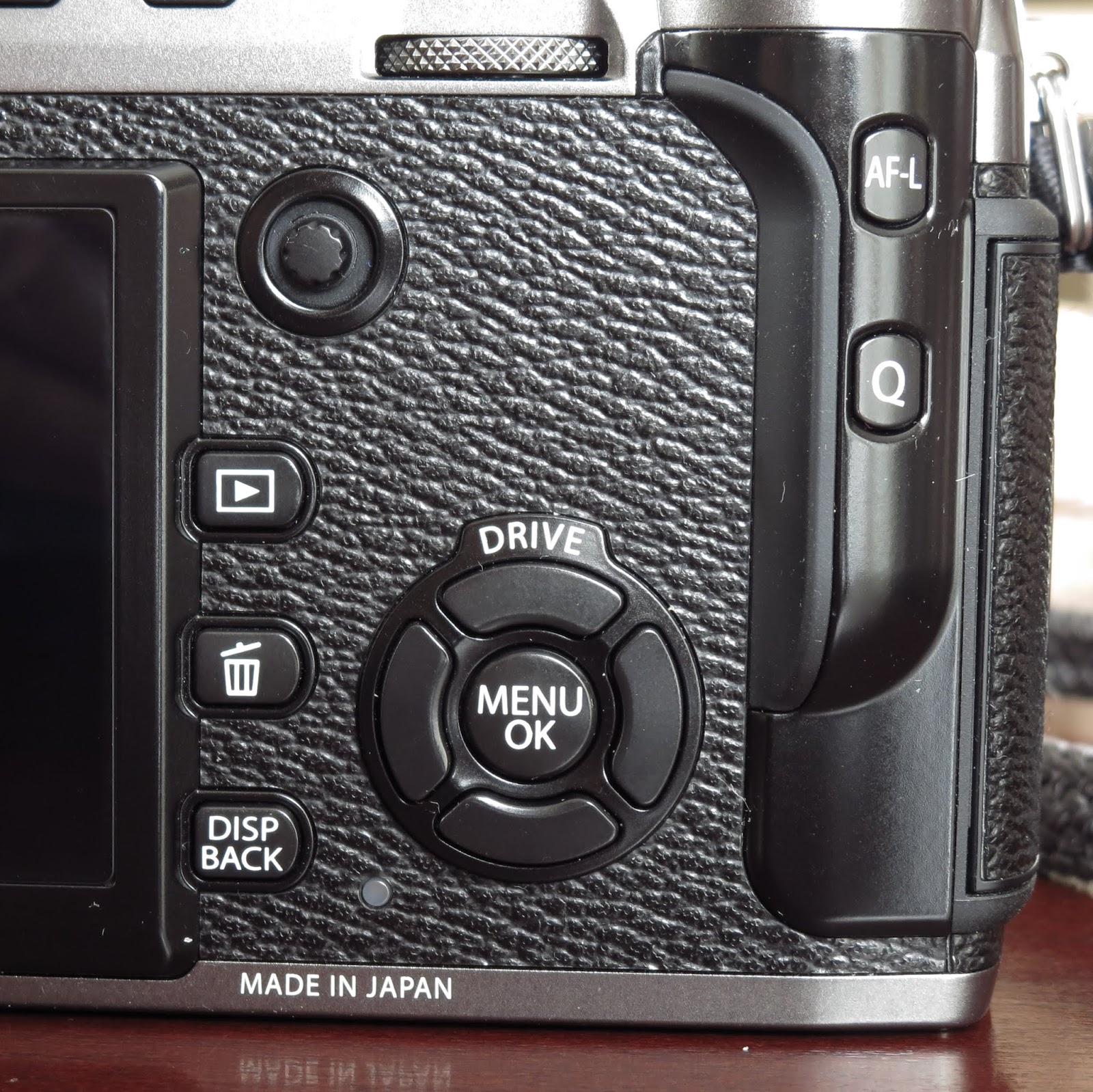
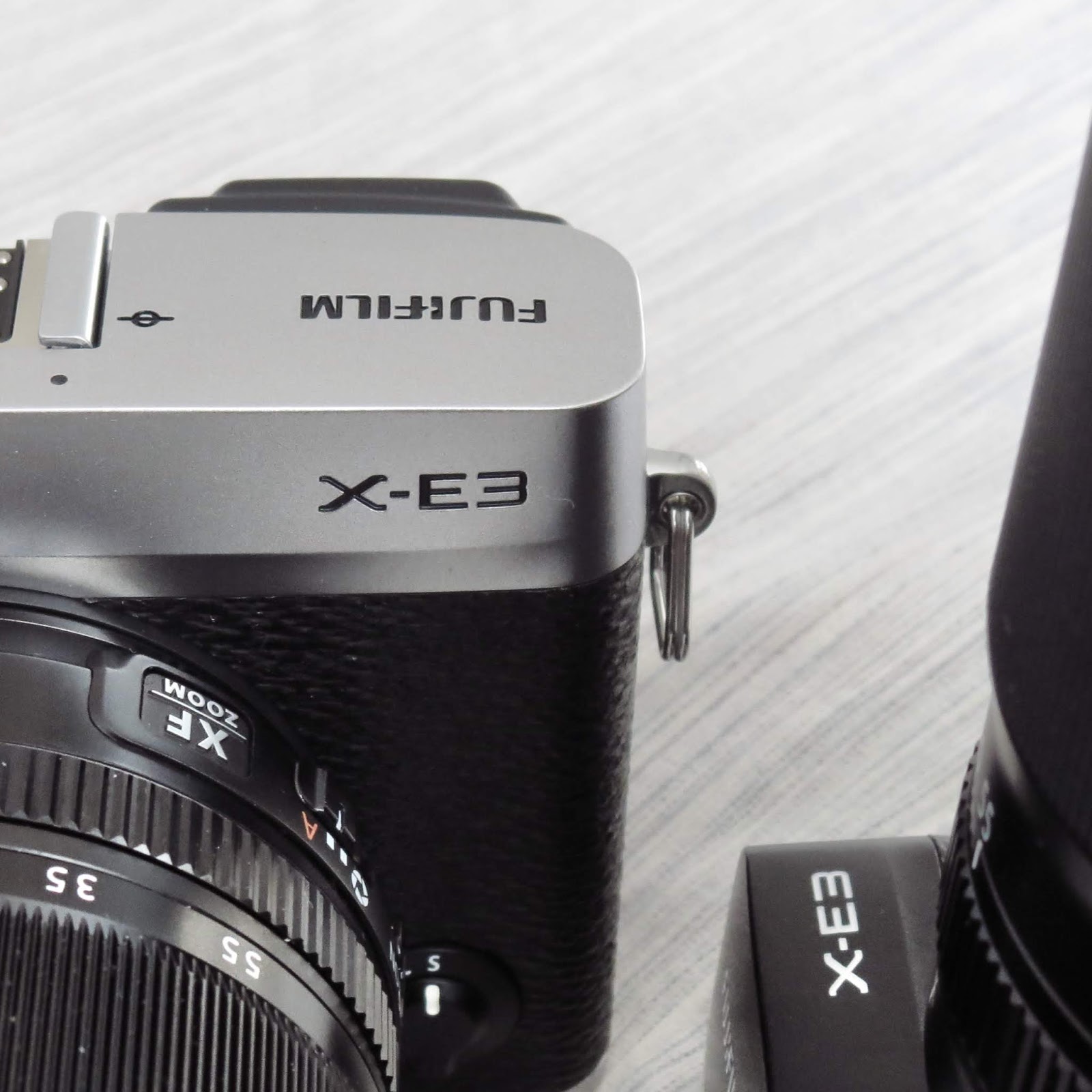
Not long time ago, Fujifilm have seemed to confirm the cessation of the X-E series (X-E1; X-E2; X-E2S and X-E3 models) and many X-E photographers were very disappointed by this decision. The Fujifilm X-E series, although that some reviewers were never able to appreciate it, was a kind of cult among its faithful users over the years. With the latest X-E3 model, the series has reached a certain maturity mainly because it reunites the compactness exigence with the technical performance requirements.
For sure, the X-Pro series has been and still is the pro reference for the rangefinder style digital camera models from Fujifilm, but the X-E ones were and still are appreciated for their lighter camera body and their more discrete presence. If you are a travel, street or casual photographer, you can attest of their versatility and their very capable functionalities.
This is the second X-mount model series that Fujifilm will phase down, this first one has been the X-M one. The SLR fashion camera models like X-T3digits and X-T2digits series have now take the lead for the compact Fujifilm representation alongside with the sans-viewfinder X-A models.
Only future will tell us if it was a wise (commercial) decision from them or, more optimistically, if Fujifilm will change its mind and will resurrect the X-E series. Let's hope for some light in that direction!
30 mars 2020
28 mars 2020
Cayo Largo désertée (mars 2020)
L'année 2020 sera marquée d'une pierre noire pour l'ile de Cayo Largo, avec la fermeture momentanée de son aéroport en début d'année et finalement la désertion complète de l'ile en pleine haute saison touristique de mars 2020 par sa clientèle toujours fidèle mais vaincue par les évènements que l'on connait.
Nous avons fait partie des tous derniers contingents de visiteurs alors que d'ores et déjà la moitié des complexes hôteliers avaient mis fin à leurs opérations et que pour les autres, il ne reste qu'une poignée d'irréductibles.
Malgré toute cette désaffectation exceptionnelle, Cayo Largo a gardé son charme incomparable et sa douceur de vivre au son des vagues déferlantes sur ses plages blanches. Ce refuge parfois rustique demeurera toujours une destination pour celles et ceux qui veulent momentanément s'affranchir du rythme effréné et bruyant de notre société matérialiste.
27 mars 2020
Last plane for the travel photographers!
Is travel photography a now past occupation? At this hour and at this day (March 27, 2020) every country is quietly closing its frontiers to foreigners and even to its own people that have been too late to catch the last flight available. One week ago, I was part of the first groups of people to be repatriated with the new airplane in-board rules that have seemed to be surrealist on the moment. They are now a standard process in the very few incoming flights to come.
What will be the world in the coming months and years? Nobody really knows! For one, the innocence of past travelers who have candidly explored the planet is a thing of the ... past! Nobody will ever be felt that full confidence about its own security, at least for sanitary obvious reasons. But there is more than a simple touristic impact from the recent events. There is also a very local one. Suspicion is now part of us very near neighborhoods. So, it is not only travel photography that is in jeopardized but any out-going photography (street, casual, etc.).
If we understand the logics behind the confinement measures, we have not really apprehended how they can be fully articulated in our day-today life. Simple acts of our basic social behavior have been abolished without any kind of substitution effort. Suspicion have replaced curiosity and it will take time to get a more relax human approach to other even with the familiar ones. Can photographs be able to take the relay of your on-sight relations? May be or maybe not. We don’t know what the common sentiment regarding socializing versus individualism will be.
During the last moments of our night return flight, I was observing through my airplane window the aerial view of the Montreal city with its empty highway roads and knowing how the traveling activities of any kind will drastically decrease almost to an unbelievable stand still. You know intuitively that, at this precise moment of time, there will be a day before and a day after.
What will be the world in the coming months and years? Nobody really knows! For one, the innocence of past travelers who have candidly explored the planet is a thing of the ... past! Nobody will ever be felt that full confidence about its own security, at least for sanitary obvious reasons. But there is more than a simple touristic impact from the recent events. There is also a very local one. Suspicion is now part of us very near neighborhoods. So, it is not only travel photography that is in jeopardized but any out-going photography (street, casual, etc.).
If we understand the logics behind the confinement measures, we have not really apprehended how they can be fully articulated in our day-today life. Simple acts of our basic social behavior have been abolished without any kind of substitution effort. Suspicion have replaced curiosity and it will take time to get a more relax human approach to other even with the familiar ones. Can photographs be able to take the relay of your on-sight relations? May be or maybe not. We don’t know what the common sentiment regarding socializing versus individualism will be.
During the last moments of our night return flight, I was observing through my airplane window the aerial view of the Montreal city with its empty highway roads and knowing how the traveling activities of any kind will drastically decrease almost to an unbelievable stand still. You know intuitively that, at this precise moment of time, there will be a day before and a day after.
25 mars 2020
Simplicity can be digital!
![]() |
| Fujifilm X-H1 / XF 50mm f2 R WR |
* Thanks to the digital camera designs from Fujifilm that mimic the film (analog) ancestors.
Yes, that debate seems to rage over the web photo planet for years and since the digital cameras and their vast inherent electronic possibilities have substituted their film-analog counterparts. Not new but always so actual. In fact, all the basics in photography remain the same (although sometimes translated differently technically) but the digital access to more parameters like film simulations, color and exposure sciences that were almost impossible to think when we were using traditional films cameras, have completely changed the photographic landscape.
![]() |
| Fujifilm X-T20 / XF 55-200mm f3.5-4.8 R LM OIS |
Even if we appreciated the well technically mastered pictures of all kind, it stays that the choice of the subject, its composition and its picture taking moment are still the very fundamentals of success in photography. And imperfections could be in a way part of the originality of every photo interpretation. Personal sophistication is also a manner of our mind (previsualize) image selection.
You may want to better control some exposure parameters for specific photographic purposes. The most noticeable ones may be the shutter speed for freezing or not the subject movement(s), and the lens aperture, for reducing or increasing the deep of field (the subject in the clear focus distance range). Experimenting and studying the different results you will obtain can help you to further push your artistic creativity and by extension your own visual originality.
In some extend, as you get more familiar to play with these parameters, you will develop some photo setting reflexes that will increase your working efficiency and also allow you to get easier the picture results you are looking for. You may find that every single subject may ask you a different technical approach and it is up to you to create different setting formulas that will apply accordingly. For example, action subject in movement could ask you the use of an higher shutter speed to freeze them or, on the contrary, a slower one to reproduce the impression of this mobility or even a moderate shutter speed combine with a panning of the central subject to produce its blurred background. So, every personal requirement may ask a specific formula.
![]() |
| Fujifilm X-H1 / XF 55-200mm f3.5-4.8 R LM OIS |
The deep of field debate is another never ending discussion. On the opposite side of the usual argumentation, blurring a subject can also develop a specific interest of it. The travelling of the observer image eyesight can create a complex interest about a two-dimensional picture. Tack subject sharpness is not always the perfect solution for a subject or a scene. Impacts of second level or third level can enhance the total photo experience. Even with a modest maximum aperture lens, you can use the deep of field phenomena creatively especially for short distance subjects.
I cannot more emphasis how the choice and the interaction with your photographic subject is paramount into your visual artistic picture expression and also for the image composition and the picture taking moment you are privileging. Those important points can surpass the only technical requirements of many in doing a more interesting content. Yes, the digital photo cameras are wonderful tool, but we have to develop also our personal vision of this world that must be translated using these devices. Persistent et repetitive photo experiences are a good way to fulfill that always renewing task.
![]() |
| Fujifilm X-H1 / XF 55-200mm f3.5-4.8 R LM OIS |
22 mars 2020
Photographic (human) uncertainty
![]() |
| Wind-Blow-Over-The-World / Fujifilm X-Pro2 & XF23mmF2 WR |
Two weeks ago, I was preparing myself for a short two weeks pause into my favorite island of Cayo Largo in Cuba with no any real concern regarding the global Mondial situation. Yes, at that point of time (Beginning of March 2020), there is some concern about a pandemic evolution of the Covid-19 but still the scale of the global menace was not clear and most of us were acting as usual. In those two little weeks, blinded into my faraway place, everything has changed and generated an outstanding new situation in every way.
Uncertainty has replaced our unconcerned behavior. We are now astonished by the utmost frailness of our society, our entourage and our own life. In that context, is there a photographic (human) testimony that we can create and perpetuate to the ones who will follow us? Because at the end photography may survive us and document those others whom will take the relay of our social community.
Life is a strange thing. She can appear and disappear in a flash on time. Life can produce a moment of time that look eternal in photographic terms but will dematerialized in a very brief time. As a photographer we want to register at least a more durable trace of it. In our mind there are so many different images of past that we will love to preserve but we know already that all this will disappears as our time will be past. For us photography is may be the only escape from the emptiness of the remembering future.
Today I sincerely hope that the photographers of this world will understand the fragility of life and be concerned to preserve the most magic moments of it. That is may be the most daring task to do for us.
02 mars 2020
Photography over the Web: an absence of authenticity!
(Foreword) Authenticity can be expressed with emotion, sharing, and generosity but also be opposed to self profit, narcissism and egocentrism.
Back to the infancy of the (large) public Web introduction, it was common that its contain was impregned of naivety, frankness and openminded will to help and share common passions such as photography. The platforms were not really sophisticated but everybody was not caring at all. But those times had come to an end when more commercially oriented people began to take the lead and simply push the basic quality level of the presentation to, let’s say, a more professional one.
If you are involved into the different commercial markets, you know already that what is appearing is often very different from what it is in reality. So, from small pieces to small pieces, the presence of photography as an innocent passion of the art and the tool have changed to a deep promotional race for the manufacturers, the promoters and finally the users. That change can be easily retraced by observing the recent evolution of the "vlogger" phenomena. Even the more popular and basic ones don't try anymore to put totally improvised contains and now they will script, screenplay and strongly edit their video posts.
At the same time, the pictures presented over the Web are more and more post-edited often with important masking, intricated subject montages and profound color and texture transformations. What we are now looking at is more a photo painting interpretation than a picture testimony in direct relation of a chosen moment of reality. And it seems that the general people like better these consumerist products that are an evident cultural standardization of their virtual world.
Who can be respond of that inevitable tendency if not everybody who is demanding for a physical world of certainty, of security, of mutual likeness, etc.? We ask for it, the web creators just answer to it. And that tendency, excuse the expression, is getting viral day after day without any hope to downplay it anytime soon.
I will certainly not blame anybody to try to embellish his/her life. That's human and that's positive. But in doing that for everything, everywhere et at any moment is progressively creating some kind of frustration because there is no perfect model that already works flawlessly. Sure, we aspire to get there but there are so many other interactions, contexts and evolutions to cope with, that is impossible to prevent new situations and learning from them.
The second alarming Web tendency is the apparition of individual and institutional but sophisticated hatred behavior regarding not only political or cultural subjects but also for consuming products which is annoying by their violence carried over simply goods like camera models. If you don’t like, just don't click on! But it is not only that because, in fact, they want to "eliminate" it! They aren't looking for a respectful discussion, they want to destroy the competition. And I am finding this very disturbing because humanity evolution is based greatly on its social interaction not the reverse.
Authenticity and integrity for ourselves, respect and openness for our community and our society are values that need to be translated through all our communication channels and in particular over the Web which is now occupied so much of our daily attention. We have to elevate ourselves from that another infancy that is polluting the actual public relations and discoverer the beauty of differences among us.
Back to the infancy of the (large) public Web introduction, it was common that its contain was impregned of naivety, frankness and openminded will to help and share common passions such as photography. The platforms were not really sophisticated but everybody was not caring at all. But those times had come to an end when more commercially oriented people began to take the lead and simply push the basic quality level of the presentation to, let’s say, a more professional one.
If you are involved into the different commercial markets, you know already that what is appearing is often very different from what it is in reality. So, from small pieces to small pieces, the presence of photography as an innocent passion of the art and the tool have changed to a deep promotional race for the manufacturers, the promoters and finally the users. That change can be easily retraced by observing the recent evolution of the "vlogger" phenomena. Even the more popular and basic ones don't try anymore to put totally improvised contains and now they will script, screenplay and strongly edit their video posts.
At the same time, the pictures presented over the Web are more and more post-edited often with important masking, intricated subject montages and profound color and texture transformations. What we are now looking at is more a photo painting interpretation than a picture testimony in direct relation of a chosen moment of reality. And it seems that the general people like better these consumerist products that are an evident cultural standardization of their virtual world.
I will certainly not blame anybody to try to embellish his/her life. That's human and that's positive. But in doing that for everything, everywhere et at any moment is progressively creating some kind of frustration because there is no perfect model that already works flawlessly. Sure, we aspire to get there but there are so many other interactions, contexts and evolutions to cope with, that is impossible to prevent new situations and learning from them.
The second alarming Web tendency is the apparition of individual and institutional but sophisticated hatred behavior regarding not only political or cultural subjects but also for consuming products which is annoying by their violence carried over simply goods like camera models. If you don’t like, just don't click on! But it is not only that because, in fact, they want to "eliminate" it! They aren't looking for a respectful discussion, they want to destroy the competition. And I am finding this very disturbing because humanity evolution is based greatly on its social interaction not the reverse.
Authenticity and integrity for ourselves, respect and openness for our community and our society are values that need to be translated through all our communication channels and in particular over the Web which is now occupied so much of our daily attention. We have to elevate ourselves from that another infancy that is polluting the actual public relations and discoverer the beauty of differences among us.
28 février 2020
The graphite and spartan Fujifilm X-Pro2! Did we said traditional like boring or exciting?
![]() |
| Fujifilm X-Pro2 w/ XF 23mm F2 R WR (Graphite version) |
Some love to own devices that are fully stuffed with functionalities and the latest novelties available. We just have to look at the "phone" market to acknowledge that it is not really recent consumerist phenomena. The same thing happens for the photo equipment market which is a "niche" market partly habited by eternal debaters who are looking for the "best" camera.
So, it is more a discussion about numerous potentialities and less about the practical use of a camera model for most of the time. It is to forget that for many decades during the analog-film era, the camera designs and interfaces were, by far, perfectible and not always fully reliable but it didn't prevent the vast majority of the photographers of that time period to make outstanding pictures.
I was hoping with this long introduction to awake our good logical reflexes and put our photo materialist preoccupation to a higher level, but I have so often failed for my own that I have no lesson to give to anybody in the first place.
![]() |
| The love of dials (ISO, Shutter speed, Exposure correction) |
For those few who are following my blog over the years, you know already my always motto to want and buy a camera model of the just preceding generation at a discount selling price right at the moment of its replacement by a newest model. Because I have a tendency to prefer a more mature product that have benefited with all the latest firmware and have been more smoothly manufactured. For example, you can be very confident to use a Fujifilm X-H1 pro model considering its inherent qualities and the obvious fact that its last promotional selling price tag was simply a hell of opportunity.
But even with the introduction of the new X-Pro3, the price level of the previous X-Pro2 is still on the higher side for modest budget like mine. Luckily one of our best retailers in Montreal have made a special offer over the Fujifilm X-Pro2 Graphite kit (w/ XF23mm F2 R WR) that I cannot have ignore and here I am with one of the best (and at least affordable for a time!) "rangefinder style" digital camera on the market!
Compare to X-E series, the Fujifilm X-Pro2 is a bigger camera although its hand prehension may appear more secure depending your hand size. Many basic controls (dials and push buttons) are similar from what we can expect on a Fuji X-mount camera model. The combination of the "joystick" and the D-Pad command selector is welcome because it facilitates different direct configuration such as film simulations, white balance, focus areas and drive functionalities. Fine tuning of the shutter speed and expanding of the exposition correction factor can be performed through front and back commander dials. Auto-exposure and auto-focus lock are easy and well implanted. The Quick menu let go to the most used functionalities extracted from the complete menu. And there are other adjustments available from programmable function buttons.
But the Fujifilm X-Pro2 won't offer you all the usual requests that photo equipment web reviewers always ask for. No moving LCD back screen. no internal flash, a very limited video use and no provision for headphones, no optional vertical battery grip, etc. Sure, without the Leica label, you cannot avoid the critics about these choices of voluntary omission. No, the Fujifilm is not a do automatically everything camera for you and you will have to adapt yourself with imagination to cope with certain picture taking situations.
![]() |
| Front view of the optical viewfinder (OVF) |
The Fujifilm X-Pro2 is equipped with a dual-option viewfinder, a unique feature among the "rangefinder style" digital ILC (Interchangeable Lens Camera) camera models. In simple words, we can select between a truly optical viewfinder (OVF) with picture frame parallax adjustment and a now classic EVF (Electronic Viewfinder). At first, I was skeptical about the utility of the optic option but after a certain time, I have found it very comfortable considering that the EVF (although more precise and more practical to preview the final picture taken) seems to develop some eye fatigue during an extended photo session. I must add that the larger view version of the OVF is not really interesting for glasses wearer like me.
The EVF is considered as the primary viewfinder by many X-Pro photographers. Its ability to project a preview picture in all the image and exposure configurations we may choose to make it as a very efficient photographic tool. With the eyepiece that Fujifilm have implanted, the eye relief of the viewfinder is (for the glasses wearer) limit for evaluating the entire frame especially for the extreme corners. All the proper information is well presented (into OVF or EVF) and have the autorotation ability. Lastly, you may prefer to select a different brightness of the EVF through the menu manual setting (in my case, minus 1 has been selected).
The Fujifilm X-Pro2 rear viewing screen can be operated to get a good Live View of your picture or as a reviewing screen for all the pictures already taken. The image definition is excellent, its reactivity is fast, and you can rely on it for many various photo opportunities. As already mentioned, the screen is fixed on the camera and no other orientation is possible. That can be annoying for people that are accustomed with more "video" oriented devices, but less external mechanisms might mean better long-term reliability and less provision for accidental (and fatal) manipulations. You can shut down the rear back screen if you don’t intend to refer to it during the photo taking session with the exception of reviewing the already pictures taking which is a very nice feature (you don't need to reactivate the rear screen to do so).
![]() |
Contax G2 w/Planar 35mm F2 (35mm film ILC) Source: Wikipedia |
The Fujifilm X-pro2 is bearing resemblances with older rangefinder cameras of the film (analog) era such as the Contax G2 illustrated here. But to evoque such a comparison like that is sometimes misleading because of the strong differences in term of design and manufacturing between the two types of cameras (film (analog) versus digital). And performances associated with them were also very apart. Digital cameras of today have a much performant auto focus system and auto exposure calculator that are more versatile and more reliable than it was 25 years ago. Going back is more an esthetically nostalgia than anything else.
The Fujifilm X-Pro2, doted with a 24MP APS-C digital image sensor, can be a very simple camera model to operate. Its handling is facilitated by its more prominent size. The shutter sound is smooth and discrete. The X-Pro is reactive in auto-focus and for the auto exposure setting. It is easy to parameter the photo basic like the ISO, the shutter speed, the aperture and the exposure correction factor. You take the camera and with an eye glance, you are informed about all these data. The accuracy of the X-Pro2 metering system is reliable even in more critical situation but you can adjust the camera following your own bias.
![]() |
| The bottom of the Fujinon XF 23mm F2 R WR Graphite Made in Japan! (not Philippine) |
The Fujifilm X-Pro2 have provision to accommodate a pair of secure digital (SD) memory cards allowing its owner to duplicate pictures in RAW and JPEG or simply get a longer autonomy. Power consumption is supported by the regular NP-W126(S) battery pack seen on most others Fujifilm models (except for the newest X-T4). Keeping spare (and loaded!) battery packs is a good habit to have with electronic camera models.
![]() |
| The best of both worlds: Joystick + D-Pad controls |
As already mentioned, the dual presence of the D-Pad and the jock stick is given you a rapid access to many other functionalities. The "Fn" push button is programmed initially to start the video recording but it can be configured for more still photography utilities. I won’t bother you in listing all the possibilities that the X-Pro2 give us access through its quick (Q) and extended menus. I leave you that part to explore and to discoverer how the Fujifilm X-Pro2 is an outstanding camera model for a lot of different photo situation. And yes, a traditional flash PC plug is located on the (LCD) side of the X-Pro2 for those who have the nostalgia of the annoying old (and hazardous) PC cord.
The autofocus system of the Fujifilm X-Pro2 perform nicely even under low light conditions. For the still photographic purpose, the system can be adjusted following more specific needs. Normal action photography can be correctly served although erratic subject movements are always been a particular challenge for any autofocus system and depend essentially on standardized algorithms that have been programmed by the manufacturer. Even if the Fujifilm X-Pro is not a "track and field" labelled camera model, it can manage its way to that task as long its owner understands its limitation and work on a creative alternative like the subject panning technique, the pre-set focus, or the voluntary blur, etc.
![]() |
| A shutter release cable mounted on the Fujifilm X-Pro2 |
One of the major strengths of Fujifilm digital camera models is certainly its science of colors and black and white that the manufacturer has imported from its past and renown experience from the film (analog) era. All the Fujifilm film simulations are interesting to try because they can offer new picture interpretations you never think of. For sure, black and white (especially ACROS) simulations are very popular. If picture quality is your primary criteria for electing a camera model, you won’t be disappointed par Fujifilm and the X-Pro2.
Since the Fujifilm X-Pro2 is designed as a professional camera, its lifespan is proclaimed to withstand more than 150,000 shutter actuations, meaning 600 working days of 250 camera shutter releases per day. For the more moderate users, it represents years of continuous use. At this date (and before the release of the X-T4 model) only the Fujifilm X-H1 can surpass that mechanical longevity interns for the number of pictures produced. Saying that a camera model is a pro one doesn't necessarily induce that it is a fully loaded photo device with all the functionalities that you may think of. It simply implies that the X-Pro2 is primarily designed and manufactured for an intensive pace of utilization.
The Fujifilm X-Pro2 like its predecessor the X-Pro1 and its successor the X-Pro3 are all greater dimension camera models not really playing into the more compact field of the X-E series for example. That bigger size allows the manufacturer to combine effective an OVF and an EVF, a specific feature you cannot find to other competitor rangefinder style models. The durability of the X-Pro2 should classified as a working everywhere and under most adverse conditions camera model and that will withstand intense uses. But it can be also seen as a long-term camera device for someone who to spend more time, more destinations, more subjects to his/her photo projects. Are still some X-Pro2 available out there? For one, I was privilege to have found one of the last in Montreal!
All illustrations were realized by Daniel Marchand except for the one presenting the Contax G2.
25 février 2020
Photo-Graphic-Ti !
Graphic subjects have always a strong photographic challenge over the years, the decades and... the centuries!
It may be because, in part, photography has been done originally in black and white (before the color event) and the graphic representations were catchier in term of contrast and form than other subjects like humans, animals, etc.
It may be also because of the more segmented light distribution that was enhancing the impact of the taking picture.
It may be the "static" of the graphic subjects that make easer to produce these types of photographs.
All these reasons and surely others have contributed to the popularity of this specific subject and of the photography practice in general.
There are many ways to do graphic subjects depending what is your purpose you intend to do. For example, architectural photography is a difficult art to perform that involve a good study of the localization and the position of the subject and a good control of the light and a good respect for the proportions to render. So, graphic photography is not so simple that we may first think. And there is emotion involved too.
Graphic representations are also a cultural testimony over time of the communities and the civilizations. The more "primitive" ones are surely the ancient graffities printed or carved on rock walls or on wood pieces. Today’s we can find them everywhere around the planet and over the walls of our material civilization! A part of the graphic representation has a great iconic value with universal themes used for many applications even through our Internet communication.
Graphic are not only a linear testimony; it can be an assembly of different density masses that will compose the context of our picture. That remark can go also for the edge exactitude of the subject(s) involved in our image. In one word, graphic doesn't always mean precision, or fine edges or even the greatest resolution. It is also a matter of personal impression face to iconography representation. The significant of a picture find its way through our mind and our imagination.
Everybody got their individual interpretation of esthetic which differs greatly between us. So graphic can be provocative (get impact), can be highly destabilizing and can exceed our comfort zone. What is more boring than a perfect picture, an image made for existing and accepted standards but without provocative originality that push the limits.
So, what about the Photo-Graphic-Ti? Is it a line, is it a form, is it a texture, is it a color, is it a subject? It is up to you to tell me what it is!
20 février 2020
Why life must be complicated? My love affair with the Fujifilm X-E3 facing the numerous recent novelties.
We love to do photography and we love to do it with beautiful cameras that we cherish but like many lovers, we are not always fully loyal, and we often look on the other side of the fence for a new loving novelty. That's human and ... that is also logical to improve our material situation. After all, why not be more efficient, more comfortable and get a jazzier product. It is not a real syndrome; it is simply the way human behave for millenniums.
True that I have been excited for all the Fujifilm cameras that I have the chance to own and to work with. The X-E2, X-E2S, X-T10, X-T20, X-T30 and X-H1 were wonderful products and each generation have solved many newborn flaws seen in the mirrorless planet. At this moment of time, two Fujifilm X-E3 cameras (silver, black, so no discussion here!) are following me into the different photo projects that I am intended to do. Yes, I love the Fujifilm X-E3 with his off-center viewfinder that replicate the old rangefinder camera way of working. The X-E3 are simple cameras with less optionality (such as a moving rear LCD screen or multiple dials and function pushbuttons). You can set the very basic technical data such as ISO, aperture, shutter speed and concentrate yourself about your picture composition and the critical picture taking moment. You can also configure the camera regarding some more specialized photographic aspect of your own.
The Fujifilm can be a fantastic "monochrome" camera without fussing about its total versatility to also do color pictures. Black and white photography represent at least half of my total but modest production. It is a format (B&W) that I am highly comfortable to anticipate and to select. The X-E3 electronic viewfinder (although it seems small in comparison of its other X-T series cousins) will give you an accurate preview of your final picture like for the very precise rear back viewing screen. My film simulation preference in monochrome goes, not surprised, to the Acros version implanted into the X-E3. The possibility to simulate B&W color filters is another fine option.
As many have already concluded, I am not very fond to add and use accessories on any camera. With the Fujifilm X-E3, you need to fit the optional and small Fujifilm EF-X8 flash unit (furnished with the camera) and set it at its upper position (which is an advantage to prevent the lens proximity). This light helper can be good as an emergency or a tiny fill-in flash. Be sure you have an extra battery pack to sustain its extensive use. The optional grip from Fujifilm (or from a third-party) is interesting not only for the additional one-hand prehension capacity but to serve as a more secure (Arca-Swiss type) tripod mount base. It is easier to center the lens with the tripod head when the optional grip is attached to the X-E3.
I am not a videographer but I can understand that the Fujifilm X-E3 is not really a photographic product meanly designed for animated picture project although it can be use that way providing certain adaptations such as may be the use of the control remote optionality operated from a phone or a tablet.
Now we can start the always present debate concerning the urgency to "upgrade" yourself with the newest camera models which is meaning the X-T200, the X-Pro3 or the X-T4 (if not the X-T3 or X-T30) that are using the latest technical advancement such as, for some of these already mentioned, a new image sensor, a faster and more accurate autofocus system, new film simulations, etc. Is the Fujifilm X-E3 becoming a complete outdated camera by today's standards? The same question has been asked in the past for the previous Fujifilm X-E1, X-E2 and X-E2S models. The answer is never a universally accepted one. But all these X-E series different versions are still producing fine and, time to time, outstanding results simply because of the involvement of the photographers that are using them.
What to conclude of all these so profound "photographix" reflections? For one, there is always place for further technical development and we are encouraging them by buying new photo equipment at our own desire and our budget availability. For two, we have a renowned tendency to fall in love with our camera choices and this why we defend them so fiercely. For three, all digital camera models (in particular the interchangeable lens cameras - ILC) can perform decently and produce interesting photographs. At the end, there is no bad or improper photo equipment choices as long you intend to use them!
True that I have been excited for all the Fujifilm cameras that I have the chance to own and to work with. The X-E2, X-E2S, X-T10, X-T20, X-T30 and X-H1 were wonderful products and each generation have solved many newborn flaws seen in the mirrorless planet. At this moment of time, two Fujifilm X-E3 cameras (silver, black, so no discussion here!) are following me into the different photo projects that I am intended to do. Yes, I love the Fujifilm X-E3 with his off-center viewfinder that replicate the old rangefinder camera way of working. The X-E3 are simple cameras with less optionality (such as a moving rear LCD screen or multiple dials and function pushbuttons). You can set the very basic technical data such as ISO, aperture, shutter speed and concentrate yourself about your picture composition and the critical picture taking moment. You can also configure the camera regarding some more specialized photographic aspect of your own.
The Fujifilm can be a fantastic "monochrome" camera without fussing about its total versatility to also do color pictures. Black and white photography represent at least half of my total but modest production. It is a format (B&W) that I am highly comfortable to anticipate and to select. The X-E3 electronic viewfinder (although it seems small in comparison of its other X-T series cousins) will give you an accurate preview of your final picture like for the very precise rear back viewing screen. My film simulation preference in monochrome goes, not surprised, to the Acros version implanted into the X-E3. The possibility to simulate B&W color filters is another fine option.
As many have already concluded, I am not very fond to add and use accessories on any camera. With the Fujifilm X-E3, you need to fit the optional and small Fujifilm EF-X8 flash unit (furnished with the camera) and set it at its upper position (which is an advantage to prevent the lens proximity). This light helper can be good as an emergency or a tiny fill-in flash. Be sure you have an extra battery pack to sustain its extensive use. The optional grip from Fujifilm (or from a third-party) is interesting not only for the additional one-hand prehension capacity but to serve as a more secure (Arca-Swiss type) tripod mount base. It is easier to center the lens with the tripod head when the optional grip is attached to the X-E3.
I am not a videographer but I can understand that the Fujifilm X-E3 is not really a photographic product meanly designed for animated picture project although it can be use that way providing certain adaptations such as may be the use of the control remote optionality operated from a phone or a tablet.
Now we can start the always present debate concerning the urgency to "upgrade" yourself with the newest camera models which is meaning the X-T200, the X-Pro3 or the X-T4 (if not the X-T3 or X-T30) that are using the latest technical advancement such as, for some of these already mentioned, a new image sensor, a faster and more accurate autofocus system, new film simulations, etc. Is the Fujifilm X-E3 becoming a complete outdated camera by today's standards? The same question has been asked in the past for the previous Fujifilm X-E1, X-E2 and X-E2S models. The answer is never a universally accepted one. But all these X-E series different versions are still producing fine and, time to time, outstanding results simply because of the involvement of the photographers that are using them.
What to conclude of all these so profound "photographix" reflections? For one, there is always place for further technical development and we are encouraging them by buying new photo equipment at our own desire and our budget availability. For two, we have a renowned tendency to fall in love with our camera choices and this why we defend them so fiercely. For three, all digital camera models (in particular the interchangeable lens cameras - ILC) can perform decently and produce interesting photographs. At the end, there is no bad or improper photo equipment choices as long you intend to use them!
17 février 2020
The Fujinon XF 27mm F2.8: The Predictable Lens
This lens is a dinosaur that is refusing to die in favor for a revised model as many dream to see for some years. Introduced in 2013 alongside with the Fujifilm X-M1 camera model, its persistence and success among the (compact) Fuji X photographers is a true testimony of its inherent qualities.
The Fujinon XF 27mm F2.8 is one of the two official so-call "Pancake" lenses available from the Fujifilm X-Mount line-up (The other one is the Fujinon XF 18mm F2 R lens). Designed firstly to be paired with smaller APS-C ILC bodies of the X-A or X-M series, it never prevents many Fuji X-mount enthusiasms to match the small optic with larger camera X-series models. Especially pleased by X-E model series users, it is still used extendedly by serious photographers.
Right from the start, we must precise that some basic characteristics of the others Fujinon XF prime lens series are missing on the XF 27mm. No aperture ring is available on the lens and no provision have been made for an optional lens hood. The Fujinon XF 27mm lens construction is noticeably lighter and the autofocus motorization can be heard.
One of the biggest advantages of the XF 27mm is its angle of view (55,5 degrees) which is equivalent to a 40mm focal length for the 24X36mm analog-film or digital format. Although its maximum aperture of F2.8 remains modest, it can be assimilated as an everyday lens.
![]() |
| Frozen Morning |
On assignation
The Fujinon XF 27mm F2.8 lens is a very small optic and you may be felt a bit uncomfortable at your first use it. It adds almost no weight to the body of the camera, in fact less than 80g (less than 3 ounces). It is also a very contracted design and for people who are used to hold the bottom of the taking lens with the palm of their left hand to get more stability, it can feel a bit odd to do it with your thumb and one finger only.
The biggest advantage of the XF 27mm F2.8, especially for a travel or street photographer, is certainly its inherent discretion. Coupled with a small Fujifilm X-mount camera body (X-A, X-M, X-E or even X-T/two digits), it can assimilate to a compact camera with a fixed lens such as the Fujifilm X100 series models.
The Fujinon XF 27mm F2.8 lens is a very small optic and you may be felt a bit uncomfortable at your first use it. It adds almost no weight to the body of the camera, in fact less than 80g (less than 3 ounces). It is also a very contracted design and for people who are used to hold the bottom of the taking lens with the palm of their left hand to get more stability, it can feel a bit odd to do it with your thumb and one finger only.
The biggest advantage of the XF 27mm F2.8, especially for a travel or street photographer, is certainly its inherent discretion. Coupled with a small Fujifilm X-mount camera body (X-A, X-M, X-E or even X-T/two digits), it can assimilate to a compact camera with a fixed lens such as the Fujifilm X100 series models.

If you decide to add to the XF 27mm F2.8 a generic lens hood (sorry no official lens hood available from Fujifilm), you may improve a bit the handling of the optic. Just remember that the lens hood is couple with the front focus moving element and attention must be taken to prevent dangerous front lens hood banging.
The 39mm accessory filter size is relatively common for that type of fix focal length
![]() |
| A little winter fresh air with coffee and some literature! |
Autofocus is quick (although not fully silent). Manual focusing is accurate with good simulated travel of the ring for fine focusing. This is not a macro lens so close focusing is limited if you are working with very small subjects. No aperture ring for that model and you will have to rely on the adjusting dial of the camera (which is an option present on every Fujifilm X-mount models). No optical stabilization system (OIS) is offered and you have to be more aware about the shutter speed selected by the camera or by yourself. You may choose to upper your minimum shutter speed limit to counteract the photographer shaking effect.
Through Glass Azur Montreal Subway
NorthernWest Light
Morning Snow Tiny Flakes
Picture quality
The color rendition of the Fujinon XF 27mm F2.8 doesn't differ from the other lens models of the X-Mount Series and the same continuity in term of image results observed with the others Fujinon X-Mount lenses can be expected. For sure, automatic in-board calibration and picture correction are part of the advantages of the modern digital photography. Focus accuracy between left and right side and up and down has been adequate with the different copies that I have owned over time.
The Fujinon XF 27mm F2.8 is not really a substitute of the standard zoom lenses such as the XF 18-55mm, XF 16-80mm or the XC 16-50mm that have a much larger focal length versatility and are dotted with an efficient optical stabilization system (OIS). Like many fixed focal prime lenses, it is more a creative lens that is forcing the photographer to anticipate and preselect the way he/she manage the subject and the context of the picture to produce.
The angle of view of the Fujinon XF 27mm F2.8 is similar of the one who can experiment with your own eyes if you are considering only the sharp area. It results that lens rendering can be easily anticipated even without looking into the viewfinder or on the back screen of the camera.
In all, the Fujinon XF 27mm F2.8 is a very predictable and compact lens of the Fujinon X-Mount line-up, ideal for travel, for street and spontaneous photography. One of the endangered optic lens species!
(First published in February 2016, revised in February 2020)
The angle of view of the Fujinon XF 27mm F2.8 is similar of the one who can experiment with your own eyes if you are considering only the sharp area. It results that lens rendering can be easily anticipated even without looking into the viewfinder or on the back screen of the camera.
In all, the Fujinon XF 27mm F2.8 is a very predictable and compact lens of the Fujinon X-Mount line-up, ideal for travel, for street and spontaneous photography. One of the endangered optic lens species!
(First published in February 2016, revised in February 2020)
12 février 2020
In color or black and white? A personal bias before everything else.
With the introduction of the digital cameras, many will said that it is now possible to work simultiniously in color and black and white (with the option to edit your final picture output). But for the "ex-analog" photographers like me, this choice between the two traditional photographic rendering have a lot more to do with our preliminary vision, color or black and white, you try to transmit from your original image content.
This one of the reason that I have chosen to work with digital cameras that have the ability to switch on a specialized monochrome rendering. All these cameras are versatile and allow you to further configure them by using internal filter setting (Yellow, Red, Green) to bias the gray distribution from the original image colors.
Shooting in black and white (B&W) is not necessarily easy and predictable for everybody but with the now commun electronic viewfinder (EVF) among many mirorless cameras, you can see in real time your final result which is a dramatic advancement from the dark ages of the analog (film) photographic era. By having access to this magnificent viewing tool, there is no reason to prevent yourself in switching to the monochrome setting. You can always register your picture in both JPEG and RAW files, this last one allowing you to get a "none-altered" color basic picture to edit further if you want to do do so.
Doing B&W photography can help you to enhance your ability to organize more specially your subject arrangement in terms of graphic positions, of light distribution and space importance of it.All these factors are also fondamental in color photography but monochrome may be an excellent exercice that can help you to better sense them.
As it is now very convenient to produce an overwhelming number of photographs and it is becoming a major flaw in our visual consumerist society. What the point to submerge people with such an abuse total amount of pictures that will simply vanish the moment after in profit of another one? We have to be more selective and assume our choice to register an image or for viewing a particular one. In that sense monochrome photography can help to be more attentive about our subjects and spend a greater and more producing time to analyse and select the right composition, the right moment of exposure. We have to get away from the "cinematic" tendency of today photography. Let's keep animated (sequence) images for the videography where it should be kept in first place.
Some may ask why B&W is still a pertinent photographic rendering in your world of colors. Posing the question is easy but answering to it is more complex. We could pretend that it is a matter of photographer's emotions and feelings. Even for documentary purposes, it appears that some of the very renowned photographers are still preferring the B&W format over the actual very easy trend to reproduce colorful counterpart.
"The color of B&W" is may be a contradiction by itself but in some ways it can appear to be a second level of visual perception. And perhaps because of the fact that color reproduction process has been historically based from different layers of B&W support that we have added the basic colors (RGB, CMYK, etc). That B&W technical approach for resolving the color representation (that many have a tendency to forget or simply not knowing it) is inducing that there is many colors which are present into a gray tonal scale. We know that some color combinations will generate more contrasty perception. In B&W photography, the colored lens filters will discriminate specific color frequencies in favor of other ones.
In our present "color educated" society as we usually see through our different visual media, B&W has been generally associated with the past testimonies of time or with old photography even considering its more recent uses. Press photography has been also almost exclusively done and printed in B&W and the color pictures were reserved for magazine formats. The actual Internet culture has imposed an almost exclusively full color visual presentation. It is only more recently that B&W seems to resurrect often on a marginal way.
Strangely, the psychologic perception for authenticity appears to be influenced by B&W versus color, may be because it has been associated by the ancient analog way to produce pictures on negatives and prints. Sure it didn't prevent photo alterations and montages in the past as we are able to do today when we post-process a registered image. The initial introduction of the television exclusively in B&W could have been also a influencer in this thinking. However, the new generations dont have that tendency to overrate the "realistic" value of B&W pictures.
When I have started to do (analog) photography, black and white was consider the basic school of the fundamentals to master in that visual field. Color photography was the next step. So, in that perspective, our photographic training have prioritized the study of the composition (the subject spatial arrangement in two dimensions), the role of the contrast, of the gray scale and even of the film granulation, the importance of the subject (moment) expression, the control of the deep of field (the era of net subject-object versus the blurry context zones), the time and the amount of exposure required to registrer your taking picture the film support. In one phrase, it was technical, it was instinctive, it was formative and progressive, it was creative.
Doing digital black and white photography should ask you the same personal involvement as we used to do during the days of film photography. And it is especially true if you have completed the whole photo process by printing your picture on a paper support.
You don't need to ask me if I am a (lifetime) advocate for B&W photography because, frankly, it is my intuitive and natural way to do it. But that "gray" and "contrasty" passion is now resugencing everywhere strongly than ever. So, just follow the "new"past trend!
09 février 2020
Fujifilm X-E3 + Fujinon XF 55-200mm F3.5-4,8 R LM OIS: An improbable pair!
No doubt that the Fujifilm X-E3 can give equally good picture results as equal as the ones from the X-T2, X-T20, X-Pro 2 or the X-H1 models that, in fact, are using the same image sensor. Even considering the autofocus performance disappearances between all these models, I didn't find significative differences in my everyday photography, except maybe for bird picturing (rate of success is significant lower even if the X-E3 is set the same way as the X-T20 for example). With the newest X-T30 model (that have replaced the previous X-T20), the story is also a bit different (marginally) because of the evolution of the autofocus system implanted by Fujifilm.
I always regarded the Fujinon XF 55-200mm zoom lens as a very creative optic, more than a "sporty" lens type. Examples around the world have proven this assertion in many ways for landscape, portrait, architectural, close, graphic, etc. And if you aren't mounting the intimidating lens hood the Fujinon XF 55-200mm can be more discrete than we may first think of. Pair with the Fujifilm X-E3, the Fujinon XF 55-200mm F3.5-4.8 R LM OIS is really a "reach" zoom lens that can discriminate an annoying surrounding from your main subject. It can be done by reframing or by selecting a shallower deep of field (larger aperture setting).
Using the "off-center" electronic viewfinder (EVF) of the Fujifilm X-E3 is a real pleasure that allow you to keep most of your face free of the camera body. Your left hand will naturally serve as a support for the zoom lens helping that way to get a better stabilization of your picture taking combination device. The optical image stabilization (OIS) of the zoom lens is another very practical tool to prevent blurry effect induced by the photographer shakes.
The Fujifilm X-E3 is a very nice, practical and efficient interchangeable lens camera (ILC) and by adding the Fujinon XF 55-200mm F3.5-4.8 R LM OIS zoom lens, you simply take advantage of its full potential of versatility and creativity, but, yes I admit, this is not in anyways, a "pancake" lens!
S'abonner à :
Messages (Atom)