20 février 2020

Why life must be complicated? My love affair with the Fujifilm X-E3 facing the numerous recent novelties.

We love to do photography and we love to do it with beautiful cameras that we cherish but like many lovers, we are not always fully loyal, and we often look on the other side of the fence for a new loving novelty. That's human and ... that is also logical to improve our material situation. After all, why not be more efficient, more comfortable and get a jazzier product. It is not a real syndrome; it is simply the way human behave for millenniums.

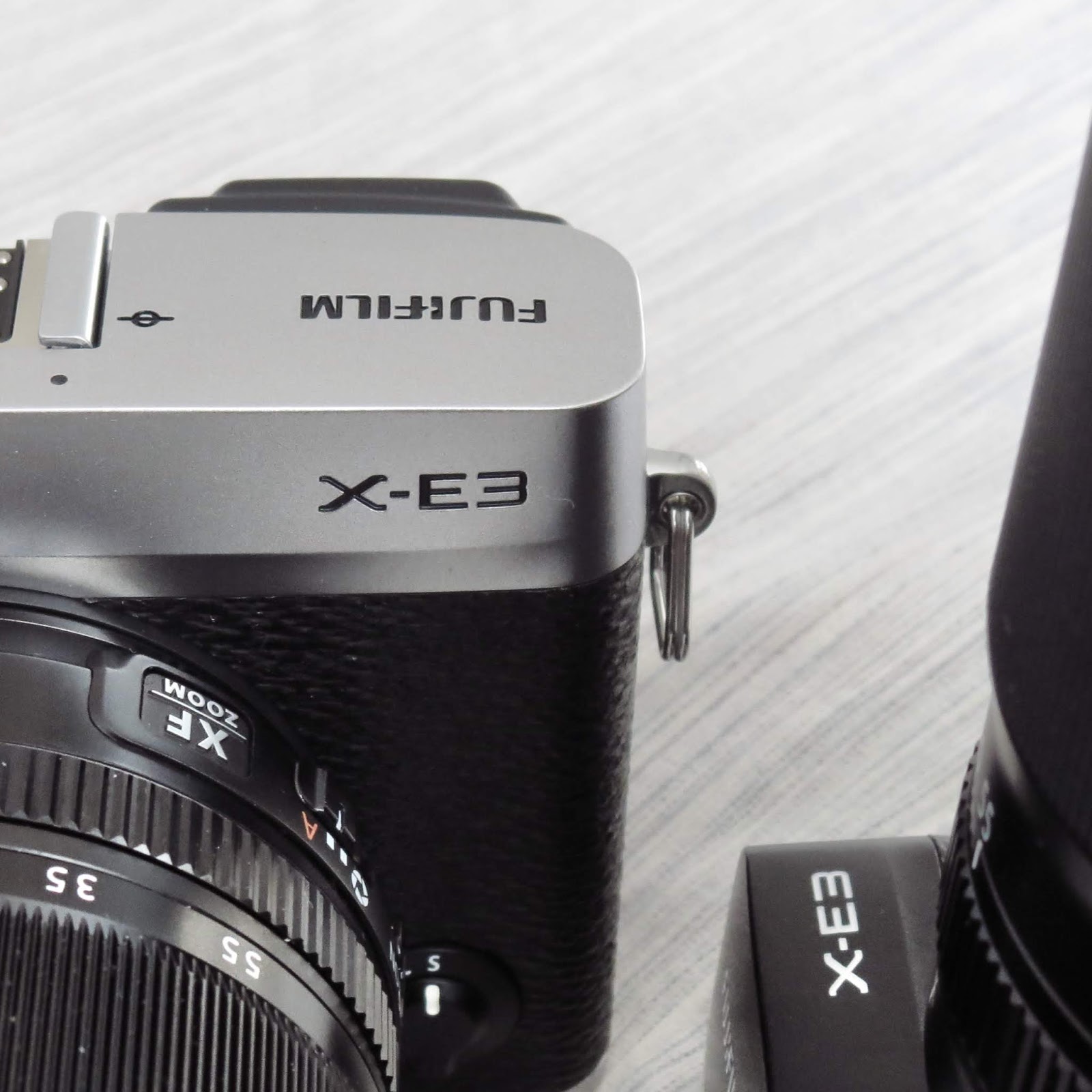
True that I have been excited for all the Fujifilm cameras that I have the chance to own and to work with. The X-E2, X-E2S, X-T10, X-T20, X-T30 and X-H1 were wonderful products and each generation have solved many newborn flaws seen in the mirrorless planet. At this moment of time, two Fujifilm X-E3 cameras (silver, black, so no discussion here!) are following me into the different photo projects that I am intended to do. Yes, I love the Fujifilm X-E3 with his off-center viewfinder that replicate the old rangefinder camera way of working. The X-E3 are simple cameras with less optionality (such as a moving rear LCD screen or multiple dials and function pushbuttons). You can set the very basic technical data such as ISO, aperture, shutter speed and concentrate yourself about your picture composition and the critical picture taking moment. You can also configure the camera regarding some more specialized photographic aspect of your own.

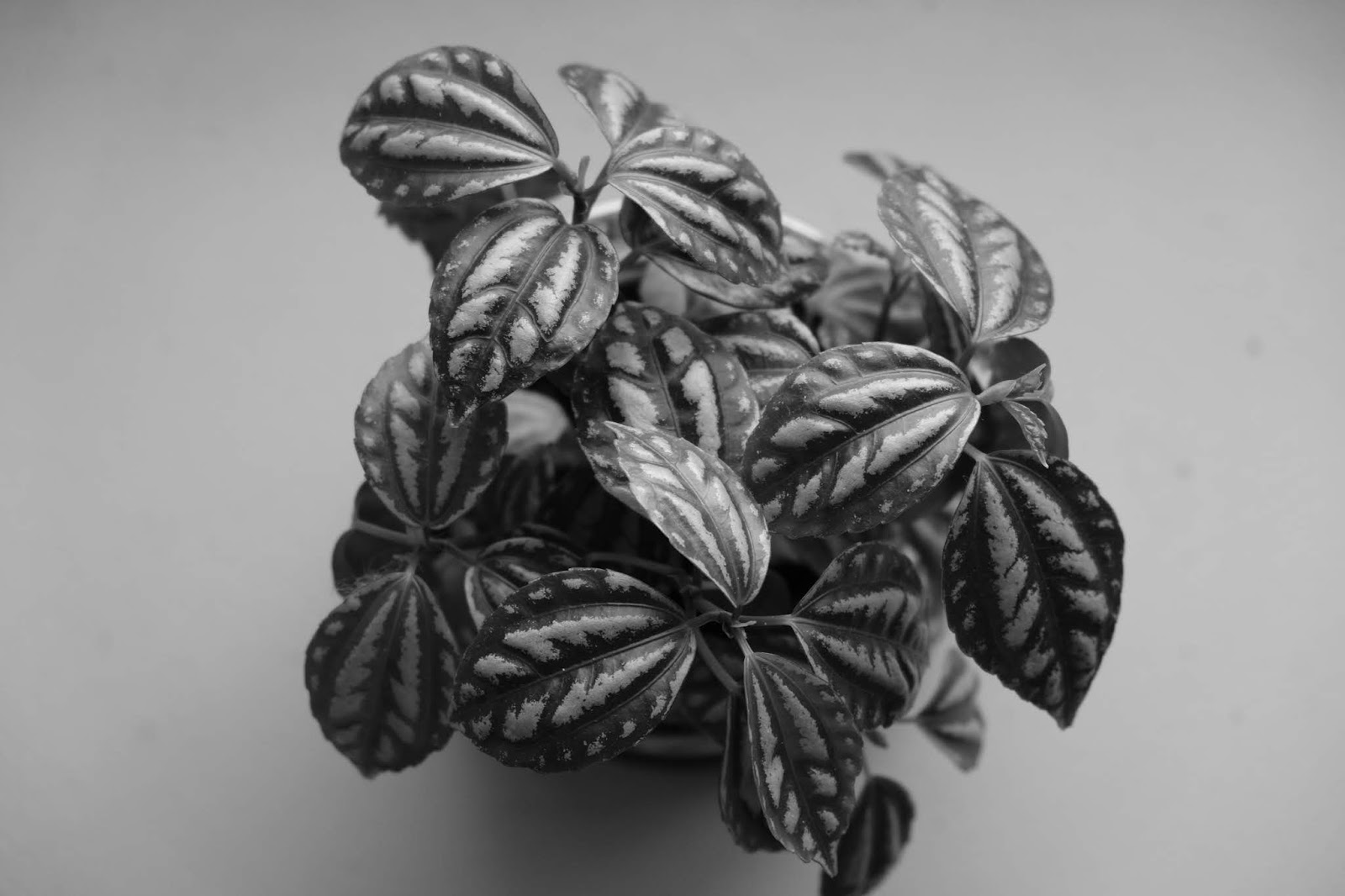
The Fujifilm can be a fantastic "monochrome" camera without fussing about its total versatility to also do color pictures. Black and white photography represent at least half of my total but modest production. It is a format (B&W) that I am highly comfortable to anticipate and to select. The X-E3 electronic viewfinder (although it seems small in comparison of its other X-T series cousins) will give you an accurate preview of your final picture like for the very precise rear back viewing screen. My film simulation preference in monochrome goes, not surprised, to the Acros version implanted into the X-E3. The possibility to simulate B&W color filters is another fine option.

As many have already concluded, I am not very fond to add and use accessories on any camera. With the Fujifilm X-E3, you need to fit the optional and small Fujifilm EF-X8 flash unit (furnished with the camera) and set it at its upper position (which is an advantage to prevent the lens proximity). This light helper can be good as an emergency or a tiny fill-in flash. Be sure you have an extra battery pack to sustain its extensive use. The optional grip from Fujifilm (or from a third-party) is interesting not only for the additional one-hand prehension capacity but to serve as a more secure (Arca-Swiss type) tripod mount base. It is easier to center the lens with the tripod head when the optional grip is attached to the X-E3.

I am not a videographer but I can understand that the Fujifilm X-E3 is not really a photographic product meanly designed for animated picture project although it can be use that way providing certain adaptations such as may be the use of the control remote optionality operated from a phone or a tablet.

Now we can start the always present debate concerning the urgency to "upgrade" yourself with the newest camera models which is meaning the X-T200, the X-Pro3 or the X-T4 (if not the X-T3 or X-T30) that are using the latest technical advancement such as, for some of these already mentioned, a new image sensor, a faster and more accurate autofocus system, new film simulations, etc. Is the Fujifilm X-E3 becoming a complete outdated camera by today's standards? The same question has been asked in the past for the previous Fujifilm X-E1, X-E2 and X-E2S models. The answer is never a universally accepted one. But all these X-E series different versions are still producing fine and, time to time, outstanding results simply because of the involvement of the photographers that are using them.

What to conclude of all these so profound "photographix" reflections? For one, there is always place for further technical development and we are encouraging them by buying new photo equipment at our own desire and our budget availability. For two, we have a renowned tendency to fall in love with our camera choices and this why we defend them so fiercely. For three, all digital camera models (in particular the interchangeable lens cameras - ILC) can perform decently and produce interesting photographs. At the end, there is no bad or improper photo equipment choices as long you intend to use them!

17 février 2020

The Fujinon XF 27mm F2.8: The Predictable Lens


This lens is a dinosaur that is refusing to die in favor for a revised model as many dream to see for some years. Introduced in 2013 alongside with the Fujifilm X-M1 camera model, its persistence and success among the (compact) Fuji X photographers is a true testimony of its inherent qualities.

The Fujinon XF 27mm F2.8 is one of the two official so-call "Pancake" lenses available from the Fujifilm X-Mount line-up (The other one is the Fujinon XF 18mm F2 R lens). Designed firstly to be paired with smaller APS-C ILC bodies of the X-A or X-M series, it never prevents many Fuji X-mount enthusiasms to match the small optic with larger camera X-series models. Especially pleased by X-E model series users, it is still used extendedly by serious photographers.

Right from the start, we must precise that some basic characteristics of the others Fujinon XF prime lens series are missing on the XF 27mm. No aperture ring is available on the lens and no provision have been made for an optional lens hood. The Fujinon XF 27mm lens construction is noticeably lighter and the autofocus motorization can be heard.

One of the biggest advantages of the XF 27mm is its angle of view (55,5 degrees) which is equivalent to a 40mm focal length for the 24X36mm analog-film or digital format. Although its maximum aperture of F2.8 remains modest, it can be assimilated as an everyday lens.


Frozen Morning


On assignation
The Fujinon XF 27mm F2.8 lens is a very small optic and you may be felt a bit uncomfortable at your first use it. It adds almost no weight to the body of the camera, in fact less than 80g (less than 3 ounces). It is also a very contracted design and for people who are used to hold the bottom of the taking lens with the palm of their left hand to get more stability, it can feel a bit odd to do it with your thumb and one finger only.

The biggest advantage of the XF 27mm F2.8, especially for a travel or street photographer, is certainly its inherent discretion. Coupled with a small Fujifilm X-mount camera body (X-A, X-M, X-E or even X-T/two digits), it can assimilate to a compact camera with a fixed lens such as the Fujifilm X100 series models.


If you decide to add to the XF 27mm F2.8 a generic lens hood (sorry no official lens hood available from Fujifilm), you may improve a bit the handling of the optic. Just remember that the lens hood is couple with the front focus moving element and attention must be taken to prevent dangerous front lens hood banging.

The 39mm accessory filter size is relatively common for that type of fix focal length


A little winter fresh air with coffee and some literature! 
Autofocus is quick (although not fully silent). Manual focusing is accurate with good simulated travel of the ring for fine focusing. This is not a macro lens so close focusing is limited if you are working with very small subjects. No aperture ring for that model and you will have to rely on the adjusting dial of the camera (which is an option present on every Fujifilm X-mount models). No optical stabilization system (OIS) is offered and you have to be more aware about the shutter speed selected by the camera or by yourself. You may choose to upper your minimum shutter speed limit to counteract the photographer shaking effect.


Through Glass Azur Montreal Subway


NorthernWest Light


Morning Snow Tiny Flakes

Picture quality
The color rendition of the Fujinon XF 27mm F2.8 doesn't differ from the other lens models of the X-Mount Series and the same continuity in term of image results observed with the others Fujinon X-Mount lenses can be expected. For sure, automatic in-board calibration and picture correction are part of the advantages of the modern digital photography. Focus accuracy between left and right side and up and down has been adequate with the different copies that I have owned over time.


The Fujinon XF 27mm F2.8 is not really a substitute of the standard zoom lenses such as the XF 18-55mm, XF 16-80mm or the XC 16-50mm that have a much larger focal length versatility and are dotted with an efficient optical stabilization system (OIS). Like many fixed focal prime lenses, it is more a creative lens that is forcing the photographer to anticipate and preselect the way he/she manage the subject and the context of the picture to produce.

The angle of view of the Fujinon XF 27mm F2.8 is similar of the one who can experiment with your own eyes if you are considering only the sharp area. It results that lens rendering can be easily anticipated even without looking into the viewfinder or on the back screen of the camera.

In all, the Fujinon XF 27mm F2.8 is a very predictable and compact lens of the Fujinon X-Mount line-up, ideal for travel, for street and spontaneous photography. One of the endangered optic lens species!

(First published in February 2016, revised in February 2020)

12 février 2020

In color or black and white? A personal bias before everything else.


With the introduction of the digital cameras, many will said that it is now possible to work simultiniously in color and black and white (with the option to edit your final picture output). But for the "ex-analog" photographers like me, this choice between the two traditional photographic rendering have a lot more to do with our preliminary vision, color or black and white, you try to transmit from your original image content.

This one of the reason that I have chosen to work with digital cameras that have the ability to switch on a specialized monochrome rendering. All these cameras are versatile and allow you to further configure them by using internal filter setting (Yellow, Red, Green) to bias the gray distribution  from the original image colors.

Shooting in black and white (B&W) is not necessarily easy and predictable for everybody but with the now commun electronic viewfinder (EVF) among many mirorless cameras, you can see in real time your final result which is a dramatic advancement from the dark ages of  the analog (film) photographic era.  By having access to this magnificent viewing tool, there is no reason to prevent yourself in switching to the monochrome setting. You can always register your picture in both JPEG and RAW files, this last one allowing you to get a "none-altered" color basic picture to edit further if you want to do do so.

Doing B&W photography can help you to enhance your ability to organize more specially your subject arrangement in terms of graphic positions, of light distribution and space importance of it.All these factors are also fondamental in color photography but monochrome may be an excellent exercice that can help you to better sense them.

As it is now very convenient to produce an overwhelming number of photographs and it is becoming a major flaw in our visual consumerist society. What the point to submerge people with such an abuse  total amount of pictures that will simply vanish the moment after in profit of another one? We have to be more selective and assume our choice to register an image or for viewing a particular one. In that sense monochrome photography can help to be more attentive about our subjects and spend a greater and more producing time to analyse and select the right composition, the right moment of exposure. We have to get away from the "cinematic" tendency of today photography. Let's keep animated (sequence) images for the videography where it should be kept in first place.

Some may ask why B&W is still a pertinent photographic rendering in your world of colors. Posing the question is easy but answering to it is more complex. We could pretend that it is a matter of photographer's emotions and feelings. Even for documentary purposes, it appears that some of the very renowned photographers are still preferring the B&W format over the actual very easy trend to reproduce colorful counterpart.

"The color of B&W" is may be a contradiction by itself but in some ways it can appear to be a second level of visual perception. And perhaps because of the fact that color reproduction process has been historically based from different layers of B&W support that we have  added the basic colors (RGB, CMYK, etc). That B&W technical approach for resolving the color representation (that many have a tendency to forget or simply not knowing it) is inducing that there is many colors which are present into a gray tonal scale. We know that some color combinations will generate more contrasty perception. In B&W photography, the colored lens filters will discriminate specific color frequencies in favor of other ones.

In  our present "color educated" society as we usually see through our different visual media, B&W has been generally associated with the past testimonies of time or with old photography even considering its more recent uses. Press photography has been also almost exclusively done and printed in B&W and the color pictures were reserved for magazine formats. The actual Internet culture has imposed an almost exclusively full color visual presentation. It is only more recently that B&W seems to resurrect often on a marginal way.

Strangely, the psychologic perception for authenticity appears to be influenced by B&W versus color, may be because it has been associated by the ancient analog way to produce pictures on negatives and prints. Sure it didn't prevent photo alterations and montages in the past as we are able to do today when we post-process a registered image. The initial introduction of the television exclusively in B&W could have been also a influencer in this thinking. However, the new generations dont have that tendency to overrate the "realistic" value of B&W pictures.

When I have started to do (analog) photography, black and white was consider the basic school of the fundamentals to master in that visual field. Color photography was the next step. So, in that perspective, our photographic training have prioritized the study of the composition (the subject spatial arrangement in two dimensions), the role of the contrast, of the gray scale and even of the film granulation, the importance of the subject (moment) expression, the control of the deep of field (the era of net subject-object versus the blurry context zones), the time and the amount of exposure required to registrer your taking picture the film  support. In one phrase, it was technical, it was instinctive, it was formative and progressive, it was creative.

Doing digital black and white photography should ask you the same personal involvement as we used to do during the days of film photography. And it is especially true if you have completed the whole photo process by printing your picture on a paper support.

You don't need to ask me if I am a (lifetime) advocate for B&W photography because, frankly, it is my intuitive and natural way to do it. But that "gray" and "contrasty" passion is now resugencing everywhere strongly than ever. So, just follow the "new"past trend!


09 février 2020

Fujifilm X-E3 + Fujinon XF 55-200mm F3.5-4,8 R LM OIS: An improbable pair!

It is a strange phenomenon that I have experimented right from the beginning of my ownership of the Fujifilm X-E3 model. For an unknown (odd) reason, I love to work with the improbable body/lens combination of the Fujifilm X-E3 camera model and the Fujinon XF 55-200mm F3.5-4.8 R LM OIS zoom lens. And the major think about it is the (surprise!) good handling of the kit.

No doubt that the Fujifilm X-E3 can give equally good picture results as equal as the ones from the X-T2, X-T20, X-Pro 2 or the X-H1 models that, in fact, are using the same image sensor. Even considering the autofocus performance disappearances between all these models, I didn't find significative differences in my everyday photography, except maybe for bird picturing (rate of success is significant lower even if the X-E3 is set the same way as the X-T20 for example). With the newest X-T30 model (that have replaced the previous X-T20), the story is also a bit different (marginally) because of the evolution of the autofocus system implanted by Fujifilm.

I always regarded the Fujinon XF 55-200mm zoom lens as a very creative optic, more than a "sporty" lens type. Examples around the world have proven this assertion in many ways for landscape, portrait, architectural, close, graphic, etc. And if you aren't mounting the intimidating lens hood the Fujinon XF 55-200mm can be more discrete than we may first think of. Pair with the Fujifilm X-E3, the Fujinon XF 55-200mm F3.5-4.8 R LM OIS is really a "reach" zoom lens that can discriminate an annoying surrounding from your main subject. It can be done by reframing or by selecting a shallower deep of field (larger aperture setting).

Using the "off-center" electronic viewfinder (EVF) of the Fujifilm X-E3 is a real pleasure that allow you to keep most of your face free of the camera body. Your left hand will naturally serve as a support for the zoom lens helping that way to get a better stabilization of your picture taking combination device. The optical image stabilization (OIS) of the zoom lens is another very practical tool to prevent blurry effect induced by the photographer shakes.

If you are already using the Fujifilm X-E3/XF 18-55mm F2.8-4 R LM OIS combination, it will be natural to extend your photo kit by adding the Fujinon XF 55-200mm F3.5-4.8 R LM OIS zoom lens. Controls are similar and adaptation will be fast and efficient. But yes, it will add weight (+ 270g) and the overall combo will be sensibly bulkier (+ 20mm of length in comparison when both lenses are retracted).

The Fujifilm X-E3 is a very nice, practical and efficient interchangeable lens camera (ILC) and by adding the Fujinon XF 55-200mm F3.5-4.8 R LM OIS zoom lens, you simply take advantage of its full potential of versatility and creativity, but, yes I admit, this is not in anyways, a "pancake" lens!

21 janvier 2020

An Olympic Year in photo equipment!

Who said that the traditional photo market is shrinking at an accelerated pace? It seems that the camera manufacturers didn't get the message or simply (temporarily) ignore it to invest their strong effort to reveal a plethora of new (and expensive!) camera and lens models. We know already that the next summer Olympics will attend in Tokyo and selected areas of Japan. So, there is certainly a question of nationalist pride among the Japanese camera manufacturers headquarters ***.

Bruny Surin, 1992 Canadian Olympic Trials
Photo Daniel Marchand

What is significant in that large effort from the different brand names is the concerted priority to offer new or enhanced "Pro" oriented equipment. That is may be interesting in term of technical advancement but for the "common" no-penny photographer, this represents often products beyond their reachable budget capacity. Fortunately, many manufacturers have already presented more affordable photo devices during the last year.

Another good news for the starting 2020 decade is the "rebirth" of the APS-C format with the recent contributions of Canon, Nikon, Sony and Fujifilm (who was may be the first one to acknowledge its mirrorless potential). Alongside with the still living Micro Four Third (MFT) format, the APS-C represent the real future for a compact ILC system if you consider also the physical lenses dimensions that are incorporating the latest technological advancements.

The D-SLR era is entering in its lasts glorious moments with the 2020 summer Olympics event. It will be very doubtful that Canon or Nikon will continue their development past this particular moment in time. The mirrorless technology is a lot more mature than ten years ago and its "pro" and enthusiasm acceptability have convinced a lot of potential photographers over the planet. Will it least less longer than the D-SLR/SLR successful chapter has been? We cannot say because with the electronic development, the things may change radically in a very short laps of time.

So, at least, the year 2020 is looking good into the photo equipment frontline after years of depress reports and consolidations of the industry (which are not fully completed incidentally). A kind of a break for us who would like to concentrate on the pleasure of taking picture with our beloved camera equipment.

*** I have serious doubts that, without the Olympics incentive, the camera manufacturers like Canon or Nikon would have consider to invested again on D-SLR pro models like the 1DX mark III or the D6 considering their new involvement into their brand new series (with FF sensor format) of mirorless cameras and lenses.

18 janvier 2020

The Fujifilm X-E3: the "off-center" mind

I've got a long love affair with the original rangefinder cameras (Leica M4-P & M6) and the now digital rangefinder style cameras (Fujifilm X-E2, X-E2S & X-E3). I don't know if it is due to the fact that their viewfinder is located off center (meaning not in the same optical axe of the picture taking lens) but that peculiar camera body design seems to stimulate my creativity and my motivation to brought the camera in places and at moments that I will have a tendency to ignore.

The Fujifilm X-E3 is the fourth version of a popular model design (X-E1, X-E2, X-E2S, X-E3) that many photographers like to bring with them as their main camera or at least as their back up camera body that often happens to become eventually their most used. The same 24MP image sensor of the X-T2 and the X-T20 previous models is incorporated to the Fuji X-E3 and the picture quality is at par of the two first mentioned cameras. Some people may call the Fujifilm X-E3 as a compact version of the Fujifilm X-Pro 2 although there are many differences between these two models especially in regard to the viewfinder system which has been simplified to its only electronic option with the X-E3. Moreover the X-Pro 2 is a more rugged camera with a proclaimed weather resistant status.

One of the thing which most interesting when you are using a rangefinder style digital camera is the fact that they are less noticeable, less protuberant, less intrusive in front of the subject. This characteristic to be more discrete is always appreciated by the spontaneous photographer on the street, during a travel and even when you taking a candid portrait of a person (The camera seems to be less "serious").

Many people were tempted to make the comparaison with the Fujifilm X100F which is a compact APS-C digital camera doted with a focal fixed lens of 23mm. If you combine the XF23mm F2.0 lens with the Fujifilm X-E3, the two camera-lens combinations will give you the same angle of view but the Fujifilm X100F is more a kind of a (large) pocket camera while the Fujifilm X-E3 is an interchangeable lens camera (ILC) that have a more standard dimension (with the XF23mm F2 lens).

Fujifilm X-E3 w/ Fujinon XF55-200mm F3.5-4.8 R LM OIS


Reviewers will talk in length about the good or the bad regarding the handling of a camera model. It is always a very personal and intuitive impression at the end. Ergonomics are designed by technicians that are biased by their own physical and cultural differences. All this has been said, one thing that I have experimented with the Fujifilm X-E3 is its fine ergonomic in terms of the camera body and lens combination and I am surprise how good and easy it is still true even when you are using a larger zoom lens such as the Fujinon XF55-200 F3.5-4.8 R LM OIS. As a travel or street photographer I fully appreciate this ability. If you combine with the Fujifilm X-E3 a "pancake" style lens such as the Fujinon XF 27mm F2.8, you will find that it is resulting in a very small photo devise package.

About the tiny Fujifilm EF-X8 electronic flash which is included with the furnished camera accessories, I was at first skeptical of its practical use but I have found later that it very easy to bring with me and to position it on the X-E3 (You can leave the unit at rest on the Fujifilm X-E3 camera at its down off-position). Dont forget that the EF-X8 is using the battery pack power of your camera. As a fill-flash and as an emergency flash unit are, may be, the two best tasks for this EF-X8 unit. For a more extended use of an electronic flash, it would be better to select an external flash unit doted of its own power management.


Window back lightning interior ambiant light exposed


Using a fill-in flash can be one of the most rewarding thing to do with interior photography with subject that are backlighted during the daylight period. The color temperature is similar between the ambiant natural light and the electronic flash output and the only big task is to choose an interesting exposure balance between the two in preserving or not the shadows or even simply voluntarily underexposure the ambiant (effect often use in fashion photography).
Using the Fujifilm F-X8 as a fill-in flash

Small in-board camera flashes are a very handy solution but they are located usually too near the taking lens  and they  are often interfering with the lens hood (you have to remove it to prevent incomplete flash bottom coverage). The Fujifilm EF-X8 give a more elevated flash reflector position. You just have to push it in its down position if you want to power it off.


Officially the Fujifilm X-E3 is a less "sporty" camera model than, let's say, the X-T series models such as the X-T20, X-T30 or the X-T2, X-T3, X-T4 or even the X-H1. The off-center viewfinder may create a small different perspective between you naked eye and the image recorded by the taking lens but if your concentrate your attention at your viewfinder, it wont be noticeable. So spontaneous photography stay a strong opportunity.

As for most of the Fujifilm X-series camera models, the controls of the photo basic parameters are designed in a similar fashion way that it is used to be for the traditional analog (film) cameras. Shutter speed, lens aperture, exposure correction and focusing options including manual adjustment can be selected with direct dials or control rings. The others parameters have to be adjusted through push buttons, touch screen options or using the versatile joystick located beside the rear screen. All these functionality controls need to be learn before really be able to master them without hesitation.

Using the Quick menu (Q) and reprogramming certains function controls can facilitate the handling of the Fujifilm X-E3. Most of the menu option presentations are easy to understand and interact but some functionalities may need more time and essaies to get the habit. There is a lot of autofocusing modes at your disposal that can tailored your shooting workflow. The all-"AUTO" option (lever next to the shutter speed dial) is a good idea for emergency snapshots without disturbing your already programmed setting.

The electronic viewfinder (EVF) is fine and detailed with all the (configurable) information you may need and got an auto-rotation presentation very useful for vertical framing. In some specific situations, the image on the EVF will be more contrasting making more difficult to evaluate the lowlights and the highlights. For people who are wearing glasses like me, the eye relief is more limit and will ask you to pay more attention to the corner of your framing composition of the subject. The back and none-orientable live screen (LVF) give you a better reviewing reddition of your picture facilitating a deeper image analysis.

The side location of the Fujifilm X-E3 electronic viewfinder may give you a better viewing confort compare to the centered viewfinders of the X-T series models. The  instant picture review is easier and the reviewing (Play) push button is  located on the bottom right side of the LVF.

In all, the Fujifilm X-E3 is a very convenient camera model, a compact size device but without sacrificing too much good handling compare to the "center viewfinder" model type.

If you are already an owner of other Fujifilm X-series models, you will fully enjoy that the X-E3 is using the same battery packs (X-T4 except) and the same external electronic flash units and is part of the same optical lens X-mount system.


The Fujifilm X-E3 doesn't have an in-(camera)body-image-stabilization system (IBIS) and will rely on your ability to set and handle the camera in effort to avoid generating blurry from the photographer's movement. Of course you can couple a lens with an optical image stabilization (OIS) that will help you to prevent that phenomena and further permit you to select lower shutter speed in low light situations or simply to get a smaller lens aperture (for increasing the deep of field). As a loosely rule of thumb, no stabilization is available with focal fix lenses (except for the new XF80mm F2.8 OIS Macro and the XF200mm F2 OIS) and it is the contrary with zoom lenses (with some noticeable exceptions such as the XF16-55mm F2.8 Pro). At this day the Fujifilm X-H1 and X-T4 are the only X-Series models equipped with an IBIS.

What I am appreciated the most of the Fujifilm X-E3 is its compactness and its very discrete status in regard of other people ressent when they are facing the camera. It is what we can call not only a user-friendly camera but also a subject-friendly photo device. Combined with a short fixe focal or short zoom lens, the X-E3 appears to be part of the family. It is not perceive as an agressive intruder of our life compare to the look with the older DSLRs. So the interaction between the photographer and the subject is very different and much more positive.

If you like black & white photography, you will adore to work with the Fujifilm X-E3. This lovely camera model offers you a choice of two monochrome reddition, standard Monochrome and Acros, with 3 different filtering variations, Yellow, Red or Green. So you can literally transform the X-E3 as a Monochrome camera without further expensive investment. (This remark is also good for the other Fujifilm X-series models).

Is it sufficient to simply have a good camera device that can deliver not only nice, well exposed and focused pictures but which is also a creative tool fun to use and to bring with you? Sure, there will always be more performing camera models now and in the future and that is inevitable in this race for better human crafting but, in the mean time, we have not to forget that the most interesting and rewarding think is to do photography.

In a sense, the Fujifilm X-E3 fulfill nicely the task of proximity photography essential in close urban situations or in interior contexts. The Fujifilm X-E3 is a compact photo companion that is not only a competent tool but is also an inspired creative photo taking device.

(First published in February 2019, revised in January 2020 and May 2020)

Another post about the Fujifilm X-E3!


16 janvier 2020

2020: the "climatic" year for photography


Things are changing in a very fast manner especially into the environmental context. The demographic pressure of the last two or three decades is pushing profound physical and psychological transformations around and inside us. And we can add without much risk that it will be the same for the years to come.

It may be because that we are entering in a real globalization of human activities without any opting-out still available and it brings a lot of frustration among people that are afraid of the changes to come. But with that inevitable fact in view, many individuals and collectivities are trying to avoid it by building new physical frontiers that will simply crack up under the necessity of the human Mondial needs in living in this planet.

Further than that, the human presence is directly affecting our surrounding in the air, in the water, on and in our soil. The climatic changes are the consequence of our environmental pillage provoked by our gradual territory invasion. The so-call "natural" (unspoiled) habitat is now, at least, a think of the past and, at most, a old fantasy for some. Many animals and vegetal species have already paid the extinction price of the human territory expansion and transformation.

On the photographic point of view, most pictures presently done will not be easily reproduceable if not completely impossible to redo as everything is mutating in a fast pace. Even the "nature" of humanity is now largely different from what we have seen in a recent past, let say twenty or twenty-five years ago, since the event of the popular Internet availability.

Documenting visually our civilization evolution can be the next primary task as many references of today or yesterday have a tendency to evaporate in a short lap of time. The big challenge will be how we will be able to transmit into the future generations of the next decades and the next centuries all those images. Hardcopy prints are may still be the surest way to do it again knowing that digital archives can be lost easily or, more important, they can be no more accessible because of the technological changes.

Can we reinterpret the "Family of Man" exhibit (***) sixty-five years later? Can we produce a planetary photo album of our humanity that will be available to everybody of this world as a sounding testimony of the human diversity but also about its profound closeness? Yes, our body envelop can be very different, but our soul is common to all. Photography can transcend superficiality to project the inner expression of our feeling, our understanding and our hopes.

Because today more than ever we need more photographic authenticity which is opposing the actual tendency to artificially mask it or recreate it. We need to preserve "what we are seeing" instead of "what we want see". Yes, there is still a place for personal interpretation of realities recorded because we cannot avoid the obvious difference of perceptions. But integrity, honesty and respect have to be the guide of our human photo quest.

Inspired by the great photo documentarists, the photojournalists and the street photographers, many of us may assigned themselves to record and share this human interest about the faces, the activities, the moods, the relations and their ecological surrounding. Curiosity can guide us to new perspectives. Studies of the past can generate a search for new interpretations of our present realities. Different image interpretations can help to up-come new ideas and analysis.

A new "climatic" year for photography should be the opportunity to refocus ourselves about the integrity of ourselves regarding our world's surrounding.

10 janvier 2020

(Photo equipment) Obsolescence seen as a state of mind (Keep it, Use it, Enjoy it!)


The tungsten light that have permitted longer hours of human activities


It may appear obvious that every new technological small or big steeps is pushing the precedent one to obsolescence. And it is true to say that the lasts two or three decades of photo equipment development have totally change the way we use to do, to explore and to show photography. The ancient way to photograph by using analog film and printing, edit, enlarge or diffuse the final picture has been mutate into a digital recording manner presented into a multimedia different platform.

So, the bridge we have passed over the large river of changes is very extensive to an obvious none-returning point (except for the analog traditionalists!). Consequently, the digital science in photo equipment have followed a fast pace in its recent development. But since the very last few years, thinks are getting more peaceful in the photo gear planet. Many manufacturers are reconsidering their future development orientations with a more circumspect point of view.

Can we have reached a plateau in photo equipment technical advancement that will prevent us to discard too early good photo devices on the assertion that something new will be much better than its predecessors? That question has been answered by some prolific photo (gear) reviewers that have started to propose a longer maintaining of our present photo arsenal. And that can be a clever proposal as long the manufacturers can guaranty the hardware and software support of their past models of cameras and lenses. And because of that, it stays obviously an unstable situation for the long term of digital photo equipment use.

The hard recorded music supports have preceded the cloud now availability 


Material obsolescence is a plague of our present civilization. At a time that we are speaking about durable development, photo industry seems to be in a world apart simply ignoring the urgent task of environmental preservation. And the (camera-lens) consumers are participating directly to that contradictory tendency.

Even today, the pictures of the past are still a valid artistic expression of our visual (and virtual) world. They are history but they are also an art expression as we told of painting, or sculpturing, or writing, or theater, etc. So, it is true to say that is not the tools used to create pictures that are paramount to photography but, moreover, it is the picture representation by itself which is most important. Yes, the tools are a form of cultural testimony, but we have to not concentrate our mind on the means only but more importantly on the results produced by them.

Brace and bit: before the electrical power tool era. 

Yes, a beautiful design of a (highly) practical tool like the today's digital camera is not only pleasant to use but it is also the expression of an esthetically functionalism. And many camera models can be classified as beautifully crafted photo devices which can be very inspirational for the users (mea culpa for myself!). But equipment durability must be part of the entire cycle of human appreciation as we do with older analog camera models. That material continuity is part of the evolution process that preserve our past heritage and giving the base of future (material) advancement


Books are now on recycle shelves (or into bins!) 


Some camera manufacturers may have already understood the importance of continuity like Leica, Fujifilm or Olympus. I hope others will follow that path. Because ingenuity is not only to start on a fresh blank sheet of paper but depend also how to reinterpret strong ideas of the past that can survive to the futility of a momentary and superficial mood.

Proclaiming obsolescence over many awesome photo devices from the past or even the very recent past is an easy critic to do, often without any real justification. The photo fundamentals didn't basically change over the years except maybe in terms of enhanced performance versus a more lagging time of reaction of the older analogic camera models if you are speaking of light exposure or of autofocus accuracy for example. My only hope is that the responsible manufacturers will support their products further than only the first few years following their release.


01 janvier 2020

Is it really the camera fault???

Doubting is a profound human nature (except for overconfident people!). So, you may ask yourself, is it the camera (or the equipment) fault if you cannot get the best picture that you are looking for? Yes, by today very high and demanding image standards, we are asking for almost perfect exposed and focused photographic subjects right from the camera output file. And, I must add, those modern picture devices are doing an outstanding job compare to not that far ago analog counterparts, thanks to the combine advancement of internal compute abilities and of sensor newest technologies.

But, even with the most sophisticated system, can a camera be able to really anticipate what will be our photo interpretation of a scene or a specific subject? Because, in some ways, that is the crucial point. Unless you were able to teach (or configure) yourself the behavior the internal camera computer, it will rely on bases implemented that are the summation of multiple selected and pre-experimented situations-solutions. In one word, it is a replication of the vision of others.

We already that modern sophisticated digital cameras are deeply configurable even in some ways that were unimaginable a few decades ago. Speaking of color (and black and white) renditions, of focus stacking, of exposure bias and corrections, of high-resolution picture merging, etc. The contemporary photo equipment is simply amazing and honestly can surpass the common knowledge of most photographers. So, the "pre-processing" of a taking picture intended can be a dire task if you agree to invest truly in that process. Moreover, the post-processing of the image file can also very complex providing you have at first a good basic image (RAW) file registered.

Creativity is not already part of all the algorithms introduce into the artificial "intelligence" of the newest digital camera. There is still places for selecting a subject into its context and for choosing the moment to register it. Because the photographic expression can still be a matter of personal interpretation. Even the most technical parameters have bias that could be voluntarily accentuated by the photographer. The choices are still present into the photo taking process.

Therefore, freedom of subject choices and personal pictorial interpretation have some consequences. No automated systems can guarantee a perfect camera set-up. Furthermore, there are technical limitations that every photo equipment will reach depending of the picture taking situations. So, is it really the camera fault? Or is it because the photographer intends to do something that his/her photo equipment is not able to cope with? Or worse is it a wrong configuration on the part of the user? The key point here is that we still have to learn how to our photo equipment is working and how to properly set it. And this simple fact is deterring a lot of people that are used to simply take a device and spent a very minimal time on learning to use it.

Here are some parameters (among others) that can be useful to check and possibly to change on your camera:

The picture quality set-up: Image file compression (JPEG, RAW) and resolution (Fine, Normal, Small); Sensor sensibility (ISO); Color and black and white rendition (Picture modes, ); Exposure set-up (Aperture, Shutter speed, Light distribution curb); Special effect picture modes (that can be a lot of possibilities there); In-board picture camera (post) processing; Avoiding too low shutter speed or unstable camera sit can generate micro blurry line of definition; Preventing incorrect focusing and/or insufficient deep of field will produce softy subjects; Rejecting low quality glasses (like cheap filters); Cleaning dirty front glass on lenses; all these factors can enhancer or destroy a nice picture.


The composition of your subject: The point here is to better analyze what is in the subject arrangement that is catching your attention. Don't forget that your photo interpretation has to be translated on the two-dimensions picture file. Framing; object or subject dimensions and localizations; light distribution; context references; you are the master of your picture canvas. Like the painter, we have to exercise our inspiration "to get the picture". Past and repeat experiences learned knowledge throughout others works or personal critics and experimentations can refine your subject composition.

The photographic moment and the interaction between you and your subject (if applicable): It is the (perfect) timing of a picture taking moment. It can freeze an expression, a position, a glimpse of light, a documentary event. The key is anticipation that can be subjective or truly conscient. You can be lucky but most of the time it is better to prepare yourself by learning about your subject or following it in its changing evolution. You can also rely on your (photographic) instinct to immortalize this very magic instant of time.


You may ask yourself again: Is it the camera fault? Yes, it can be, but the real disturbing factor is most of the time located behind the camera often by a technical misunderstanding from its own (photographer) operator. The modern digital cameras are sophisticated tool with many ways to be configured, thanks to technology and the people who have engineered it. But even with this marvelous imbedded electronic aid, the photographer setting task stay paramount for producing from good to outstanding pictures.


23 décembre 2019

The Olympus M.Zuiko ED 14-150mm F4-5.6 II (with the OM-D E-M5 II): An easy-going (outdoor) zoom lens

Is the Micro Four Third sensor remains pertinent for its compactness and for its image quality?

After all what we may like the most in photography is going out and have pleasure doing some pictures with a compact well-designed camera body and lens combination (which should be also good looking!). Are Olympus the only manufacturer does nice and refine photo equipment? No for sure but they have their own signature for a long time since the event of the famous Pen analog series.

And we are speaking about compactness first which a paramount quality for photographers on the go. Small cameras at first but also small lenses to be coherent with the concept. And the Micro Four Third sensor format is may be the only one that can guaranty that without letting down any technological (automated) advancement. If you are speaking about other sensor formats like the 24 X 36mm or APS-C, you cannot put aside the fact that their optics are often large and heavy comparatively from the equivalent MFT ones.


And how about the image quality of the Micro Four Third format? I think we have reached an MFT sensor development that can now deliver the quality level needed in most of the general photographic situations. Yes, in specific cases the larger formats (especially the medium ones) are still doing an outstanding job but we can leave them to the few pros and enthusiasms that can afford and justify their use. What is important is what you do with your pictures and what final purpose you intend with. Even for the fairly large print (like 13X19 inches or A3 format), a modern MFT format sensor will fulfill the task nicely if your picture-taking parameters are correctly set.

Source: Olympus.com
And is the Olympus OM-D- E-M5 Mark II still a pertinent camera choice for today?

And what about using a second generation (16MP sensor) like we find into the Olympus OM-D E-M5 Mark II considering that a third itineration (Mark III w/20MP sensor) is already available on the market? Why not since the E-M5 Mark II is still a remarkable photographic camera device, very well built and designed for an everyday use under many various (and adverse) picture-taking conditions. The Olympus OM-D E-5 Mark II is also a mature product that have been updated a few times. For sure we are assisting to its last days of front selling life but with Olympus, you never know when it will be really no more available.


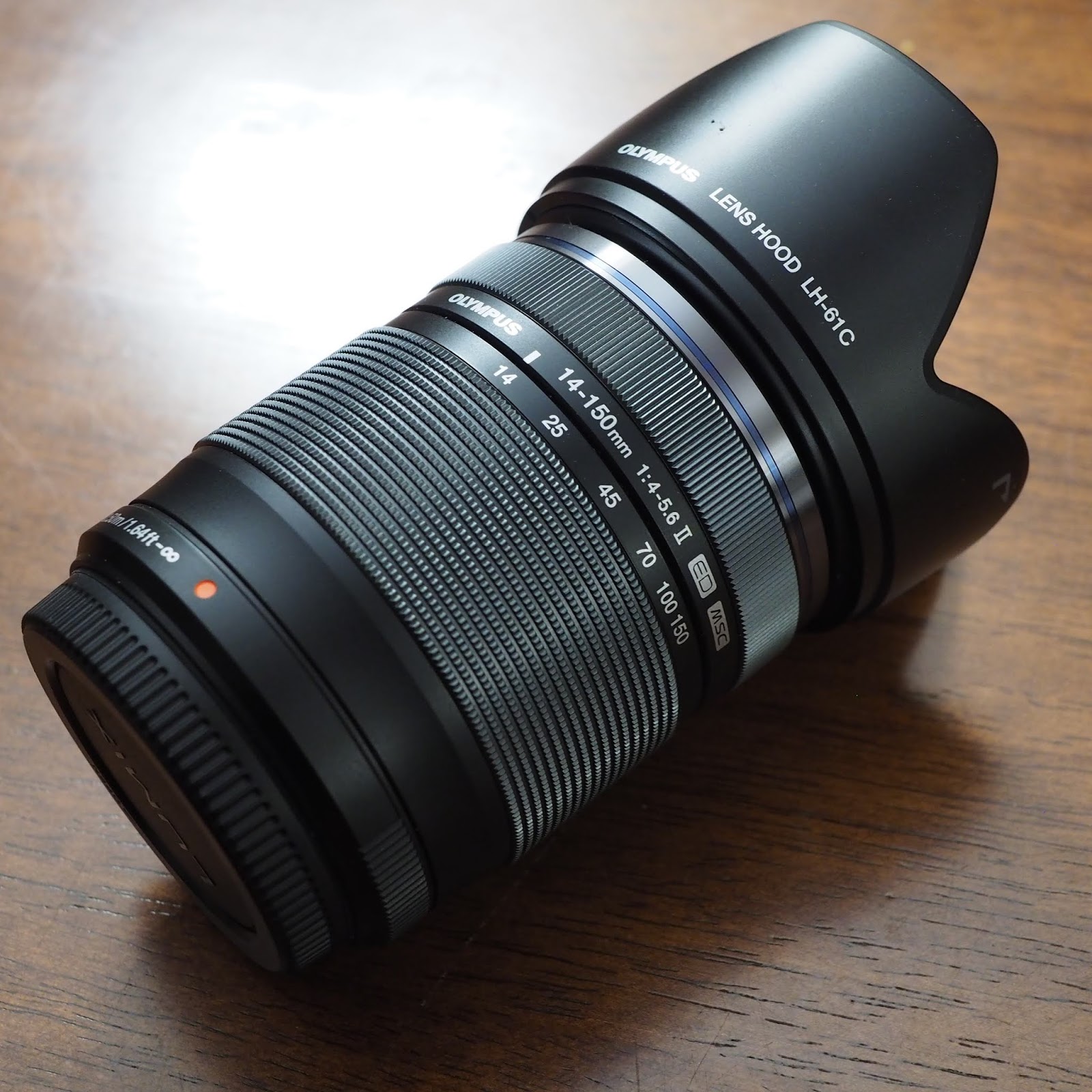
The Olympus M.Zuiko ED 14-150mm f4-5.6 II zoom lens is a kind of extreme optic that can be used for all-around photographic purposes. It is a compact design and construction along with a maximum 150mm focal length giving a six-time magnification compare to our naked eyesight. At its widest 14mm focal length, the Olympus zoom lens can fulfill many proximate photographic tasks and can perform panoramic views. With a very modest maximum variable aperture of F4-5.6, the M.Zuiko ED zoom lens is for sure a less flexible tool when you are facing low light situations or moving subjects. In those cases, you may rely on a higher ISO setting and on an internal camera body stabilization system (if available) with a higher deep of field, we must add.

The zoom ring is fairly large and have a good tempering turning resistance. The focusing ring can be reached easily and don't turn too freely although it is "by-wire". The Olympus M.Zuiko ED 14-150mm II zoom lens is not part of the Olympus Pro line of optics but it has the splash proof feature which can be a great help when using the lens in adverse conditions (providing that the camera body have the same characteristic). A dedicated bayonet mount lens hood is furnished with the lens which is always appreciated by the owner who have already spent good money to get the optic. The 58mm filter accessory size is moderated and allows you to buy good protection filter or special effects filters if you wish to do so.

All the official specifications regarding the Olympus M.Zuiko ED 14-150mm F4-5.6 II are here.

In daylight or well light contexts, the Olympus M.Zuiko ED 14-150mm II is handy optic especially if you couple it with a camera model such as the Olympus OM-D or Pen series which are featuring internal sensor stabilization capability. Having a fast access to bigger telephoto setting give to the zoom lens a greater flexibility that prevent continuous permutation between different lens models and that can be hazardous in many circumstances. Even more it is a faster optic to operate when you are framing your subject. At its widest focal length of 14mm, you are reaching the upper limit of a "real" wide angle lens with 75 degrees of angle of view.

Doing close photography is possible with the Olympus M.Zuiko ED 14-150mm II considering its high magnification capability although you have to respect a minimum distance between you and your subject of half a meter (1.6 ft). If you are expecting to take pictures of regular size objects like flowers, the Olympus M.Zuiko ED 14-150mm II will allow you to get very interesting results and again its versatility will be appreciated. It is not a "macro" intended optic and the Olympus M.Zuiko ED 60mm F2.8 or ED 30mm F3.5 macro premium lenses should be your best choices to do such specialized and small subjects.

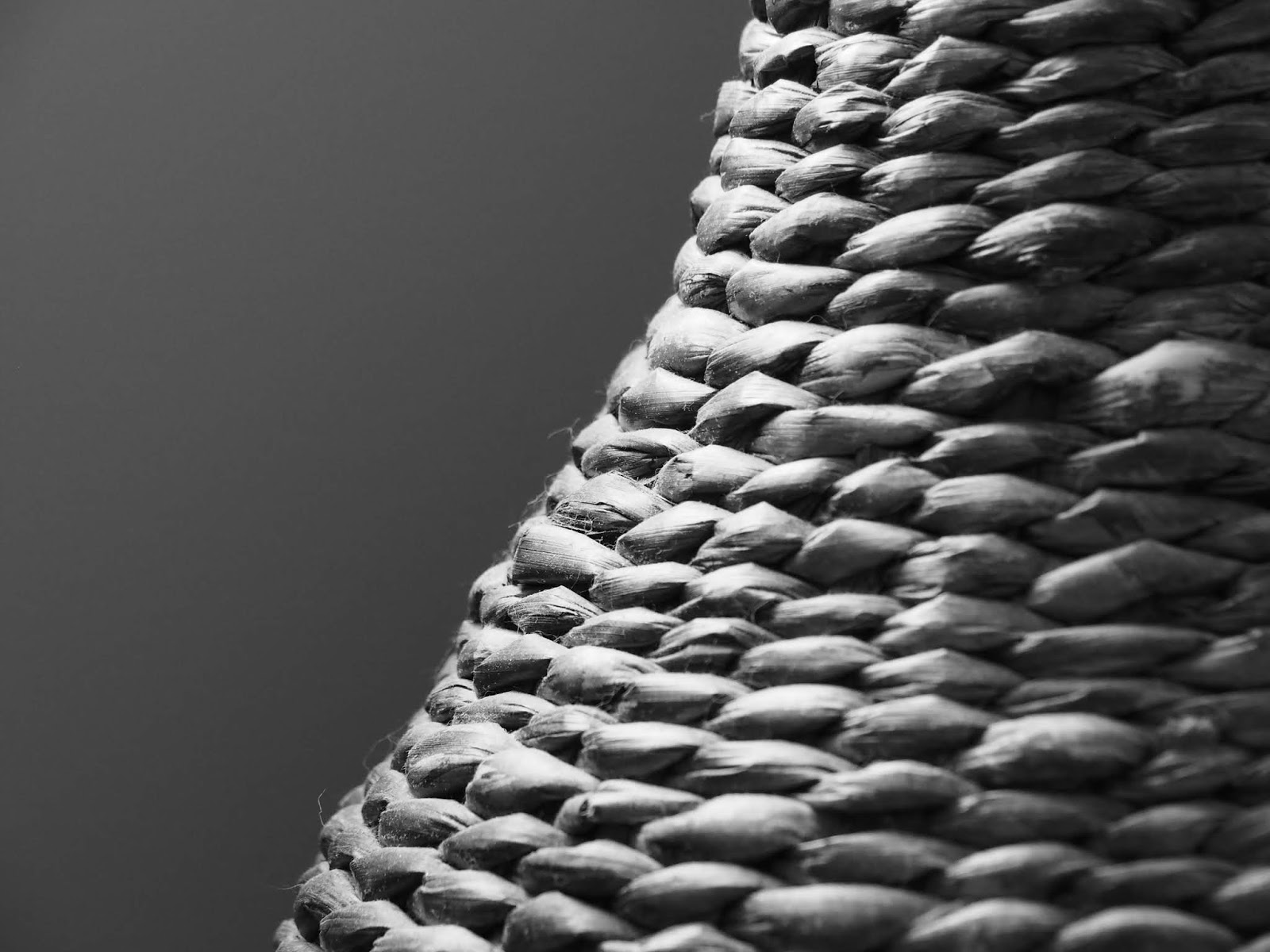
Having worked with the Olympus M.Zuiko ED 14-150mm II zoom lens for some table top subjects has giving me the opportunity to check the image quality output of the optic in a more optimum picture taking condition in using a low ISO and having the camera tripod mounted. And this M.Zuiko ED zoom lens is offering usual Olympus optical "standard" lens quality level ( acknowledging that the Olympus Pro lenses are still their best products in that sense). Color rendition, contrast, image definition are good and on average compare to their less focally stretched standards zoom lenses.

If you are a photographer that is bringing your camera almost everywhere in the city, on travel, in your surrounding or doing outdoor trecking, the Olympus M. Zuiko ED 14-150mm II should be a serious lens option to consider for its versatility and its image quality. It is compact, well built and ready to cope with almost any kind of subjects. A very pleasant lens mate.

20 décembre 2019

Antoine Desilets (1927-2019): une influence au-delà des images.

Photo Jeannine Alain
Source: Le Devoir
Il ne faut pas réduire l'influence d'Antoine Desilets à son rôle de photographe car il était éminemment un homme de paroles à l'image de cette génération de québécois qui par la chanson, par le théâtre, par le journalisme et les autres médias ont caractérisé cet effort de se débarrasser du carcan de la "petitesse canadienne-française de leur temps" et entrer de plein pied dans la globalisation humanitaire.

Certes Antoine Desilets avait ce charme des mots qu'il employait mais aussi son propos pouvait être incisif à sa manière en ce sens qu'il provoquait en vous une recherche plus profonde d'émulation et de dépassement car c'est bien d'en parler mais surtout c'est beaucoup mieux de le faire.

De son œuvre iconique, je retiens l'universalité des thèmes et des sujets et plus encore l'ironie et la justesse de son irrévérence qui, sans être maligne, nous procurait cette distanciation humoristique nécessaire à la tragédie grande ou petite de l'humanité.  De sa démarche pédagogique, il n'y a qu'à saluer sa profonde influence dans l'univers des amateurs de photographie à titre personnel ou professionnel. De son implication humanitaire, il faut aussi retenir sa grande modestie.

Admirateur et émule comme tant d'autres d'Antoine Desilets, j'ai eu l'occasion de le côtoyer pour l'élaboration et la réalisation d'une exposition rétrospective il y a plus de 25 ans. J'en garde le souvenir d'une personne humble et rayonnante pour son entourage et surtout je conserve l'image indélébile de son sourire si particulier. Oui il aimait bien vivre et aujourd'hui, il continue de le faire à travers nous.

Daniel Marchand
Ancien président
Corporation lavalloise pour le développement de l'art photographique

Pour en savoir plus sur Antoine Desilets:

Article-hommage du journal Le Devoir

Wikipedia

18 décembre 2019

2019: the turning year in photo equipment!


2019 will be the year marked as the definite separation between the "mass market" industrial philosophy and the return of the traditional "niche" photo enthusiasm market. That turning point was already inevitable since the Photo equipment industry cannot really compete with the smartphone electronic manufacturers. 

What is interesting and we are now knowing is that a technical fusion between traditional photo equipment and the newest smartphone products are not and cannot easily mergeable to get commercial success. For many years photo equipment reviewers were appealing for a such thing but consumer experiences had proven that many attempts to do so were almost always some kind of failure.

So traditional photo users’ market is still demanding for a ... traditional photo equipment at least in its design and presentation. All the efforts to divert from the classic ergonomics seem to not attract the photo equipment consumers. All major photo equipment manufacturers have quietly agreed to adopt a more orthodox approach for their camera line up. Today most camera models might be confused to analog (film) camera devices offered thirty years ago.

The none-event of the 2019 year might be the cancellation of the renew Photokina first planned in spring 2019. The Photokina organization have tried to recreate a photo industry gathering based of the past fast changing rate of the digital photo equipment of the last ten or fifteen years but without acknowledging this era was already finish. Now the big photo equipment shows are doomed to short presentations that are not able to compete with the strength of the Internet power of attraction. Can Photokina will be capable to reinvent itself without the contribution of the Nikon, Leica, Olympus or Fujifilm of this world? It appears to be a very difficult task.

The photo manufacturers are entering into a turmoil of indecision regarding the photo equipment evolution. Manufacturers like Nikon or Canon are skeptical to invest further into new technologies such as mirrorless cameras without knowing what the photo equipment market state in would be the next few years. In fact, they apprehend the worst with a constant disaffection of the traditional photo field. The last photo equipment consumer statistics are not looking conclusive. We are facing a mature market in “reflexion” and that is tempting to return to their obvious past (recent) choices as we are seeing from some prominent photo web reviewers. 

iPhoto Manon Paquette


At the end, the great era of the frenetic digital photo equipment consuming (at a fast rate of changing) have now went to its finality. Many are now welcoming to the return of more reasonable approach of choosing and buying their photo arsenal. In a more responsible eco world, that can be the real good news of this 2019 year!