01 février 2019

The Fujifilm X-T20: Suffice to say "classical"


It is like old friend that you can rely every time you are coming back to him. Fujifilm have proposed very attaching digital camera models over more than a decade. Today I am still surprise how good their picture quality output has been punchy, detailed and charming. Without speaking their obsession to produce high level construction-assembly into their appealing product with a photo traditional design. And we are not speaking about their nice and reliable lens line-up.

In the past I just have loved to use their films (color, slide and B&W) on various working situations with success. Thereafter the digital age had taken the stage and Fujifilm were one of the first to offer photo devices that have delivered interesting results.

Today Fujifilm has already almost win every bit of recognition in the photo industry for their products and rightfully the Fuji line-up is very complete and comprehensive. Even a player like Nikon will never try to compete with Fujifilm which had forced them to develop a mirrorless alternative into the other so-call "full frame" sensor format (24 X 36mm).

Among the Fujifilm beautiful line-up  we can find an interesting model under the name of X-T20 (successor of the previous X-T10). Presented by many as a downscaled version of the X-T2, the Fujfilm X-T20 is a very small package designed with a centered viewfinder à la SLR. It is a compact camera smaller and lighter than the MFT format Panasonic Lumix G85 for example. In my sense this represent the very essence of mirrorless camera category (To be compact and lightweight).

I think the best way to approach the Fujifilm X-T20 is to forget all about the previous recent camera models that I have used over time and return to a very basic experience in photography. In doing so I have found that the only missing part of the X-T20 is the rapid wind lever (to advance traditional film!) just to show how this camera model seems to have intentionally or not designed as it use to be for a reflex from the film era.

In fact a more serious exam of the X-T20 proved me wrong in every aspects of it because it is indeed a very contemporary digital camera. The Fujifilm designer department have the very good ability to create that impression of a return of the past by adopting forms and fonction controls that are legendary associated with legends in photo equipment. That can be be deceptive for some people that will strongly underestimate the very modern potentialities of the X-T20. So don't get a falsely impression at first sight.
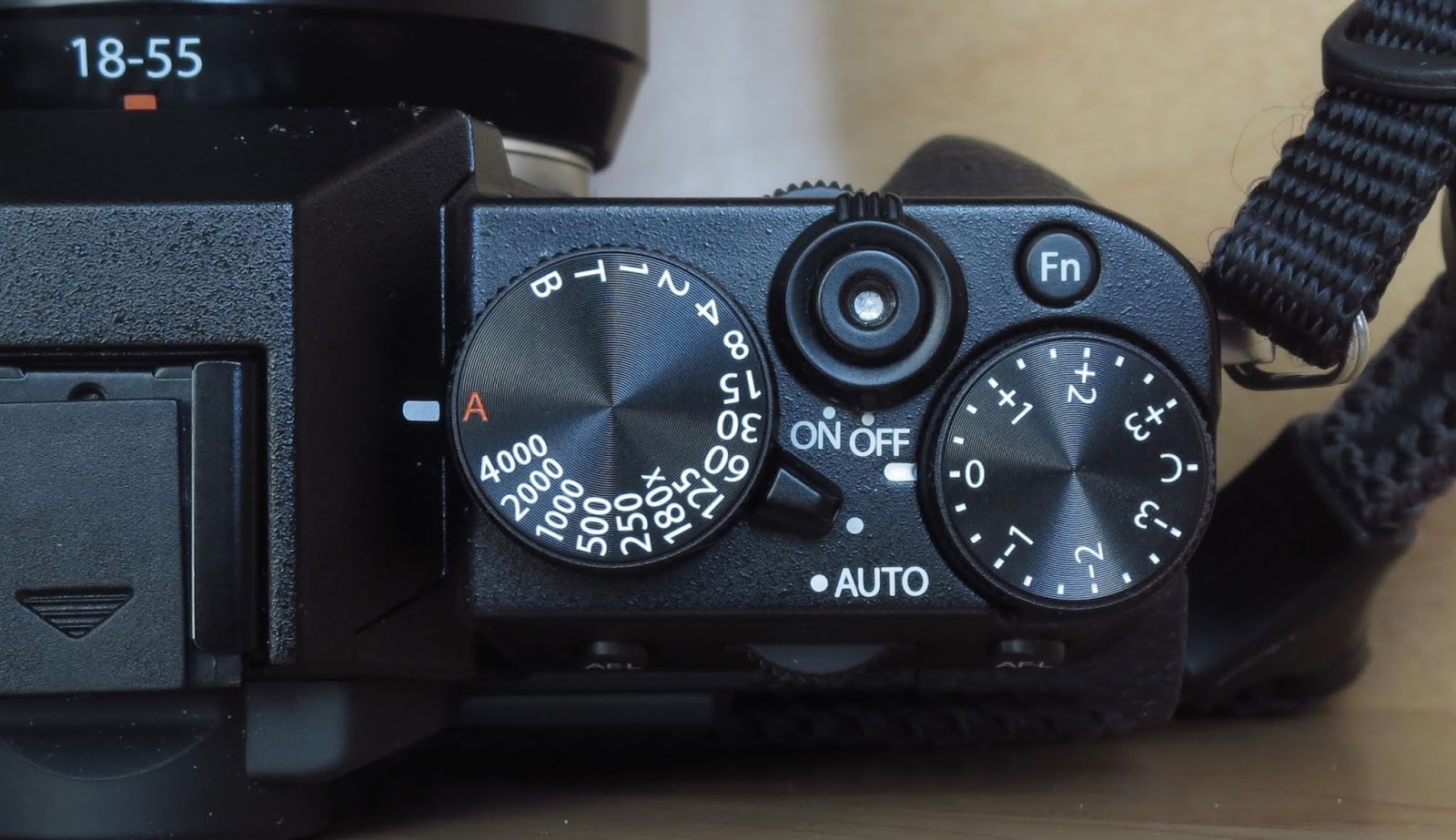
The presentation of the basic functionalities of the X-T20 is recalling film camera especially for the shutter speed and EV correction dials. If you combine the X-T20 body with most of the XF lenses the lens aperture can be set by using the ajustement ring present on these lenses which replicate the traditional setting way of the past SLRs or rangefinders of the tradiotonal film era.  In doing so you can preset the X-T20 without actually powering it.  For sure you may have to pay attention for the exposure accuracy of your choices. Furthermore you can manually focus your lens and reproduce the entire past experience.

But The Fujifilm is also a very modern digital photo camera that is giving you access of all the contemporary automatic aids and references that help to perform without bothering with many technical constraints. So again apparences can be deceptive for the fast looker.

Ergonomic notes
Every time we are speaking about the ergonomics of a camera model we have mixed opinions regarding the pure handling of the device and the adaptability of the photographer to use it. At the end we find that confort is ultimately a very personal perception that depends of so many physical and psychological factors that is almost impossible to get a general rule that suit most of us. For myself I have compare the Fujifilm X-T20 with my previous compact 35mm SLR camera experiences. And because we want something small and lightweight it induce to let go some bigger handling exigence like the famous hand grip with sufficient finger space to hold the camera body like a glove. Instead the X-T20 will ask you to pay more attention when you hold and interact with it.

Add-on Grip Volume
Just a short note regarding the optional add-on grip available through Fujifilm official accessories (Hand Grip MHG-XT20) or its third-party clone (Meike XT20G). Some will find and adopt almost full-time the accessory although others will simply discard it when they discover that the add-on grip contradict in part the compact vocation of the X-T20. It is up to you to make your choice of convenience.
With bigger and longer Fujinon lenses the additional grip will certainly increase your confort and you will fell a higher sense of security if you carry the X-T20 with your one-hand. (I'm not fond of the big under opening for the battery/card access but it is a very useful feature for sure). 

Since I have already a previous experience with the Fujifilm X-T10, the X-T20 predecessor, I was familiar with the camera body design and functionalities which are remaining the same for most of it. Attentive viewers will denote the discret disparition of a function button located on the rear bottom far side which has been relocated on the previous video button on the right upper deck. Video is now command by the shutter release button itself through an added option available on the control dial located on the far left of the upper deck.

All control dials and push buttons are reasonably reachable after a short learning introduction to the X-T20 and few  photo sessions. I regret the left position of the reviewing button that prevent us to activate it with our right hand fingers. The shutter release button is not very large too (you can screw in an off-brand enhanced button to improve the situation but at the expense to get a more sensitive "feather" touch). Halfway pressure to activate the focus and exposure functions is easy to master. An old fashion cable release can be use with the X-T20, an option that I have always preferred to the other electronic remote but this is purely personal.

Separated exposure and focus locking push buttons are a very nice idea. To have access to the Quick menu (Q) is also a fine option. The same for the touch back screen. The front focus option dial is a good tool that allows easy and direct permutation.

The very discrete in-board flash is a small extra light unit that can be used for fill-in flash purpose. Just remember that the flash is activated by the camera battery pack. So if you are planning an extended use of an electronic flash it is better to look for an external unit with more light power, separate battery power and have the possibility of different flash head orientations (for bounce task).

I have also appreciated that the Fujifilm X-T20 is not too much crowed with numerous function buttons that generate often on others models accidental activations. The back of the camera is clean, the upper deck functional, and the front very discrete except for the company and model lettering. ("What sort of camera you are using? Fujifilm my friend! Ah???")

"What is on the Menu?"
Almost everything is reconfigurable on the X-T20 if you are using the menu. So explorations, essaies and setting can customize the functionalities of the camera. Speaking of that there is also the possibility to register those specific setting on one of the seven Custom menus to be recall later. I leave you the "joy" of discovering all what this interface is able to do for help (or confusing you!). Menu presentation is fairly intuitive even for a past analog photographer like me 😉.

Seing your picture (Electronic Viewfinder and Live Screen).
Working without a viewfinder is more and more popular although I persist to say that it induce a far less efficient camera holding. The electronic viewfinder (EVF) of the Fujifilm X-T20 is a very good visual reference tool with a good reactivity. Once you have adjusted its brightness to your own taste, it give a realistic image  output of your subject with the essential infos with a very handy automatic rotation presentation. It can be customized if you need to do so. Informations are not intrusive of the picture area, a nice attention for the composition effort of the photographer.

Focus appreciation accurancy via an EVF has been always a tricky business even when you attempt to use the differents focusing aids availible through the menu. By far I would prefer the older way by using a fine grain (simulation) focusing screen that permit you to keep the entire view of your picture at any moment. The Fujifilm X-T20 can allow you a moderate rate of success in doing that way. In low light situations it performs well as long you get sufficient contrast from your main subject.

For people like me who are wearing permanent eyeglasses, you will have to really get close to the eyepiece in order to have the full view of the screen. Activation of the exposure correction is clearly illustrated by the illumination of its scale. Viewing modes include the always economical option of the electronic viewfinder use only with the eye detection activation (by far my preference in many situations).

At the end the X-T20 EVF do give an average magnification coupled with a modest eye relief distance that make the thing a bit difficult for eyeglasses wearers but it deliver a fine reproduction of your picture.

The high quality of the rear viewing screen is the other working option. The screen can be tilted for a waist level viewing position or for an "over the crowd" use. The big news is the touch screen possibilities during the picture taking sessions for the focus position, the shutter release, the menu exploration and setting and the picture reviewing. Speaking the last option mentioned the automatic last picture reviewing on screen has to be configured through the menu since it is not settle by default.

Touch screen functionalities are very nice additions included into the X-T20 model. Many users will appreciate to work during their shooting or/and their pictures reviewing as for cruising through the camera menu. Today touch screens are a feature that you are expecting to have a standard access. As usual it can be shut down if you prefer to set the camera with the more traditional fashion way.

The big change of the Fujifilm X-T20 is its new 24MP sensor that give you a better overall definition. Transiting from the previous 16MP version, the new sensor seem to deliver finer definition of your subject nor in final analysis the change appears to be subtil but make no mistake you will obtain an  professional image output that can be printed without restriction on A4, A3 or even A2 paper formats as long you have done a correct exposure and composition of your subject and you have used a stable support to eliminate unacceptable blur effects induced from motion of the camera. Using a top grade lens is another option to reach the maximum definition from the Fujifilm X-T20 image sensor.

Selecting Exposure mode (manual, semi-automatic, program, dedicated)
Exposure can be set in every ways, from complete programmed (including dedicated and special effect modes) to fully manual setting of the aperture, shutter speed and ISO. All semi-automatic modes are present by simply disengage the shutter and aperture control dials from the "A" position. This is very efficient and straightforward although the ISO has to be selected with the aid of the EVF or the Live screen. Exposure correction factor can be set with the rotating dial or the front multifunction dial.

The exposure metering system the Fujifilm X-T20 is reliable but don't prevent yourself to evaluate it with the EVF or the Live screen and be able in doing so to alter the final result in regard of your own taste or bias. Since the camera sensor has a good dynamic range you can exposure (and memorize) for the high lights (to prevent the super-white clipping effect) and then correct your shadow areas during the post-processing of your final picture. It works well even with the JPEG files.

Focus (Automatic, Tracking, Manual w/aids)
Another great improvement is the newest algorithm used to calculate and set the autofocus. More reactivity and better tracking are always appreciated by photographers "on the spot".

ISO
The ISO scale of the Fujifilm X-T20 is giving you a good latitude of exposure without strong degrading quality when you are using the more sensitive part of it. I have very manageable image results from ISO 200 up to ISO 3200. B&W pictures are awesome in any cases.

Image quality (Color, B&W)
Almost all my picture are registered on JPEG files since I prefer not to post-edit them too much (except for very caricatural effects). The Fujifilm cameras are fulfilling exactly that way of producing very fine images right from the start without painful and long post processing. Colors, details, finesse are there and rewarding for the photographer.
The different film simulations recreate beautiful bias without  too fuss. The monochrome rendering is fantastic at such a high level that some people were asking Fujifilm to offer exclusive monochrome versions of their camera models "à la Leica".
On a very personal note I find that Fujifilm APS-C sensor format picture files to be superior to what I have previously experimented into the MFT format (may be the new MFT 20MP sensor is the most similar). Provia/Standard in color and Acros in B&W are the film simulations that have my preferences by far.
A carefully compose and exposure picture with good image stability should give a high level of quality sufficient to get an very good printable result in paper format of A4, A3 and even A2.

As usual since I am not a videographer the Fujifilm X-T20 video features wont be part of this personal review.

Others details
The off-centered tripod screw hole at the bottom plate of the Fujifilm X-T20 can be bothering in specific combination with a telephoto lens and a monopod for example if you intend to do a panning of a moving subject. That can be partly addressed by using the optional grip  (MHG-XT20). Action (sport, nature, performance) photographers need to have a help when you working long hours with heavier lenses. In that sense, the add-on grip may became a full-time part of the X-T20.

The Fujifilm X-T20 is not a weather-resistant camera and precautions have to be taken when using it in adverse conditions. The X-T20 seems to be a solid device but exposing it to water, very high humidity, sandy or high winds can be hazardous even lethal for the electronics of the model. So keep a safe use of the X-T20 (Improvise a camera raincoat with a clear bag and seal the front end of the lens with a rubber band surrounding the lens hood, a protective neutral filter is also recommended).
In cold climate conditions, freeze battery pack and internal condensation are others sources of disruption to be aware. A warm extra battery pack in your pocket could solve the problem. Not exposing the camera to sudden shift of temperature from cold to warm (be progressive) will help also.  There is no reason to miss photo opportunities because a more difficult weather, just be prepared and in worst case scenarios just put the camera gear in weather seal case.

Final note
After all this small study on many aspects of the Fujifilm X-T20 the most important I retain of the experience is the pleasure of using a very creative tool with real personality.

Fujifilm is not only a designer/manufacturer/marketer of nice cameras and lenses, Fujifilm is also a trade name under which many communities of photographers of everywhere became reunited into their commun passion of doing pictures and share their joy of using a niche product like all the Fujifilm cameras and Fujinon lenses. So be aware to not becoming yourself an active member of their photo sect!


28 janvier 2019

Être "photo-graphique",une vocation iconographique.

Chaque photographe développe sa perception visuelle et sensorielle a travers les images qu'il ou elle enregistre tout au long de ses expérimentations et de ses interprétations photographiques. De cette perception on peut en déduire un style ou une signature particulière à chaque auteur. Comment se définir à travers notre créativité personnelle? Bien malin qui connaitrait la réponse universelle à cette question-piège.

Quand je jette un regard sans trop de fard sur ma production passée et présente, y a-t-il une tendance, un courant d'idée, un regard répétitif mais non redondant qui en ressort plus particulièrement? Malgré mon expérience limitée dans ce monde de l'expression artistique sur deux dimensions, ce serait éminemment prétentieux de me réclamer d'une école ou d'une autre de ce monde culturel de la photo.

Mais il y a tout de même une constante qui se dégage de cette recherche visuelle et c'est le sens graphique de mes sujets. J'oserais même dire le sens intrinsèque de la ligne crée par le contour et du contraste des nuances généré des noir, gris et blanc et de toutes les couleurs associées à la "multi-chromie". Cette ligne définit la limite et le volume du sujet et en trace la forme et son originalité. Le ou la photographe agit comme un dessinateur de la réalité visuelle sans pour autant qu'il l'invente mais plutôt qu'il la mémorise et la fige dans l'espace-temps sur un support à plat.

Si on ne peut photographier sans lumière, qu'en est-il des nuances et de ses limites essentielles à la compréhension du sujet-photo? Une photo sans graphisme est une image sans repère. Certes une impression se dégage de toute manifestation de lumière mais l'absence de définition ne peut qu'induire la confusion des sujets, des genres ou des interprétations même si l'impact purement émotionnel reste au rendez-vous.


À partir de notre enfance nous sommes exposé à plusieurs expressions graphiques et en particulier dans l'illustration et le dessin. Dès mon jeune âge j'ai été fortement influencé par l'école des auteurs de bandes dessinés comme Hergé (Tintin, Jo et Zette, etc.) qui utilisaient une technique définie par le terme de la ligne claire où chaque limite de couleur ou de volume du sujet était soulignée par un trait-frontière ténu. Plus tard la technique des ombres via les nuances de gris comme dans les dessins au fusain a été aussi une grande source d'intérêt personnel.  Ces deux techniques se retrouvent transposées implicitement, consciemment ou non dans ma modeste production photographique couleur et noir & blanc.

Plus que tout je considère que le trait-contour doit demeuré bien défini pour qu'en général une photo de mon cru passe le test. Bien sûr je n'exclue pas l'utilisation du flou volontaire suggéré pour accentuer l'impression de mouvement par exemple mais sur une base élargie, la netteté du sujet reste primordiale pour l'attention et l'impact que génère l'image. Et vous le constatez vous-même comment cette exigence reste fondamentalement intuitive chez l'observateur de photographie.


La préoccupation du graphisme ne doit pas cantonner à certaines spécialités photographiques comme l'architecture, la proximo-photographie ou l'illustration mais aussi à tous les autres sujets comme le portrait, le reportage et la photographie d'action. Son application est universelle car le graphisme d'une image implique la proposition d'un parcours que le regard emprunte dans l'observation du sujet photographique. Il y a donc un élément actif que le graphisme amène à la lecture de la photo.

Le regard emprunte les contours des composantes d'une photo et questionne les nuances de tonalité des sujets illustrés. Il en tire non seulement une information factuelle mais aussi une impression-émotion générale du contexte et de la situation de prise de vue de l'image enregistrée. C'est pourquoi le graphisme d'une photographie est un élément essentiel de composition et d'impact de cette expression artistique à deux dimensions.


25 janvier 2019

Fujifilm X Series: What would be the professional camera model to select at this day?


Foreword:
Before going any further I must state that any camera model could be used as a "professional" device as long it help you to earn money from your clientele. So don't be move about the following (very personal) suggestions. I am the first to proclaim that a camera choice is at the end a purely subjective choice as long the model you have preferred can fulfil your expectations in convenience and result.


The elusive Fujifilm GFX-Series...
source: Fujifilm
So now I can felt free to entertain you about the "pro" questioning over the Fujifilm X-Series. First we have to agree for the stellar quality image output generated by the Fujifilm GFX Series system. This beautiful system like most medium formats proposed by the manufacturers is not really suited in many action photography situations that will need constant, rapid and extended facility to perform well even in very adverse contexts. So I will classify the Fujifilm GFX system as a fairly niche (and expensive) product that is asking more careful attention and is obviously less flexible in term of handling and transportation. But surely for people that are working with studio requirement (inside or outside) the Fujifilm GFX system will fulfill the bill (and empty your pocket!).

Now going through the Fujifilm X-Series system the is a lot of candidate to consider. If you apply the Weather-Resistant (WR) criteria as a priority you will finish with three evident contenders: the Fujifilm X-Pro2, the Fujifilm X-H1 and the Fujifilm X-T3. We know that the most recent one, X-T3, got the most up-to-date best reactive autofocus functionality and an extended video capacity. We know also that the X-H1 is the only one doted with an internal image sensor stabilization. And finally we know that the rangefinder style X-Pro2 is the only model with a traditional optical viewfinder and the electronic viewfinder option (EVF).

source: Fujifilm
The Fujifilm X-H1 and X-T3 have both the possibility to add a vertical power unit that will translate in a better vertical handling and a much greater battery autonomy. These have the other advantage to have a centered EVF (same optical axis of the taking lenses) that assure you easier following or panning of your subject movement. Sport, nature or action photographers should be well served with the X-H1 and X-T3 no question about it. The Fujifilm X-Pro2 is a great reporter camera model for street and spontaneous photography. The optical viewfinder give an instant view of your subject without any kind of time lag between your naked eye and the camera viewfinder. This is a very unique feature of the X-Pro2 but I must add that I have learned that many of its users are preferring almost exclusively the EVF option.

source: Fujifilm
When you are choosing a camera system it is better to look first at the optical offer of that manufacturer because you may need specific lenses for special applications of your own. In my sens the Fujinon line-up can respond to a good number of those specialized tasks. But some choices may induce some better choice of camera model. To give a good example lets take the case of earning the Fujinon "Pro" XF16-55mm F2.8R LM WR which is a very versatile lens for photo reportage and many other situations such as wedding. The XF16-55mm F2.8 have no optical in-board stabilization and that omission may be seen as a flaw for a trans-standard zoom lens. In that case the recommandation should be to combine the Fujifilm X-H1 camera body already equipped with the sensor stabilization option. So your lens choice can be paramount to the camera body selection.

As a personal general rule of thumb I am suggesting most of the time to select a second camera body identical to the first one. That way you facilite the overall manipulation of the two cameras that are owning the same ergonomic, the same sensor, the same interface and are using the same accessories including the battery packs. A third camera body could be a different model for different applications or specific contextual uses. For example two Fujifilm X-Ts  twin models alongside a Fujifilm X-Pro for a more discrete mandate.

source: Fujifilm
So what would be my personal choice if I was still a corporate press photographer like I use to do a some (!) years ago? For the camera body I will probably select two Fujifilm X-H1 alongside with a Fujifilm X-Pro2. For the X-Ts lenses, the Fujinon XF16-55mm F2.8, XF50-140mm F2.8 and XF8-16mm F2.8 all WR are the obvious but expensive choice. For the X-Pros applications, the Fujinon XF23mm F2 WR, XF60mm F2.4 Macro and XF90mm F2 WR could be a sensitive choice. But all that is very relative and questionable for other photographers. But all those products are top of their line (except for the special purpose lens XF60mm F2.4 Macro) and are well protected from adverse condition encounters.

You may ask you why most of the professional photographers are loaded with a big chunk of photo equipment? Part of the answer can be the fact they don't use all that stuff at the same time but they want to be prepared for every eventualities. Many in the profession are tempting to get rid of the  weight and the overcrowding of all those expensive pieces of material. Some will select only a main camera body coupled with a more light version as a backup and complete the kit with two or three lenses. For special assignment they will rely on renting a more spefific lens or camera body. Others photographers are working on very specialized picture production and they only need few pieces of equipment to fulfill their task.

Many Fujifilm competent photo equipments are offered into their line-up and you shouldn't be afraid to use them professionally speaking. Smaller and lighter devices may improve your photo creativity and mobility and ultimately serve your "pro" and artist expression. You don't have to follow guideline that can only mismatch you (and empty your wallet!). For example Fujifilm products like the X-T20 or the X-E3 combine with lenses such as the XF-18-55mm F2.8-4R LM OIS or the WF23mm F2R WR are perfect equipment (but you will have to observe a little more care when you use them in adverse conditions).

As I said earlier there is no magic solution to propose for all the photographers. But we have to rely on our camera and lenses and master them in order to produce a "Pro" level of pictures that will be cherished by our customers who really don't care about what is in our gadget bag...


Do I really need to get the latest technology on my hand to be a successful professionnel photographer?

Fast answer: Certainly not! The professional photo equipment (labelled or not) has to be very reliable and prévisible in their day-today use. Many renowned photographers prefer to work with "generation-before the latest one" models to get the assurance of its guaranteed results. Some are very, very reticent to change a winning combination and are particularly beware regarding any new devices. Usually they will try new equipment outside their regular assigments and have a tendency to keep their previous equipment as a safety mesure. So Fujifilm X-T3 or X-H1? For myself the answer is obvious...


20 janvier 2019

Rangefinder versus DSLR: which style of viewfinders? For sport picture or for social photography?

Typical Off-Center optical viewfinder design (Source: Fujifilm)
It happens every time I am in reflection what should be the next camera I should purchase. Because I use to love to work with rangefinder film cameras (Leica M4-P & M6) and digital cameras with "off-center" viewfinder such as the Fujifilm X-E2 & X-E2s and the compact X-30. But in the same time over the years in many action photography situations I had like better to rely on SLR models (Nikon F1-2-3HP-4) or their actual digital counterparts such as my present Fujifilm X-T20.

So the dilemma will always be there: rangefinder style or utilitarian DSLR type? For sure it depends what kind of photography which are attempting to do and which photo equipment will better suited your tastes. It is meanly a personal endorsement of material. And it is also a profound love affair (Dont try to reject that subjective argument in your choice).

Technically both categories of these digital cameras can perform almost identically for their exposure abilities, for the quality and definition of theirs pictures, for their reactivity especially for focusing, for their functionalities and interface and even for their electronic viewfinder specifications. So it is not a matter of technical limitations but there is some design caracteristics that can definite more the strength of each viewfinder positioning category.

The rangefinder love affair
At first we must say that it was the classical way of designing a photo camera. The rangefinder has been brought to photography in order to solve the focusing task of the taking lens on which it has been eventually fully couple in order to facilitate and accelerate the work of the photographer. Off-center viewfinders were the technical respond to accommodate the two independent lenses required for the telemetric purpose and the device was incorporated with the optical viewfinder used for the framing purpose. Today such technical requirements are no longer part of the focusing system into our digital camera.

But the past contraints had influenced the architectural of these film rangefinder camera models for a very long period of time. Many photographers of that time have also appreciated the compactness of the design especially with the ones that are using 35mm films. Those rangefinder cameras were far from perfect. The final picture frame appreciation was very approximative and was variable with the change of the distance between you and your subject and even more with very near areas (parallax). The interchangeability of the different focal length lenses was severely limited by the framing ability of the optical viewfinder. There was no way to get a visual confirmation of the deep of field generated by the aperture selected on the taking lens. Because of the shutter curtain type introduce into the interchangeable lens models, the shutter speed limit for the use of electronic flashes was very low. And I am sure I have forgotten other annoyances of the past.

Almost all of those problematic rangefinder specifications of the traditonal film era have been adressed by the digital new technology in a very accurately manner with functional and efficient technical solutions. Today using a rangefinder style digital camera is simply charming with the advantage to be a less intrusing for your subject who is often associating a DSLR camera style with intimidating photojournalism. The viewfinder framing past problem with the different focal lenght is no more an issue with the new electronic viewfinder technology (EVF). You got the exact framing of the final picture. The flash shutter synchro speed limit is the same as for DSLR camera type. The deep of field can be fully evaluated through your viewfinder.

So there is no formal reasons to avoid the use of a rangefinder style digital camera. And many today photo professionals are true users of models such as the Fujifilm X-Pro2 to name one among others. And that can be apply to many others types of photographers that love and share the rangefinder style design.

The DSLR domination
So why to choose a DSLR type digital camera with the event of the new performing electronic viewfinders (EVF)? You have to remember the SLR film era with the avent of mystical reflex models such as the Nikon F to name one. At that time it was a revolution that have solved many rangefinder design flaws and facilitated greatly the work of photographers especially the action ones. Precise framing, full lens interchangeability, visual deep of field appreciation, fast flash synchro shutter speed limit, centered viewfinder architecture for easy follow-up of the movement of the subject, good ergonomic with motorized film advance optionality, etc, etc. At that time there was no way that film rangefinder cameras have been able to compete with their SLR counterparts.

The "Reflex" (named because of the mirror use to reflect the image through the prisme which is preventing the reversal of the subject seen through the viewfinder) film cameras were the kings of their era that last for more than four decades. Professional news or sports photography has been associated with the look of the SLR models and SLRs were present everywhere from the fully amateur to the more advanced photographers. Manufacturers have introduced many improvements to the basic concept over the years with a huge success.

Even with the advent of the digital camera era and the introduction of higher quality electronic viewfinder (EVF), the DSLR design have maintained its appeal among the photographic community. Why? Maybe because a centered viewfinder is still the best solution to follow a moving subject when it is combined with a long focal length lens. It is obvious that it is still a more confortable way of doing action photography. Maintaining the viewfinder in the same optical axe as the taking lens is unbeatable for panning the subject with accuracy and stability of a tripod or a monopod stand. There is no "parallax phenomena" induced by the optical lens axe and your eye view such as it can be experimented with off-center viewfinder of the rangefinder style models.

At the end the different viewfinder design schools will kept its defending lovers and the ambivalence of the choice will stay in your hands. May be the best is have the two possibilities on your side and have some "rangefinder days" and other "DSLR subject day tasks".

12 janvier 2019

The Fujinon XF 55-200mm F3.5-4.8R LM OIS: Improve my reach!


It may be a more existential question regarding telephoto lenses and more specifically long telephoto zoom lenses that have a tendency to extend almost up to the infinity. The good thing about this it is the fact that you don't really notice it when you are looking at your viewfinder but otherwise it could be seen as a bit of indecent...

The Fujinon XF 55-200mm F3.5-4.8R LM OIS zoom lens is from the start a very fine product. Not fast as a "pro" F2.8 lens but it can deliver a lever of quality image output result that can stand on par compare to these more expensive products. Its design presentation is a mimic of the XF 18-55mm F2.8-4R LM OIS standard zoom lens and we can assimilate them as the four optic elements of the Fujifilm NMARX X-series lens models (None-Marked-Aperture-Ring-X-Series-lens i.e. NMARX) (the other ones are the Fujinon XF 10-24mm F4R and the XF 18-135mm F3.5-5.6R both OIS).


The Fujinon XF 55-200mm is not a compact product. The "left-hand-holding" lens got a lot of inertia on which you can count to stabilize it. It will better fit with larger Fujifilm camera models like the X-T1/2/3 or the X-H1 for the weight repartition between the body camera and the lens. Using a center viewfinder will also work better with this powerful telephoto zoom lens especially when you select its longest focal length and doing more action photography.

Because of its first nature of being a zoom lens, the XF 55-200mm is a kind of "all-around" telephoto optics that can be convenient into many different situations like portrait, sport, nature, detailed or compressed subjects. With a minimum focusing distance of 1.1m it is not a real close focusing ability lens but its maximum magnification ratio may be sufficient for bigger objects.

By design and construction the Fujinon XF 55-200mm F3.5-4.8R LM OIS will extend a lot at its longest focal length which is less esthetically interesting to say the least. So you will not impress the pro photo intelligentsia of this small planet but other than that the XF 55-200mm is a very well built optic. Remember this is not a weather sealed product and it need to be protected to perform flawlessly in adverse conditions (a good translucide plastic bag used along with a rubber band surrounding the lens hood can easily do the job here).

The variable maximum aperture of F3.5 to F4.8 is a good compromise that avoid the choice of smaller maximum aperture like F5.6 or F6.3 at its maximum length and in doing so it minimize the aperture-stop lost compare to more "pro" lenses of F2.8. For portrait situation, the aperture of F4 can be set within the focal range of 75 to 90mm which should be sufficient to get an average clear/blur separation between subject and foreground/background.

Even with heavy cropped picture the Fujinon XF55-200mm F3.5-4.8R LM OIS
won't prevent you to get good results.
In action photography and with a maximum aperture of F4.8 you will have to compensate 1 1/2 stop opening by increase your ISO or panning the action of your subject. If you can keep your sensor sensibility below the ISO 1600-3200 mark the quality lost should be minimal. For years a 300mm F4 or 4.5 lens in 35mm film (200mm equiv. in APS-C sensor format) was the workhorse for many press photographers prior to the venue of the now inevitable 300mm F2.8 lens version.

The in-board optical image stabilizer (OIS) of the Fujinon XF 55-200mm F3.5-4.8R is very efficient allowing us to select shutter that are almost three stop under the usual reference (1/focal length). For example you can get good results at 1/60sec instead of 1/250-1/500. In doing so you are less penalized by its more modest maximum aperture. Working with a long zoom telephoto such as the Fujinon XF 55-200mm F3.5-4.8R will ask you a more careful holding of the camera/lens combo because of the image magnification which is about 6 times higher compare to the standard 35mm lens for the APS-C sensor format. The use of an additional support like a monopod, a tripod or even an improvised one will help you to get a better rate of success.

The Fujinon XF 55-200mm F3.5-4.8R LM OIS has good focusing abilities. Even in low light or with less contrasty subject, it perform well assuming that the camera model is recent. But in some specific situations manual focusing may be the only sure way to rightly lock on your subject. The "prefocusing" method can be also used for tricky subject in action photography.

62mm is the moderate filter accessory diameter of the XF 55-200mm F3.5-4.8R LM OIS zoom lens. A dedicated lens hood is part of the original manufacturer accessories that came with the lens which is always a good habit to observe in the industry. You can use it to prevent flare coming from light sources located in front of the camera but in some others light scenario it can afford be dispose. As I use to say a protective filter made of high quality optic is a safe precaution for preventing to spoil the front glass element of the lens or cleaning it or even replacing it (when it is possible!).

Fully extended the Fujinon XF55-200mm F3.5-4.8R LM OIS is a fairly long lens! 


Despite its more standard size dimensions and weight I really appreciate to work with the Fujinon XF 55-200mm F3.5-4.8R LM OIS zoom telephoto lens. Part of it can be certainly related to its quality of construction which is giving confidence to use it intensevely. But I would say that the high level of the image quality output is may be its best asset. If can afford its limitations like the minimum focusing distance and its moderate maximum aperture you will enjoyed with very large variation of focal lengths that gives to the XF 55-200mm an outstanding versatility.


11 janvier 2019

Des goûts et des couleurs ... !

Source: scoop.it


Chaque fois que j'adopte un nouvel appareil photo ou un nouvel objectif, je suis curieux de connaître les avis, les analyses ou les commentaires que cet équipement suscite sur la planète Internet. Cependant depuis un certain temps déjà nous avons basculé dans un monde binaire en amour, i.e. l'adoption sans condition, ou en haine, le rejet sans appel qui semblent caractériser plusieurs intervenants photo-v/blogistes. La place n'est plus à la nuance, à la retenue ou encore à l'humble critique respectueuse mais plutôt à l'éclat ou l'effet de style lapidaire.

Source: Fujifilm Canada

C'est au point où je m'interroge sur la pertinence de ces comptes-rendus dont le fondement des remarques apparait limité à tout le moins. Par exemple un vlogiste populaire chez les adeptes de produits Fujifilm a récemment déclaré que le viseur électronique du X-T20 est tout simplement inutilisable en vertu de son relief oculaire et son grossissement d'image limités. Le problème c'est que ce modèle de viseur était considéré il y a a peine deux ans comme le nec le plus ultra dans sa catégorie. Après quelques semaines d'utilisation du X-T20, je constate que ce viseur est tout à fait adéquat en ce qui me concerne.


Autre exemple pour le même manufacturier, un blogiste cette fois australien prétend que l'objectif Fujinon XF18-55mm F2.8-4R LM OIS est tout simplement un échec optique ("this lens is a total dud..."). Plus encore il proclame en avoir acquis trois exemplaires avec le même constat. J'ai utilisé deux versions de cet objectif trans-standard en 4 années d'intervalle avec une toute autre perception des images qu'il génère. Bien conçu et construit, ce XF18-55mm m'apparait très compétent et versatile.

J'en viens au point de penser que certains photographes ont perdu toute objectivité envers le matériel, tout sens autocritique pour apprendre de leurs erreurs, toute motivation pour mieux s'adapter à l'usage optimal de leur équipement photographique. Travail, expérimentation, persistence sont des exigences qui semblent les dépasser à moins qu'ils ou elles se considèrent au delà de toute technicité d'apprentissage et de maitrise du médium.


Quant je manipule un modèle récent d'appareil photo numérique, je suis souvent fasciné par l'ingéniosité de conception qui a conduit à la création d'un tel modèle. Astucieux est le mot qui me vient à l'esprit pour tous ces dispositifs performants qu'on retrouve dans les dernières créations. Je dois même me discipliner pour éviter que l'appareil prenne en charge toutes les décisions et définisse l'image obtenue selon sa seule interprétation, bref son intelligence artificielle. Car si vous le laissez faire, vos photos ne seront en définitive que des clones de ce qui fait parti de la banque de références iconographiques de l'appareil.

J'aime les modèles d'appareils photo qui ont une certaine personnalité. Ils peuvent parfois vous pousser dans vos derniers retranchements techniques pour exprimer votre créativité. C'est un peu cela qui vous fait évoluer vers la diversité et la différence des sujets photographiques. Bref facilité rime rarement avec originalité...

08 janvier 2019

The Fujinon XF 18-55mm F2.8-4 R LM OIS: (I'm) Not a kit lens!

How to compare the Fujinon XF 18-55mm F2.8-4 R LM OIS zoom lens from Fujifilm? I will be a bit controversial saying that this little first class optic can be put at the same level as the Leica MFT 12-60mm F2.8-4. I know that the Fuji XF 18-55mm R has obviously a less wider angle of view at its short end and is natively less powerful on its longest end. That stands for the focal length statistic comparaison between these two fine products but for the quality of their respective construction, their optic glasses, their control rings and their manual abilities, there are in the same league.

And there is something else very important. The maximum aperture of the Fujinon XF 18-55mm at F2.8-4.0 is an exception compare to what we see useably in the compact standard zoom lenses market. And that simple point make a big different especially for the lenses designated for their on smaller sensor format like the APS-C and the MFT. In that field the Fujinon beats the Leica although it seems they share the same maximum aperture because the effect is different between those two smaller format sensor zooms.

The Fujinon XF 18-55mm R LM OIS is remarquable because it has that maximum  aperture of F2.8-4 and the internal optical stabilization, but also because it is still a compact lens in regard of all these factors. It breaks the actual tendency for the lens manufacturers to design and produce more and more inflated (i.e. big) lenses with larger maximum aperture or with a wider range of focal variations.

When you will be introduced for the first time to the Fujinon XF 18-55mm F2.8-4 R LM OIS you may notice that it is an optic more oriented on the traditional design way. This is not a featherweight optic device and the zoom and focus control rings are more stiffer than many others zoom lenses. Direct access of an aperture control ring is another advantage of the Fujinon (as for all XF Fujinon lenses). Every bits of the XF 18-55mm R LM OIS is telling us about the quality of this zoom lens.

We can considerer it as the introducing zoom lens of the Fujifilm NMARX X-series lens models (None-Marked-Aperture-Ring-X-Series-lens i.e. NMARX) (the other ones are the Fujinon XF 10-24mm F4R, the XF 18-135mm F3.5-5.6R and the XF 55-200mm F3.5-4.8R all OIS).

There is a lot to say regarding the obvious optical quality results obtained by the XF 18-55mm F2.8-4 R. Many tests done over the Web by specialized photo test sites will tell you about its optimal definition compare to other products. I leave to them to give you a complete technical information.

A full exposure stop gain at 55mm focal length is one the most appreciated strength that I have experimented with the XF 18-55mm lens. It qualifies the zoom lens to an upper class compare to all others products that give you a max. aperture of F5.6 or more at their longest end. I wont pretend it can replace a "pro" zoom lens (with a constant max. aperture of F2.8) but it certainly is certainly far more compact optic.

On the purely none-objective side, we can already appreciate the image output of the XF 18-55mm F2.8-4 R LM OIS both in JPEG and RAW files issued from a Fujifilm X-camera.

With an angle of view of 79 degrees at its widest focal length, the XF 18-55mm R LM OIS is doing just a little bit better than an usual 28mm equivalent to 24X36mm format (FF). So contextual photography into cramped areas can be a real challenge especially in interior photography. But that angle should be manageable if you take time to carefully select your angle of view and the distance from your subject. The Fujinon XF 18-55mm F2.8-4 R LM OIS is an enjoyable urban lens with a lot of flexibility. If you can afford to not use its dedicated lens hood, the lens become very discrete and non-intrusive

At 55mm you have just sufficient magnification to partly isolate medium range subject with success. This is not a true face portrait lens  but the Fujinon XF 18-55mm can produce good full-body (or partial) portrait.

For sure we have access to any intermediate focal lengths available on the Fujinon XF 18-55mm f2.8-4 R LM OIS. Popular focal setting include 23mm and 35mm that replicate their fixed focal length counterparts. Close focusing is on the average and this Fujinon is not a genuine macro optic but it can perform with subjects like flowers or mid-sized objects (or parts of) with competence. The XF 18-55mm F2.8-4 R OIS lens doesn't have a special close focusing setting to activate to get its nearest focusing distance, an advantage for detail photography on the spot.

I am not really found on the special function switches way and I prefer the solution used by Fujifilm on most of the others XF lenses with an "A" position on the aperture ring (this way you can preset your aperture value without looking at the viewfinder/screen like with the shutter control dial). If you are a frequent user of the Fujinon XF 18-55mm F2.8-4 R LM OIS (maybe as your first lens) you will probably assimilate the reflex to activate/deactivate that switch...

Optical Image Stabilization (OIS) is in fact a commun "must be" with standard zoom lenses. Its advantage is obvious in particular when using slow shutter speed for less lit subject. Switching from a non-OIS lens, the Fujinon 18-55mm F2.8-4 R LM OIS will guaranty you a better rate of success by preventing micro blurs on the contours of your in-focus subject(s). The presence of OIS must not prevent you to still apply the best support you can give to your camera-lens. The OIS functionality can be shutdown for video or macro or tripod photographic situations.

A last a word regarding the dedicated lens hood that came with the lens (a nice though from Fujifilm). Using it will prevent flare no question about it as the lens hood offer an additional protection for the front of the lens. Without it as already mentioned the Fujinon lens is becoming more discrete, less protuberant for your subject. So the choice is yours. It can be inverted for transport but the inverted accessory is covering the vital focusing and aperture control rings.

Filter accessory size is 58mm a commun one available for a lot of filter combinations. It is up to you to use or not a protective filter. I do but the filter should be made with high optical quality glass that wont introduce more glare or  glass distortion in my picture. Many people don't bother anymore about that and I respect their choice. Being a retired professional that have encounter many adverse conditions I have always preferred to change a filter than a complete lens...


What to say more about the Fujinon only to qualify it as an "all-going" standard zoom lens of an higher level optically and with a more than average quality of construction. Fujifilm produces lenses in the upper standard that perform well over the years and offers products that in my sens surpass many big competitor counterparts. So try it and eventually own it with confidence. Since I am not in any ways paid or attached to them my only raeson is to encourage manufacturers that still have respect for photographers...

06 janvier 2019

Balado-Photo: le voyage sans les bagages...


Le dilemme se présente avant chaque départ, peu importe la destination. Car si j'aime voyager, visiter des environnements inconnus, je veux l'accomplir avec le moins de contrainte possible d'horaire, de liste de lieux à visiter et surtout de bagages à emporter. Bref voyager ne doit pas être un fardeau mais une libération en quelque sorte. Se balader avec 10 kilos d'équipement photographe n'est pas ce que j'appellerai une visite légère mais plutôt une tâche à réaliser le plus consciencieusement possible. Durant mes années professionnelles, la photographie comme gagne-pain comportait son lot de mandats exigeant la maitrise des résultats attendus par la clientèle. Il en résultait des contraintes matérielles propres à chaque assignation photographique. À moins de vouloir "jouer" au photographe d'agence, de presse, d'institution ou pigiste, le balade-photographe en voyage n'a pas à assumer ce carcan productif ou même créatif imposé.

En voyage je recherche d'abord le regard nouveau sur un environnement à priori inconnu ou non-expérimenté. Il y a donc une partie importante de spontanéité à développer. Bien sûr tout notre bagage mental de formation et d'expérience passées nous habite toujours et induit notre interprétation artistique et technique comme photographe du jour. C'est d'ailleurs la pièce d'"équipement" la plus importante à emporter avec soi. Car c'est d'abord et avant tout une vision personnelle des lieux, des choses et des personnes qui constituera l'essentiel de notre témoignage iconographique. Dans la sélectivité et le traitement de nos sujets se dégagera une interprétation originale des situations, des contextes et des expressions de ceux-ci.

Les petits et grands voyages sont toujours excitants pour la ou le photographe dans l'âme. Ce sont des occasions de rencontres, de confrontations, de dialogues entre le touriste occasionnel et l'autochtone  car nous sommes bien des visiteurs, inopportuns parfois, qui insèrent dans une réalité extérieure à notre environnement habituel. Comme observateur, nous pouvons voir, entendre, toucher, goûter tout ce qui nous apparait exotiques à nos yeux de profanes. Il y a l'avant et l'après voyage parce que dans une vrai expérience d'immersion nous en ressortons différents au propre comme au figuré. Ainsi les voyages forment l'humanité et l'humanité a toujours migré d'un lieu à l'autre à la recherche de sa signification spirituelle.

C'est pourquoi il faut d'abord regarder avant de photographier pour embrasser le panorama de la vie et éviter une vision-tunnel tronquée et trompeuse de la réalité. Ce n'est qu'après que l'acte de photographier, de voler une parcelle de momentané, devient possible. Comme l'ancien voyageur qui transposait son témoignage sur ses relations (cahiers), sur ses dessins ou dans ses valises remplies d'artéfacts. Car enfin ce que nous choisissons de photographier ce sont nos propres impressions de l'instant privilégié.

C'est donc un état d'esprit par extension un état d'âme qui motive nos intensions sélectives. Tout cela est bien plus important que toute la technicité dont on entoure la photographie dite de voyage.

Petites et grandes cameras
Modestement je peux relater certaines expériences de voyage en débutant par mon éternelle ambivalence du choix matériel de l'équipement photographique. J'ai visité Londres, Barcelona, Le Caire et l'Égypte avec de petits appareils compacts à objectifs fixes. J'ai fait d'autres destinations avec des ensembles d'appareils à objectifs interchangeables. À tout prendre je préfère un minimum d'encombrement et de poids que procure les appareils photos compacts mais je ne saurais me contenter d'un téléphone intelligent qui n'a pas de viseur spécifique à la photographie. Je comprends que pour certains types de sujets spécifiques, le choix se limite à des combinaisons appareils-objectifs plus particuliers.

Contraintes des situations touristiques
En voyage, vous ne recherchez pas nécessairement une complète mise en scène du sujet. Vous préférez enregistrer la réalité en "direct" et rendre l'aspect contextuel original de votre destination. Ce coté "spontané" de l'image ne découle pas nécessairement d'une prise de vue à la volée mais aussi d'une bonne analyse, quoique souvent rapide, de la situation et du contexte. Je n'ai jamais été très fortiche  sur le coté théâtral de faire de la photo-spectacle dans le style photo-reporter bardé d'appareils photo (bien que ce fut mon lot professionnel dans le passé). Je préfère de beaucoup la discrétion  en utilisant un appareil de petites dimensions beaucoup moins intimidant et plus ludique. Après tout nous sommes tous des touristes de l'image. Ne pas se prendre au sérieux n'empêche pas de faire les choses sérieusement. De plus le contact interpersonnel est facilité grandement quand on élimine le look inquisiteur de ces équipements proéminents.

Il est très rare qu'on ne puisse pas vraiment photographer un sujet mais il faut parfois user de stratégies et de façons de faire non-ostentatoires comme laisser l'appareil loin de nos yeux en bandoulière ou à la ceinture et viser approximativement, une pratique à développer pour les endroits plus sécurisés. Le déclenchement doit être quasi-silencieux ou se mêler au bruit d'ambiance. Pré-cadrer d'abord et attendre le moment propice peut aussi constituer une technique intéressante anciennement prisée avec les viseurs à télémètres qui débordait du cadre effectif de prise de vue. On peut aussi demander la permission de faire une photo souvenir avec un air candide surtout si vous êtes accompagné(e) ce qui est une belle opportunité de portrait. Enfin il reste de beaucoup préférable de vous conformer à un refus de photographer qu'à chercher à contourner l'interdit qui comporte parfois des conséquences moins agréables comme la saisie de matériel jusqu'à l'arrestation.

les choix techniques
Le choix d'un équipement photographique reste éminemment personnel. Un conseil d'autrui pourrait ne pas correspondre à vos besoins et votre confort d'utilisation. Je ne vous connais pas donc comment pourrais-je savoir. Ce qui convient à l'un(e) peut être un ennui pour l'autre. Je ne peux parler que de mon expérience personnelle étalée sur quelques décennies donc sujettes à l'obsolescence des produits utilisés. Comme tourisme de la nature, j'ai eu tendance à privilégier un équipement lourd à une époque où les appareils compacts 35mm argentiques ne disposaient pas d'objectifs zoom efficaces en longue focale. Cependant en milieu urbain ou en situation de faible luminosité, j'ai toujours préféré les appareils de petites dimensions dotés d'objectifs de focales grand angulaires ou semi-grands-angulaires dotés d'une ouverture maximale plus flexible.

Aujourd'hui je n'hésites pas à utiliser en balade ou  en voyage que des appareils compacts couplés avec des objectifs de courtes focales fixes ou variables. Je préfère l'option d'interchangeabilité des objectifs pour me permettre d'utiliser à l'occasion un optique téléphoto de base pour le portrait ou la photo de proximité au cadrage plus serré. Les formats de capteur numérique APS-C et MFT sont nettement suffisants en qualité d'image pour répondre à mes besoins en diffusion Internet ou en impression manuscrite de dimensions moyennes (A4, A3). Les précautions élémentaires entourent toujours la préparation d'une séance de prise de vues par l'addition des piles-accus, de cartes mémoires et de tout accessoire jugé utile. De même un petit appareil photo supplémentaire peut être utile en cas de perte ou de bris de votre camera. Votre téléphone cellulaire peut aussi remplir cette fonction.

Une de perdue et dix à retrouver (Cliquer...posez les questions après!)
Bien sûr planifier vos déplacements est toujours préférable à une pure improvisation quoique que cette dernière peut être un modus operandi efficace pour certain(e)s. Même si on croit généralement que les opportunités de prise de vues sont multiples et considérables en voyage ou en balade, la réalité peut être tout autre car plusieurs facteurs doivent contribuer à parfaire une image plus exceptionnelle.

L'éclairage est un élément fondamental en photo. Il peut découper le sujet mais aussi le rende à plat (sans volume) tout dépendant de son orientation et de son intensité. Il y a donc lieu de soigner son exposition ce qui est grandement facilité par l'utilisation des viseurs et écrans électroniques qui renvoient une bonne approximation du résultat final. La correction d'exposition est un bon outil de travail qui évite les ajustements manuels (ou les choix) des paramètres comme l'ouverture de l'objectif et le temps de pose de l'obturation.

Ouverture/Vitesse d'obturation
Le contrôle de la zone de netteté du sujet principal est un autre outil intéressant quant il s'agit de privilégier celui-ci de son contexte de prise de vue. Souvent illustré en portrait, cette technique de détermination de la profondeur de champs, i.e. de l'espace dans lequel les sujets seront nets, peut être employée pour toute une variété de sujets. Dans la plupart des appareils photo actuels le mode "A" correspond à la priorité consacrée au choix de l'ouverture, le reste des paramètres demeurant en fonctions automatisées de l'appareil.

De même, le temps de pose, vitesse d'obturation, peut être un facteur déterminant du gel ou non de l'action ou du mouvement du sujet et de son environnement. Si votre sujet est en action vous pouvez suggérer sa mobilité par un flou généré par son arrière ou avant-plan (technique dit de panning) ou encore par une partie de ce sujet. Dans ce contexte l'image exprime le dynamisme de la situation choisie par la ou le photographe. On peut expérimenter pour éventuellement maitriser cette technique via le mode "S" pour "shutter speed" de l'appareils, le reste des paramètres demeurant en fonctions automatisées de l'appareil.

L'affichage de l'ajustement des paramètres de l'appareil photo est un tableau de bord important qui confirme ou non la pertinence des choix techniques du moment. En plus de l'ouverture et de la vitesse d'obturation, il y a également le réglage de la sensibilité et les aides à l'exposition comme l'affichage d'un graphe de distribution de la lumière moyenne ou par séparation des couleurs primaires ou encore des zones de très hautes lumières qui définissent souvent les limites en définition et et d'enregistrement des détails du sujet sur le capteur. Même si la captation numérique surpasse de beaucoup l'ancienne capacité argentique, le film traditionnel, il y a encore des limites contraignantes qui n'égalent pas la performance et l'adaptabilité de l'oeil humain.

Tous ces facteurs ou paramètres ne doivent pas nous éloigner de l'importance du choix du sujet, de son positionnement propre (composition) et contextuel (cadrage), de son environnement (situation) et de son expression (moment).

À plus d'un point de vue technique une photo ne sera jamais parfaite pour certains mais l'expression de son message transcendera facilement les aléas présumés de son contenant. Il y a donc une priorité à déclencher, prendre des photos, avant de se laisser submerger et démotiver par la maitrise présumée  des choix paramétriques. La plupart des appareils photo accomplissent une analyse exemplaire des situations d'expositions et tentent d'en tirer le meilleur parti. Il y a également plusieurs programmes d'exposition qu'on peut sélectionner sur l'appareil et qui sont spécialement adaptés à des situations typiques. Tous ces outils peuvent vous libérer de contraintes de prises de vues et contribuer à faciliter votre créativité.

Le plaisir de la balade-photo et de la photographe de voyage est sa grande diversité de situations et la découverte toujours renouvelée de sujets. C'est pourquoi le confort et la facilité de photographier doit être privilégiés car cela affecte directement la motivation et la créativité de son auteur(e). Bien sûr en expédition photographique, vous serez peut-être plus en mesure de justifier des choix d'équipement plus encombrant mais légèreté et complicité du matériel sont souvent des facteurs gagnants et garants du maintien de l'intérêt du photographe.

De retour de balade ou de voyage, le visionnement d'images satisfaisantes demeure toujours la récompense recherchée du photographe qui prolonge ainsi son plaisir de s'exprimer à travers celles-ci.

Bonne balade et bon voyage!