25 octobre 2022

Before the OM-1: The Olympus OM-D E-M1 Mark III breifly summarized by Daniel M


 Before OM System has taken over the ownership of the photographic gear division of the Olympus company, many products have been release during their name(Olympus) into the last few years at the control of it. Among them, we have found the OM-D E-M5 Mark III and the OM-D E-M1 Mark III. Except for the OM-D E-M1X introduction, the OM-D E-M1 series has represented since the avent of the Micro Four Third (MFT) image sensor format the Olympus "professional" flagship offer. That was completed with a specific line of "Pro" lenses that have larger maximum aperture, stronger construction and weather resistant quality and higher image definition.

We know now that OM-System have taken the ownership of the OM-D series development and manufacturing and have concretizing this effort by introducing a new OM-1 (and greatly simplified its appellation!). Lately I was looking about the opportunity for buyers to get a new "pro" MFT camera body and many good deals in regard of the latest Olympus OM-D cameras might appear to be the logic way to go without spending a huge amount of money (I must add that those "deals" are not part of the official OM System selling network).

The Olympus OM-D E-M1 Mark III is a very mature product that has been improved over the succession of the three different versions of the E-M1 series. This camera model can be used with reliability in very adversed contexts and with intensity and competence. If you put aside the never ending discussion about the virtues of each image sensor format, the facts and the picture results have proven that the E-M1 can be consider seriously as an ambitious photo device that can deliver excellent picture results on demand.
______________________________


The Olympus OM-D E-M1Mark III has been release in 2020 year as an updated model of the previous OM-D E-M1 Mark II introduced in December 2016. Their camera bodywork is similar except for the presence of a joystick at the back of camera, a feature that has been standardized among the "pro" and advanced camera manufacturers. Ergonomics of the E-M1 III is equally appreciated but no improvement has been done to the electronic viewfinder (EVF) which is the exact same as the Mark II one and the same can be said for the overall camera interface. The image sensor has remained the previous 20MP but some performance updated have been done to get a more reactive camera model especially in regard of the autofocus system.


Compare to the mighty OM-D E-M1X model, the E-M1 Mark III can be assimilated as a kind of modular photo device that can be relatively compact (body only) or fully dressed (body + vertical power grip HLD-9), which may remind for some of us the film-analog pro Nikon F4 model thirty years ago. It create in my sense a more versatile tool in particular for people who intend to work in very different photo-taking contexts. The E-M1 III is a wide camera body model partly because of its bigger grip that add confort for photographers who the (good) habit to leave the camera on their right hand ready to shoot. Incidentally, most of the E-M1 III command dials and functions can be selected on that (right) side which is a logical thing in term of design and the camera abilities.

As for most of the camera manufactured for a professional use, the Olympus OM-D E-M1 Mark III is rugged and environmentally sealed which explain its higher selling price point to some extend. It is an everyday photo device that can withstand an intensive task (At least four hundred thousand shutter releases according to Olympus claim). You can easily feel it when you manipulate the E-M1 III and stay confident about its durability although this is not an invitation to drop or to bang the camera voluntarily.

As for almost all photographic specialized devices, the OM-D E-M1 III cannot be slipped in your pant pocket. It is clear that in bringing the camera, you will concentrate your efforts to produce pictures with higher levels of quality and creativity. Yes, you can also do snapshots with the E-M1 III as a complementary task or pleasant activity in particular over an exploring journey on travel or else.

Under the most recent performance criteria, the OM-D E-M1 III is not a spectacular camera model. Although most its inherent specifications are rightly decent and can be highly sufficient for the picture uses you may have selected, some if not many will argue that others manufacture gear offers will plainly surpass the Olympus model on purely statistic base which is true but not necessarily relevant on a real world expectation. Yes, the MFT image sensor is limited (!) to 20,4MP (Mégapixels), the electronic viewfinder (EVF) to a 2,36 mega dots, the autofocus is base on a 121 cross reading points, etc. But the Olympus OM-D E-M1 III expertise, as for many modern digital cameras, will exceed most of the actual photographer needs. The very partial use of its interface is just proving its over-ability compared to the day-today selected settings by its owners.

What does very well the Olympus OM-D E-M1 Mark III is its capacity to be personalized for each specific photographer setting by using its impressive interface and its customized dial functionality (4 of them are available). This prove to be that the OM-D E-M1 III is a good practical and designed professional camera model for the field assignation and not only for the Web bla-bla discussion (Sorry for the "pro" YouTube reviewers of this planet...). If you are looking for a "for action" photo device, the OM-D E-M1 III may answer to the call flawlessly.

Image rendering.

At the end, you may find that the image rendering on your picture files is THE final factor for choosing a specific camera model over other counterparts. Each manufacturer has its own picture signature especially for the photographers who are intending to privilege JPEG image file formats over RAW files which are often selected by people that have further picture editing extended needs or special image renderings. As I have often experimented in digital photography, the final picture quality results are most of the time exceeding what you first observe on the electronic viewfinder (EVF) or on the back screen although the latter is noticeably more accurate over the first. Many time EVF will increase the perceived overall contrast of the viewing picture compare to its recorded file. The OM-D E-M1 III is simply another practical example of that phenomena (but we must add that the latest EVF are far more better that the previous ones).

The Olympus OM-D E-M1 Mark III is offering you a complete choice of different picture interpretations as it is now a common feature with digital cameras plus the possibility to select the RAW file optionality only or with an alongside JPG counterpart second image file. The 20MP picture file should be sufficient for most of picture finalities intended by the photographer. A lot of reviewing picture quality tests are available over the Web already but be aware that they often represent very specific conditions used in their partial analysis.


Personal specific points

The Olympus OM-D E-M1 Mark III have all the qualities that are associated with a true professional photographic device. It is a sturdy constructed camera body that withstand the most adverse environnemental conditions. It can be used intensively and stay reliable. It is also a very reactive camera model for action photography. Its exposure metering system is accurate and all the exposure modes are available on demand. Dealing with mixing light temperatures (Kelvin) may be its only one lower user point in still photography that you have to pay attention with the OM-D E-M1 III, a commun remark that can be said for many Olympus digital camera models.


Handling the OM-D E-M1 Mark III is requiring more muscle effort and a stronger hand prehension compare to more compact lightweight models such as the OM-D E-M5 Mark III. So, photographer fatigue will certainly be a factor to count with although this phenomena is less pronounced than when so-call "full-frame" professional camera models are selected. This is especially noticeable when the OM-D E-M1 III is combine with a "Pro"optic and the HLD-9 vertical power grip. That leaves us with a combo that have a lot of inertia and that, with the help of the internal stabilization system, allow us to work with slower shutter speeds in low light situations for example. Finally we can underline the more "angular" body design approach of the OM-D E-M1 III compare to the Panasonic Lumix G 9 Pro model for example.

Color and black and white (B&W) excellent picture renderings are a strong if not the "central" feature of the OM-D E-M1 III without any doubt. As a mostly exclusive JPEG picture file adept, I fully appreciate the Olympus image quality even more when I am reviewing my latest picture entries on a computer monitor. In one word, you can feel confident about it and rely on the camera for the best results available into the MFT image sensor format camera offer. Moreover you can configure your own color bias and much other camera settings if you need to do so and the four custom settings (C1, C2, C3, C4) are excellent to keep them available "on the spot".

No internal flash is available on the OM-D E-M1 III which can annoying if you are a fill-flash adept for one example. It puzzles me that "professional" camera designers have always disregarded the true utility to have on hand this very useful feature that has been reserved for the "lower" grade camera models. More than that this feature allows an easy access to an emergency light source very handy in high contrast back light situations. And the "all-weather" requirement is really a poor excuse to avoid the internal flash availability.


There is a lot of command dials and function push-buttons present on the OM-D E-M1 III., so, direct access to the most important functionalities should not be a problem and many of them are re-configurable by the user. Menu is complete and comprehensive as long you are interested to invest some time to learn it. No fully automatic exposure mode has been incorporated to the OM-D E-M1 III again under the assertion that a "pro" camera dont need it which again is a complete absurdity in my book but, you know, we have to satisfy the pretentious of this world who are claiming to be in full control of their (failing) destiny.

The electronic viewfinder (EVF) of the OM-D E-M Mark III is competent and sufficiently detailed to be a sufficient reference for the manual focusing purpose. In high contrast situations, it may struggle to give an accurate exposure rendering of the very low lighted areas especially if you compare it to the final picture file result, a commun behavior of all the OM-D E-M1 series versions. The viewing eye point (distance between your eye and the EVF eyepiece) is excellent for none glass-wearers although for the others like me (glass wearers) you may struggle a bit to check the four image corners simultaneously. The fully orientable LCD back screen is very accurate and give you excellent picture reviewing opportunities. All exposure, mode, function information are clearly displayed on the EVF and back screen but won't rotate to accommodate a vertical (portrait) subject framing.


The feather-touch shutter release will trigger the OM-D E-M1 Mark III in a very discrete fashion. No internal vibration are perceived and the camera seems to be ready on demand without obstructive delay. The camera can be configure to take very fast sequences of several pictures if you are the anxious type of photographer and not very good in subject anticipation. As usual I will not speak about the video virtues of this model since I am not in any way a videographer.

Last potentially irritative factor is the price level of the Olympus Pro system in general (as for all the other pro system manufacturers of course). At these pompous price tags, you have to think twice before selecting each different piece of gear you are interested to add to your photo equipment set. In a way, that can be also a good contraint preventing over gear stocking.*

The OM-D E-M1 Mark III is a versatile photographic device with multiple configurations adaptable for the needs and the preferences of the different types of photographers. The branding Olympus has been always a reckoned trademark with most of their camera designs since many decades and over the two technical eras, of analog-film and now digital. As I have already mentioned in the past for the previous OM-D E-M1 Mark II, that OM-D E-M1 series and the M.Zuiko Pro lenses are mature products addressed to sophisticated users that will appreciate well crafted camera models but you won't see a lot of them into the photo press reporter sidelines which is not new and tell us only that the old Olympus corporate professional event support level was almost absent compare to the Canon or Nikon ones. However, for those few professional photographers that have adopted the Olympus system, most of them have no desire to quit it for the obvious reasons of reliability, compactness and good quality picture results.

* P.s. The Olympus OM-D E-M1 Mark III camera models are still available for a time even considering the replacement introduction of the newest OM-1, you may have access to some interesting deals over the Web planet.

Photos Daniel M: Olympus OM-D E-M1 Mark III / M.Zuiko ED 12-40mm F2.8 Pro & ED 75-300mm II (E-M1 III photos) OM-D E-M5 III / ED 14-150mm II

10 octobre 2022

Oly Key Lines by Daniel M


 This is my favorite Olympus Digital Camera Art effect (Key Lines I & II versions) mainly because it emphasizes the graphic impact of your picture and add a strong pastel rendering to your subject color surfaces.The final image result is clearly a kind of cartoon caricature of he subject in its context. I will try to restrain myself for using it but it seems to be a lost cause like my love for black and white pictures. Here are few recent "key lines" interpretations to give a taste of that Olympus amusing Art effect.


Photos Daniel M: Olympus OM-D E-M5 III / M.Zuiko ED 14-150mm II

07 octobre 2022

Verti-Go Kompozitions


Pen-To-Glass

Tree-O-Fall-Beat-Win

Flo-Ro-Fall

Stri-O-Lamp

Sha-Do-Pal

____________________________________________

Photos Daniel M: Olympus OM-D E-M5 III / 45mm F1.8; Olympus PEN-F / 45mm F1.8; Olympus OM-D E-M1 III / ED 12-40mm F2.8 Pro; Lumix GX9 / G Vario 45-200mm II ; Olympus OM-D E-M5 III / ED 14-150mm II

05 octobre 2022

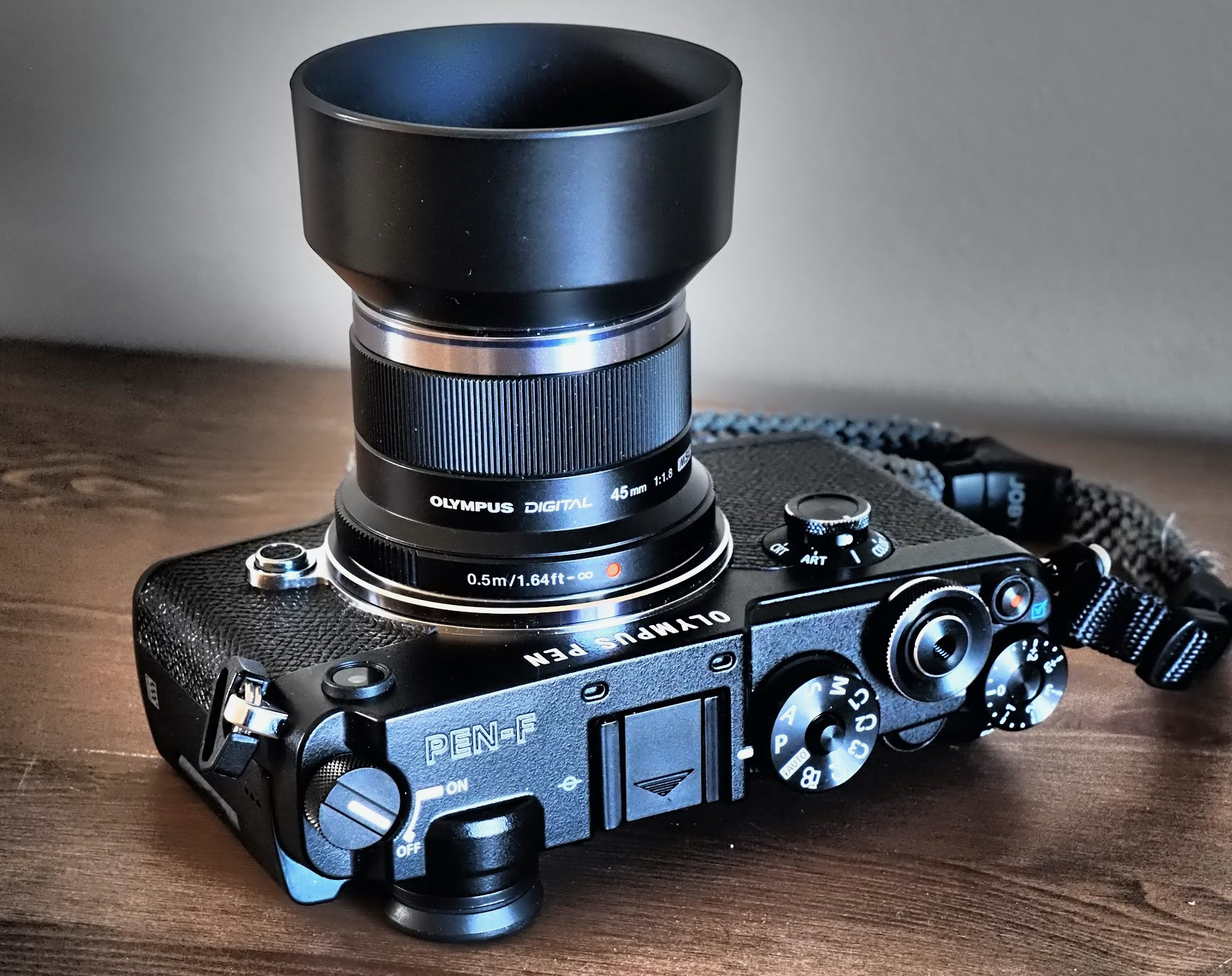
45(mm) Higher Love! The Olympus M.Zuiko 45mm F1.8 Premium


 My love of the 45mm focal length into the Micro Four Third (MFT) image sensor format is not new (and may have begun with the Leica Summicron 90mm F2.8 into the 35mm film format not so long ago…!). It may because it is a "closer" lens, without be so close from your subject if you understand what I mean. It may be because it seems to be a so definite and without distortion. It may be because it is a real discrete optic to be used all day long. It may be because for its large maximum aperture (F1.8 with the Olympus M.Zuiko Premium 45m F1.8). It may be simply because … I love it!

You can feel higher with the Micro Four Third 45mm focal length also because it is so gorgeous competent and compact optic without pretention compared to the F1.4 or F1.2 counterparts. Trying one and you will surely appreciate it at glance except, may be, if you are a super wide-angle freak. Some will like to qualify the 45mm lens as a portrait optic but that is only a small part of the story because this fabulous optic can do so much more to do and to create exceptional pictures. And over the years I did it with different camera models such as the Olympus EP-3, OM-D E-M5 (Original-mark II and III), E-M1 (Original, mark II and III), and the famous Pen-F (digital), and each time, the M.Zuiko Premium 45mm F1.8 have fulfilled its active task with performance and good picture results.

If you are fond about compact photographic ILC (Interchangeable Lens Camera) devices, you may consider to try the MFT system and the 45mm F1.8 lens is the perfect illustration of what it could be. Sure others MFT optics can be equally appreciated by all kind of enthusiasm photographers of this small planet but, for me and for many others, the 45mm is unique on its way. You dont question love!

________________________________


The Olympus M.Zuiko 45mm F1.8 is often described as "the" optic that have brought a lot of photographers to try and, for some, adopt the Micro Four Third (MFT) image sensor format system. The tiny lens model has been introduced in 2011 and perfectly suited in size and weight the Olympus Pen series very compact cameras. But it is more its outstanding image results that have given its reputation renown.

Very small with a filter front accessory diameter of 37mm and a weight of only 116g (a little more than 4 ounces), its mostly polymer construction (but with a metal lens mount) is well done and the only moving part is the focusing ring which is offer a positive turning resistance. Presentation can be silver or black, the choice is yours. The internal aperture mechanism is composed of seven curvy blades.

From my modest experience, the 45mm F1.8 is exempt of noticeable optical distortion. Definition, contrast, and color rendering are simply stellar. The transition between in-focus and blurry subjects is smooth but sufficiently distinctive. An optional accessory lens hood can be mounted on the front lens bayonet surrounding receptor although the M.Zuiko 45mm F1.8 is mostly flare resistant without it.


The close-focusing ability of the M.Zuiko 45mm F1.8 is very limited with a minimal distance of 50cm (20 inches approx.) which cannot be assimilated to macro photography but for larger subjects like flowers or table objects it is still manageable without problem.

With an almost two-time magnification from a MFT standard prime lens (25mm), the M.Zuiko 45mm F1.8 acts as a small telephoto with a limited picture compression effect. However, on a practical day-today basic use, many photographers will surpass its first attended portrait purpose to a more extended variety of subjects, even for landscape or architectural projects. In brief, you can easily develop the M.Zuiko 45mm F1.8 versatility the more you get used to it. At that selling price point, there is no reason not to add it to your own optic park!

Photos Daniel M: Olympus OM-D E-M5 III & PEN-F / M.Zuiko 45mm F1.8

26 septembre 2022

You cannot buy creativity!

"Go your own way" - Fleetwood Mac

 It seems that everybody is looking in these strange days to buy something if not somebody. Fame is now an highly materialistic think and money can buy anything and everybody. We live into the individualist games of the more aggressive and egocentric that are now the emperor of this crushing human world. To best the best, suffice to grab your chance over the unlucky, the less advised or the softy ones.

You can buy beauty, you can buy fame, you can buy likes, you can buy anything but... can you buy sensibility, can you buy cleverness, can you buy creativity? Sorry those last ones are not available over the Web by simply clicking your credit card. Sure electronic brains seem to replace our present deficient mind but is it creativity or is it simply preprogrammed existents algorithms? Is it human or is it simply machine extrapolations?


We don't want to reverse the material evolution surrounding our fragile life and its fantasy world. No. we understand that we are also a productive part of this evolution. But we are still asking for some originality, for an un-standard vision, for something provocative that will push higher in the scale of universe over our ephemeral physical tiny lifespan. Yes, trying to be different, to look over the fence of conformity, can be very insecure but it can be also very exciting at the same.

No you cannot buy creativity! You have to earn it by yourself and, I know, that each of us can do it, it is only a matter of self-confidence. Not just try it but do it, you deserve it.

Photos Daniel M: Olympus OM-D E-M5 III / M.Zuiko ED 14-150mm II

19 septembre 2022

Low light !


 When we speak about available light, many times we are referring to low light situations. Capturing these darker moments is not an easy task for any photographic classic or modern devices. It stretches them to their technical limits to get an acceptable image rendering. The "quality" of light is often associated with "quantity" of it meaning it add a lot of density of the picture definition and more density can help in image post-editing.

Be able to record low light contexts can be very rewarding because these pictures add a lot to the mystery and the magical of the subject. Intimate, strange, scary, ethereal, all these qualifiers can be evoked to describe a low light photograph. Recent digital camera models are now better equipped to record those special contexts. They have access to higher image sensor light sensitivities (ISO levels) that we had never expected to be available and sufficiently workable during the traditional analog-film era. Now it is manageable as long you take a minimal special care in holding your camera and be aware about the blur induced by the subject movement if it happens.


A special care could be also taken by the photographer not to destroy the "scarce" light distribution that definite the low light context of the subject. For most of the time the details of it can be more suggested than fully definite like in the daylight or well-lit contexts. Experimentations can help by bracketing your exposure to get a range of different light interpretations for example. Digital photography permits you these different image essays at low cost and with easy executions.

Many photographers are easily discouraged by low light situations, but they are avoiding a lot of original opportunities to get special pictures and it is a pity because these image contexts are often interesting more that their full lit counterparts. There is no reason not to try and not to succeed today in that very peculiar photographic task.


A "Low-Light" Setting Memo:
Hold steadily the camera or use a fixed stand (tripod, wall, floor, table, etc.); Pay attention to your (slow) shutter speed; Be aware of your focus point especially with a shallowed deep of field when using a larger lens aperture; Note your image sensor sensibility (ISO) that can influence your image quality (by definition increase image noise presence); Have a good comprehension of the light distribution of your subject that will compose your final picture; Don't hesitate to review the taken picture and do it again if the first result doesn't please you.


Photos Daniel M: Olympus OM-D E-M5 III / M.Zuiko ED 14-150mm II / ED 75-300mm II

12 septembre 2022

07 septembre 2022

Other Ormstown-Scapes with the Olympus OM-D E-M5 III & M.Zuiko ED 14-150mm II


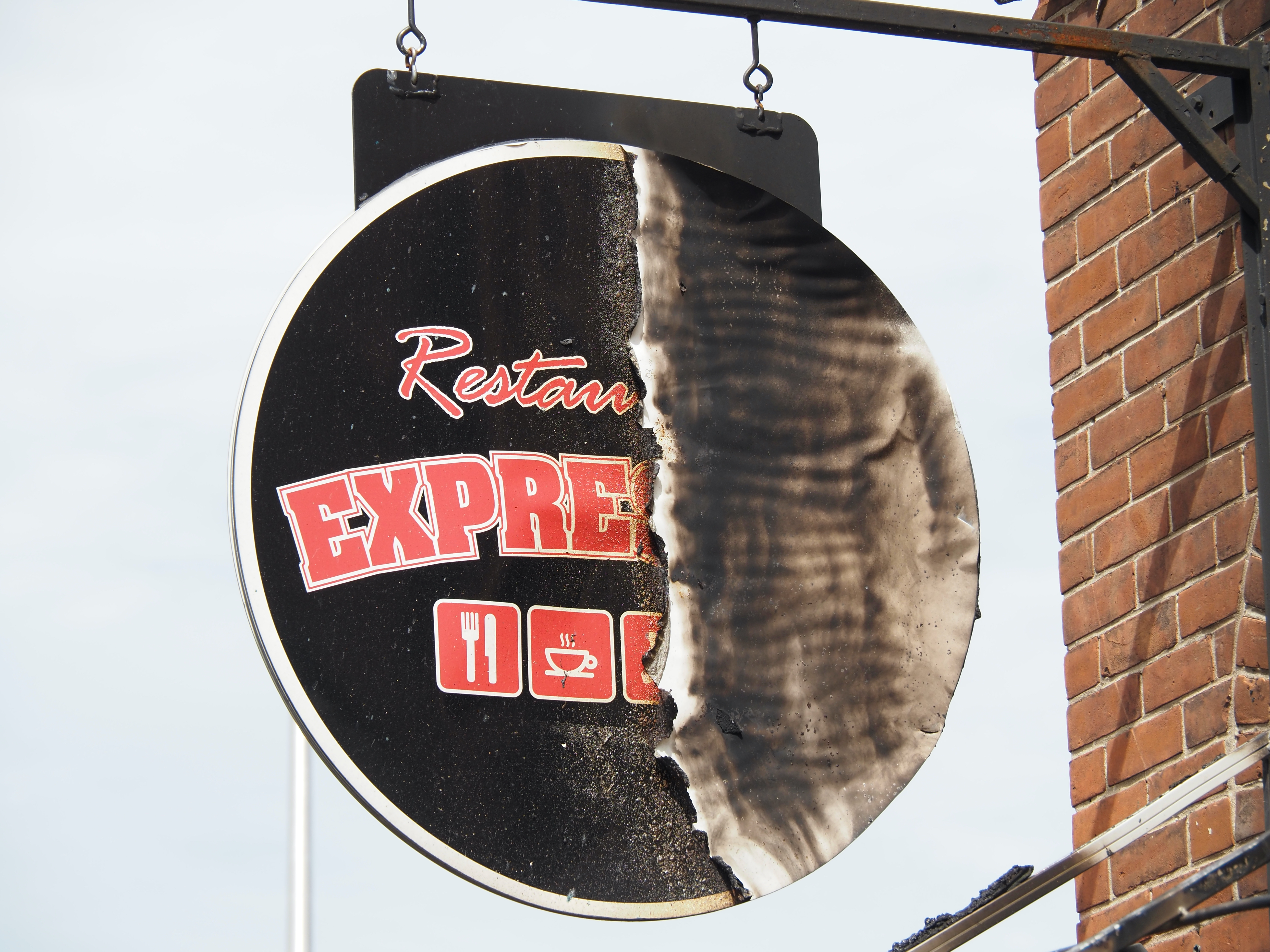
The Express 57 incinerated dream.

Not long ago I have proposed a post that give you a short sneak view of a nearby small town, Ormstown, from the place I use to stay in summer. From this quiet countryside and appeasing village, there are the habitual focus points to go like a general store, a bank, two churches, a small school, two taverns and few restaurants or cantines. One of those was the Express 57, renowned for its retro fifteen cachet with full of past of artefacts and with very sympatic owners and team to serve you. Doing a Ormstown photographic essay must require to get some Express 57 clichés which I did without second though.


A week later, the unthinkable happens and during the night, the Express 57 was literally incinerated but their owners who were living on the second floor manage to escape with the aid of the local and courageous fire brigade volunteers. Today The building has been locked up waiting its restauration or simply its demolition and because of its very central location, the place is a constant and inevitable reminder of this drama and its tragic consequences.

Photos Daniel M: Olympus OM-D E-M5 III / M.Zuiko ED 14-150mm II 


01 septembre 2022

September at last!


 We all love the summer season but at the end of it in late September (for the northern hemisphere), the arrival of the roman "seventh" month in Latin (Septembribus) represents the very beginning of the fall season which signify a kind of appeasement from the frenetic heat of the vibrant summer. Bathing suits, for those who still wear one, will be stored in the drawer until next year or for all those light clothes and sandals.

But what is all about the autumn period may be the multiple and rapid changes of temperatures and landscapes all around us. Even nature have a different odor spreading from all these dying leaves on the ground. For those who can spent time to observe (instead of inside working!), the fall season can be experimented in many ways over a short period of time. Even the colder temperature may be seen as a relief from the past hot summer.


September can be also a nice break in life to do some introspection about the already travelled road and about the one which coming ahead. The fast pace of summer leave place for more relaxing thoughts. Today more than ever, we need to have access to some king of regenerating pauses and get a more philosophical point of view in life in general.

In photography, by opposition, the September month use to be a kind of “back to school” period with numerous outings, exhibits, courses, various club activities, etc. However, the Web expansion, the social media and surely the pandemic restrictions have partly changed the photographic landscape to a more individual approach that have limited the mobility and the gathering possibilities for all the photographic passionate people.


The colors of the Autumn season have been always a very inspiring and productive photographic subject. The green landscape leave place to a kaleidoscope of warmer colors and tints. The sun is lower to the horizon that create more interesting tridimensional effects even in considering the lowlight challenges that are facing the photographers. If you intend to work in more adverse conditions (rain, wind, cold), photo devices that are weather-resistant (WR) got the preference over less protected piece of equipment.

During the fall season, you can expect less crowed urban areas giving you a real chance to emphasize the architectural aspects of your subjects. I have also found that people are often less annoyed by photographers than during the summer season. It is an excellent time to experiment and to document the very near surroundings that we tend to neglect otherwise.

Forever the reasons we may evoke to underline it, the return of the month of September means for many of us an important departure to new photographic adventures that we are pleased to enjoy fully.

Photos Daniel M: Olympus OM-D E-M5 III / M.Zuiko 14-150mm II ED MSC

29 août 2022

Why coming back to bigger cameras? (because, for many, it seems to be the Graal..)


 Are you a "real" photographer if you are persisting to use small compact (digital) cameras? (As I was asking to myself and my conscientious reasoning mind). The bigger things and the larger ones tend to impress people and in doing so they put pressure on us to follow that inflated trend which seems to never be finished. In photographic gear, we have seen the recent introduction of "pro" (ballooned?) models by several manufacturers (you know already their names!). Let say it right now: I am not impressed and for many obvious reasons. On one side, we cherish the small and readiness of the smartphone, on the other, we are pushing on a pedestal camera models that could be assimilated to the biggest dinosaur ancestors. So, what is the problem here if not one of simply human perceptions and cultural behavior. 

For many users, holding or more precisely, showing a camera appears to be an affirmation gesture and posture rather than an act of photographic creativity. The proclaimed artistic tool can be more assimilated as an expensive and large jewel to show its material health and pretended cleverness. See, "I am a "pro" photographer (in my head more than for my empty pocket that never been filled by earning true photo revenue) and ... to finally stating that there is nothing interesting to photograph here or, on the contrary, I will press the shutter to take thousands of similar pictures (good or not) that nobody will never see or care to see anyway.

On the other hand, there are these dedicated "amateur" photographers (I'm there!) that like to "do pictures and share them" (how silly you are since everything has been already done in photography!). Even for myself that love to try different camera and lens models, my principal interest is in discovering how when I can do interesting pictures from them using their hardware and interface particular interpretation versions. And strangely most people are not fooled by the pretentious self-proclaimed "pro" photographers and are far more concerned by the ones who really take pictures even with very small cameras.

So, what is the argue here in this post, you may ask yourself very legitimately. And you are right because there is not at all! Everybody is allowed to spend their money, their interest, and their effort the personal way they intend to do so, and it is just a personal grumble morning from my not completely awaked mind!

Photo Daniel M: Canon ELPH 330

22 août 2022

Forever Young! (the nostalgic era)

Despite its obvious retro apparence, the Olympus Pen-F is an highly sophisticated digital camera
  that mimic the mechanical photo gear era.

 It is a FB contributor (See the World) Leigh that inspire me to choose that subject about our search for eternal youngness. I must add that Leigh have associated the musical therapy to stay young than ever in our mind and that inspire me that song from Alphaville. With the aging of the occidental population, the nostalgic trend is taking more and more a major part of our mediatic life. All historic eras are intertwined into a past-present-future way of life where history had no really important role to play, we must add. Yes, we celebrate remembering things and people but only to refuge ourselves in our own fixed time capsule-cocoon.

No place for nostalgia when we are looking for new urban spaces to develop!


What can be illustrate this nostalgic trend is certainly all these pictures that are venerating every artifact of the past available. Old houses, old garments, old cars, old cameras, let's name it ad nauseam... But the funny thing about this pseudo-interest, is that on a parallel course, we are destroying about anything including our own planet in the name of consumerism. An odd contradiction but a very human one by nature! Individualism seems to have conduct us to a dead-end issue. Flower power have been replaced by the hatred (and gun) power well illustrated into our libertine "showcase" and our social media fevers.

Forever young is also a dream by itself. The dream that we can stop the effect of time if not reverse it at least in appearance. Sure, every clever person will understand the fallacy of this dream becoming a reality. But again, cleverness is not a very popular quality at this precise moment of humanity. Even many entertaining’s has been confined to auto-repeated stereotypes that are reassuring for the spectators.

There are only the young people that are really young but for these ones, we don't care to listen them and give them a legitimate place for their aspirations and their experimentations. Yes, we, the older ones, are very far from the 1969 Woodstock folly or, are we still there? That is the question, my friends!

Photos Daniel M : Olympus OM-D E-M5 II / M.Zuiko ED 12-40mm F2.8 Pro; Fujifilm X-S10 / Fujinon XF55-200mm R LM OIS