31 mars 2019

Cubanitas with the Fujifilm X-T20


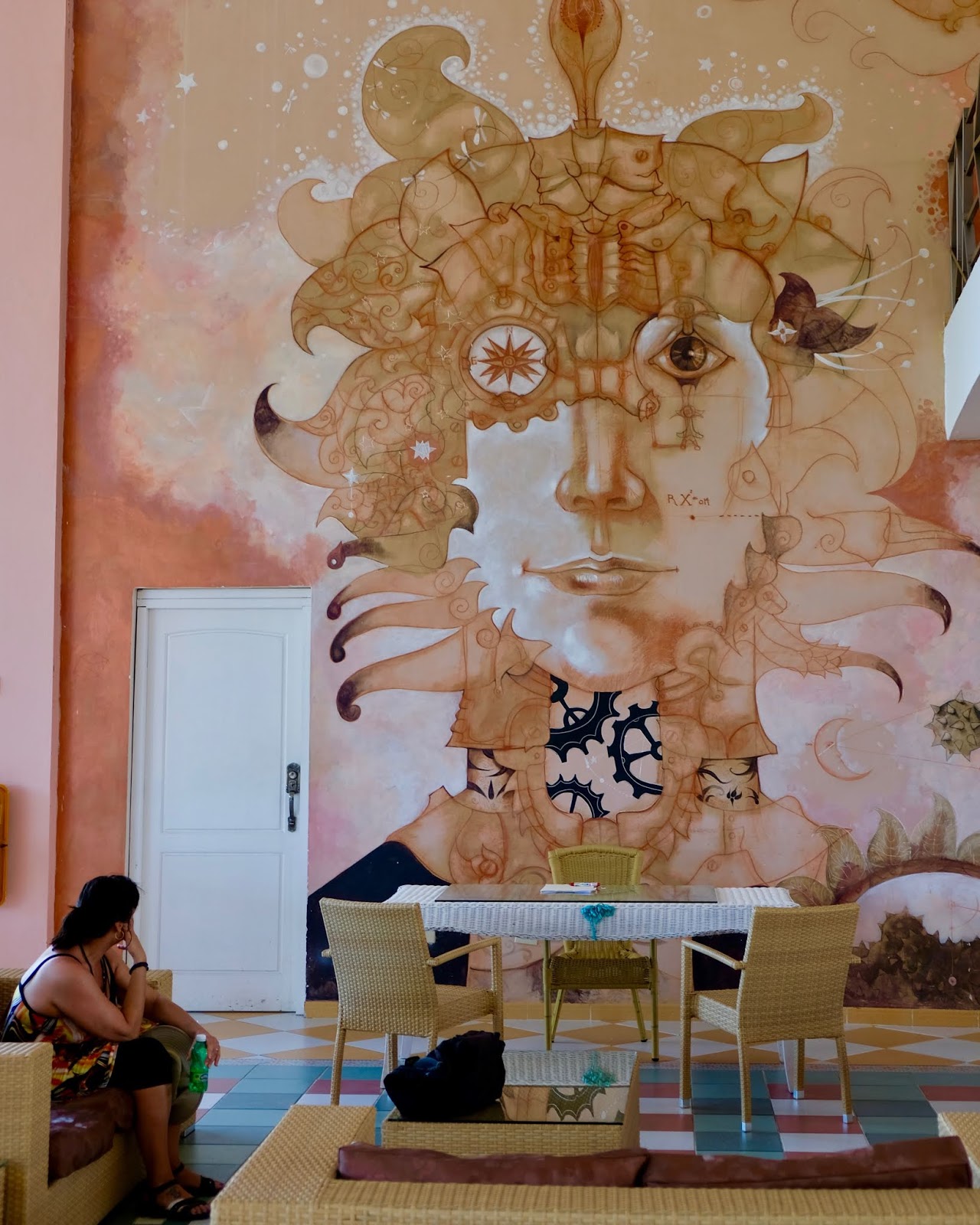
The Cayo Largo Island has been (and still is) a frequent destination for recharging your frozen batteries affected by our long Canadian winter season.

Located south of the main island of Cuba into the Gulf of Mexico, this idealistic place is share by people in search of calm, of nice long white sandy beaches and of friendly Cuban people.

Although many hotels installations are now more on the rustic side because the buildings are suffering a lot into the southern weather since the island seems not to have a lot of material resources to refresh them properly, vacationers from Canada and other countries are coming back year after year and some are paying visits for even a more frequent pace over the year!

We know now that there is very few probabilities that the island of Cayo Largo will be ever "americanized" in any ways in the near future. The Italian travel agencies seem to be the only ones really interested to invest on the island and have created a group of specific resorts strictly controlled and only available for their clientele.

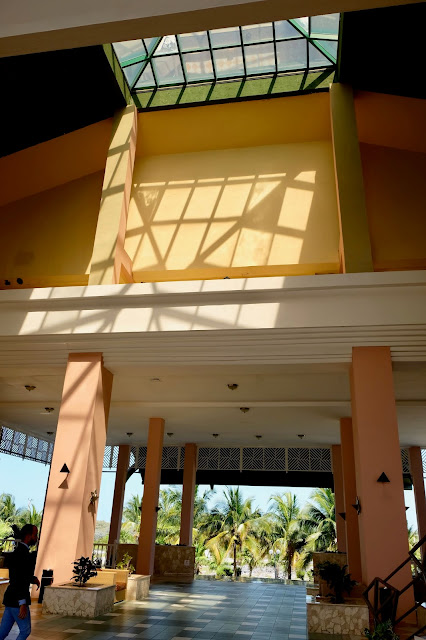
I am particularly fascinated by the architectural point of view of many earlier buildings since they represent a kind of merging of the hispanic heritage blended into the Cuban modern way of building back in the 1980s and 1990s. And because it has not been reproduced in the last twenty years, it may be important to preserve some image temoignages of what may disappear in mid-term.

All the pictures of this article have been taken with the Fujifilm X-T20 camera and the Fujinon XF 18-55mm F2.8-4 R LM OIS lens.




13 mars 2019

The Mind and Photography: an ongoing process.


Yes I know I am repeating myself in saying that photography is a more precise medium than video. We sincerely love video because it is live, it is colorful, it is soundly, it is cinematographic. It is fiery tail on our animated visual and earring senses. All those things that photography cannot compete in terms of modern popularity. But strangely still images seem to last longer in our memory and be more informative than a stream of pictures.

Glimpses of selected reality (as perceive by their auteur) photography offer a full view of an instant visual memory. Just think about the multiple aspects of a face expression photography is may be the best way to freeze those fugitive moment of great signification.

Behind and beyond the image are always part of the mental process that a picture can trigger in our mind. There is the pictural story on the paper (or on the screen) but there is this other story that our brain is developing about the picture itself. It is self-information added to the strict imagery of the picture. The complexity of the train of thinking triggered by a photo can be infinite as for the multiple personal interpretations we can give to it and this is the beauty of it.

We have to not forget that photography is in fact an instant glimpse of the past since it is already a selective past moment. Every time we look to a photograph we see an imperfect repetition of a subject or a context.

Unstatic Memories
Is there a learning curve about imagery? Because photography is segmenting our timeline almost on an infinitive base every single picture got the glimpse of eternal history into our mind memory. So it happens that picture became a reference you can remember under every circonstances you wish to do so. With time passing by all those pictures are stacking at a point difficult to apprehend and many picture frames of our distant past experiences seem to vanish of our voluntary recollection but time to time they appear without notice.

Mind is complex because it memorize not only pictures, odors, tastes, sensations but also impressions even interpretations. With age we sometimes experiment warp return of past moments to our astonishment. It demonstrate how the process of our mind is ongoing continually.

I have once said that persistence is an important creative factor in photography because the subject of it is in continuous dynamic of change. Light, position, context, etc are in constant evolution and the photographer as an observer should take all the opportunities to note and memorize the movement of life surrounding us. Training yourself to translate your impressions on a 2-D support is a perpetual task to accomplish with curiosity and will to repeat.

So photography is an expression of learning life through a mind process of apprehending selecting instants moments.

09 mars 2019

Hors-Propos: Le déclin de l'intelligence "Internet"


Avec la nouvelle explosion de la tendance populiste, il fallait s'y attendre: le déclin de l'intelligence "Internet". Et plus étonnamment encore à une vitesse croissante exponentielle. Si bien qu'aujourd'hui nous avons l'impression d'une caricature de ce qu'était le Web il y a quatre ou cinq ans., i.e. avant 2015. Car le point est là où plusieurs esprits plus retords ont vite compris la grande faiblesse d'Internet, de ses réseaux et de son auditoire participant, c'est-à-dire sa grande naïveté ou plutôt en langage plus correct, son ouverture d'esprit qui était d'abord sa force.

Comme au judo ("utiliser la force de l'adversaire à son avantage"), ces grands malveillants manipulateurs que ce soient des personnes, des groupes, des corporations ou des institutions, tous ces "e-déviants" ont profité du formidable outil de communication que constitue le Web et ses composantes pour propager leur vision d'une pseudo-réalité non avérée, non-vérifiable et totalement belligérante. En faisant cette description je suis déjà convaincu que vous avez une multiple d'exemples en tête.

Le même phénomène s'est propagé sur toutes les plates-formes et a envahi tous nos secteurs socio-culturels y incluant celui consacré à la photographie. Bref tout a été politisé dans son sens le plus petit, le moins constructif et le plus réducteur.


Dans cette nouvelle perspective ce n'est plus l'intelligence de l'auditeur qui est sollicitée mais plutôt sa réactivité primaire face à l'interprétation profondément biaisée et non-démontrée d'une réalité dont on prétend qu'elle est à plusieurs facettes d'abord pour ensuite la réduire à celle qu'on veut bien nous imposer. C'est au point où tous les participants du Web ont compris que seuls l'image et le contenant sont prioritaires au delà du contenu. Le message lui est implicite car on ne veut pas vraiment qu'il s'affiche ouvertement par crainte de sa réprobation.

Bref de plus en plus les agenda de chacun sont devenus stratégiquement cachés. Sincérité, intégrité et spontanéité sont bannis des qualités requises pour réussir et ne sont évoqués que pour servir de facade rassurante, de cassette redondante de diffusion.

Alors qu'est-ce que l'avenir nous réserve à propos d'internet? Certainement l'avénement, déjà amorcée, de plusieurs petits réseaux underground avec leurs faiblesses et leurs dérives certes mais aussi leur aptitude à déjouer les grands ensembles régulateurs biaisés. L'éclosion de banque d'information disponible sur l'Internet, les bibliothèques Web, qui tentent de préserver l'information  de façon accessible même si le tri, le classement et l'interprétation de leur contenu ne sont pas par définition totalement objectifs. Le retour à la communication interpersonnelle sous toutes ses formes qui propose lien direct entre interlocuteur via la discussion, la causerie, la conférence, l'animation, la formation académique ou autres, etc.

Toute cette micro-communication sera évidemment confrontée au méga-canaux utilisés par les groupes socio-politiques et économiques manipulateurs légitimés par l'organisation humaine des grands ensembles. Le défi premier en sera donc un d'espace de diffusion qui deviendra lui la nouvelle définition de la démocratie des mots et des idées.

Il en est ainsi de la nature humaine, imparfaite en soi mais aussi parfois mais pas assez souvent évolutive.


Toutes les photographies de cet article ont été prises avec un Fujifilm X-T20 et l'objectif Fujinon XF55-200mm F3.5-4.8 R LM OIS / All pictures have been taken with a Fujifilm X-T20 and a Fujinon XF55-200mm F3.5-4.8 R LM OIS.

04 mars 2019

The Fujinon XF23mm F2.0: the close observer lens


Let us rewind to the analog film days of photography. The 35-50mm taking lenses were kings of their era and were present to almost every manufacturer systems offered. Their maximum aperture were ranging from a modest F3.5 to an astounding F1.2 if you were able to afford it.

With the introduction of electronic autofocus and motorized cameras  they were replaced by a plethora of different trans-standard zoom lenses from the cheapest ones to the expensive "pro" such as the 24-70mm F2.8. And that tendency has been replicated right from the start of the digital cameras era.

With an angle of view of 63 degrees the Fujinon XF23mm F2 R WR can be assimilated as a "eye-normal" standard lens although for some their opinion is that this Fujinon model is a bit too wide to be classified easily in that category. Its close focusing ability is good and this caracteristic contribute largely to its versatility. It is not a (head) portrait optic but surely you can work full body view portrait with confidence and proximity of your main subject.

The Fujinon XF23mm F2 R WR lens is a useful "interior" lens providing you are not looking for a very wide view (the Fujinon XF16mm F2.8 or XF10-24mm F4 R OIS lenses for example should be more interesting choices in that case). For sure in some narrow contexts you will need to contorsion yourself to embrass the whole subject.

Because of its reduced size, this Fujinon XF23mm f2 R WR is a discrete optic and more if it is coupled with a Fujifilm X-E or X-M series camera body. This particular nature will be fully appreciated if you doing street, travel or casual photography in giving you the possibility to be more spontaneous in your activity.

We cannot escape the (Leica) Summicron lens series analogy even if we are speaking of two very different
 lines of optics especially considering the electronic involvement into the Fujinon X-series.

The two control rings of the Fujinon XF23mm F2 R WR allow you to select your aperture and adjust your focus manually if needed or hoped. In the case of the aperture it is handy to be able to better control the deep of field of your subject and also with the focusing ring have the capacity to choose the optimal focus point. The Fujifilm lens hood furnished with the lens is small and none-protuberant (You can leave on almost permanently except if you intend to use optional 43mm screw-in filters).

What about the optical quality image output of the Fujinon XF23mm F2 R WR lens? Suffice to say that I cannot see any noticeable (for me!) between this optic compare to the others Fujifilm XF series lenses. To be more reassured you can consult the numerous technical tests over the web. But in my sens the best way of evaluating a lens for your specific needs is to take pictures with it. It can fit or not your style of photography and respond accordingly to your specific technical way of taking pictures. In some countries Fujifilm offers "try and test" session or even loan programs to do so.

So the Fujinon XF23mm F2 R WR lens is it for you or not? That is the big question. Focal fixed lenses are optics that are asking a photographer adaptability to be ensure their complete useful. So your mobility is a key point of success when you intend to select that category of optics.  If you feel better and confortable to work from a fixed point of view and reframe with a variable focal zoom lens that can be a big issue. On the contrary if you are a kind of "active" photo takers this Fujinon XF23mm F2 R WR can be be an creative and easy manageable answer (as for all the others focal fix Fujinon lenses).

A few years ago I was talking with Billy Luong of Fujifilm Canada about the possibility of creating a king of "bridge" new lens between the existing XF27mm F2.8 and the expensive XF23mm F1.4 R model and I have noticed his smiling facial expression at the moment. Less than one year after this conversation the new Fujinon XF23mm F2 R WR was introduced on the market. Additionaly the Fujinon XF 23mm F2 R WR is now offered as a complementary ("kit") lens combined with various camera body models at a very competitive price point. For many photographers it could a very wise and rewarding choice...


Close-Cat

22 février 2019

Un long hiver...


Pour celles et ceux qui vivent en Amérique du Nord et plus particulièrement dans sa région nord-est, l'hiver 2018-2019 est devenue une saison longue, répétitive dans sa froideur et son imposant manteau blanc dé neige très persistant cette année. Bien sûr cela peut paraître poétique pour l'observateur vivant à l'extérieur de cette région mais cela se vit très différemment à l'intérieur.

Parce que, qu'on le veille ou non, l'hiver est la saison du confinement pour la plupart de nous. Elle devient celle de l'immobilisme quant les conditions extérieures deviennent plus extrêmes. En milieu urbain, nos trottoirs disparaissent et nos rues sont sinistrées de glace, d'ornières et de congères. Certes le paysage semble féérique par sa blancheur immaculée les matins de nouvelle neige mais ... la vie continue avec son cortèges d'obligations qui nous forcent à maintenir un rythme difficile à harmoniser avec la météo du moment sans fin apparente.


La photographie en hiver est peut-être un sujet stimulant pour le néophyte mais cela revet un tout autre aspect pour l'habitué. Certes le paysage revêt une plus grande simplicité et quand le soleil est au rendez-vous, l'intensité lumineuse tient plus de l'éblouissement total. D'ailleurs les posemètres de nos appareils photo ont beaucoup de difficulté à s'y faire. L'hiver fournit donc un renouvellement évident de notre contexte de prises de vues.


Mais l'hiver est une saison à faible niveau d'activité par sa nature même plus difficile pour l'être humain et toute autre vie animale et végétale. Bref la neige, le givre et les glaçons peuvent devenir assez rapidement des sujets presque monotones pour celles et ceux qui les côtoient quotidiennement. Restent les dites activités sportives et de loisir propose à l'hiver comme le ski, le patin, la raquette, le traineau et autres disciplines ou intérêts typiques de la saison. Mais avouons que plusieurs d'entre nous la motivation est inversement proportionnel à l'effort de préparation et à l'inconfort de réalisation.


Je comprend l'aspect anecdotique et foncièrement bref du vacancier d'hiver qui savoure son grog chaud en avant d'une douce et odorante chaleur d'un feu de foyer mais après quelques mois de ce régime la lassitude nous envahit à la pensée d'un printemps tardif et d'un été si ensoleillé et chaleureux pour lequel on aime bien se plaindre de sa haute température car il faut bien râler...

En hiver le photographe doit composer avec le rendement amoindri des blocs d'alimentation, le phénomène de condensation propre au passage du froid vers le chaud, aux périodes réduites d'éclairage diurne, aux conditions précaires de mobilité, etc. Et sans parler des difficultés de manipulation de l'appareil photo avec des gants si on veut conserver une certaine sensibilité à nos doigts vite engourdis et même gelés par le froid ambiant.

Ayons donc un grand respect pour toutes elles et tous ceux qui pratiquent la photographie d'hiver... et souhaitons-nous un printemps précoce! Entretemps concentrons-nous sur les projets intérieurs.

17 février 2019

Blog-propos: et puis quoi d'autre?

Écrire un blog, ça peut paraitre plutôt banal aujourd'hui comme bien d'autres choses dans cette société  du blasé-tout azimut comme par exemple composer une symphonie originale, écrire un chef d'oeuvre littéraire, réaliser un film marquant. Plusieurs diront de façon totalement erronée d'ailleurs: "Bah je suis capable d'en faire autant si je voulais ou si j'en avais les ressources (matérielles) ou si encore je serais reconnu pour mon talent".

Eh bien non, grosse désillusion en perspective, l'originalité du propos, l'expérience du médium et la volonté de persister n'est pas l'apanage de tous. Ça aussi fait parti de la différence et de la diversité humaine qu'il faut célébrer aujourd'hui. Mais il y  a cette fâcheuse, et faucheuse, idée tenace du nivellement par le bas qui justifie l'abaissement culturel au niveau du rire gras.

En photo le principe est le même et c'est la "pixel-isation" de l'esprit critique qui ramène tout à la maitrise stricte du rendu technique de l'image. Quant au propos, i.e. son contenu, qu'il se cantonne aux"standards" reconnus par la dite intelligentsia dictatoriale des pseudo auto-proclamés expert en art photographique.

Certes le phénomène n'est pas nouveau, nouveau mais avec l'avènement Internet, il pollue maintenant nos horizons et contribue largement à la démotivation des efforts des véritables mais souvent fragiles auteur(e)s ayant une pensée innovatrice, provocatrice et rafraîchissante.

Comme je suis abonné-participant à certains autres forums-photo et plates-formes de diffusion comme Flickr, il m'arrive de déceler des talents émergents ou encore bien expérimentés et je prie intérieurement qu'un ou une directeur(e) artistique les découvre, les présente et les encourage à offrir ce cadeau à notre humanité devenue pauvre culturellement par sa recherche matérialiste individuelle réductrice.


Aujourd'hui je rends hommage aux efforts souvent inconnus mais si essentiel à notre civilisation humaine que font tous ces créatrices et créateurs de contenu et qui réinventent parfois à leur insu ce médium qu'est la photographie.

14 février 2019

La photographie urbaine: plus que de la "street photography"!


Il y a toujours cette image tenace que que la photographie urbaine se définit essentiellement par la street photography, un courant culturel qui remonte aussi loin que dans les années 1950 et 1960 et plus particulièrement aux États-Unis dans les mégapoles comme l'exemple connu de New-York.


La street photography qui a eu comme précurseurs d'autres grands photographes observateurs de l'activité humaine en milieu urbain comme Alfred Stieglitz ou Henry Cartier-Bresson, a inauguré une vague déferlante qu'on pourrait assimiler à la photographie exploratoire et souvent spontanée de notre environnement citadin.


Mais doit-on réduire la dimension de la photographie urbaine à la réalité de l'activité humaine seulement? Ne doit-on élargir son propos à tout ce qui relève de l'urbanité sans restriction. Ses paysages (urbanscape), son architecture, ses artéfacts, sa mobilité, etc. En ouvrant l'horizon de son champs d'étude visuel, on y constate une grande richesse de sujets et d'interprétations artistiques.


Bien sûr il ne s'agit d'exclure l'essence même de l'urbanité, i.e. l'empreinte humaine. Cette dernière reste toujours implicite de tout environnement urbain. Tout élément de son contexte comporte une histoire, un impact, une émotion. À travers ces constructions, ces assemblages, ces ensembles neufs, clinquants de presque perfection mais aussi ces lieux délaissés, défaits, désuets, il en demeure tout un trame historique antique, moderne ou contemporaine à capter et à partager.

Notre point de vue doit élargir son champs visuel au delà du microcosme individuel humain pour se projeter vers l'affirmation sociale qui le propre de notre évolution humaine. Notre regard doit embrasser tous ces horizons souvent oubliés qui sont la signature d'une civilisation ou si vous préférez d'une communauté civile devenue essentiellement urbaine.


Les pistes de la photographie urbaine recoupe toutes celles de la photographie en générale. C'est ce qui la rend si riche, si originale, si créative et si évolutive.

07 février 2019

Once upon a time photography was hard printed!

In 1997 the world of photography was about to change drastically from its conformable analog photo era to a rather agitated digital time where experimentations were tried on a frenetic market flux. Nobody already know at that time that the change will be so radical that today we have great difficulty to remember what it was a little more than twenty years ago. In fact it represent one only generation gap if when you think of it.

The big difference is that photography was presented on a two dimensions hard support like paper or cardboard at the time. Yes there were slide shows (classed as audio-visual) but the fact was that photography was considered finalized when the image was printed.

Today the picture representation is now virtual meaning observed from screens of different dimensions and resolutions on diverse hardware supports. Yes the image is still fixed but not permanently  as it use to be in the past. And this very picture stay virtual and is memorized to digital support which access and durability can be variable and uncertain.


Back in 1997 we were in the apogee of the analog film era and during that spring I was part of a group of fellow Canadians who were invited at the Leica Akademy located at Solms in Germany not far from Wetzlar. At that time Leica was concentring its operation in maintaining its past heritage with the productions of the M6 rangefinder model and the new SLR R8 (with a controversial design). Autofocusing functionality was not part of the Leica plan but some of their own employees agreed that it was an inevitable option to offer in the future.


During the morning class sessions and the afternoon practical picture taking exercices on various beautiful locations, we were not aware that in ten or twenty years we will be seen as long outdated photographers and dinosaures. But in reality things were already changing at a very fast rate. For example it has been already for more than ten years that photocomposition was digitalized and the news photographers were scanning directly their negatives for further use during the paper editing process. The only weak point of this production chain was the analog camera by itself which was still using near obsolete film negative technology. And this why press media were hurry to adopt the first digital still cameras even if they were largely quality inferior to theirs analog cousins.

So the pressure of the photo technology change was not only a pure R&D effort but rather a complete technical push from the entire economic and industrial activities. In fact the photo industry was late instead to be at the front guard.

Paper has been abandon for communication and documentary purpose for obvious economical reasons. The debate about the ressources availability and the environnemental issues had accentued that movement. But the archival impact issue stay still a conflicting debate. The new digital storing technologies have still to demonstrate that they can equal in durability of the paper conservation for long time archival purpose. Access and durability of the digital memory supports seem to be incertain and fragile on a long term. And they are not easily convertible for most of them.

Since the past twenty years we have lost an easy access (if not entirely) to the recent photographic documentation. It is symptomatic to see a lot of photo reeditions that origin to the traditional analog era but very few from the digital recent past. It prove that the photo paper representation has not been really replaced by the actual digital supports which are clumsy to consult partly because of the overwhelming total of pictures taken without any kind of radical selection and proper classification. All these works will be or are already lost for the next generations.

Reflecting on these two different periods of my modest life (film & digital) I came to the conclusion that the hard printing may be the only way to get a final photographic representation that will be preserved, consulted and reproduced in the future. So don't prevent ourself to select, edit and print your best or more significant pictures.

All the pictures presented in this article has been taken by the author during the Leica Akademie in May 1997. There are all scanned from the original slides (colors may have shifted over time).