01 juillet 2021

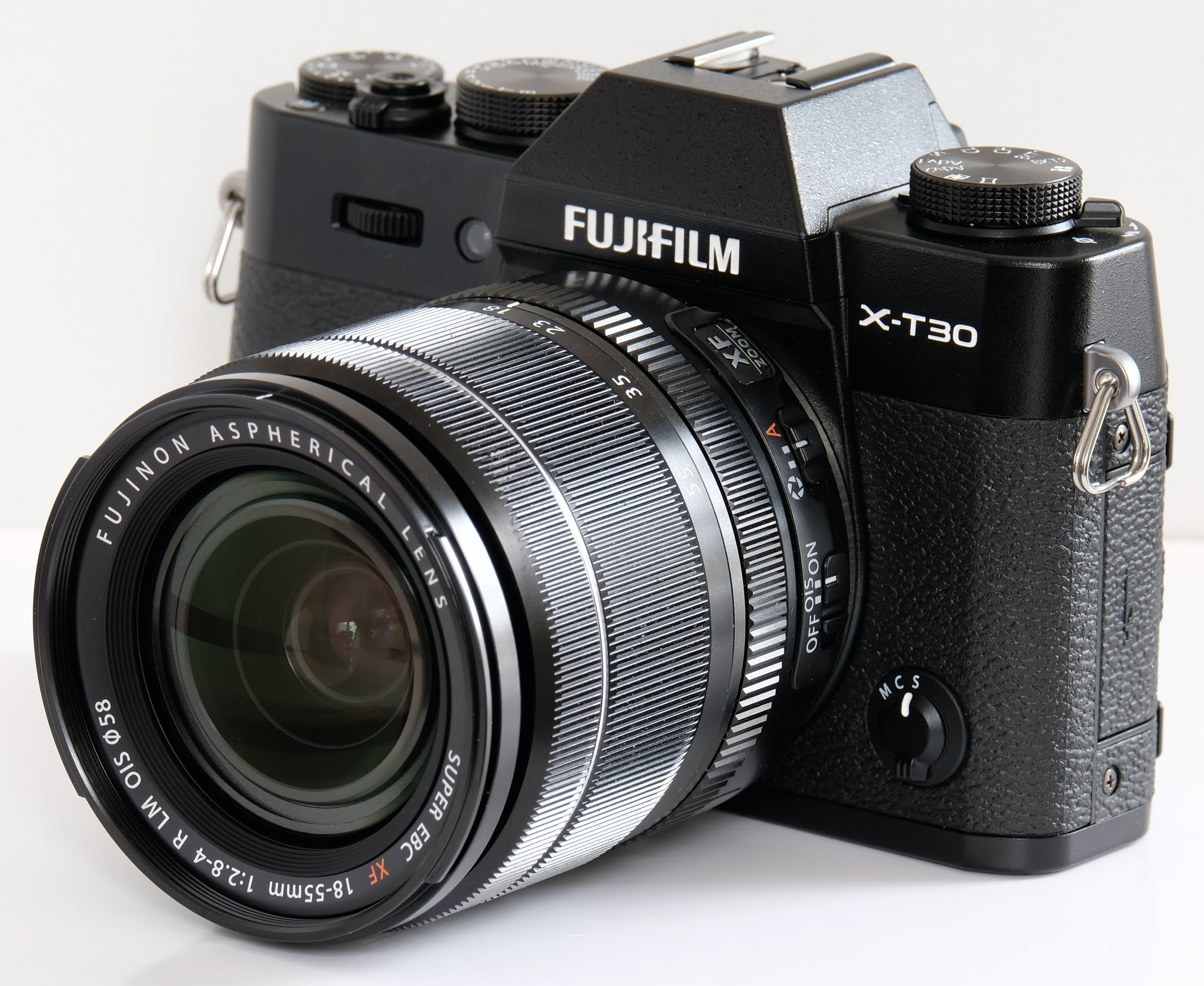
X-T10, X-T20 ... and now the Fujifilm X-T30!


"Can't stop this thing we started!" (dixit Bryan Adams)

I have been testing Fujifilm X-T/two digits models since the beginning of the series. And I remember my skepticism when the Fujifilm Canadian representatives of the time have presented me the first mock-up of the X-T10. But my mind gradually been transformed to a better opinion when I  have really started to work with the Fujifilm X-T10 camera model. And simply because the X-T/2digits are compact, competent and reliable cameras that deliver excellent picture results.

The Fujifilm X-T30 offers essentially the same camera body configuration compare to the preceded ones X-T10, X-T20 although the replacement of the previous D-Pad by a joystick of the back side of the camera requires a certain user's adaptation. For the rest, similarities with the X-T10 or X-T20 are including the use of the same battery packs, external flashes, optional hand grip and accessories and, accordingly, the same X-mount lens system. Fujifilm have not incorporated an internal camera body image stabilization system (reserved for the newest X-S10 model). This can be partially compensated by selecting Fuji X-mount lenses that have already an optical image stabilization (IOS) functionality.


Many changes done on the newest Fujifilm X-T30 are less apparent but can be decisive regarding the video use of the model but as usual, since I am not a videographer, this small review will voluntary not mentioning these X-T30 abilities. I have no doubt that others internet camera reviewers will give all that interesting inputs about the video capacities of the Fujifilm X-T30.

With its 26MP image sensor, the Fujifilm will equal the same picture quality standard as its big brothers, the X-T3 and X-T4 models. The complete film simulation selection is available on the X-T30 as for the advanced optional picture effects. You can choose to set a specific ISO sensor sensibility or let the camera do it (with the possibility to configure its ISO upper limit and its minimum shutter speed bias). The autofocus system has been also upgraded to be more reactive for action situations or spontaneous picture taking moments.

For the rest, you can easily refer to my longer review on the Fujifilm X-T20 camera model which was a classical on its own. The new joystick that is replacing the older D-Pad is operating almost in the same manner it already does on the Fujifilm X-E3 model. The viewfinder and the back-tilting viewing screen are performing with the same definition level, so no surprise there or major upgrading.


Angular body design
Oppose to others design tendency, the Fujifilm X-T30 camera body present a somewhat angular shape that may rebut some people looking for a more comfortable rounded one. The front grip of the X-T30 is minimalist although it can be increased by adding an optional (and costly!) supplemental hand grip. But despite its first look impression, the Fujifilm X-T30 is real compact camera with a good (one hand) handling except may be if you couple it with a larger size or a heavier lens. In that case the optional hand grip will surely help and secure the prehension of the camera/lens combination.


Control dials and push function buttons can be managed with confidence, but their location may ask you some kind of manual adaptation. The on/off switch is surrounding the shutter release button on which a traditional shutter release cable can be screwed in place. The signalization marking of the shutter speed and the drive setting on their respective dials are very explicit by themselves as for the AUTO activating switch.

There is no usual MODE dial on this Fujifilm X-T30 as the camera will automatically switch on aperture priority when you are selecting a specific aperture value on the lens and the same logic will occur when you are choosing a particular shutter speed (shutter speed priority). In the case you are manually setting both the aperture and the shutter speed, the Fujifilm X-T30 will configure itself into the fully manual exposure metering mode with indications of over or under exposure. The usual focus mode selector is available in front of the Fujifilm X-T30 camera body. So, all the possibilities are available concerning the degree of manually controlling the parameters of the X-T30 and that is including the exposure sensibility (through multifunction back or front control dials or via quick (Q) menu). However the Q pushbutton is by far too easily triggered by involuntary pressure of your holding thumb.

The back side of the X-T30 has less push buttons of the previous models (X-T10, X-T20) with the presence of a new joystick. The Fujifilm X-T30 is a very versatile camera and it is almost impossible not to find a way to configure it for every different picture taking situation. The possibilities of the X-T30 should exceed the needs for most photographers (including myself!).

The electronic viewfinder (EVF) is clean, well definite and adjust its information presentation to horizontal and vertical framing, a nice Fujifilm feature. The tilting viewing back-screen can work perfectly into waist-level or tripod photo taking requirement as for "over the crowd" viewing contexts. The informative data are complete, and presentation can be customized.


The battery/memory card access is located into the bottom of the camera which is not a perfect solution for the SD card access. You may also have noticed the tripod screw socket is not centered with the lens mount which is not an optimal solution. A small retractable flash unit is incorporated into the Fujifilm X-T30 camera body and can be assimilated as a "fill-in" or as an emergency flash. There is a hot shot socket with dedicated contacts for an optional external (Fuji compatible) electronic flash unit.

The "Preset" advantage (a vintage way to photograph!)
Having the possibility to preset your basic parameters without looking to your viewfinder or your Live view back screen such as in selecting your shutter speed or your lens aperture can be very handy for photographers that want to keep their fully attention to not only their main subject but also to the context surrounding it. This is particularly true during a photo reportage. As an ex-photo-reporter, I can testify that presetting your camera can save your working day and ... your butt! Today the technological automation advantage must not let you forget the importance to select specific parameters i.e. shutter speed or lens aperture for example) to get a decent picture.

The Fujifilm X-T30 has maintained the traditional control dials for shutter speed and exposure correction (but yes, the ISO analog selector is absent although you can use a multifunctional control dial in front or back of the camera to do so). So, the transition from older analog-film cameras is fairly easy and the reverse is also true especially in regard for the increase of interest for traditional film still photography.


Live Experiences with the X-T30

I have frequently travelled during my modest life and during all these years, I have developed a special attraction for more compact cameras of any kind because of their easiest in bringing them and their obvious discrete presence. As an interchangeable lens camera (ILC) the Fujifilm X-T30 is remarkable compact size photo device. Couple with smaller lenses it permits you to be less intrusive facing different subjects and allow you to realize more spontaneous pictures. In that sense the Fujifilm X-T30 model replicate the good experiences I have with the previous Fujifilm X-T20 and X-T10 models.

If you are looking for a good picture taking companion that is not proclaiming your presence among your surroundings, the Fujifilm X-T30 could be a logic choice. It is not a heavy and big sized photographic device and couple with a more compact lens it could be a very productive and creative photo option. Although nothing is really perfect and may need a certain learning curve, the results you can obtain with the X-T30 may fulfill and more your photographic goals.


As we are facing the new social challenges generated by the actual sanitary Mondial situation with the Covid-19 limitations, it is paramount to be able to continue documenting our surrounding work as a present testimony of our world. Future generations have to understand the present challenges. I can only emphasize the photographer responsibility to record and preserve these special times.

I can only hope that Fujifilm will preserve the X-T/2 digits series heritage with further similar models. Not that I want to depreciate the X-S series models, but it remains part of the very original Fujifilm heritage to be still offering models with more analog interface as it was with the X-T1 and X-T10 first models.

23 juin 2021

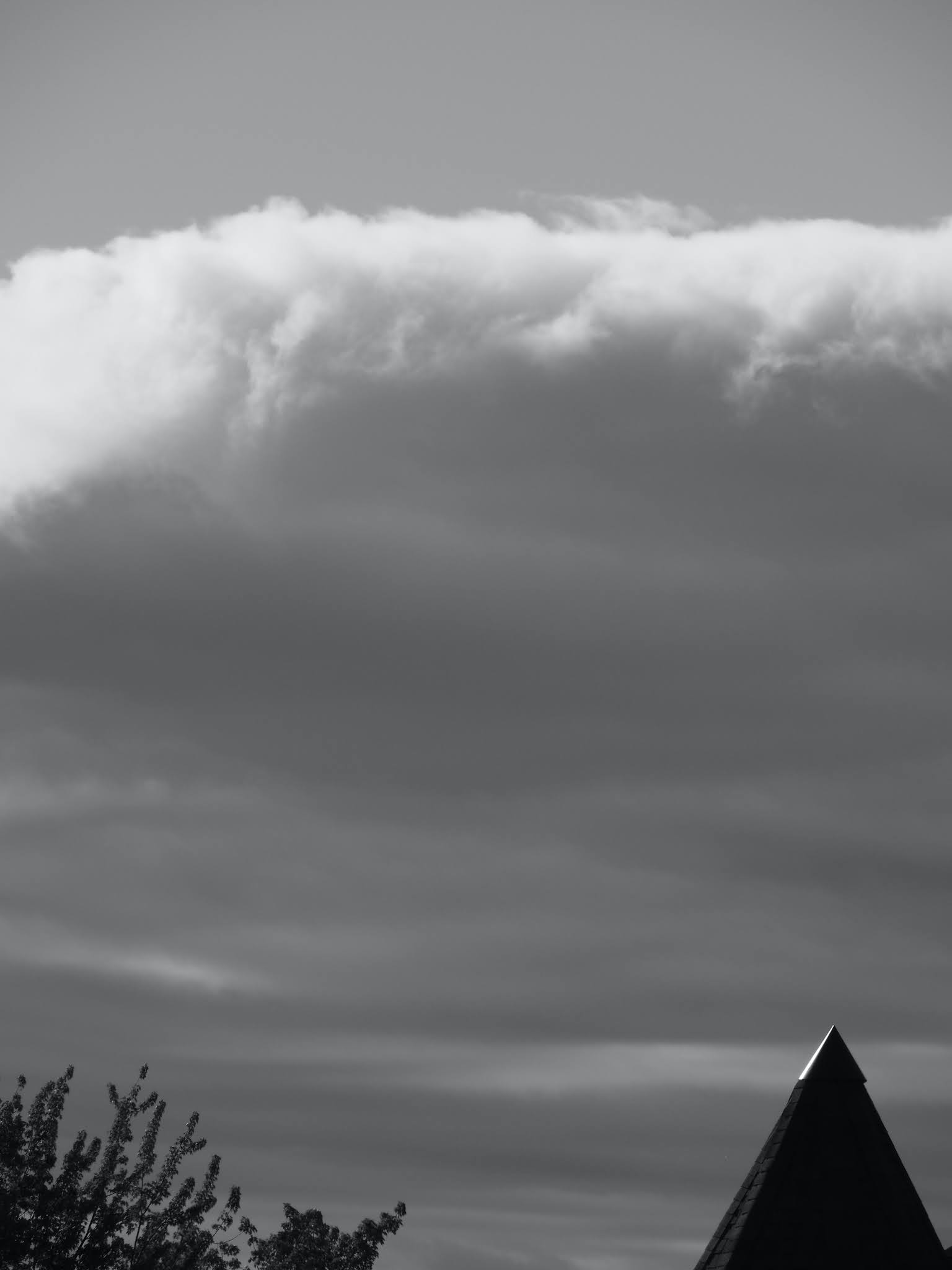
Sky flocks


Additional notes about the Olympus M.Zuiko ED 40-150mm F2.8 Pro zoom lens

That is an often none fully admitted but finally true that better optics are more expensive and the Olympus M.Zuiko ED 40-150mm F2.8 Pro zoom lens is reflecting exactly that. It is not that you cannot take good pictures from cheaper lenses because it can certainly be done but each time you must be aware to be very on the edge from your final image cropping and your exposure setting. With less expensive lenses your latitude is narrowed. With "Pro" or "Premium" optics, you are discovering the comfort to able to perform a more elaborated editing without too much quality dropping.

Along the road of using Olympus Pro and Premium lens models, I cannot prevent myself to be every time amaze by the outstanding optical performances of the Olympus ED 40-150mm F2.8 Pro.

But let be honest about the Olympus ED 40-150mm F2,8 Pro zoom lens, it is a big piece of glass by the Micro Four Third (MFT) sensor format standards. In fact, al "Pro" optic has that tendency to be large and weighty and, in that case, not far from 2 lbs. (880g). With the lens hood attached and extended, the length of the zoom lens is reaching 22cm (more than 8 inches). So yes, it is definitively not a compact lens.

Magnification is ranging from 1.6 to 6X compare to a MFT "normal" lens (25mm) which can be considerate as standard for a modern varifocal telephoto optic. Among the advantages of using the Olympus Ed 40-150mm F2.8 Pro there are a snappy autofocus reactivity, rather large and well damped zoom (focal) and manual focus (with clutch optional) rings, good handling, a reliable tripod accessory ring removable and an ingenious big lens hood.

You can consult my complete review of this marvelous optic here


19 juin 2021

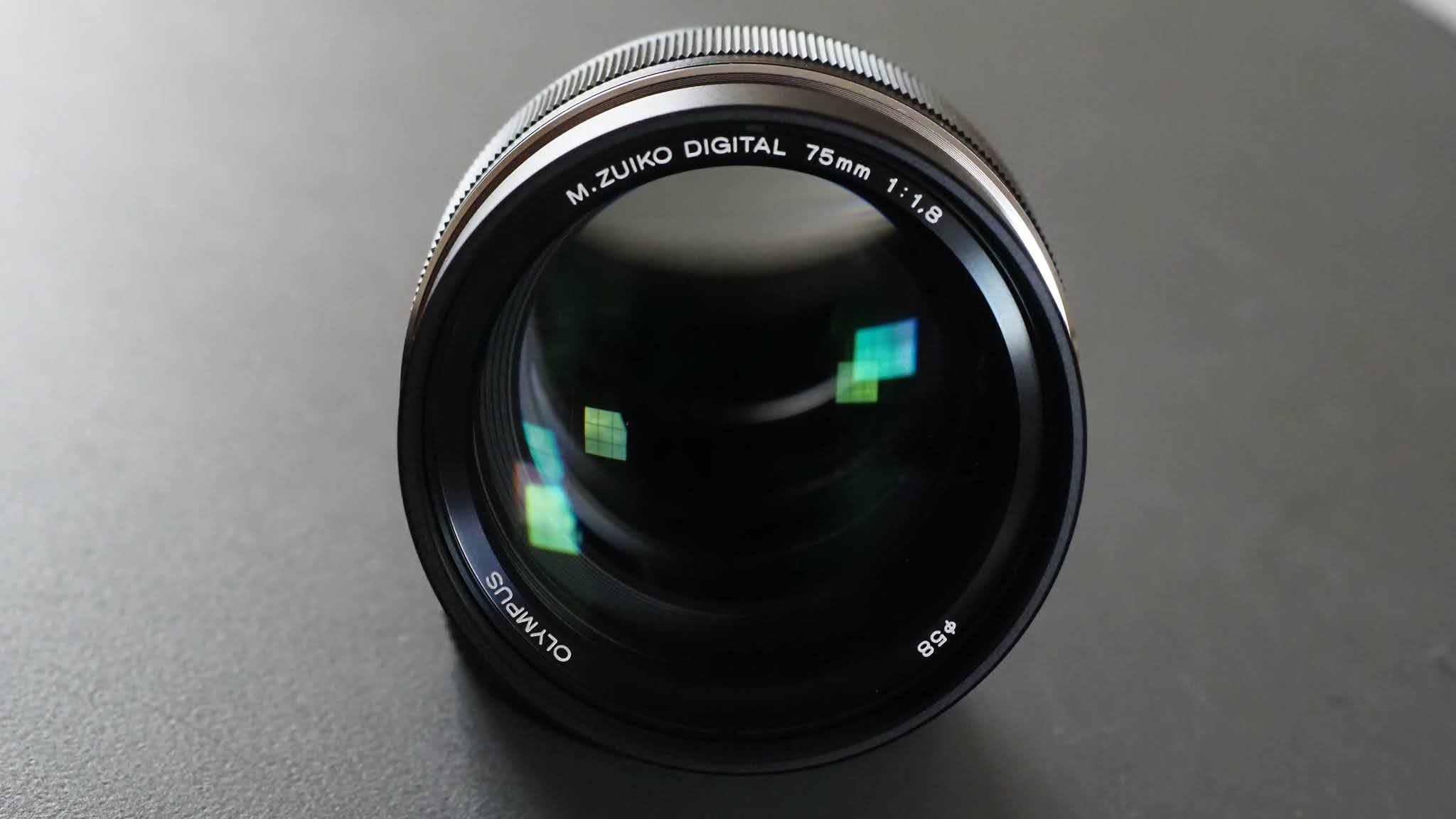
The "luminous" Olympus M.Zuiko ED 75mm F1.8 Premium telephoto lens


B
ecoming a cult or legend is not an easy task in this always changing world and especially into the photographic gear domain. But oddly, the Olympus M.Zuiko ED 75mm F1.8 Premium lens have gotten this pinnacle status almost right from its market introduction in 2012. Many factors have contributed to this phenomenon like its exceptional construction quality and its outstanding picture abilities.


Telephoto lenses with approximative 3X magnification are not new in the photographic gear world. Let's remember alone the 135mm focal length very popular among the 35mm film photographers. Many were sheering this telephoto lens category as the true "portrait" optic. This past heritage is openly present and assumed by the Olympus ED 75mm. Its maximum aperture of F1.8 replicate in term of deep of field the F3.5 aperture seen on many 135mm lens models (in 35mm analog format).

The "made in Japan" Olympus M.Zuiko ED 75mm F1.8 is rather compact lens weighing little over 300g (305). With a physical length of less than 7 cm and a diameter of less than 6.5 cm, the telephoto optic is doted of a filter accessory size of 58mm. A large focusing ring offers a light turning resistance for precise manual focusing but no auto/manual focus clutch* is present as for many Olympus Pro lenses. No accessory lens hood is included into the manufacturer box and it is rather expensive optional accessory to add.

Mid-sized Micro Four Third (MFT) camera models or larger ones are better to select if you are looking for a more equilibrated camera body-lens combination. With an heavier lens like the Olympus ED 75mm F1.8 Premium, your left hand will be more in demand to serve as a stabilization anchor which is always a good habit to do under many photographic situations.


What we are asking from a telephoto lens such as the Olympus ED 75mm F1.8 Premium is to be a "discriminate" optic that privilege the main subject extracted from its foreground and background. And we ask also to get a smooth transition between the focused points and the blurred ones (Bokeh) which is the case for the Olympus ED 75mm F1.8 Premium. When I have first tested it five years ago, I was impressed by its ability to compress the main subject and maintaining a certain deep of field marge for preserving a focusing range factor considering the dimensional volume of the main subject (Architectural, close-up, etc.)

The Olympus M.Zuiko ED 75mm F1.8 Premium lens is certainly a good candidate to do action photography providing its large maximum aperture. The question is more about its focusing speed ability. Although it depends also on which camera model it has been coupled, the overall answer stays favorable especially if you are located near the subject target considering its modest 3X magnification ratio. As usual, the erratic movement trajectories are often challenging the autofocus tracking reliability.

The Olympus ED 75mm F1.8 Premium lens has been for a while one of the most reputable flagship optic of M.Zuiko lens series, before the introduction of the Pro lens series. The absence of the autofocus-manual clutch system optionality* and of the weather resistant characteristic prevent the ED 75mm to be classified as a "pro" lens but, in fact, many professional photographers have adopted it anyway for portrait and even fashion subject purposes.


Details from the above picture

The picture quality output of the Olympus M.Zuiko ED 75mm F1.8 Premium is unquestionable and simply outstanding. This lens can be highlighted for its fine resolution and its genuine color rendition as for its monochrome tonal distribution.

One of the major handling differences between focal fix lenses such as the Olympus ED 75mm F1.8 and the now very popular zoom (vari-focal length) lenses, is a question of mobility from the photographer point of view. You must do framing adjustment by physically moving yourself instead of simply zoom in or zoom out your subject with the vari-focal optic. By doing so (moving yourself) it can also change the contextual perspective of your entire picture. In one word, the focal fix lengths are more demanding optics, but they are forcing the photographer to be more careful and be less frenetic trigger.

A telephoto lens is often the second optic you will be tempted to get after the one you have already first combined with your camera body. The Olympus M.Zuiko lens line-up offers us a good selection of different zoom or fix focal telephoto lenses. Among them, there are the 45mm F1.8 Premium an affordable small, short telephoto (1.8X) with superb resolution and the more sumptuous ED 75mm F.8 Premium with its higher magnification ratio (3X). Any of these two Olympus lens models among others will be a good creative lens tool that have a large maximum aperture but the ED 75mm F1.8 Premium is certainly the finest one in term of picture definition. And even at its high price level, it won't disappoint you in any ways.


* Which can be compensated by configuring the camera to the Autofocus + Manual setting optionality.


04 juin 2021

e-Konik-skies


Geometric can be a photographic feast for the pleasure to experiment. If you add the architectural value of those drawing lines marriage, you obtain a never ending graphic fascination!


01 juin 2021

A photographic interest


 Videography is everywhere and people love to follow the animated pictures and listening the sound variations of any kind. Static imagery seems to be relegated to an illustrating status for operating manual and bestseller books (caricatural speaking!). But there is always somehow, somewhere, some among us that are still preferring to do photography and share their pictures around the Web planet. And maybe because photography appears to be more reliable to prolong our subject and context impression, a kind of a more durable visual memory.

Everything is changing and everything stay the same! It is a known contradiction throughout our small human history. The actual pandemic frenzy situation is no exception of this affirmation. Although some would like to turn back to the past "before Covid-19" context, there is no way to return in this world of frantic individual and unconscious consumerism with absolute physical security. In fact, it has been never the case but to be more conscious of it has been, may be, one of the true legacies of the present pandemic crisis.


In the history of traditional photography, many had predicted death of the medium and its eventual replacement by all kind of cinematographic counterparts. But a "stop" and registered picture has nothing to do with a constant flux of imagery. It is a rare testimony of a freeze moment of this universe that can be observed, analyzed and compared to others and even criticized by the looker. In fact, each picture has its own history to discover and to share.

It often begins by choosing an interesting angle of view for your intended photographic subject. Already a discriminating process have started in your mind. Photography is not a fully automated and spontaneous creative way to register imagery. It is a very selective medium due not only to its technical limitations but mainly by the photographer intervention in using it. The act and the art of photography are very subjective ones. But the absence of objectivity does not necessarily mean the full vacuum of an authenticity research. It is up of its author to cope with his/her own integrity about the subject treatment.


Many photographers are intuitive ones (like me). It is not to say that the technical photographic point of view is not important, but they are simply prioritizing the subject before the medium. Or better, they subjugate the medium to the subject. Cameras are beautiful and complex imagery tool which is full of already configured (programmed) behavior by their manufacturers and they represent in a certain way a specific vision of this world. As a creator, you may have to "overpass" these technical ways of producing pictures and try to get a more original point of view of your subject.

Still imaging or classic photography is, even today, a perfect visual art medium to express our concerns about our changing world as for others art medias such as painting, sculpture or book writing. And there is always a photographic interest to do so...

25 mai 2021

More bird snapshots with the Olympus M.Zuiko ED 75-300mm F4.8-6.7 II super zoom lens.


When it comes time to do birds photography, all eyes are turn on the telephoto lens model you are choosing to realize your pictures. And it is also obvious that such an optic has to give you at least a increase magnification of 10 times compare to your normal eyesight. That means for the Micro Four Third format something like a 250mm (10 X 25mm). But you can manage to install a more bird friendly and nearer (!) environment, with some bird tables (feeders) or baths that will allow you to be nearer of them as it is my case with the advantage to get a more predictable arrangement and a better rate of success.

Following my introduction of the use of the Olympus M.Zuiko ED 75-300mm F4.8-6.7 II telephoto zoom lens, it is my pleasure to offer you other interesting results in bird photography.


Bird No.1: White-breasted nuthatch; Bird No.2: American Goldfinch (Male); Bird No.3 Blue Jay; Bird No.4: Evening grosbeak(Female)

Photos Daniel M

19 mai 2021

The Olympus M.Zuiko ED 75-300mm F4.8-6.7 II: The Tele-genik Photo Lens!


It is a kind of bizarre to be a faithful user of the Micro Four Third image sensor format (MFT) with the strong will to have the most compact camera body-lens combination and finally choose a super telephoto zoom that the final physical length extension remind the days of the 35mm film-analog era and their big bazooka telephoto optics.

The Olympus M.Zuiko ED 75-300mm F4.8-6.7 II zoom lens is a beast compare to the usual standard zoom lenses associated with the MFT format system (let’s put the Pro optic line-up aside in that case) which are presented into a small-sized dimensions. But, in fact, the Olympus ED 75-300mm II is real compact tele-zoom lens considering its high magnification, from 3X to 12X compare to the standard focal length in MFT format (25mm). To get there, the "made in Japan" optic is doted of a small maximum variable aperture of F4.8 to F6.7 which is the slowest maximum aperture for a telephoto lens that I have ever own! The front filter accessory diameter is 58mm and the lens weight is only 423g.


A large focal length control ring with a good resistance when turning it allows the zoom framing adjustment. The focusing ring for its part is small and offers no real resistance with a "free" rolling characteristic and its reactivity is, in my sense, too much slow for changing the focusing point. Coupled with a compact Micro Four Third camera body, your left hand will support mainly the weight of the lens-body combination as it was the case during the past age of the 35mm analog-film era. There may be a bit an adaptation to do here if you are accustomed to use smaller lenses.

With a modest variable maximum aperture such as the Olympus ED 75-300mm II have, we can say that you have a good safety in term of deep of field for focusing your subject which a good thing when you are targeting fast moving subjects such as animals or birds for example. Foreground and background have a pleasant defocusing degradation (Bokeh). The Olympus ED 75-300mm II can be also an interesting optic to do portrait assuming that your distance between you and your subject will be further than the usual way to do this kind of photographic project.

A long minimal focusing distance of almost 3 feet (0,9 m) is characterizing the Olympus ED 75-300mm II but this is not preventing you to do picture of smaller objects. In any case, this kind of distance allow you to not disturb the subject, its spatial arrangement and its light distribution.


Stabilization is a must!
At first, telephoto lenses can be hard to get satisfactory picture results. Partly because of the necessity to be stable when holding the camera boy-lens combination especially considering the greater magnification proposed by any tele-lens. Internal camera sensor stabilization (IBIS) is a direct answer to this problem although some other lens model offers an optical stabilization (which proclaim to be more efficient for super telephoto lenses).

There is also the haze (air) effect that is more evident with the compression perspective generated by telephoto lenses. By configuring certain picture taking factors such as the exposure and the contrast, or by a post-editing fine tuning, you can counteract this inevitable fact of life.

Check your shutter speed and follow the subject travel (Panning). 
Because of its seducing high magnification, the Olympus D 75-300mm II is an easy pick to isolate your subject from its surrounding but there is a catch with such long telephoto lenses. Even with a good camera sensor stabilization system, you may have to select a faster shutter speedway be at least equal to the focal length as we do during the film analog era. In doing so, you will probably open your telephoto optic to its maximum aperture and observe a very shallow deep of field. Trying to photograph moving subjects can be another kind of challenge because of the limited maximum aperture of the Olympus ED 75-300mm II. Panning your main subject, the same direction of its movement travel can be an answer but it requires a good knowledge of the subject movement behavior, practice of the technique, persistence and ... some luck of your side!


Tripod and monopod limitations.
The Olympus ED 75-300mm II is not really a tripod (or monopod) intended lens. Although it is possible to secure your camera body with such accessories, the follow-up of your main subject can be awkward and the none-equilibrated camera-lens combination might stress your camera tripod base too much in certain case. So, you may adapt the way you are holding the camera-lens combo by using the palm your left hand as a plateau and your elbow can lean on a more stable base. In the past, the bean bags were very popular among photographers at a time that the "pro" telephoto lenses have not any provision to be screw alone on a tripod (such as the Olympus ED 40-150mm F2.8 Pro has).


The Olympus ED 75-300mm II is surely a real birder optic considering its superlative magnification. That goes also for the animal photographers. If you are using a good picture taking technique, the results can be outstanding (in regard of the price level of this lens model). If you like to use super zoom compact camera models with fix lens, the quality gain difference will be very significant.

And yes, you can do portrait with the Olympus ED 75-300mm II providing you got the space you do it properly and that your subject doesn't need constant coaching.

If you are a Micro Four Third format photographer and you are using an Olympus camera model*, the Olympus ED 75-300mm II can be a valuable long telephoto optic solution. If you like to be on the move without transporting large and heavy photo gear which is, in a way, the basic essence of the MFT format, the Olympus ED 75-300mm II merits a good consideration. Its design limitations (small maximum aperture, no tripod collar provision, loose focusing ring) are compensated by its optical performances and to get marginally better you will have to spend a lot of additional money on your budget.

The more you will experiment the Olympus ED 75-300mm II, the better you will appreciate it for its long telephoto perspective. By using a good picture taking technique, this tele-genik photo lens will seduce you further than you can think of.


* The same logic can be applied for the Panasonic Lumix G Vario 100-300mm F4-5.6 II lens for the MFT Panasonic Lumix camera models. See this previous post.

11 mai 2021

The Olympus M. Zuiko ED 9-18mm F4-5.6: the pocket super wide zoom!


The Olympus M.Zuiko ED 9-18mm F4-5.6 zoom lens is a small optical elf into the M.Zuiko lens line-up. Considering its focal length latitude, it is so compact that many won't regard it seriously as a true super wide angle zoom lens. But it is a such optic despite its very modest maximum variable aperture of F4-5.6. Its angle of view ranges from 62 to 100 degrees which certainly classify the 9-18mm as a real practical wide-angle lens. Weighing only 155g and with a front lens filter diameter of 52mm, its compactness is obvious. Its polymer construction can be deceptive and the M.Zuiko ED 9-18mm is part of the very first Olympus Micro Four Third (MFT) lens series introduced more than twelve years ago!

The M.Zuiko ED 9-18mm lens is also a strange fellow optic by today's standards. It is a retractable lens (a very old feature on past lenses of the last century) with a locking focal length stop. After its "opening", the lens will physically extend by more than one third compare to its retracted rest position. Thankfully, the lens is doted of a metal rear mount. There is a provision for a dedicated bayonet mounted lens hood, but no lens hood is included with the lens (and so, you have to buy it separately).


After all these material considerations, we can concentrate how the Olympus M.Zuiko ED 9-18mm F4-5.6 will perform optically and how it handles on the field. It is not a "swiss knife" optic that will suit every photographic subjects or contexts and that it could be enough versatile to be a one lens option except if it corresponds to your specific creative vision of this world. Moreover, it is a more difficult lens to apprehend because of its exaggerated perspective it generates compare to our usual eyesight. At the 18mm focal length, it can be used as a moderate semi-wide angle lens which is very interesting if you are working into tight urban or interior areas and want to get more latitude into your subject cropping.

At 9mm focal length setting (which is one of the main reasons you may have bought the Olympus ED 9-18mm zoom lens), the Olympus super wide zoom lens is really a "proximity" optic offering a very large angle of view (100 degrees) that allows you to create beautiful contextual spatial picture. You can explore many architectural designs or environmental graphic arrangements. You can also be near if not in contact with people (when the situation doesn't have any pandemic preoccupation that are preventing proximity) providing that some facial deformations will be tolerated or simply avoided.

The very modest maximum variable aperture of the Olympus ED 9-18mm which is ranging from F4 at 9mm focal setting up to F5.6 at 18mm and will give you a safety marge of deep of field for focusing your main subject but the price to pay is a less lens ability to subtract this very subject from the foreground and the background. Considering that most of my privileged subjects are architectural, design or spatial arrangements, a larger deep of field is becoming an advantage but that can be different for other photographers.


As I have already mentioned, the Olympus ED 9-18mm lens can be difficult to apprehend first and some will be rapidly discouraged to use it in that special perspective. A special attention to the foreground as a participating part of your main subject or your complete picture context can be a key of success when a wide-angle lens view such as the Olympus ED 9-18mm is selected. The position of the photographer can be also a strong factor to get pleasant results. Although every "zoom" lens are reframing optics, the discriminating effect is harder to conciliate with the inclusion or exclusion of the foreground.


When you are setting a longer focal length and especially starting from the 12mm setting, the Olympus ED 9-18mm is acting more as a moderate wide-angle lens up to its 18mm position which is almost a normal angle of view (62 degrees). At this point, the optic proves to be enough versatile to be keep on the camera for a complete journey venture providing you don’t want to be more discriminate or prefer to use a real telephoto optic. If you have the chance to work simultaneity with two camera bodies, the Olympus ED 9-18mm can be easily your first or second first chosen lens of the day. It can be also a very good "interior" lens if you accept to parameter your camera with a higher ISO or leave it on its automated ISO selection. (If you choose to light your subject with an electronic flash, be sure that its coverage angle will meet the one of the focal lengths selected on the zoom lens in order to get an even light distribution).


Depending on your picture taking position, it is easy to register converging and undesirable graphic lines. That can be totally or partly corrected by activating the Keystone functionality (which is acting as an optical electronic Tilt-Shit) present in many different Olympus camera models. This handy program permits you to re-establish parallelism to the vertical and horizontal lines. By using the Keystone correction, you must be aware that your angle of view will be reduced, and the definition of your picture may be altered in a certain degree but it worth the try and the experimentation.

What I am missing the most after more than one pandemic year (2020-2021) is the possibility to travel even locally to explore and experiment new photographic subjects in different contexts. A lens like the Olympus ED 9-18mm is the perfect tool to do so if you are interested to create images with story of people, of things, of mood and atmosphere. Micro Four Third format cameras and lenses can be awesome daily companions to do so because of their compact presentation and their nonintrusive factor to the subject. I hope we can be able soon to use again the Olympus ED 9-18mm at its full potential.

The Olympus M.Zuiko ED 9-18mm F4-5.6 super wide zoom lens is not an optic that everybody will appreciate, of course, because of its difficulty to apprehend easily and many will avoid its exaggerated perspective that include too many aspects of the subject with a spatial obvious extension. But if you like to do wide angle photography, the Olympus ED 9-18mm could a competent and valuable compact tool available at a more accessible price level.


10 mai 2021

The glass edge


Life is a very fragile thing
Fragile as the edge of a glass
And glass reflect this perfect fragility