26 septembre 2022

You cannot buy creativity!

"Go your own way" - Fleetwood Mac

 It seems that everybody is looking in these strange days to buy something if not somebody. Fame is now an highly materialistic think and money can buy anything and everybody. We live into the individualist games of the more aggressive and egocentric that are now the emperor of this crushing human world. To best the best, suffice to grab your chance over the unlucky, the less advised or the softy ones.

You can buy beauty, you can buy fame, you can buy likes, you can buy anything but... can you buy sensibility, can you buy cleverness, can you buy creativity? Sorry those last ones are not available over the Web by simply clicking your credit card. Sure electronic brains seem to replace our present deficient mind but is it creativity or is it simply preprogrammed existents algorithms? Is it human or is it simply machine extrapolations?


We don't want to reverse the material evolution surrounding our fragile life and its fantasy world. No. we understand that we are also a productive part of this evolution. But we are still asking for some originality, for an un-standard vision, for something provocative that will push higher in the scale of universe over our ephemeral physical tiny lifespan. Yes, trying to be different, to look over the fence of conformity, can be very insecure but it can be also very exciting at the same.

No you cannot buy creativity! You have to earn it by yourself and, I know, that each of us can do it, it is only a matter of self-confidence. Not just try it but do it, you deserve it.

Photos Daniel M: Olympus OM-D E-M5 III / M.Zuiko ED 14-150mm II

19 septembre 2022

Low light !


 When we speak about available light, many times we are referring to low light situations. Capturing these darker moments is not an easy task for any photographic classic or modern devices. It stretches them to their technical limits to get an acceptable image rendering. The "quality" of light is often associated with "quantity" of it meaning it add a lot of density of the picture definition and more density can help in image post-editing.

Be able to record low light contexts can be very rewarding because these pictures add a lot to the mystery and the magical of the subject. Intimate, strange, scary, ethereal, all these qualifiers can be evoked to describe a low light photograph. Recent digital camera models are now better equipped to record those special contexts. They have access to higher image sensor light sensitivities (ISO levels) that we had never expected to be available and sufficiently workable during the traditional analog-film era. Now it is manageable as long you take a minimal special care in holding your camera and be aware about the blur induced by the subject movement if it happens.


A special care could be also taken by the photographer not to destroy the "scarce" light distribution that definite the low light context of the subject. For most of the time the details of it can be more suggested than fully definite like in the daylight or well-lit contexts. Experimentations can help by bracketing your exposure to get a range of different light interpretations for example. Digital photography permits you these different image essays at low cost and with easy executions.

Many photographers are easily discouraged by low light situations, but they are avoiding a lot of original opportunities to get special pictures and it is a pity because these image contexts are often interesting more that their full lit counterparts. There is no reason not to try and not to succeed today in that very peculiar photographic task.


A "Low-Light" Setting Memo:
Hold steadily the camera or use a fixed stand (tripod, wall, floor, table, etc.); Pay attention to your (slow) shutter speed; Be aware of your focus point especially with a shallowed deep of field when using a larger lens aperture; Note your image sensor sensibility (ISO) that can influence your image quality (by definition increase image noise presence); Have a good comprehension of the light distribution of your subject that will compose your final picture; Don't hesitate to review the taken picture and do it again if the first result doesn't please you.


Photos Daniel M: Olympus OM-D E-M5 III / M.Zuiko ED 14-150mm II / ED 75-300mm II

12 septembre 2022

07 septembre 2022

Other Ormstown-Scapes with the Olympus OM-D E-M5 III & M.Zuiko ED 14-150mm II


The Express 57 incinerated dream.

Not long ago I have proposed a post that give you a short sneak view of a nearby small town, Ormstown, from the place I use to stay in summer. From this quiet countryside and appeasing village, there are the habitual focus points to go like a general store, a bank, two churches, a small school, two taverns and few restaurants or cantines. One of those was the Express 57, renowned for its retro fifteen cachet with full of past of artefacts and with very sympatic owners and team to serve you. Doing a Ormstown photographic essay must require to get some Express 57 clichés which I did without second though.


A week later, the unthinkable happens and during the night, the Express 57 was literally incinerated but their owners who were living on the second floor manage to escape with the aid of the local and courageous fire brigade volunteers. Today The building has been locked up waiting its restauration or simply its demolition and because of its very central location, the place is a constant and inevitable reminder of this drama and its tragic consequences.

Photos Daniel M: Olympus OM-D E-M5 III / M.Zuiko ED 14-150mm II 


01 septembre 2022

September at last!


 We all love the summer season but at the end of it in late September (for the northern hemisphere), the arrival of the roman "seventh" month in Latin (Septembribus) represents the very beginning of the fall season which signify a kind of appeasement from the frenetic heat of the vibrant summer. Bathing suits, for those who still wear one, will be stored in the drawer until next year or for all those light clothes and sandals.

But what is all about the autumn period may be the multiple and rapid changes of temperatures and landscapes all around us. Even nature have a different odor spreading from all these dying leaves on the ground. For those who can spent time to observe (instead of inside working!), the fall season can be experimented in many ways over a short period of time. Even the colder temperature may be seen as a relief from the past hot summer.


September can be also a nice break in life to do some introspection about the already travelled road and about the one which coming ahead. The fast pace of summer leave place for more relaxing thoughts. Today more than ever, we need to have access to some king of regenerating pauses and get a more philosophical point of view in life in general.

In photography, by opposition, the September month use to be a kind of “back to school” period with numerous outings, exhibits, courses, various club activities, etc. However, the Web expansion, the social media and surely the pandemic restrictions have partly changed the photographic landscape to a more individual approach that have limited the mobility and the gathering possibilities for all the photographic passionate people.


The colors of the Autumn season have been always a very inspiring and productive photographic subject. The green landscape leave place to a kaleidoscope of warmer colors and tints. The sun is lower to the horizon that create more interesting tridimensional effects even in considering the lowlight challenges that are facing the photographers. If you intend to work in more adverse conditions (rain, wind, cold), photo devices that are weather-resistant (WR) got the preference over less protected piece of equipment.

During the fall season, you can expect less crowed urban areas giving you a real chance to emphasize the architectural aspects of your subjects. I have also found that people are often less annoyed by photographers than during the summer season. It is an excellent time to experiment and to document the very near surroundings that we tend to neglect otherwise.

Forever the reasons we may evoke to underline it, the return of the month of September means for many of us an important departure to new photographic adventures that we are pleased to enjoy fully.

Photos Daniel M: Olympus OM-D E-M5 III / M.Zuiko 14-150mm II ED MSC

29 août 2022

Why coming back to bigger cameras? (because, for many, it seems to be the Graal..)


 Are you a "real" photographer if you are persisting to use small compact (digital) cameras? (As I was asking to myself and my conscientious reasoning mind). The bigger things and the larger ones tend to impress people and in doing so they put pressure on us to follow that inflated trend which seems to never be finished. In photographic gear, we have seen the recent introduction of "pro" (ballooned?) models by several manufacturers (you know already their names!). Let say it right now: I am not impressed and for many obvious reasons. On one side, we cherish the small and readiness of the smartphone, on the other, we are pushing on a pedestal camera models that could be assimilated to the biggest dinosaur ancestors. So, what is the problem here if not one of simply human perceptions and cultural behavior. 

For many users, holding or more precisely, showing a camera appears to be an affirmation gesture and posture rather than an act of photographic creativity. The proclaimed artistic tool can be more assimilated as an expensive and large jewel to show its material health and pretended cleverness. See, "I am a "pro" photographer (in my head more than for my empty pocket that never been filled by earning true photo revenue) and ... to finally stating that there is nothing interesting to photograph here or, on the contrary, I will press the shutter to take thousands of similar pictures (good or not) that nobody will never see or care to see anyway.

On the other hand, there are these dedicated "amateur" photographers (I'm there!) that like to "do pictures and share them" (how silly you are since everything has been already done in photography!). Even for myself that love to try different camera and lens models, my principal interest is in discovering how when I can do interesting pictures from them using their hardware and interface particular interpretation versions. And strangely most people are not fooled by the pretentious self-proclaimed "pro" photographers and are far more concerned by the ones who really take pictures even with very small cameras.

So, what is the argue here in this post, you may ask yourself very legitimately. And you are right because there is not at all! Everybody is allowed to spend their money, their interest, and their effort the personal way they intend to do so, and it is just a personal grumble morning from my not completely awaked mind!

Photo Daniel M: Canon ELPH 330

22 août 2022

Forever Young! (the nostalgic era)

Despite its obvious retro apparence, the Olympus Pen-F is an highly sophisticated digital camera
  that mimic the mechanical photo gear era.

 It is a FB contributor (See the World) Leigh that inspire me to choose that subject about our search for eternal youngness. I must add that Leigh have associated the musical therapy to stay young than ever in our mind and that inspire me that song from Alphaville. With the aging of the occidental population, the nostalgic trend is taking more and more a major part of our mediatic life. All historic eras are intertwined into a past-present-future way of life where history had no really important role to play, we must add. Yes, we celebrate remembering things and people but only to refuge ourselves in our own fixed time capsule-cocoon.

No place for nostalgia when we are looking for new urban spaces to develop!


What can be illustrate this nostalgic trend is certainly all these pictures that are venerating every artifact of the past available. Old houses, old garments, old cars, old cameras, let's name it ad nauseam... But the funny thing about this pseudo-interest, is that on a parallel course, we are destroying about anything including our own planet in the name of consumerism. An odd contradiction but a very human one by nature! Individualism seems to have conduct us to a dead-end issue. Flower power have been replaced by the hatred (and gun) power well illustrated into our libertine "showcase" and our social media fevers.

Forever young is also a dream by itself. The dream that we can stop the effect of time if not reverse it at least in appearance. Sure, every clever person will understand the fallacy of this dream becoming a reality. But again, cleverness is not a very popular quality at this precise moment of humanity. Even many entertaining’s has been confined to auto-repeated stereotypes that are reassuring for the spectators.

There are only the young people that are really young but for these ones, we don't care to listen them and give them a legitimate place for their aspirations and their experimentations. Yes, we, the older ones, are very far from the 1969 Woodstock folly or, are we still there? That is the question, my friends!

Photos Daniel M : Olympus OM-D E-M5 II / M.Zuiko ED 12-40mm F2.8 Pro; Fujifilm X-S10 / Fujinon XF55-200mm R LM OIS

15 août 2022

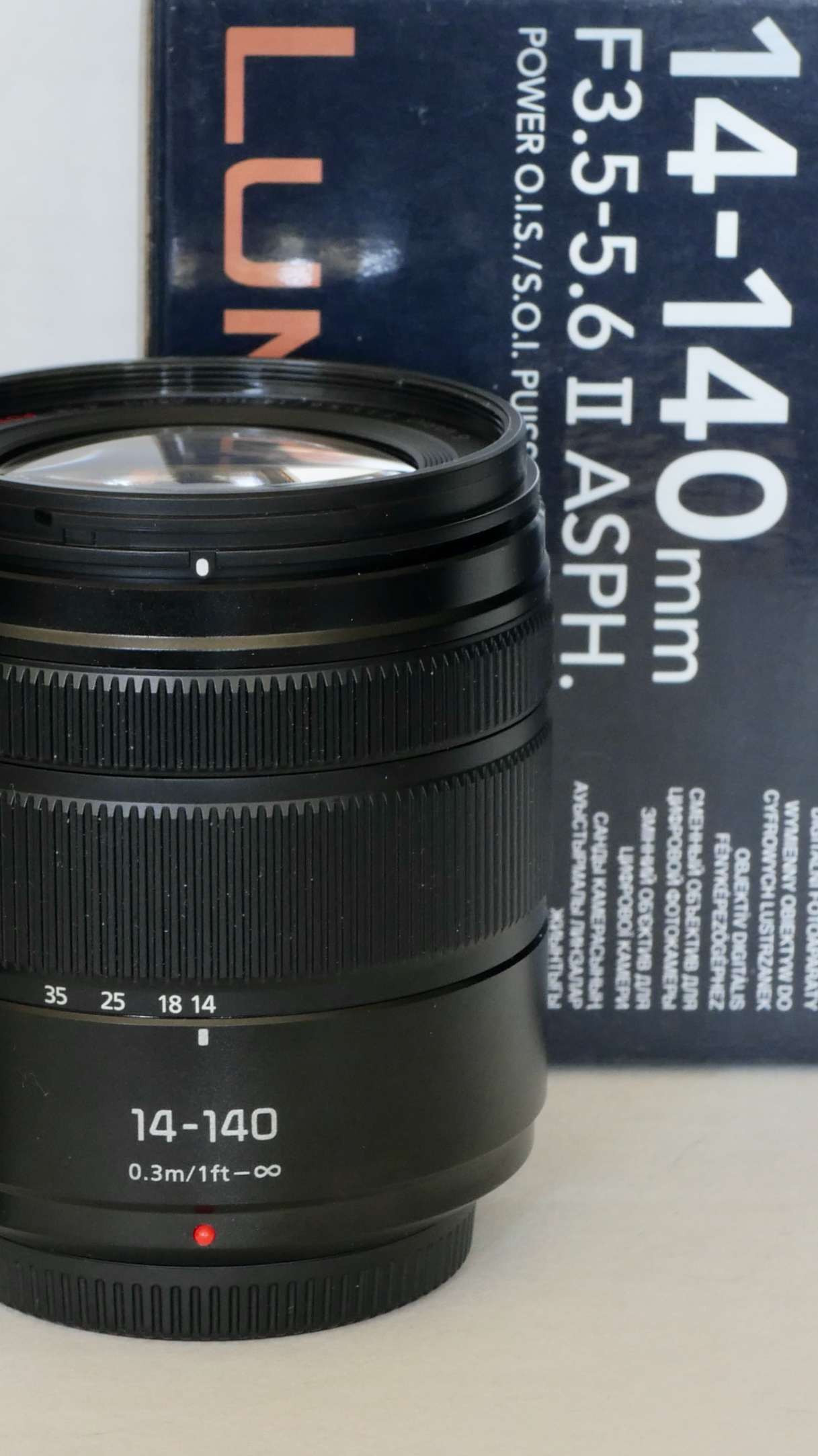
The Panasonic Lumix G Vario 14-140mm F4-5.6 II: The easy MFT out-going optic.


 It was an extended review
of the Lumix G95/90 published by the nomad and Belgium blogger Cynthia Bil that give me the hint to try the versatile “one-in-all” trans-standard Panasonic Lumix G Vario 14-140mm F4-5.6 II (Power OIS). It was clear that Cynthia was relying a lot on the latter to produce her magnificent pictures (see here). For my use and tastes, those long trans-standards optics are almost the perfect camera match although their very modest maximum aperture may ask you to bring with an extra-large aperture small prime lens for specific low light situations or if you are looking for a narrower deep of field effect.

The Lumix G Vario 14-140mm II is a good all-around zoom lens for serious photographers that don’t want to carry a lot of photo equipment and decide which to use and don't want to lose too many opportunities in the process. The key word here is versatility that define the strongest aspect to own an optic of this specific type. In a context of one camera-one lens combination, it may be a winner for many photo enthusiasms. The lens is relatively, small, light, and well-constructed. Two good sized control rings allow the zoom (focal length) and the manual focus (if asked) selections and there is a switch selector to enable or not the lens optical stabilization system (OIS). Filter accessory diameter of 58mm is also very reasonable.

With an optic like the Lumix G Vario 14-140mm II zoom lens, the choice of perspective is yours from a contextual view (wide angle) to a more intimate one (telephoto). You can switch from one angle of view to the other but often you will have already decided which specific (or around) focal length setting you may work in priority. This Lumix optic is not an extreme one for super wide-angle shots or for very long telephoto subjects (which are more specialized subjects to cope with) but it allows much creative picture possibilities in a small and handy package.


According to already mentioned nomad photographer Cynthia Bil, the Lumix G Vario 14-140mm II may be "the" traveler zoom type of lens of preference on the market. These optics are mainly designed for daylight use although it is still possible to get picture from them into more dim light situations using a careful approach of the subject especially in regard of the slower shutter speed or the higher ISO setting you will be asked to select.


The Lumix G Vario 14-140mm II is splash-proof according to Panasonic specifications which is always a nice reassuring feature. It won't prevent you to take precautions when use it in very adverse conditions. The trans-standard zoom lens is easy to manipulate for zooming and focusing purposes. It is a well balance optic that will couple harmoniously with the camera body of your choice even the smaller rangefinder style models such as the Lumix GX series or the Olympus Pen-F or EP ones. The optical stabilization system is also a welcome feature and can be switch off from the lens itself.


Close focusing capacities

The Lumix G Vario 14-140mm II is not and by far a specialized macro lens but it can perform very decently for near subject photography. Its minimum focusing distance varies from 30 cm (wide angle) to 50 cm (telephoto) which is practical for smaller objects as long you are not trying to do try subjects alongside with high reproduction ratio like 1:1 or 2:1.

Picture rendering

The Lumix G Vario 14-140mm II is in a good performer in terms of image definition, contrast, or color rendering although I never do scientific analysis about the optics I use. With large zoom range like this, it is always a greater optical compromise that designers are facing. So, some limitations are inevitable such as a bit of pincushion (narrow silhouette effect) at its telephoto setting and, may be, a glimpse of barrel distortion at the extreme wide-angle position although, frankly, I didn't observe it myself. It is true there are still some rare bad lenses on the market (and not necessarily the cheapest ones!) but this model is certainly not part of that avoidable category.


In brief

In North America, Panasonic doesn't offer the Lumix G Vario 14-140mm F4-5.6 II Power OIS as a kit lens optionality like in Europe for example and frankly, it is a pity. It should be the case as it is already for the excellent Lumix G Vario 12-60mm F3.5-5.6 Power OIS because it responds to a different type of users that privilege the capacity to better isolate their main subjects and are less incline to work with more contextual photographic projects and the Panasonic Lumix G Vario 14-140mm F4-5.6 II Power OIS should be a real handy and competent photographer companion on the run.

Photos Daniel M: Lumix GX9 / G Vario 14-140mm II

11 août 2022

(Color) Violet Times


 The color violet has always inspired us ambiguous feelings. For one it is a very pleasing and appeasing color but at the same time, it is often associated with less desirable human soul states like nostalgia, aging and sometime death and the end of our short or long period of life.

In nature, the color violet is also very rare to observe as for the flower that have given its name to identify it. Because of its obvious rarity, the color violet symbolizes a kind of mystic bridge between life and death, between day and night, between good and bad, etc. It is recent in human history that violet now represent more positive trends in our society, the color of women political emancipation, one of the colors that is part of the gay rainbow symbol, or its more extended use into the fashion industry.

For the photographer, the color violet can be an eye catching one that we tend to isolate from others creating an exquisite and exclusive effect of its own. May be violet is a charming color that is trying to ensorcelled us...

Photo Daniel M: Lumix G95 / G Vario 14-140mm II