30 septembre 2021

The mechanical feeling: further thoughts about the Fujifilm X-Pro2


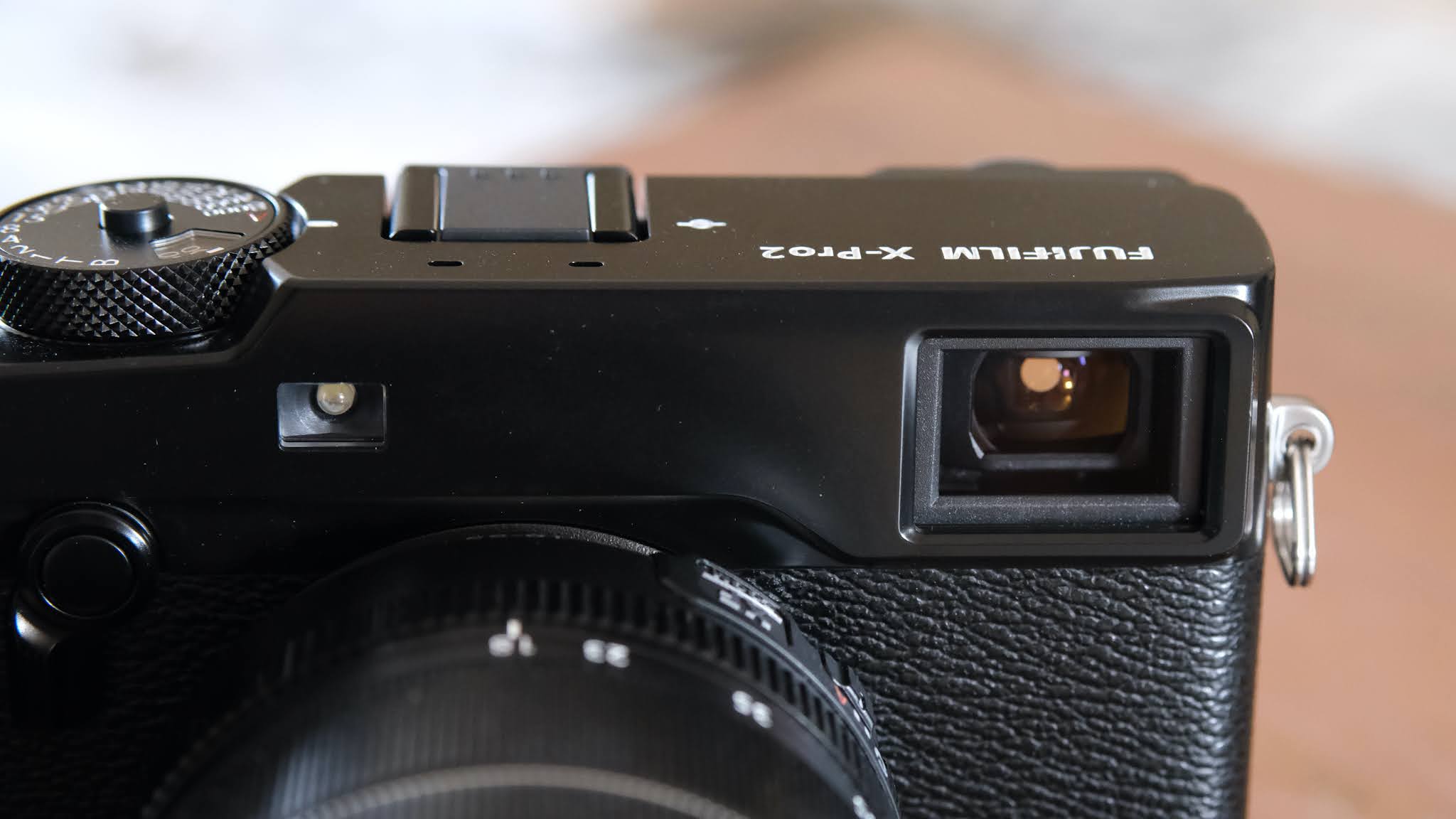
 One of the most distinctive features regarding the use of the Fujifilm X-Pro2 camera model, it is certainly its mechanical style approach which is illustrated by many analog style controls or dials. Many basic functionalities are present such as ISO adjustment, shutter speed and exposure correction dials, aperture and focusing rings, viewfinder option front lever as for auto/manual focus control dial. Even the presence of a shutter release button with a screw-in cable release option is typically a reminiscence of the traditional analog film camera era. 

Analog control dials are usually by stepped one-stop exposure value graded, compared to the more precise stepless electronic adjustment. This can be observed with the shutter speed scale, the aperture ring setting, and the ISO selector. And the convenience to set manually those dials is by forcing the photographer to get a better comprehension of the parameter choices in relation with the subject and its context. Automation often induces a less attention to the effect of the configuration used to photograph. Moreover, it is easier to directly set a particular parameter without working through control dials or buttons that are only reflected by viewfinder/live view info’s.


There is a bit of controversy about the utility of using an optical viewfinder (OVF) knowing that an electronic viewfinder (EVF) will deliver you a good preview of your final picture result. But EVF had proven to be more tiring for the eye of the photographers. An optical viewfinder in these digital days is offering a bit of a relief from all those electronic screens that are a constant part of your life even if you consider the less reliable framing accuracy of some OVF. Using an OVF is also a good way to measure how your film simulation bias are altering the "raw" picture rendering in terms of color, contrast, dynamic, etc. It may force you to reconsider that special image sensor configuration aspect.

Analogue control dials and rings don't mean that there is a mechanical link between them and the material functionality of the camera. For sure we understand most of those adjustment is done electronically ("by wire") and we cannot compare an electronic Fujifilm X-Pro2 to an almost complete mechanical parametric system like the Leica M (if you except the image sensor part).


Many Fujifilm X-Ts, X-H and X-Pro’s products have this mechanical feeling that characterize their series for years now. Beginning in 2012 with the introduction of the original X-Pro1, Fuji is now offering an impressive and expanded line of camera models and various X-mount lenses. Most of them respect the analog style presentation but as time is passing by, some of the most recent Fuji X-mount models such as the X-S10 have now adopted the standard electronic multi-function dial/push-button trend, and there are sensitive economical and industrial good reasons to do so.

If you like to do photograph in a simple manner but you still want to participle directly to the selection of the fundamental picture parameters, the Fujifilm X-Pro2 is certainly a strong camera choice to do so. Even though all automation versatility is present on the X-Pro2 and are reliable if you need to use them, on the other hand, you can configure, one by one, an exposure bias or a focusing zone of your choice that will open a different pictorial interpretation of your subject and its context. There are your image sensor configuration (JPEG film simulation or RAW), your sensor sensibility (ISO quality), your shutter speed (movement control), your lens aperture (deep of field), your focus point and, eventually, your exposure correction. Most of them have a direct control dial access and you can go further with all the menu functionalities or the other function push buttons like the white balance (picture temperature Kelvin control), the autofocus behavior, etc.)

Since the emergence of the digital photography, we have seen the reintroduction of the two camera design historical trends, i.e. the off-lens axis viewfinder (à la rangefinder) and the centered ones (à la single lens reflex or D-SLR). Each school has his/her supporters. Off-lens-axis viewfinders allow generally to stay more discrete in front of the subject, in looking less serious or as a pro-type of photographer, more face-to-face generous contact which is an advantage when you are looking for more spontaneous photography. The camera body design is often more slick, less bumpy although it will signify a less secure hand holding. At the end the virtues of each viewfinder type depend what kind of use the photographer will do with the camera.

Last remark regarding the Fujifilm X-Pro2 is its ability to be able to pre-select faster basic parameter without looking to the camera viewfinder/live-view. Getting an intuitive technical photographic approach save more time to look to the subject in its context with your naked eye and increase your ability to search and find different angles of view or to anticipate the scene time and space development. In that sense, the Fujifilm X-Pro2 is a very creative photographic tool.

More about the Fujifilm X-Pro2

29 septembre 2021

Fotonimous


Many pictures that have strong impact in your vision of this world and that we have seen during our life spend, are staying anonymous meaning we cannot remember their specific authors. This is often the case because the pictorial message is prioritizing first in term of information and reflection starter on its subject or object. The message overcome the messenger which is, in a way, a right thing because it prevents a bit a form of initial prejudgment that may influence the looker before the picture examination (That is why most photo contests will hide the author and the technical data during the judgement process). 

Yes, photographers as all other artists without restrictions have the right to be renowned for their work but it seems that there is a human tendency to "forget" to understand who, why and how a picture has been taken, processed and shared. To counteract this phenomenon, many photographers will sign-over their pictures creating by this gesture a kind of window that will interpose himself before the picture. Really, I am not found of this way of presenting photos, but some may feel more secure in proclaiming their identity so evidently.

The fact is that we are not owner of a picture subject even if it is done on a pre-arranged set-up. We have the opportunity and the privilege to be able to prolong a specific moment in time of a subject in a determined context. We agree that it takes a certain skill to accomplish that (doing the picture) and it is fair to consider the author contribution as a communicator that have an original interpretation of a subject but this the latter that will often "survived" further in time and will prolong the impact of the pictorial message.

28 septembre 2021

The pleasure and ... the pain!: the Fujifilm X-Pro2


If you are looking into my modest photo bag, you will certainly notice the contrast between the presence of two opposite camera model design and interface: the Fujifilm X-S10 and the Fujifilm X-Pro2. The first one (X-S10) can be called an action subject captor and the second one (X-Pro2), a classical photo composer. Although the Fujifilm X-Pro2 is an excellent traveler camera (urban, casual, intimate, etc.), this older Fuji X-mount model have the other interesting quality of being simple to use with a less extended interface menu to deal with. Only the absence of any in-camera stabilization sensor system (IBIS) may be seen as a disadvantage by some photographers (which I agree to a certain extend).

Following my usual compact camera criteria, the Fujifilm X-Pro2* have a rather big camera body alongside with somewhat larger control dials and function buttons that are making most parameter manipulations easier to do and secure. And many of those functionalities are cleverly done such as the auto-focus look (AF-L) that can be used to pre-focus the attendee subject leaving at the same time the front focus lever to its continuous position (C). Some reviewers compare the Fuji X-Pro2 with the Leica M series models which is, in a sense, an incorrect analyst because the X-Pro 2 is an automated camera model at first rather than an exclusive manual one (especially in autofocusing optionality).


One of the very specific features regarding the Fujifilm X-Pro2 is the presence of its optical viewfinder (OVF) that mimic the old optical viewfinder of the great rangefinder camera era. Although the focusing system of the X-Pro2 is using a complete different technical and hardware principle, some advantages have been retain such as be able to see outside the frame of the lens focal selected for anticipating the subject final composition getting a non-distracting view of the subject without any image sensor interpretation (a "raw" view if you prefer). For other photographers that prefer to preview as much as possible their final picture before taking it, the electronic viewfinder (EVF) can fulfill the task like many other mirrorless camera models. The EVF option is also a better viewing option when you are coupling a zoom lens with the Fuji X-Pro2. At the end, the Fujifilm X-Pro2 viewfinder options are unique in this market (interchangeable lens camera, ILS).

The Fujifilm X-Pro2 offers less than many other Fujifilm X-mount series models. For examples, no moveable rear LCD screen; no internal electronic flash; no (complete) Auto switch or control dial Auto position; no filter or special effect interface. But as a "pro" camera model, the camera body construction is suited for an intense use in adverse conditions.


The freedom of creativity is often opposed to the diktat of technically and modern photography and is one of the best illustrations of this dilemma. Getting be too much involved by the multiple interface (and parameters) possibilities can simply kill the enthusiasm and the motivation generated by a creative impulsion. It can also have the tendency to force photographers to replicate the algorithms embarked into the camera CPUs. But, on the other hand, automation is a good thing à priori because it prevents to be overwhelmed by purely technical challenges that are eventually stop spontaneity and enthusiasm to take pictures.

If you are looking for an "intended" photo in regard of the basic parameters of a picture such as image rendering, shutter speed, aperture/deep of field, composition, shooting moment, all of these can play a fundamental role to your final picture. But some of those technical adjustments may be less important and will depend of the context and of the goal of doing this particular imagery. The reference algorithms are based on a widespread image analysis of sometime thousands of photographic situations and the final parameter adjustments applied to them, but there are common bias that can restraint many constructive pictorial creative attempts. Working with a simpler interface camera to technically pre-set like the Fujifilm X-Pro2 opens larger original imaging possibilities.


In view of the newest Fujifilm X-Pro3, many of us may ask if is it still pertinent to stay with or choose the Fujifilm X-Pro2? In fact, those two successive Fuji camera models have a different personality despite their optical viewfinder central characteristic. And it is mainly du of the different LCD back screen design interpretation. In one case (X-Pro2), the LCD is a fixed one with direct visual reference that is been aligned with the lens axis. Moreover, the X-Pro2 LCD screen can be activated exclusively to review your already done pictures. On the X-Pro3, the LCD screen is movable but in an off-camera position which seem to me more intended to use it as an after taking-picture reference and its natural closed intended position is obvious. Time will tell which system will be favored if Fujifilm persist or not in that trend for future X-Pro designed cameras.

If you are asking what the best camera would be to choose, you may simply confuse yourself with all the different reviews, diverse statistics or even with the good-intended advice that will create a final confusion without any help to select a definitive camera model. The Fujifilm X-Pro2 is definitively no more, five years after its 2016 introduction, the flavor of the month. Its availability (as new) is almost non-existent now, but it remains a solid valid choice for basic reasons like its optical-electronic viewfinder, its simplicity to use and its obvious durability.

More about the Fujifilm X-Pro2!
________________________________________

* Nobody is perfect for us and certainly not a specific camera model. The Fujifilm X-Pro2 is a large size camera comparable to a Leica M10 (35mm image sensor format) in dimensions although the Fuji is weighing notably less and because of its "rangefinder" design with its off-center viewfinder, it is an easy camera to hold with your right hand.

The Fuji X-Pro2 optical viewfinder (OVF) is still puzzle me a bit and I have found that it is better suited to use it in conjunction of a fix focal lens. Comparatively, the electronic viewfinder (EVF) is the perfect tool when using a zoom (variable-focal) optic. In both cases, the autorotation (horizontal-vertical) info display is a very pleasing feature.

23 septembre 2021

One 23 fo(u)r all ! (1,23,4) : Second regard on Fujifilm Fujinon XF23mm F2 R WR


 Although it seems
more valorizing to spend (a lot of) time to select a new camera model, it is often the choice of the optic that will be coupled to it that may determinate the level of interest you will dedicate on photography. After all, the angle of view, the versatility and the quality of the lens chosen will impact directly to the satisfaction or not you will resent in evaluating of your picture results. Today photographic gear manufacturers offer you a vast selection of different optics, fix focal and zoom lenses, and it is hard to think that you won't be able to find your own lens sibling for your camera.


The Fujifilm Fujinon XF23mm F2 R WR is not a spectacular lens in any way except, may be, for its compactness and its optical qualities. This lens model is part of an unofficial line of small F2-2.8 Fujinon fix focal lenses that include among others the XF16mm F2.8 R WR, the XF35mm F2 R WR and the XF50mm F2 R WR which are all small optics with the weather resistant feature. My only design critic is for not having harmonized the filter accessory size of all these lenses which are ranging from diameters of 43mm (XF23F2 & XF35F2), 46mm (XF50F2), to 49mm (XF16F2.8).

With an angle of view of 63,4 degrees, the Fujinon XF23mm F2 R WR is a sub-normal lens by giving an extra wide view compared to the usual normal or standard 35mm (44 degrees) in APS-C sensor format. It means that the subject will appear a bit smaller than your own vision (naked eye) but, except for that, the Fujinon XF23mm F2 R WR is relatively easy to apprehend in pre-visualization. As a travel, street, or casual photographer, you can mentally anticipate his/her intended picture frame and compose the scene in its context without really or constantly looking at the camera viewfinder/live screen.

Focus/aperture(pre-set) rings. Many photographers that like to set manually their camera will always appreciate the manufacturer effort to preserve for them the control rings and dials dedicated to the photographic basic parameters (ISO, shutter speed, aperture, focus, etc.) On the Fujinon XF23mm F2 R WR, a large focusing ring (with a smooth turning resistance) and a true aperture ring are offering a positive and manual access to these settings if you want to do so.


Autofocus ability. The autofocus mechanism of the Fujinon XF23mm F2 is silent and fast in almost any type of subject contexts although the focusing accuracy can depend on which camera model you will couple the lens.

A maximum aperture of utility (F2). Beneficing of a moderate maximum aperture like F2 on a modern digital optic is still an advantage over many "standard zoom" lenses that are rating between F4-5.6 smaller opening. One or two stops advantage can be paramount to use a lower ISO or a higher shutter speed in certain subject cases but the price to pay is that the Fujinon XF23mm F2 R WR is a fix focal lens that will ask you to be more mobile for composing your picture.

Weather Resistant, a feature of confidence. We all like to think about durability in regard of our photo gear. In this climatic changing world, things can get for the worst in a very short notice. Knowing that your camera-lens combination can withstand these adversities is reassuring and, may be, offer you new photographic opportunities.

Above average to exceptional optical quality level. At the end, the picture quality is often the most important factor for the photographer who like to rely on his/her photo equipment without second thoughts. The Fujinon XF23mm F2 R WR is part of the finest fix focal optic of their line of lenses. Color rendition and image resolution are at par with the Fuji "pro" lenses. Optical distortion is almost none-existent. A good minimum close focusing distance allows you to photograph smaller subjects but you must remember that is not a true macro lens.


To conclude: a fine versatile optic (with some limitations). During my various travel experiences the Fujinon XF23mm F2 R WR and the older Fuji XF27mm F2.8 R were and still is for the XF23mm F2 R WR, my fix focal lenses of predilection. For sure, their compactness and lightweight were significant factors but without losing any optical quality which is the key factor in selecting them. Discretion, predictability, and reliability are certainly assets for the photographer on the move whatsoever photographic situations he/she is facing. The Fujinon XF23mm F2 R WR lens is totally recommendable as a competent and very useful optic although it won't replace a true telephoto or a larger wide-angle lens which eventual addition could complete your photographic gear.

16 août 2021

On the Floor!


Could it be better to be on the floor,

And on the floor can we feel better,

With its secure surface which can stand the beat of life.

14 août 2021

Fujifilm X-S10 Auto-Focus (Bird) Tracking Performance w/ Fujinon XF55-200mm F3.5-4.8 R LM OIS.


 The difficulty to take good, clear, and interesting picture of birds is not new. Good rightly photographically focused of bird specimens is challenging by the nervous and fast nature of them. Unpredictability is another one among others such as strong exposure variation (From deep shadow to brightly sunny areas). Bird photographer specialists can surely bring you a vast and lengthily presentation about these challenges.


Trying the Fujifilm X-S10 camera model, I was particularly interested to see how the autofocus tracking system can manage the task in taking picture good bird snapshots and, I must admit, it did well even in using it in conjunction of the Fujinon XF55-200mm F3.5-4.8 R LM OIS which is one of my preferred optics (but older) in Fuji X-mount line up. I can imagine that performance will be better with the more recent Fuji X-mounts that have been introduced lately.

A last word regarding bird photography is the preparation it needs in term of knowledge of the bird habits and how to not disturb your main subject even for a snap shooter like me. And, of course, a lot of persistence!


10 août 2021

Why challenging an all-times winner? The Fujinon XF18-55mm F2.8-4 R LM OIS


The Fujifilm Fujinon XF18-55mm F2.8-4 R LM OIS* zoom lens has been part of the Fuji X-mount line-up for so long time, in digital terms (!), that many of us tend to disregard it despite its excellent abilities. It has been almost ten years since its introduction in early 2012 and many users are still hoping that Fujifilm will maintain its availability at least for the near future (as for the Fujinon XF55-200mm F3.8-5 R LM OIS, its perfect telephoto zoom lens companion) but more recent Fuji X-mount zoom lens introductions may soon signal a definitive retirement for this beautiful trans-standard zoom optic.

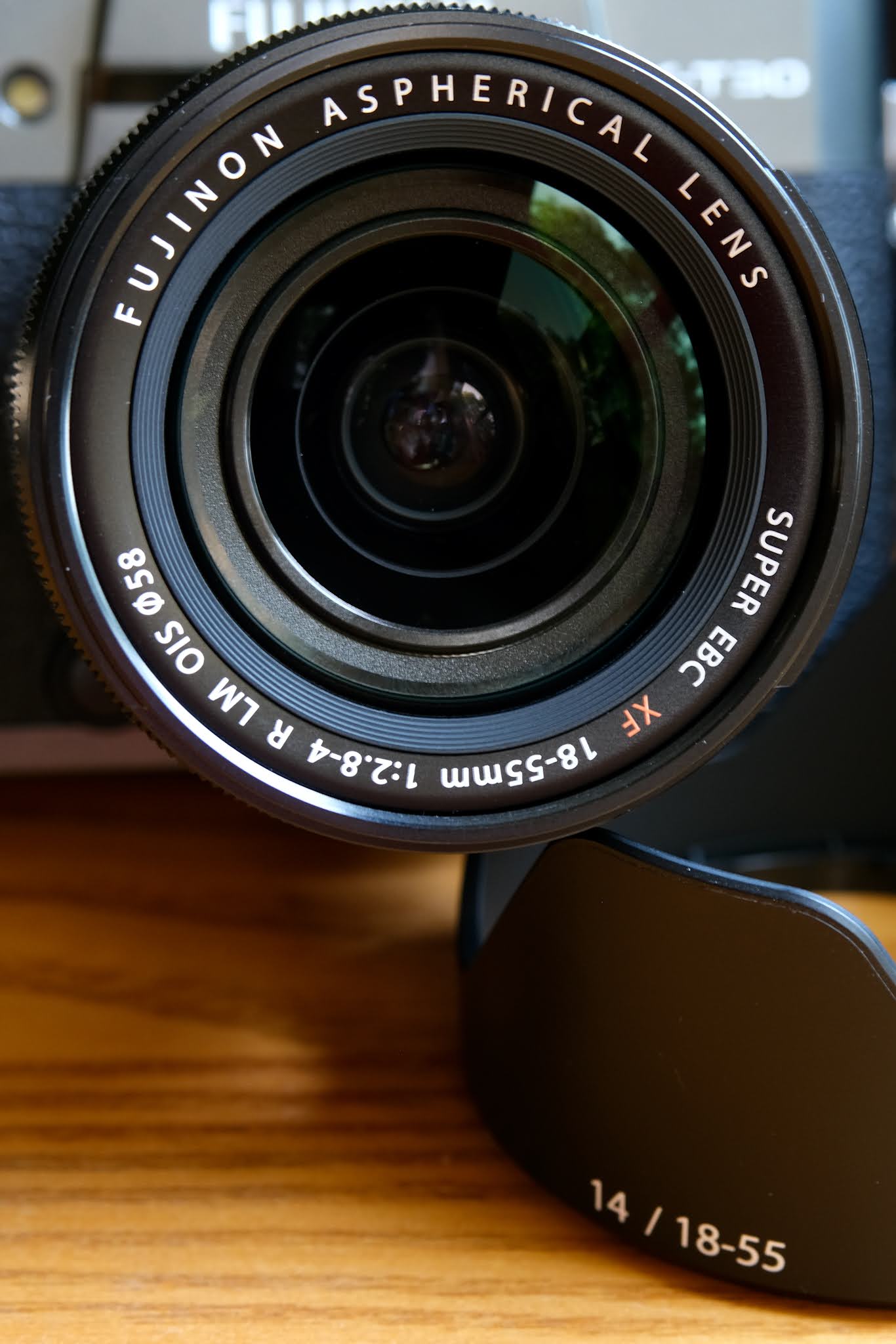
There is so much to said about the Fujinon XF18-55mm OIS that it may appear outrageous for many enthusiasms of the other Fuji X-mount lens models to promote and cherish it even after all these years. First it is a true compact zoom lens weighing 310g only with a lens filter accessory ring of 58mm of diameter. It has three control rings easily recognizable for focusing, zooming, and setting the aperture manually. it has also two switches to activate or not the optical image stabilization (OIS) system and the aperture ring. A dedicated reversible bayonet mounted petal lens hood is furnished with the zoom lens. In brief it is a complete package optic right from the start.


You can select a range of angles of view stating at 76,5 degrees wide up to the narrowed 29 degrees that is giving to the Fujinon XF18-55mm OIS a very good picturing and framing versatility even though some others Fuji X-mount lenses will offer a larger focal range **. The variable maximum aperture starts at F2.8 (18mm) and finish at F4 (55mm) which is moderate compared to the "pro" zoom lenses but much better that the usual "kit» lenses. Combined with the optical image stabilization (OIS) system, the Fujinon XF18-55mm OIS is clearly manageable in many low light situations.


In terms of optical performances and color (and black and white) rendition, the Fujinon XF18-55mm OIS is able to deliver high quality result even up to pro picture standards, and with the most recent camera models or the newest Fujifilm APS-C sensors. In that perspective, it is interesting to note how many Fujifilm X-photographers are still using the Fujinon XF 18-55mm OIS despite its longevity. Part of this long-time success seems o be attributed to its compactness, versatility, and performance.

Even though the Fujinon XF18-55mm OIS is not proclaimed weather-resistant (WR), many photographers will adopt it as a good travel and urban zoom lens. Discrete, focally flexible, and small, the Fujinon XF18-55mm OIS is an easy-going choice

Over the years, I had experimented different body-lens combinations with the Fujinon XF 18-55mm F2.8-4 R LM OIS zoom lens and many different Fuji X-mount camera models such as the Fujifilm X-E2, X-E2S, X-E3, X-T20, X-T30 and X-S10 and it had performed flawlessly through many various photographic situations. All these mentioned Fujifilm cameras are compact models that will harmonize perfectly in terms of size and weigh with this trans-standard zoom optic.


In January 2019, I have published
this post that contain a deeper "user" analyst of the Fujinon XF18-55mm F2.8-4 R LM OIS. Since that time, my opinion had never change and as for other lovers of this trans-standard zoom lens I am hoping that Fujifilm will keep this zoom lens available for X-mount photographers and be part of their regular and current line of optics.
______________________________

* The Fujifilm Fujinon XF18-55mm F2.8-4 R LM OIS was the first zoom lens offered into the new Fuji X-mount optic series.

** With the expense of a bigger and heavier optic to use and carry.

28 juillet 2021

Charcoal Views taken with and of the charcoal-silver Fujifilm X-T30!


A
lmost all camera manufacturers like time to time to offer "special edition" of some of their models that is more often a cosmetic different version of the usual ones. In the past there has been a few exceptional built camera model redoes with more noble material like titanium that have been presented into their natural color apparency or with a special coated paint like bla

We have seen also bright color versions that easier to realize with plastic (Polycarbonate) camera body but market success of them have been limited that most of these "colorful" and distracting models appear to have a very short commercial life. But the "titanium-like" trend has survived until this day where we are still be able to purchase such this photographer fantasy.


I have already experienced the joy to briefly have a Fujifilm Pro-2 camera model in its "graphite" version well matched by a similar presentation (graphite) of the Fujinon XF 23mm F2 WR lens. It was so magnificent that wearing cotton white gloves to hold the camera seemed better appropriate to preserve this stellar camera body finish. 

Considering the popularity of the Fujifilm X-T30 in its traditional liveries (black or silver), it was a bit surprising to discover a "charcoal-silver" version of the X-T30 (No matching "charcoal-silver" lens model has been produced this time!).


It is always a matter of personal taste, but I must confess that I have been seduced by the "charcoal" Fujifilm X-T30 at a point of buying one and frankly it has an elegant looking despite the none matching lens (choosing black lens livery could be a better esthetic choice in that case). The command dials and push function buttons marking are a bit less contrasty compared to the black version in certain strong light situations because the reflection of the livery prevent an easy reading of them. The front and back command dials are better esthetically integrated to the camera body. Oddly the camera appears to be smaller than its black version for example. The overall camera body cosmetic appears to be more sophisticated and justified.


For the rest, all the Fujifilm X-T30 versions (black, silver, charcoal-silver) are operating the same way and will perform accordingly. But you may be more inclined to bring with you the "charcoal" Fuji X-T30 more often for using it and admire its special camera body finish!


_________________________________________

Personal Notes regarding the Fujifilm X-T30

Since the introduction of the Fujifilm X-T10 that has been followed by the competent Fujifilm X-T20, this compact Fuji X-mount series has been my preferred choice for an "all-around" camera to carry everywhere, everyday. In fact, the Fujifilm X-T30 is so compact that Fuji designers seem to had to push down a little bit the "joy stick" in the back of the camera body to leave more space for a better thumb rest and a more secure position.

The Fujifilm X-T30 is an "analog operational approach" camera with many direct control dial or push button functionalities. All the usual parameters such as shutter speed and aperture setting can be done without looking specifically at the electronic viewfinder (EVF)/Live view back screen. Moreover this camera model can be configure differently if you want to do so. For the older Fuji X-mount model users, there is no real adaptation to perform before a serious first utilisation. 

Because of its pre-setting ability, the Fujifilm X-T30 is a perfect "grab and go" camera that will offer t the photographer a speedier control without exploring the setting through a viewfinder-like necessity.